Roberto Bolan o's Tres is a showcase of the author's willingness to freely cross genres, with poems in prose, stories in verse, and flashes of writing that can hardly be categorized. As the title implies, the collection is composed of three sections. "Prose from Autumn in Gerona," a cinematic series of prose poems, slowly reveals a subtle and emotional tale of unrequited love by presenting each scene, shattering it, and piecing it all back together, over and over again. The second part, "The Neochileans," is a sort of On the Road in verse, which narrates the travels of a young Chilean band on tour in the far reaches of their country. Finally, the collection ends with a series of short poems that take us on "A Stroll Through Literature" and remind us of Bolan o's masterful ability to walk the line between the comically serious and the seriously comical.
Written when he was only twenty-seven, Antwerp can be viewed as the Big Bang of Roberto Bolano s fictional universe. This novel presents the genesis of Bolano s enterprise in prose; all the elements are here, highly compressed, at the moment when his talent explodes. From this springboard which Bolano chose to publish in 2002, twenty years after he d written it ( and even that I can t be certain of ) as if testing out a high dive, he would plunge into the unexplored depths of the modern novel.Voices speak from a dream, from a nightmare, from passersby, from an omniscient narrator, from Roberto Bolano. Antwerp s fractured narration in fifty-four sections moves in multiple directions and cuts to the bone.
A North American journalist in Paris is woken at 4 a.m. by a mysterious caller with urgent information. For V. S. Naipaul, the prevalence of sodomy in Argentina is a symptom of the nation s political ills. Daniela de Montecristo (familiar to readers of Nazi Literature in the Americas and 2666) recounts the loss of her virginity. Arturo Belano returns to Mexico City and meets the last disciples of Ulises Lima, who play in a band called The Asshole of Morelos. Belano s son Geronimo disappears in Berlin during the Days of Chaos in 2005. Memories of a return to the native land. Argentine writers as gangsters. Zombie schlock as allegory "
Now I am a mother and a married woman, but not long ago I led a life of crime: so Bianca begins her tale of growing up the hard way in Rome in A Little Lumpen Novelita. Orphaned overnight as a teenager our parents died in a car crash on their first vacation without us she drops out of school, gets a crappy job, sees a terrible brightness at night, and drifts into bad company. Her little brother brings home two petty criminals who need a place to stay. As the four of them share the family apartment and plot a strange crime, Bianca learns she can drift lower Electric, tense with foreboding, and written in jagged, propulsive short chapters, A Little Lumpen Novelita one of the first novels Roberto Bolano ever published delivers a surprising, fractured tale of taking control of one s fate."
"Now I am a mother and a married woman, but not long ago I led a life of crime" so Bianca begins her tale of growing up the hard way in Rome. Orphaned overnight as a teenager--"our parents died in a car crash on their first vacation without us"--she drops out of school, gets a crappy job, and drifts into bad company. Her younger brother brings home two petty criminals who need a place to stay. As the four of them share the family apartment and plot a strange crime, Bianca learns how low she can fall. Electric, tense with foreboding, and written in jagged, propulsive chapters, A Little Lumpen Novelita delivers a surprising, fractured fable of seizing control of one's fate.
The problems of international communication and linguistic rights are recurring debates in the present-day age of globalization. But the debate truly began over a hundred years ago, when the increasingly interconnected world of the nineteenth century fostered a desire for the development of a global lingua franca. Many individuals and social movements competed to create an artificial language unencumbered by the political rivalries that accompanied English, German, and French. Organizations including the American Philosophical Society, the International Association of Academies, the International Peace Bureau, the Comintern, and the League of Nations intervened in the debate about the possibility of an artificial language, but of the numerous tongues created before World War II, only Esperanto survives today. Esperanto and Its Rivals sheds light on the factors that led almost all artificial languages to fail and helped English to prevail as the global tongue of the twenty-first century. Exploring the social and political contexts of the three most prominent artificial languages-VolapÜk, Esperanto, and Ido-Roberto GarvÍa examines the roles played by social movement leaders and inventors, the strategies different organizations used to lobby for each language, and other early decisions that shaped how those languages spread and evolved. Through the rise and fall of these artificial languages, Esperanto and Its Rivals reveals the intellectual dilemmas and political anxieties that troubled the globalizing world at the turn of the twentieth century.
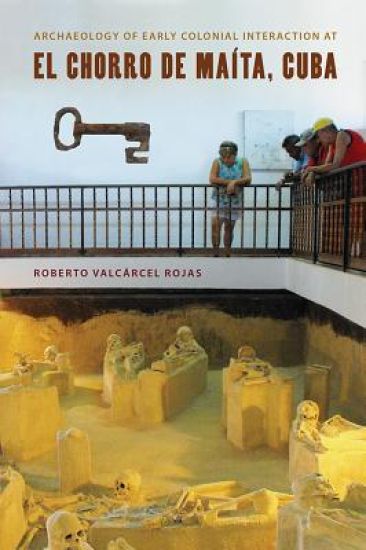
During Spanish colonization of the Greater Antilles, the islands' natives were forced into labor under the encomienda system. The indigenous people became ""Indios,"" their language, appearance, and identity transformed by the domination imposed by a foreign model that Christianized and ""civilized"" them. Yet El Chorro de Maíta retained many of its indigenous characteristics.In this volume-one of the first in English to examine and document an archaeological site in Cuba-Roberto Valcárcel Rojas analyzes the construction of colonial authority and the various attitudes and responses of natives and other ethnic groups. His pioneering study reveals the process of transculturation in which new individuals emerged-Indians, mestizos, criollos-and helps construct the vital link between the pre-Columbian world and the development of an integrated and new history.
The year 1996 in Italian politics was a year rich in novelty. After the "stalled transition" of 1995, the political atmosphere had begun to change. Most obvious was the end of Dini's unelected government of technocrats, supported by a heterogeneous group in Parliament, and its replacement with Romano Prodi's government, a coalition of the parties that had won the general election on April 21, 1996. But an even more important change and one more likely to be remembered was a new climate of dialogue amongst the main political forces that emerged from this period of transition between two republics. In 1996, despite the general elections, cooperation again became part of the political game.
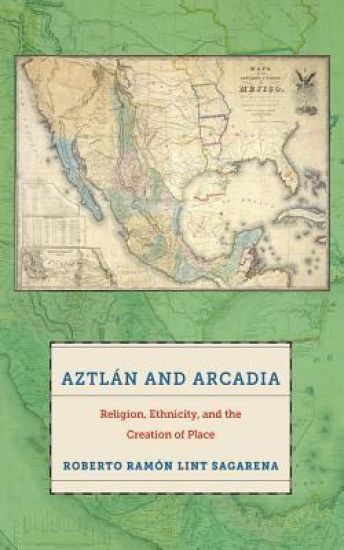
In the wake of the Mexican-American War, competing narratives of religious conquest and re-conquest were employed by Anglo American and ethnic Mexican Californians to make sense of their place in North America. These "invented traditions" had a profound impact on North American religious and ethnic relations, serving to bring elements of Catholic history within the Protestant fold of the United States' national history as well as playing an integral role in the emergence of the early Chicano/a movement. Many Protestant Anglo Americans understood their settlement in the far Southwest as following in the footsteps of the colonial project begun by Catholic Spanish missionaries. In contrast, Californios—Mexican-Americans and Chicana/os—stressed deep connections to a pre-Columbian past over to their own Spanish heritage. Thus, as Anglo Americans fashioned themselves as the spiritual heirs to the Spanish frontier, many ethnic Mexicans came to see themselves as the spiritual heirs to a southwestern Aztec homeland.
"Millions of Americans have lost their homes since the start of the recession initiated by the financial crisis of 2008–09. But is the dream of homeownership for America's working families obsolete, an aspiration from a bygone era? Regaining the Dream rejects that notion and proposes a way to strengthen the financial system while simultaneously promoting an equitable and viable American homeownership policy.For the first time, the authors of Regaining the Dream offer data-driven evidence on how the mortgage industry can serve working families in the United States, pointing the way to a pragmatic housing policy that promotes the opportunity for sustainable homeownership.Taking the reader step by step through the lending crisis and what caused it, the authors include useful and clear definitions of terms heard almost daily in news coverage. And they give a fair account of the history behind Fannie Mae and Freddie Mac and the new Dodd-Frank law, explaining what remains to be done to uphold one of the defining characteristics of the American dream."
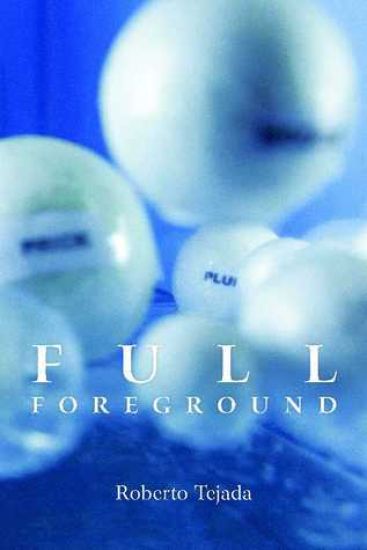
Poet Roberto Tejada uses lyrical poems to explore and give a voice to the troubles of global citizenship, US-Mexico relations, Latino identity, and the political emotion of queer sexualities. His collection provides a holistic ground-level view of pivotal world events from the mid 1990s to a more recent present. Tejada's innovative work dramatically widens the scope of Latina/o literature, showing us exactly what it can accomplish. The poems move very much like a three-act play, in which the first act is one of origins; the second, a staging of desire; and the third, a symbiosis. These acts magnify one another when unified. Each poem within the collection positions itself within the avant-garde, in which the artful use of language aims to dazzle, surprise, and enliven. The poems dance by, preserving a tension between hurry and delay, momentum and stasis, and every line is like a newly launched firecracker, sending out startling patterns of spark and flare. Tejada's exuberant language stretches the limits of selfhood and the way it is represented in poetry. He illuminates the tangled webs that are woven when identities are linked to sexuality, nationality, privilege, and temporality. The concerns and obsessions voiced here turn the construction of desire on its head, forcing us to ask ourselves what is worthy of our attentions.
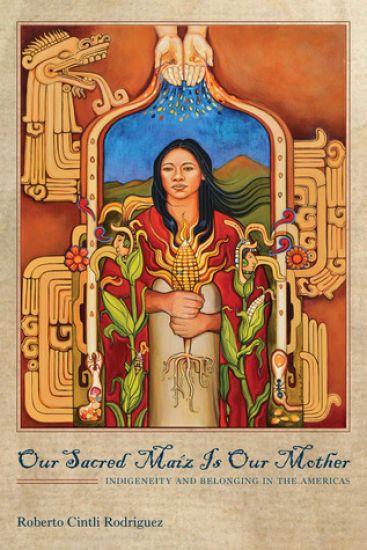
If you want to know who you are and where you come from, follow the maíz."" That was the advice given to author Roberto Cintli Rodriguez when he was investigating the origins and migrations of Mexican peoples in the Four Corners region of the United States.Follow it he did, and his book Our Sacred Maíz Is Our Mother changes the way we look at Mexican Americans. Not so much peoples created as a result of war or invasion, they are people of the corn, connected through a seven-thousand-year old maíz culture to other Indigenous inhabitants of the continent. Using corn as the framework for discussing broader issues of knowledge production and history of belonging, the author looks at how corn was included in codices and Mayan texts, how it was discussed by elders, and how it is represented in theater and stories as a way of illustrating that Mexicans and Mexican Americans share a common culture.Rodriguez brings together scholarly and traditional (elder) knowledge about the long history of maíz/corn cultivation and culture, its roots in Mesoamerica, and its living relationship to Indigenous peoples throughout the continent, including Mexicans and Central Americans now living in the United States. The author argues that, given the restrictive immigration policies and popular resentment toward migrants, a continued connection to maíz culture challenges the social exclusion and discrimination that frames migrants as outsiders and gives them a sense of belonging not encapsulated in the idea of citizenship. The ""hidden transcripts"" of corn in everyday culture—art, song, stories, dance, and cuisine (maíz-based foods like the tortilla)—have nurtured, even across centuries of colonialism, the living maíz culture of ancient knowledge.
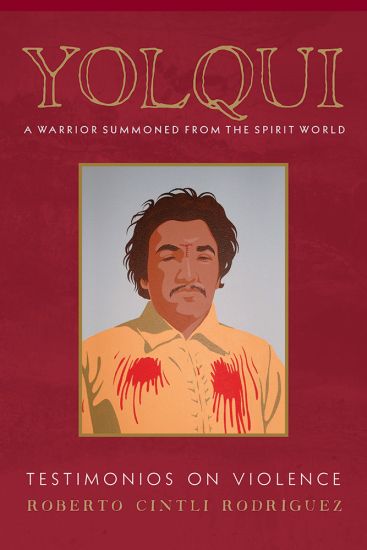
In Nahuatl yolqui is the idea of a warrior brought back from the dead. For author and activist Roberto Cinctli Rodríquez, it describes his own experience one night in March 1979 after a brutal beating at the hands of L.A. sheriffs. Framed by Rodríguez's personal testimony of police violence, this book offers a historia profunda of the culture of extralegal violence against Red-Black-Brown communities in the United States. In addition to Rodríguez's story, this book includes several short essays from victims and survivors that bring together personal accounts of police brutality and state-sponsored violence. This wide-ranging work touches on historical and current events, including the Watts rebellion, the Zoot Suit Riots, Operation Streamline, Standing Rock, and much more. From the eyewitness accounts of Bartolomé de las Casas to the protestors and allies at Standing Rock, this book makes evident the links between colonial violence against Red-Black-Brown bodies to police violence in our communities today. Grounded in the stories of the lives of victims and survivors of police violence, Yolqui, a Warrior Summoned from the Spirit World illuminates the physical, spiritual, and epistemic depths and consequences of racialized dehumanization. Rodríguez offers us an urgent, poignant, and personal call to end violence and the philosophies that permit such violence to flourish. Like the Nahuatl yolqui, this book is intended as a means of healing, offering a footprint going back to the origins of violence, and, more important, a way forward. With contributions by Raúl Alcaraz-Ochoa, Citalli Álvarez, Tanya Alvarez, Rebekah Barber, Juvenal Caporale, David Cid, Arianna Martinez Reyna, Carlos Montes, Travis Morales, Simon Moya Smith, Cesar Noriega, Kimberly Phillips, Christian Ramirez, Michelle Rascon Canales, Carolyn Torres, Jerry Tello, Tara Trudell, and Laurie Valdez.
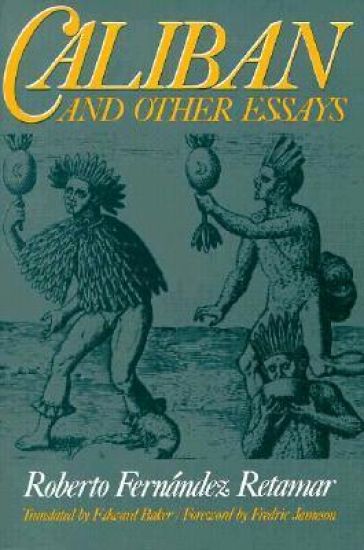
Roberto Fernández Retamar--poet, essayist, and professor of philology at the University of Havana--has long served as the Cuban Revolution’s primary cultural and literary voice. An erudite and widely respected hispanist, Retamar is known for his meticulous efforts to dismantle Eurocentric colonial and neocolonial thought. Since its publication in Cuba in 1971, “Caliban"--the first and longest of the five essays in this book--has become a kind of manifesto for Latin American and Caribbean writers; its central figure, the rude savage of Shakespeare’s Tempest, becomes in Retamar’s hands a powerful metaphor of their cultural situation--both its marginality and its revolutionary potential.Retamar finds the literary and historic origins of Caliban in Columbus’s Navigation Log Books, where the Carib Indian becomes a cannibal, a bestial human being situated on the margins of civilization. The concept traveled from Montaigne to Shakespeare, on down to Ernest Renan and, in the twentieth century, to Aimé Césaire and other writers who consciously worked with or against the vivid symbolic figures of Prospero, Calivan, and Ariel. Retamar draws especially upon the life and work of José Marti, who died in 1895 in Cuba’s revolutionary struggle against Spain; Marti’s Calibanesque vision of “our America” and its distinctive mestizo culture-Indian, African, and European-is an animating force in this essay and throughout the book.
Roberto Esposito is one of the most prolific and important exponents of contemporary Italian political theory. Bíos-his first book to be translated into English-builds on two decades of highly regarded thought, including his thesis that the modern individual-with all of its civil and political rights as well as its moral powers-is an attempt to attain immunity from the contagion of the extraindividual, namely, the community. In Bíos, Esposito applies such a paradigm of immunization to the analysis of the radical transformation of the political into biopolitics. Bíos discusses the origins and meanings of biopolitical discourse, demonstrates why none of the categories of modern political thought is useful for completely grasping the essence of biopolitics, and reconstructs the negative biopolitical core of Nazism. Esposito suggests that the best contemporary response to the current deadly version of biopolitics is to understand what could make up the elements of a positive biopolitics-a politics of life rather than a politics of mastery and negation of life. In his introduction, Timothy Campbell situates Esposito’s arguments within American and European thinking on biopolitics. A comprehensive, illuminating, and highly original treatment of a critically important topic, Bíos introduces an English-reading public to a philosophy that will critically impact such wide-ranging current debates as stem cell research, euthanasia, and the war on terrorism. Roberto Esposito teaches contemporary philosophy at the Italian Institute for the Human Sciences in Naples. His books include Categorie dell impolitico, Nove pensieri sulla politica, Communitas: orgine e destino della comunità, and Immunitas: protezione e negazione della vita. Timothy Campbell is associate professor of Italian studies in the Department of Romance Studies at Cornell University and the author of Wireless Writing in the Age of Marconi (Minnesota, 2006).
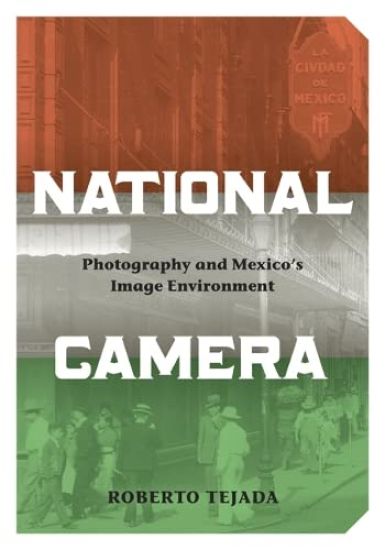
In National Camera, Roberto Tejada offers a comprehensive study of Mexican photography from the early twentieth century to today, demonstrating how images have shaped identities in Mexico, the United States, and in the borderlands where the two nations and cultures intersect—a place Tejada calls the shared image environment. The “problem” of photography in Mexico, Tejada shows, reveals cross-cultural episodes that are rife with contradictions, especially in the complex terms of cultural and sexual difference. Analyzing such topics as territory, sexuality, and social and ethnic relations in image making, Tejada delves into the work of key figures including Manuel Alvarez Bravo, Edward Weston, Tina Modotti, Marius de Zayas, and Julien Levy, as well as the Agustín Víctor Casasola Archive, the Boystown photographs, and contemporary Mexican and Latina photo-based artists. From the Mexican Revolution of 1910–1920 to the U.S.–Mexico borderlands of today, Tejada traces the connective thread that photography has provided between Mexican and U.S. American intellectual and cultural production and, in doing so, defines both nations.
In National Camera, Roberto Tejada offers a comprehensive study of Mexican photography from the early twentieth century to today, demonstrating how images have shaped identities in Mexico, the United States, and in the borderlands where the two nations and cultures intersect-a place Tejada calls the shared image environment. The “problem” of photography in Mexico, Tejada shows, reveals cross-cultural episodes that are rife with contradictions, especially in the complex terms of cultural and sexual difference. Analyzing such topics as territory, sexuality, and social and ethnic relations in image making, Tejada delves into the work of key figures including Manuel Alvarez Bravo, Edward Weston, Tina Modotti, Marius de Zayas, and Julien Levy, as well as the AgustÍn VÍctor Casasola Archive, the Boystown photographs, and contemporary Mexican and Latina photo-based artists. From the Mexican Revolution of 1910–1920 to the U.S.–Mexico borderlands of today, Tejada traces the connective thread that photography has provided between Mexican and U.S. American intellectual and cultural production and, in doing so, defines both nations.
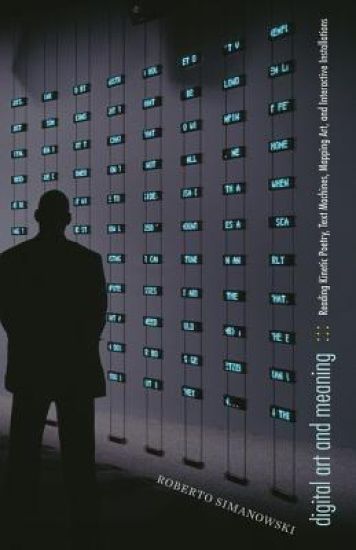
In a world increasingly dominated by the digital, the critical response to digital art generally ranges from hype to counterhype. Popular writing about specific artworks seldom goes beyond promoting a given piece and explaining how it operates, while scholars and critics remain unsure about how to interpret and evaluate them. This is where Roberto Simanowski intervenes, demonstrating how such critical work can be done. Digital Art and Meaning offers close readings of varied examples from genres of digital art such as kinetic concrete poetry, computer-generated text, interactive installation, mapping art, and information sculpture. For instance, Simanowski deciphers the complex meaning of words that not only form an image on a screen but also react to the viewer’s behavior; images that are progressively destroyed by the human gaze; text machines generating nonsense sentences out of a Kafka story; and a light show above Mexico City’s historic square, created by Internet users all over the world. Simanowski combines these illuminating explanations with a theoretical discussion that employs art philosophy and history to achieve a deeper understanding of each particular example of digital art and, ultimately, of the genre as a whole.