Kirjojen hintavertailu. Mukana 11 717 486 kirjaa ja 12 kauppaa.

Kirjahaku

Etsi kirjoja tekijän nimen, kirjan nimen tai ISBN:n perusteella.

1000 tulosta hakusanalla Ron Butcher

The Massachusetts District Police
This book is the third chapter in a series of books about the history of the Massachusetts State Police covering the State District Police Force from 1879 to 1919. The first chapter covered the state police constables from 1865 to 1875, and was published in The First To Serve, in August of 2017. The second chapter covered the State Detective Force from 1875 to 1879 and was published as The State Detective Force in August 2018.This third chapter, The Massachusetts District Police, covers the period 1879 through 1919 and brings the reader into the twentieth- century when the Department of Public Safety was established in 1919. Two years later, in 1921, the State Police Patrol was created. Today's Troopers, in their French and Electric Blue uniforms and cruisers are a continuation of the oldest state police department in the Nation, established in 1865. First In The Nation - Finest In The World!
Engaging the Courts of Healing & the Healing Garden
God has wonderfully provided for our healing and health via the Courts of Healing and the Healing Garden. Join with us as we explore this amazing complex designed to help you experience the riches of God's goodness and see the Apostle John's prayer manifested in your life: Beloved, I wish above all things that you would prosper and be in health even as your soul prospers. (3 John 2) Learn the obstacles to healing and how to get them removed, discover how to intercede for others and see lives changed. No sickness, disease, or condition is beyond the scope of God's provision in the Courts of Healing, Heaven's Hospital and the Healing Garden. May you experience God's healing in your life.
Heaven's Light

Heaven's Light

Ron Koch

Lulu.com
2020
nidottu
I hope you will enjoy some of my poems as they can relate to your spiritual path through this world.The poems are all about Heaven's Light and God's love and what He has provided for all His sons and daughters here and the great here after - heaven.
Resilient Space Systems Design
Recognized as a "Recommended" title by Choice for their November 2020 issue.Choice is a publishing unit at the Association of College & Research Libraries (ACR&L), a division of the American Library Association. Choice has been the acknowledged leader in the provision of objective, high-quality evaluations of nonfiction academic writing. Presenting a fundamental definition of resilience, the book examines the concept of resilience as it relates to space system design.The book establishes the required definitions, relates its place to existing state-of-the-art systems engineering practices, and explains the process and mathematical tools used to achieve a resilient design. It discusses a variety of potential threats and their impact upon a space system. By providing multiple, real-world examples to illustrate the application of the design methodology, the book covers the necessary techniques and tools, while guiding the reader through the entirety of the process. The book begins with space systems basics to ensure the reader is versed in the functions and components of the system prior to diving into the details of resilience. However, the text does not assume that the reader has an extensive background in the subject matter of resilience. This book is aimed at engineers and architects in the areas of aerospace, space systems, and space communications.
The Design, Implementation, and Audit of Occupational Health and Safety Management Systems
This book covers the design, implementation, and auditing of structured occupational health and safety management systems (SMS), sometimes referred to as safety programs. Every workplace has a form of SMS in place as required by safety regulations and laws.The Design, Implementation, and Audit of Occupational Health and Safety Management Systems describes some of the elements that constitute an SMS, the implementation process, and the auditing of the conformance to standards. It covers more than 60 processes, programs, or standards of a system, and gives important background information on each element. Guidelines and examples show how to design and implement the risk-based processes, programs and standards, and how to audit them against standards.The text is based on actual SMS implementation experiences across a wide range of industries. It offers a roadmap to any organization which has no structured SMS. It will guide them through the process of upgrading their health and safety processes to conform to local and international standards. It will lead them away from relying on reactive safety measures such as injury rates, to proactive actions which are measured by the audit of the system.Features Covers more than 60 elements of a safety management system (SMS)Provides practical examples of how to design, implement, and audit a structured SMSBased on actual SMS implementation experience across a wide range of industriesPresents the integration of an SMS into the day-to-day functions of the organization
Democratization of Expertise

Democratization of Expertise

Ron Fulbright

Routledge
2020
sidottu
We create technology enabling us to do things never before possible and it ultimately changes the way we live, work, play, and interact with each other. Throughout human history, the democratization of technology making a technology available to the masses, has brought about sweeping cultural, social, political, and societal changes. In the last half-century, the democratization of computers, information, the Internet, and social media have revolutionized and transformed our lives. We now stand at the beginning of a new era sure to bring about waves of new revolutions, the cognitive systems era. Until now, humans have done all of the thinking. However, our lives are about to be infused with artificial entities capable of performing high-level cognitive processing previously possible only in the human mind. Systems capable of this kind of "synthetic cognition" will achieve and surpass the level of human experts in almost every field of endeavor. Far from replacing humans, these cognitive systems will be our collaborators, teachers, confidants, colleagues, and companions. The future will belong to those who can better partner with these cognitive systems. Made available to the average person via the Internet, handheld devices, and through ordinary objects all around us, expertise will become democratized. Everything will change when anyone has access to expertise in any field and new things will be possible. The democratization of expertise is the foundation on which our society’s revolutions will be built over the next half-century. This book discusses societal and cultural revolutions throughout history brought about by the adoption of new technology and gives brief histories of human cognitive augmentation and artificial intelligence. In the coming cognitive systems era, humans, by collaboratively partnering with cognitive systems, will together achieve expert-level performance—synthetic expertise—with humans performing some of the cognitive processing and cognitive systems performing some. As the capabilities of cognitive systems improve over time, the balance of thinking will shift from being mostly human to mostly artificial. This book introduces the Levels of Cognitive Augmentation to describe this shift. Drawing from previous research in cognitive systems and intelligent agent theory, the knowledge stores required for expertise are identified in a Knowledge Level description of expertise. This book introduces a new abstract level, called the Expertise Level to describe the skills needed for expertise. Combining the knowledge-level and expertise-level descriptions, this book introduces the Model of Expertise. This book demonstrates use of the Model of Expertise by presenting several synthetic expert architectures: a synthetic teacher (Synthia), a synthetic friend/therapist (Sy), a synthetic elderly companion (Lois), a synthetic research companion (Synclair), and an automated scientific hypothesis explorer (Ashe). This book is intended for anyone interested in the fields of cognitive systems, cognitive computing, cognitive augmentation, or artificial intelligence or the impact of technologies from these fields on society. Anyone doing research and development in the area of cognitive systems or artificial intelligence will find this book particularly useful.
ReducedEffort® Changeover

ReducedEffort® Changeover

Ron Heiskell

CRC Press
2020
nidottu
ReducedEffort® Changeover: The Lean Way to Quickly Reduce Changeover Downtime provides a step-by-step guide for conducting a Kaizen event that empowers the people who do the work to improve how that work is done. Packed with tips, tools, and examples, this practical guide begins with a clear description of the Lean principles underlying the ReducedEffort Changeover system. In addition, it explains how and why reducing the effort always reduces the time of converting a machine, line, or process from one product to another. In this book, you’ll find everything you need to quickly and dramatically reduce the effort and time of any process using the ReducedEffort method.This is not another book about how to do SMED. Like SMED, ReducedEffort Changeover (REC) does reduce changeover time, but REC is not SMED.SMED, Single Minute (or digit) Exchange of Dies, developed by Dr. Shigeo Shingo, has been the process used for many years by countless manufacturing plants to reduce changeover time. The SMED process was used in Toyota to reduce the changeover of a 1,000-ton stamping press from four hours to three minutes.As a Lean-based process, the REC system focuses on reducing the labor, not the time, involved in changing over a machine to work on a different product. With REC, there are no Standard Operation Combination Sheets to fill out and no Problem Identification Sheets to complete, and it does not require the arduous chore of timing every task, as SMED does.Very little capital investment is required with REC. Unlike SMED, it does not require management-approved funding to achieve substantial results. Because REC is not capital-driven, management does not need to drive the process. The operators will drive the process because it reduces their labor. One of the biggest advantages of REC over SMED is that operators will readily accept the process, and more important, they will want to sustain it. The reason for this is quite simple and will become evident when the REC process is defined. REC takes SMED to a new level that is easier and faster both to implement and to deliver sustainable results.
ReducedEffort® Changeover

ReducedEffort® Changeover

Ron Heiskell

CRC Press
2020
sidottu
ReducedEffort® Changeover: The Lean Way to Quickly Reduce Changeover Downtime provides a step-by-step guide for conducting a Kaizen event that empowers the people who do the work to improve how that work is done. Packed with tips, tools, and examples, this practical guide begins with a clear description of the Lean principles underlying the ReducedEffort Changeover system. In addition, it explains how and why reducing the effort always reduces the time of converting a machine, line, or process from one product to another. In this book, you’ll find everything you need to quickly and dramatically reduce the effort and time of any process using the ReducedEffort method.This is not another book about how to do SMED. Like SMED, ReducedEffort Changeover (REC) does reduce changeover time, but REC is not SMED.SMED, Single Minute (or digit) Exchange of Dies, developed by Dr. Shigeo Shingo, has been the process used for many years by countless manufacturing plants to reduce changeover time. The SMED process was used in Toyota to reduce the changeover of a 1,000-ton stamping press from four hours to three minutes.As a Lean-based process, the REC system focuses on reducing the labor, not the time, involved in changing over a machine to work on a different product. With REC, there are no Standard Operation Combination Sheets to fill out and no Problem Identification Sheets to complete, and it does not require the arduous chore of timing every task, as SMED does.Very little capital investment is required with REC. Unlike SMED, it does not require management-approved funding to achieve substantial results. Because REC is not capital-driven, management does not need to drive the process. The operators will drive the process because it reduces their labor. One of the biggest advantages of REC over SMED is that operators will readily accept the process, and more important, they will want to sustain it. The reason for this is quite simple and will become evident when the REC process is defined. REC takes SMED to a new level that is easier and faster both to implement and to deliver sustainable results.
Process Improvement and CMMI for Systems and Software

Process Improvement and CMMI for Systems and Software

Ron S. Kenett; Emanuel Baker

CRC Press
2019
nidottu
Process Improvement and CMMI® for Systems and Software provides a workable approach for achieving cost-effective process improvements for systems and software. Focusing on planning, implementation, and management in system and software processes, it supplies a brief overview of basic strategic planning models and covers fundamental concepts and approaches for system and software measurement, testing, and improvements. The book represents the significant cumulative experience of the authors who were among the first to introduce quality management to the software development processes. It introduces CMMI® and various other software and systems process models. It also provides readers with an easy-to-follow methodology for evaluating the status of development and maintenance processes and for determining the return on investment for process improvements. The authors examine beta testing and various testing and usability programs. They highlight examples of useful metrics for monitoring process improvement projects and explain how to establish baselines against which to measure achieved improvements. Divided into four parts, this practical resource covers: Strategy and basics of quality and process improvementAssessment and measurement in systems and software Improvements and testing of systems and softwareManaging and reporting data The text concludes with a realistic case study that illustrates how the process improvement effort is structured and brings together the methods, tools, and techniques discussed. Spelling out how to lay out a reasoned plan for process improvement, this book supplies readers with concrete action plans for setting up process improvement initiatives that are effective, efficient, and sustainable.
Cause, Effect, and Control of Accidental Loss with Accident Investigation Kit
Accident: an undesired event that results in loss. Most people give little thought to accidents or their prevention. Health and safety professionals face this challenge, and its associated costs and losses, both human and financial, every day. Cause, Effect, and Control of Accidental Loss with Accident Investigation Kit provides the tools you need for accident prevention in the workplace and during off-site company activities.
Francis Huxley and the Human Condition

Francis Huxley and the Human Condition

Ron Roberts; Theodor Itten

Routledge
2020
sidottu
Focused on the life and work of Francis Huxley (1923–2016), this book offers an exploration of the search to understand the human condition, one which is simultaneously biographical, philosophical, cultural, historical, political and epistemological.A member of the illustrious Huxley dynasty, Francis Huxley forged an unusual and innovative career, making key contributions to social anthropology, mental health care and the protection of indigenous peoples. His story reveals how the production and dissemination of ideas can be understood in an intergenerational context which is familial and sociological. The book reflects on the contemporary relevance of Huxley’s work, forging links between the central philosophical, cultural, scientific and political themes that dominate the turbulent early 21st century and the enduring questions that have driven human beings in the search to understand themselves and their place in the world. It will be of interest to scholars from across the social sciences and humanities.
Francis Huxley and the Human Condition

Francis Huxley and the Human Condition

Ron Roberts; Theodor Itten

TAYLOR FRANCIS LTD
2022
nidottu
Focused on the life and work of Francis Huxley (1923–2016), this book offers an exploration of the search to understand the human condition, one which is simultaneously biographical, philosophical, cultural, historical, political and epistemological.A member of the illustrious Huxley dynasty, Francis Huxley forged an unusual and innovative career, making key contributions to social anthropology, mental health care and the protection of indigenous peoples. His story reveals how the production and dissemination of ideas can be understood in an intergenerational context which is familial and sociological. The book reflects on the contemporary relevance of Huxley’s work, forging links between the central philosophical, cultural, scientific and political themes that dominate the turbulent early 21st century and the enduring questions that have driven human beings in the search to understand themselves and their place in the world. It will be of interest to scholars from across the social sciences and humanities.
Democratization of Expertise

Democratization of Expertise

Ron Fulbright

Routledge
2020
nidottu
We create technology enabling us to do things never before possible and it ultimately changes the way we live, work, play, and interact with each other. Throughout human history, the democratization of technology making a technology available to the masses, has brought about sweeping cultural, social, political, and societal changes. In the last half-century, the democratization of computers, information, the Internet, and social media have revolutionized and transformed our lives. We now stand at the beginning of a new era sure to bring about waves of new revolutions, the cognitive systems era. Until now, humans have done all of the thinking. However, our lives are about to be infused with artificial entities capable of performing high-level cognitive processing previously possible only in the human mind. Systems capable of this kind of "synthetic cognition" will achieve and surpass the level of human experts in almost every field of endeavor. Far from replacing humans, these cognitive systems will be our collaborators, teachers, confidants, colleagues, and companions. The future will belong to those who can better partner with these cognitive systems. Made available to the average person via the Internet, handheld devices, and through ordinary objects all around us, expertise will become democratized. Everything will change when anyone has access to expertise in any field and new things will be possible. The democratization of expertise is the foundation on which our society’s revolutions will be built over the next half-century. This book discusses societal and cultural revolutions throughout history brought about by the adoption of new technology and gives brief histories of human cognitive augmentation and artificial intelligence. In the coming cognitive systems era, humans, by collaboratively partnering with cognitive systems, will together achieve expert-level performance—synthetic expertise—with humans performing some of the cognitive processing and cognitive systems performing some. As the capabilities of cognitive systems improve over time, the balance of thinking will shift from being mostly human to mostly artificial. This book introduces the Levels of Cognitive Augmentation to describe this shift. Drawing from previous research in cognitive systems and intelligent agent theory, the knowledge stores required for expertise are identified in a Knowledge Level description of expertise. This book introduces a new abstract level, called the Expertise Level to describe the skills needed for expertise. Combining the knowledge-level and expertise-level descriptions, this book introduces the Model of Expertise. This book demonstrates use of the Model of Expertise by presenting several synthetic expert architectures: a synthetic teacher (Synthia), a synthetic friend/therapist (Sy), a synthetic elderly companion (Lois), a synthetic research companion (Synclair), and an automated scientific hypothesis explorer (Ashe). This book is intended for anyone interested in the fields of cognitive systems, cognitive computing, cognitive augmentation, or artificial intelligence or the impact of technologies from these fields on society. Anyone doing research and development in the area of cognitive systems or artificial intelligence will find this book particularly useful.

Digital Negatives with QuadToneRIP

Digital Negatives with QuadToneRIP

Ron Reeder; Christina Anderson

Routledge
2020
nidottu
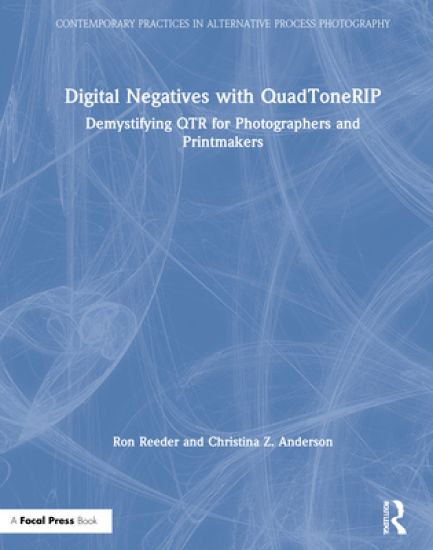
Digital Negatives with QuadToneRIP is a text that fully explores how the QuadToneRIP printer driver can be used to make expert digital negatives. The book takes a comprehensive, Òunder-the-hoodÓ look at how Roy Harrington’s QTR printer driver can be adapted for use by artists in several different creative practice areas. The text is written from the Mac/Photoshop point of view. The book is divided into three parts. Part One is a step-by-step how-to section that will appeal to both beginning and more advanced practitioners. Part One includes quickstart guides­ or summary sheets for beginning students who want to jump into using QTR before understanding all of its functional components. Part Two addresses dimroom, darkroom, and printmaking practices, walking the reader through brief workflows from negative to print for lithium palladium, gum bichromate, cyanotype, salted paper, kallitype, silver gelatin and polymer photogravure, with a sample profile for each. It also includes an introduction to a new software iteration of QTR: QuickCurve-DN (QCDN). Part Three is devoted to contemporary practitioners who explain how they use QTR in their creative practice.The book includes: A list of supplies and software needed A summary QTR glossary with a simple explanation of how each function works A sample walk-through to create a QTR profile from start to finish How to linearize profiles with simple to more exacting tools A visual guide to modifying functions Quickstart guides for many of the workflows Instructions for crafting monochrome, duotone, tricolor, and quadcolor negatives Instructions for using QTR to print silver gelatin in the darkroom Instructions for using QTR to print alternative processes in the dimroom Instructions for using QTR to print polymer photogravure in the printmaking room Introductory chapter to QuickCurve-DN software Troubleshooting common QTR problems Generic starter profiles for processes discussed Contemporary artists: their work and QTR process.Learning how to craft expert digital negatives can be a bit overwhelming at the outset. Digital Negatives with QuadToneRIP makes the process as user-friendly as possible. Like other books in the series, Digital Negatives with QuadToneRIP is thoroughly comprehensive, accessible to different levels of learner, and illustrative of the contemporary arts.
Digital Negatives with QuadToneRIP

Digital Negatives with QuadToneRIP

Ron Reeder; Christina Anderson

Routledge
2020
sidottu
Digital Negatives with QuadToneRIP is a text that fully explores how the QuadToneRIP printer driver can be used to make expert digital negatives. The book takes a comprehensive, Òunder-the-hoodÓ look at how Roy Harrington’s QTR printer driver can be adapted for use by artists in several different creative practice areas. The text is written from the Mac/Photoshop point of view. The book is divided into three parts. Part One is a step-by-step how-to section that will appeal to both beginning and more advanced practitioners. Part One includes quickstart guides­ or summary sheets for beginning students who want to jump into using QTR before understanding all of its functional components. Part Two addresses dimroom, darkroom, and printmaking practices, walking the reader through brief workflows from negative to print for lithium palladium, gum bichromate, cyanotype, salted paper, kallitype, silver gelatin and polymer photogravure, with a sample profile for each. It also includes an introduction to a new software iteration of QTR: QuickCurve-DN (QCDN). Part Three is devoted to contemporary practitioners who explain how they use QTR in their creative practice.The book includes: A list of supplies and software needed A summary QTR glossary with a simple explanation of how each function works A sample walk-through to create a QTR profile from start to finish How to linearize profiles with simple to more exacting tools A visual guide to modifying functions Quickstart guides for many of the workflows Instructions for crafting monochrome, duotone, tricolor, and quadcolor negatives Instructions for using QTR to print silver gelatin in the darkroom Instructions for using QTR to print alternative processes in the dimroom Instructions for using QTR to print polymer photogravure in the printmaking room Introductory chapter to QuickCurve-DN software Troubleshooting common QTR problems Generic starter profiles for processes discussed Contemporary artists: their work and QTR process.Learning how to craft expert digital negatives can be a bit overwhelming at the outset. Digital Negatives with QuadToneRIP makes the process as user-friendly as possible. Like other books in the series, Digital Negatives with QuadToneRIP is thoroughly comprehensive, accessible to different levels of learner, and illustrative of the contemporary arts.
The Global Free Trade Error

The Global Free Trade Error

Ron Baiman

Routledge
2019
nidottu
The doctrine of "free trade" is second only to that of "free markets" in undergirding ideological support for our current global economic structures and rules. From David Ricardo’s "comparative advantage principle" to James Meade’s Neoclassical or mainstream economics proof of self-adjusting free trade equilibrium, the free trade doctrine has had a lasting and destructive hold on Neoclassical economic thinking since its inception.The Global Free Trade Error provides a detailed analysis of these foundational models and counter-poses these to alternative Neo-Marxist "unequal exchange" models of global trade and finance. In the first part of the book the three core free trade models alluded to above are respectively demonstrated to be: overdetermined, inapplicable, and infeasible. In particular, Ricardo’s parable is shown to support managed trade rather than free trade as Ricardo and two centuries of economic texts have claimed. In the second part of the book, unequal exchange analyses of global trade are shown to provide logically coherent and useful insights into global trade and finance. In the third and final part of the book, this unequal exchange perspective is used, within a general "demand and cost" setting, to develop a set of global managed trade principles for a more equitable and sustainable world trade regime.This book will be of great interest to those who study political economy, history of economic thought, and international trade, including trade agreements and tariffs.
Leadership Lessons from a UPS Driver

Leadership Lessons from a UPS Driver

Ron Wallace

ReadHowYouWant
2016
pokkari
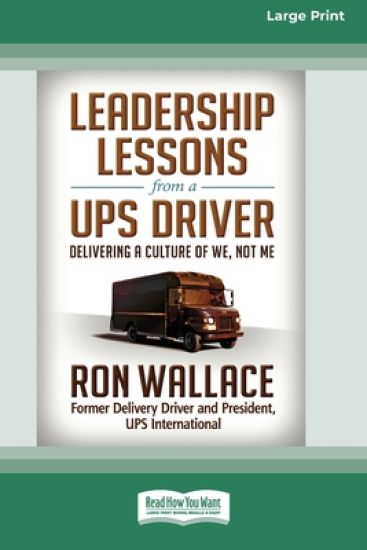
Leadership Lessons from a UPS Driver Delivering a Culture of We, Not Me UPS is a household name and one of the most highly regarded American corporations by customers and investors alike. Who hasn't been delighted by a right - on - time delivery, one of the 18 million UPS makes every day? Founded over a hundred years ago, UPS has moved steadily up the Fortune 500 as so many other corporations have dropped off. So what's the company's secret? Just ask a driver Ron Wallace was a UPS driver for six years before he rose through the ranks to become president of UPS International. In other companies that might be extraordinary, but for UPS it's par for the course. UPS has a unique people culture. It's like a family. Package loaders call executives by their first names and vice versa. The company almost always promotes from within. Lifetime employment is common. Most employees own UPS stock. Wallace credits this spirit of ''we, not me'' with the company's success - and his own. As he puts it, working at UPS gave him a PhD in teamwork. Instead of writing a typical business memoir that celebrates the leader as celebrity, Wallace shares vivid stories that focus on the people he worked with, the challenges they overcame, and the simple principles and practices that make up the UPS way. He exhorts his fellow leaders to grow their people, not just their business plans. The leadership style described in this book is simple and direct - and it works. The straightforward and easy - to - understand lessons provide a blueprint for an individual or company to build on past successes and adapt to future challenges. This is a must - read for anyone aspiring to become a great leader.
The Orbital Perspective

The Orbital Perspective

Ron Garan

Readhowyouwant
2015
pokkari
For astronaut Ron Garan, living on the International Space Station was a powerful, transformative experience - one that he believes holds the key to solving our problems here on Earth. On space walks and through windows, Garan was struck by the stunning beauty of the Earth from space but sobered by knowing how much needed to be done to help this troubled planet. And yet on the International Space Station, Garan, a former fighter pilot, was working work side by side with Russians, who only a few years before were ''the enemy.'' If fifteen nationalities could collaborate on one of the most ambitious, technologically complicated undertakings in history, surely we can apply that kind of cooperation and innovation toward creating a better world. That spirit is what Garan calls the ''orbital perspective. Garan vividly conveys what it was like learning to work with a diverse group of people in an environment only a handful of human beings have ever known. But more importantly, he describes how he and others are working to apply the orbital perspective here at home, embracing new partnerships and processes to promote peace and combat hunger, thirst, poverty, and environmental destruction. This book is a call to action for each of us to care for the most important space station of all: planet Earth. You don't need to be an astronaut to have the orbital perspective. Garan's message of elevated empathy is an inspiration to all who seek a better world.