Kirjahaku
Etsi kirjoja tekijän nimen, kirjan nimen tai ISBN:n perusteella.
1000 tulosta hakusanalla Rupert Brooke
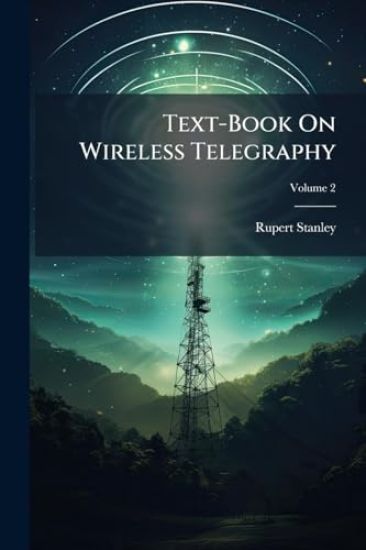

The Modern Law of Charities As Derived From the Statute of Charitable Uses
Rupert Sargent Holland
Hutson Street Press
2025
sidottu
The Modern Law of Charities As Derived From the Statute of Charitable Uses
Rupert Sargent Holland
Hutson Street Press
2025
pokkari


Blackbeards Island; the Adventures of Three boy Scouts in the sea Islands
Rupert Sargent Holland
Hutson Street Press
2025
sidottu
Blackbeards Island; the Adventures of Three boy Scouts in the sea Islands
Rupert Sargent Holland
Hutson Street Press
2025
pokkari
Neueste AktenstÃ1/4cke Des Prälatenstandes Und Der Landschaft In Baiern
Rupert Kornmann
Hutson Street Press
2025
sidottu
Neueste AktenstÃ1/4cke Des Prälatenstandes Und Der Landschaft In Baiern
Rupert Kornmann
Hutson Street Press
2025
pokkari
R.d.d. Ruperti Abbatis Monasterii S. Heriberti Tuitiensis Viri Longe Doctissimi Summique Inter Veteres Theologi Opera Omnia
Rupert (of Deutz); Jacques-Paul Migne
Hutson Street Press
2025
sidottu
R.d.d. Ruperti Abbatis Monasterii S. Heriberti Tuitiensis Viri Longe Doctissimi Summique Inter Veteres Theologi Opera Omnia
Rupert (of Deutz); Jacques-Paul Migne
Hutson Street Press
2025
pokkari
Educational technology is controversial – some see it as essential to providing free global learning, others view it as a dangerous distraction that undermines good education. In both instances, most theories that have previously been applied to educational technology do not account for the distinctive nature and vast potential of technology. This book addresses this issue, exploring how education has been bound up with technology from the beginning, and recognising that educational aims have already been shaped by technologies. Offering a ‘dialogic’ theory of educational technology, Rupert Wegerif and Louis Major respond to contemporary challenges to education within this book, including, but not limited to, climate change, misinformation on the internet and the impact of Artificial Intelligence.Chapters introduce, discuss, and contextualise key theories and illustrate through case studies their uses within a diverse range of educational contexts, spanning from primary education to adult lifelong learning. Each chapter also concludes with a short summary, demonstrating how these theories translate to practical implications for design.A fascinating response to current developments in educational technology, this is a crucial read for all involved in creating, researching or making decisions about the use of technologies within educational contexts.
Educational technology is controversial – some see it as essential to providing free global learning, others view it as a dangerous distraction that undermines good education. In both instances, most theories that have previously been applied to educational technology do not account for the distinctive nature and vast potential of technology. This book addresses this issue, exploring how education has been bound up with technology from the beginning, and recognising that educational aims have already been shaped by technologies. Offering a ‘dialogic’ theory of educational technology, Rupert Wegerif and Louis Major respond to contemporary challenges to education within this book, including, but not limited to, climate change, misinformation on the internet and the impact of Artificial Intelligence.Chapters introduce, discuss, and contextualise key theories and illustrate through case studies their uses within a diverse range of educational contexts, spanning from primary education to adult lifelong learning. Each chapter also concludes with a short summary, demonstrating how these theories translate to practical implications for design.A fascinating response to current developments in educational technology, this is a crucial read for all involved in creating, researching or making decisions about the use of technologies within educational contexts.

First published in 1963, Massacre at Amritsar recreates the terrible scene of the Jallianwala Bagh from the stories of eyewitnesses and survivors. General Dyer’s action at Amritsar on April 13, 1919 flared up into one of the most heated political and moral controversies of 20th century. Was he right in firing without warning on the group which had gathered in defiance of his orders? And in continuing to fire after they had started to disperse? Did he thereby save Punjab from worse bloodshed, and all India, perhaps, from a second Mutiny? Or did he commit a cold-blooded, purposeless massacre, for which no excuse was possible?The Army, which had condoned his act on his first explanation, could not stomach his arrogant replies at the enquiry. The Government of India described Dyer’s act as ‘monstrous.’ And perhaps more than any other single factor the massacre consolidated Indian opinion behind the campaign for independence. Yet a large section of the British public backed Dyer; a huge subscription was raised for him, and the House of Lords exonerated him. This book examines the circumstances that led up to the massacre and the deplorable actions that followed it and offers a new solution to the enigma of Dyer’s mind, making it an important read for students of history, South Asian studies, area studies and for the people of any erstwhile colonized nation.

First published in 1963, Massacre at Amritsar recreates the terrible scene of the Jallianwala Bagh from the stories of eyewitnesses and survivors. General Dyer’s action at Amritsar on April 13, 1919 flared up into one of the most heated political and moral controversies of 20th century. Was he right in firing without warning on the group which had gathered in defiance of his orders? And in continuing to fire after they had started to disperse? Did he thereby save Punjab from worse bloodshed, and all India, perhaps, from a second Mutiny? Or did he commit a cold-blooded, purposeless massacre, for which no excuse was possible?The Army, which had condoned his act on his first explanation, could not stomach his arrogant replies at the enquiry. The Government of India described Dyer’s act as ‘monstrous.’ And perhaps more than any other single factor the massacre consolidated Indian opinion behind the campaign for independence. Yet a large section of the British public backed Dyer; a huge subscription was raised for him, and the House of Lords exonerated him. This book examines the circumstances that led up to the massacre and the deplorable actions that followed it and offers a new solution to the enigma of Dyer’s mind, making it an important read for students of history, South Asian studies, area studies and for the people of any erstwhile colonized nation.

First published in 1968, The Bourbon Tragedy marks the fall of the ancient French monarchy on August 10, 1792. The Bourbon Royal Family was imprisoned in the tower of the Temple, a dark, medieval dungeon. The following January Louis XVI was taken out, tried and guillotined, and later Marie Antoinette too. Their two children, the Dauphin, a boy of eight, and his fourteen-year-old sister, were shut up alone. Eventually, in 1795, the girl was released to her mother’s Austrian relatives in exchange for eight French prisoners. She survived to ride at her uncle’s side at the Bourbon Restoration which followed the defeat of Napoleon. The boy’s fate is a mystery. Officially Louis Charles died on June 8, 1795, but it was later claimed by a series of Pretenders to the French throne that the boy who died in the Temple was not the Dauphin, but a dumb boy, dying of scrofula, who had been substituted for him. They may have been right: the little phantom King may have been rescued and, in this case, what happened to him? Was one of these claimants truly the Dauphin?Rupert Furneaux discusses this intriguing problem in a book which tells the intimate, tragic story of the captivity and fate of the whole Bourbon family in the French Revolution. This book will be of interest to students of French history, war history, literature, philosophy as well as to any casual reader interested in the mysteries of history.

First published in 1968, The Bourbon Tragedy marks the fall of the ancient French monarchy on August 10, 1792. The Bourbon Royal Family was imprisoned in the tower of the Temple, a dark, medieval dungeon. The following January Louis XVI was taken out, tried and guillotined, and later Marie Antoinette too. Their two children, the Dauphin, a boy of eight, and his fourteen-year-old sister, were shut up alone. Eventually, in 1795, the girl was released to her mother’s Austrian relatives in exchange for eight French prisoners. She survived to ride at her uncle’s side at the Bourbon Restoration which followed the defeat of Napoleon. The boy’s fate is a mystery. Officially Louis Charles died on June 8, 1795, but it was later claimed by a series of Pretenders to the French throne that the boy who died in the Temple was not the Dauphin, but a dumb boy, dying of scrofula, who had been substituted for him. They may have been right: the little phantom King may have been rescued and, in this case, what happened to him? Was one of these claimants truly the Dauphin?Rupert Furneaux discusses this intriguing problem in a book which tells the intimate, tragic story of the captivity and fate of the whole Bourbon family in the French Revolution. This book will be of interest to students of French history, war history, literature, philosophy as well as to any casual reader interested in the mysteries of history.
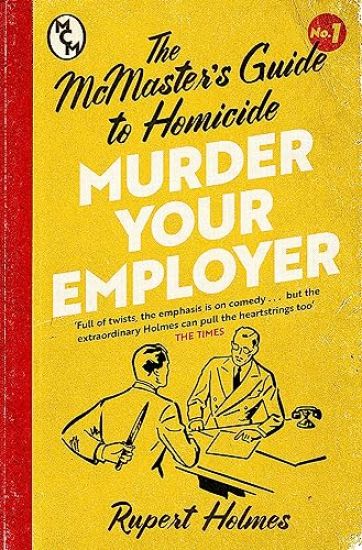
Murder Your Employer: The McMasters Guide to Homicide
Rupert Holmes
HEADLINE PUBLISHING GROUP
2023
pokkari
'Full of twists, the emphasis is on comedy . . . but the extraordinary Holmes can pull the heartstrings too.' THE TIMESThe McMasters Conservatory for the Applied Arts - a luxurious, clandestine college dedicated to the fine art of murder where earnest students study how best to "delete" their most deserving victim.Who hasn't wondered for a split second what the world would be like the object of your affliction ceased to exist? But then you've probably never heard of The McMasters Conservatory, dedicated to the consummate execution of the homicidal arts. To gain admission, a student must have an ethical reason for erasing someone who deeply deserves a fate no worse (nor better) than death.The campus of this "Poison Ivy League" college-its location unknown to even those who study there-is where you might find yourself the practice target of a classmate...and where one's mandatory graduation thesis is getting away with the perfect murder of someone whose death will make the world a much better place to live.Prepare for an education you'll never forget. A delightful mix of witty wordplay, breathtaking twists and genuine intrigue, Murder Your Employer will gain you admission into a wholly original world, cocooned within the most entertaining book about well-intentioned would-be murderers you'll ever read.'A case study in the droll amusements of homicide, Rupert Holmes's send-up of higher education and even higher crimes and misdemeanors will keep you up at night-alternately turning pages and checking to make sure the front door is locked.' Gregory Maguire, author of Wicked'With dry humor and an eye for hidden clues, Rupert Holmes imagines a secret Hogwarts-like school that teaches the fine art of pulling off the perfect (and perfectly deserved) murder. An utterly creative and deliciously diabolical read.' Alafair Burke, New York Times bestselling author'A college with a degree in Homicide? Only Rupert Holmes could make murder laugh-out-loud funny. This book isn't clever-it's fiendishly clever. And the twists and tricks and endless surprises make me want to sign up for another semester!' R.L. Stine, author of Goosebumps and Fear Street