Kirjojen hintavertailu. Mukana 11 627 670 kirjaa ja 12 kauppaa.

Kirjahaku

Etsi kirjoja tekijän nimen, kirjan nimen tai ISBN:n perusteella.

1000 tulosta hakusanalla Stephan Drake

Beneking: Booklet with piano scores / sheet music of 10 Valses melancoliques, 7 Preludes fantaisies, 3 Dances on icy waters and
Stephan Beneking, composer, is based in Berlin, Germany. Beneking s orginal compositions are in neo-classical, melodic style for piano solo. His repertoire comprises more than 300 piano works so far and his music is being played by hobby and professional pianists in many countries. All scores/sheet music can be downloaded for free on www.beneking.com to make the music available to all interested pianists. The unique melodies and melancholy in his pieces attract listeners all over the world, even comparing him with the likes of Chopin, Schuman and Schubert. Pianists appreciate the sudden changes, little surprises and sparkling creativity, that make the pieces enjoyable to play. Beneking s style of "pure piano" means literally "crafted" piano works, that concentrate on the pure melody aspect, while the omission of any tempo, dynamics and pedal markings gives every pianist the possiblity to develop his/her own understanding of the work, thus making every single interpretation an unique piece of art, joint product of composer and pianist. His most famous works are the series of 10 Valses melancoliques, of which the"Valse melancolique No. VIII - le desir eternel" won the international Free-Scores Classical Piano contest in 2013. Many of his works are called "R ves" (dreams) or "Petits R ves" (dreamlets, little dreams) and refer to relatively short musical ideas, even miniatures, like a short musical "breath". Other works were inspired by Nature (Printemps, Little spring, The last flight of the Cranes, Dances on icy waters), Poetry and Myths (Melusine, Valkyries), the Death (Sprudelnder Geist in memory of his father) or the dramatic events of the Shoah (Petr Ginz, Kristallnacht). Beneking mainly composes in series of works with a certain theme or connection, often in combination with a compositional challenge (e.g. compositions for one hand alone or piano works on black or white keys only).
24 Petits Rêves - Booklet with piano scores / sheet music: 24 Petits Rêves - Booklet with piano scores / sheet music
24 piano dreams ranging from B flat minor to A major as a musical journey through the chromatic scale. A colourful modern classical collection of pure piano pieces. Composed in 1997 Stephan Beneking, composer, is based in Berlin, Germany. Beneking s orginal compositions are in neo-classical, melodic style for piano solo. His repertoire comprises more than 350 piano works so far and his music is being played by hobby and professional pianists in many countries. All scores/sheet music can be downloaded for free on www.beneking.com to make the music available to all interested pianists. The unique melodies and melancholy in his pieces attract listeners all over the world, even comparing him with the likes of Chopin, Schuman and Schubert. Pianists appreciate the sudden changes, little surprises and sparkling creativity, that make the pieces enjoyable to play. Beneking s style of "pure piano" means literally "crafted" piano works, that concentrate on the pure melody aspect, while the omission of any tempo, dynamics and pedal markings gives every pianist the possiblity to develop his/her own understanding of the work, thus making every single interpretation an unique piece of art, joint product of composer and pianist. His most famous works are the series of 10 Valses melancoliques, of which the"Valse melancolique No. VIII - le desir eternel" won the international Free-Scores Classical Piano contest in 2013. Many of his works are called "R ves" (dreams) or "Petits R ves" (dreamlets, little dreams) and refer to relatively short musical ideas, even miniatures, like a short musical "breath". Other works were inspired by Nature (Printemps, Little spring, The last flight of the Cranes, Dances on icy waters), Poetry and Myths (Melusine, Valkyries), the Death (Sprudelnder Geist in memory of his father) or the dramatic events of the Shoah (Petr Ginz, Kristallnacht). Beneking mainly composes in series of works with a certain theme or connection, often in combination with a compositional challenge (e.g. compositions for one hand alone or piano works on black or white keys only).
Beneking: Booklet with piano scores / sheet music of 18 Preludes for one hand: Beneking: Booklet with piano scores / sheet music
Stephan Beneking, composer, is based in Berlin, Germany. Beneking s orginal compositions are in neo-classical, melodic style for piano solo. His repertoire comprises more than 350 piano works so far and his music is being played by hobby and professional pianists in many countries. All scores/sheet music can be downloaded for free on www.beneking.com to make the music available to all interested pianists. The unique melodies and melancholy in his pieces attract listeners all over the world, even comparing him with the likes of Chopin, Schuman and Schubert. Pianists appreciate the sudden changes, little surprises and sparkling creativity, that make the pieces enjoyable to play. Beneking s style of "pure piano" means literally "crafted" piano works, that concentrate on the pure melody aspect, while the omission of any tempo, dynamics and pedal markings gives every pianist the possiblity to develop his/her own understanding of the work, thus making every single interpretation an unique piece of art, joint product of composer and pianist. His most famous works are the series of 10 Valses melancoliques, of which the"Valse melancolique No. VIII - le desir eternel" won the international Free-Scores Classical Piano contest in 2013. Many of his works are called "R ves" (dreams) or "Petits R ves" (dreamlets, little dreams) and refer to relatively short musical ideas, even miniatures, like a short musical "breath". Other works were inspired by Nature (Printemps, Little spring, The last flight of the Cranes, Dances on icy waters), Poetry and Myths (Melusine, Valkyries), the Death (Sprudelnder Geist in memory of his father) or the dramatic events of the Shoah (Petr Ginz, Kristallnacht). Beneking mainly composes in series of works with a certain theme or connection, often in combination with a compositional challenge (e.g. compositions for one hand alone or piano works on black or white keys only).
Beneking: Booklet with piano scores / sheet music of 12 Valkyries: Beneking: Booklet with piano scores / sheet music of 12 Valkyries
Stephan Beneking, composer, is based in Berlin, Germany. Beneking s orginal compositions are in neo-classical, melodic style for piano solo. His repertoire comprises more than 350 piano works so far and his music is being played by hobby and professional pianists in many countries. All scores/sheet music can be downloaded for free on www.beneking.com to make the music available to all interested pianists. The unique melodies and melancholy in his pieces attract listeners all over the world, even comparing him with the likes of Chopin, Schuman and Schubert. Pianists appreciate the sudden changes, little surprises and sparkling creativity, that make the pieces enjoyable to play. Beneking s style of "pure piano" means literally "crafted" piano works, that concentrate on the pure melody aspect, while the omission of any tempo, dynamics and pedal markings gives every pianist the possiblity to develop his/her own understanding of the work, thus making every single interpretation an unique piece of art, joint product of composer and pianist. His most famous works are the series of 10 Valses melancoliques, of which the"Valse melancolique No. VIII - le desir eternel" won the international Free-Scores Classical Piano contest in 2013. Many of his works are called "R ves" (dreams) or "Petits R ves" (dreamlets, little dreams) and refer to relatively short musical ideas, even miniatures, like a short musical "breath". Other works were inspired by Nature (Printemps, Little spring, The last flight of the Cranes, Dances on icy waters), Poetry and Myths (Melusine, Valkyries), the Death (Sprudelnder Geist in memory of his father) or the dramatic events of the Shoah (Petr Ginz, Kristallnacht). Beneking mainly composes in series of works with a certain theme or connection, often in combination with a compositional challenge (e.g. compositions for one hand alone or piano works on black or white keys only).
Beneking: Elegies et Phantaisies - Booklet with piano scores / sheet music: Beneking: Elegies et Phantaisies - Booklet with piano scores / sheet music
Stephan Beneking, composer, is based in Berlin, Germany. Beneking s orginal compositions are in neo-classical, melodic style for piano solo. His repertoire comprises more than 350 piano works so far and his music is being played by hobby and professional pianists in many countries. All scores/sheet music can be downloaded for free on www.beneking.com to make the music available to all interested pianists. The unique melodies and melancholy in his pieces attract listeners all over the world, even comparing him with the likes of Chopin, Schuman and Schubert. Pianists appreciate the sudden changes, little surprises and sparkling creativity, that make the pieces enjoyable to play. Beneking s style of "pure piano" means literally "crafted" piano works, that concentrate on the pure melody aspect, while the omission of any tempo, dynamics and pedal markings gives every pianist the possiblity to develop his/her own understanding of the work, thus making every single interpretation an unique piece of art, joint product of composer and pianist. His most famous works are the series of 10 Valses melancoliques, of which the "Valse melancolique No. VIII - le desir eternel" won the international Free-Scores Classical Piano contest in 2013. Many of his works are called "R ves" (dreams) or "Petits R ves" (dreamlets, little dreams) and refer to relatively short musical ideas, even miniatures, like a short musical "breath". Other works were inspired by Nature (Printemps, Little spring, The last flight of the Cranes, Dances on icy waters), Poetry and Myths (Melusine, Valkyries), the Death (Sprudelnder Geist in memory of his father) or the dramatic events of the Shoah (Petr Ginz, Kristallnacht). Beneking mainly composes in series of works with a certain theme or connection, often in combination with a compositional challenge (e.g. compositions for one hand alone or piano works on black or white keys only).
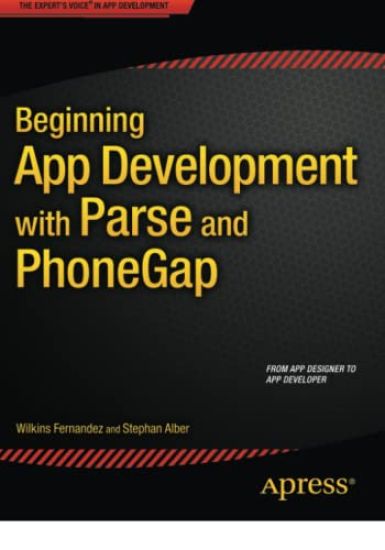
Beginning App Development with Parse and PhoneGap

Beginning App Development with Parse and PhoneGap

Stephan Alber; Wilkins Fernandez

APress
2015
nidottu
Beginning App Development with Parse and PhoneGap teaches you how to start app development with Parse and PhoneGap: free and open source software. Using the building block languages of the web--HTML, JavaScript, and CSS--you’ll be on your way to creating a fully working product with minimal effort as fast as possible. With over 25 years' of combined experience, the authors make daunting tasks seem trivial. There is no book on the market that can take you from designer to developer faster.Using Facebook’s Parse as backend service, and Adobe’s PhoneGap (or Cordova) as a mobile development framework, building a highly customizable application is easier than you can imagine. A basic understanding of JavaScript, HTML, and CSS is not required, but it will help you pick up concepts faster.This book is geared toward a designer who wants to explore the world of application development. If you do not know anything about design, that’s OK! We willwalk you through step by step on how to build your first native iOS or Android app in the fastest and easiest way possible. Using free and open source software, this book will get you up and running quickly and efficiently--start using Parse and PhoneGap today with this key title.
Clean C++20

Clean C++20

Stephan Roth

APress
2021
nidottu
Write maintainable, extensible, and durable software with modern C++. This book, updated for the recently released C++20 standard, is a must for every developer, software architect, or team leader who is interested in well-crafted C++ code, and thus also wants to save development costs. If you want to teach yourself about writing better C++ code, Clean C++20 is exactly what you need. It is written for C++ developers of all skill levels and shows by example how to write understandable, flexible, maintainable, and efficient C++ code. Even if you are a seasoned C++ developer, there are nuggets and data points in this book that you will find useful in your work.If you don't take care with your codebase, you can produce a large, messy, and unmaintainable beast in any programming language. However, C++ projects in particular are prone to get messy and tend to slip into a maintenance nightmare. There is lots of C++ code out there that looksas if it was written in the 1980s, completely ignoring principles and practices of well-written and modern C++.It seems that C++ developers have been forgotten by those who preach Software Craftsmanship and Clean Code principles. The web is full of C++ code examples that may be very fast and highly optimized, but whose developers have completely ignored elementary principles of good design and well-written code. This book will explain how to avoid this and how to get the most out of your C++ code. You'll find your coding becomes more efficient and, importantly, more fun.What You Will LearnGain sound principles and rules for clean coding in C++Carry out test-driven development (TDD)Better modularize your C++ code baseDiscover and apply C++ design patterns and idiomsWrite C++ code in both object-oriented and functional programming stylesWho This Book Is ForAny C++ developer or software engineer with an interest in producing better code.
Microsoft Conversational AI Platform for Developers
Build a chatbot using the Microsoft Conversational AI platform. This book will teach you, step by step, how to save time and money by including chatbots in your enterprise's strategy. You will learn how to be proficient at every phase of development, from collaboration on a chatbot in an end-to-end scenario, to the first mock-up phase, and on through to the deployment and evaluation phases.Microsoft built a cloud service ecosystem for running artificial intelligence workloads in public cloud scenarios and a robust AI platform that offers a broad range of services targeting conversational artificial intelligence solutions such as chatbots.Building a chatbot requires not just developer coding skills but special considerations, including input from business stakeholders such as domain matter experts and power users. You will learn by example how to use a great set of tools and services to bridge the gap between business and engineering.You will learn how to successfully morph business requirements into actionable IT and engineering requirements. You will learn about Bot Framework Composer, which allows power users to initiate the building of a chatbot that can then be handed over to the development team to add capabilities through code. Coverage is given to the process of sharing implementation tasks and workloads between power users, who are using a low-code or no-code approach, and developers, who are building out the enhanced features for the chatbot.What You Will LearnUnderstand Microsoft’s comprehensive AI ecosystem and its services and solutionsRecognize which solutions and services should be applied in each business scenarioDiscover no-code/low-code approaches for building chatbotsDevelop chatbots using the conversational AI stackAlign business and development for improved chatbot outcomes and reduced time-to-marketWho This Book Is ForDevelopers and power users who want to build chatbots. An understanding of the core principles of writing code (.NET or JavaScript) for modern web applications is expected.
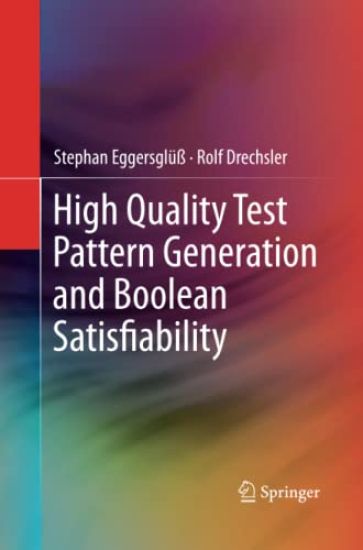
High Quality Test Pattern Generation and Boolean Satisfiability

High Quality Test Pattern Generation and Boolean Satisfiability

Stephan Eggersglüß; Rolf Drechsler

Springer-Verlag New York Inc.
2014
nidottu
This book provides an overview of automatic test pattern generation (ATPG) and introduces novel techniques to complement classical ATPG, based on Boolean Satisfiability (SAT). A fast and highly fault efficient SAT-based ATPG framework is presented which is also able to generate high-quality delay tests such as robust path delay tests, as well as tests with long propagation paths to detect small delay defects. The aim of the techniques and methodologies presented in this book is to improve SAT-based ATPG, in order to make it applicable in industrial practice. Readers will learn to improve the performance and robustness of the overall test generation process, so that the ATPG algorithm reliably will generate test patterns for most targeted faults in acceptable run time to meet the high fault coverage demands of industry. The techniques and improvements presented in this book provide the following advantages: Provides a comprehensive introduction to test generation and Boolean Satisfiability (SAT); Describes a highly fault efficient SAT-based ATPG framework; Introduces circuit-oriented SAT solving techniques, which make use of structural information and are able to accelerate the search process significantly;Provides SAT formulations for the prevalent delay faults models, in addition to the classical stuck-at fault model;Includes an industrial perspective on the state-of-the-art in the testing, along with SAT; two topics typically distinguished from each other.
Beneking: Booklet with piano scores of "The Swans" - 12 Valses Melancoliques: Beneking: Booklet with piano scores of "The Swans"
Stephan Beneking, award-winning composer, is based in Berlin, Germany. Beneking s orginal compositions are in neo-classical, melodic style for piano solo. His repertoire comprises more than 350 piano works so far and his music is being played by hobby and professional pianists in many countries. All scores/sheet music can be downloaded for free on www.beneking.com to make the music available to all interested pianists. Contact: [email protected] The unique melodies and melancholy in his pieces attract listeners all over the world, even comparing him with the likes of Chopin, Schuman and Schubert. Pianists appreciate the sudden changes, little surprises and sparkling creativity, that make the pieces enjoyable to play. Beneking s style of "pure piano" means literally "crafted" piano works, that concentrate on the pure melody aspect, while the omission of any tempo, dynamics and pedal markings gives every pianist the possiblity to develop his/her own understanding of the work, thus making every single interpretation an unique piece of art, joint product of composer and pianist. His most famous works are the series of 10 Valses melancoliques, of which the"Valse melancolique No. VIII - le desir eternel" won the international Free-Scores Classical Piano contest in 2013. Many of his works are called "R ves" (dreams) or "Petits R ves" (dreamlets, little dreams) and refer to relatively short musical ideas, even miniatures, like a short musical "breath". Other works were inspired by Nature (Printemps, Little spring, The last flight of the Cranes, Dances on icy waters), Poetry and Myths (Melusine, Valkyries), the Death (Sprudelnder Geist in memory of his father) or the dramatic events of the Shoah (Holocaust Remembrance Suite with Petr Ginz, Kristallnacht, The Kiss and other works). Beneking mainly composes in series of works with a certain theme or connection, often in combination with a compositional challenge (e.g. compositions for one hand alone or piano works on black or white keys only).
Beneking: Booklet with piano scores of 10 Nocturnes-"Nachtlieder der Toteninsel" Beneking: Booklet with piano scores of 10 Noctu
Stephan Beneking, award-winning composer, is based in Berlin, Germany. Beneking s original compositions are in neoclassical, classical, romantic, melodic and contemporary modern classical style for piano solo. His repertoire comprises more than 350 piano works so far and his music is being played by hobby and professional pianists in many countries. All scores/sheet music can be downloaded for free on http: //www.beneking.com to make the music available to all interested pianists. The unique melodies and melancholy in his pieces attract listeners all over the world, even comparing him with the likes of Chopin, Schuman and Schubert. Pianists appreciate the sudden changes, little surprises and sparkling creativity, that make the pieces enjoyable to play. Beneking s style of "pure piano" means literally "crafted" piano works, that concentrate on the pure melody aspect, while the omission of any tempo, dynamics and pedal markings gives every pianist the possiblity to develop his/her own understanding of the work, thus making every single interpretation an unique piece of art, joint product of composer and pianist. His most famous works so far are the series of 10 Valses melancoliques, of which the "Valse melancolique No. VIII - le desir eternel" won the 1st Prize in the international Free-Scores Classical Piano contest in 2013. Many of his works are called "R ves" (dreams) or "Petits R ves" (dreamlets, little dreams) and refer to relatively short musical ideas, even miniatures, like a short musical "breath". Other works were inspired by Nature (Printemps, Little spring, The last flight of the Cranes, Dances on icy waters), Poetry and Myths (Melusine, Valkyries), the Death (Sprudelnder Geist in memory of his father) or the dramatic events of the Shoah (Holocaust Remembrance Suite with Petr Ginz, Kristallnacht, The Kiss and other works). Beneking mainly composes in series of works with a certain theme or connection, often in combination with a compositional challenge (e.g. compositions for one hand alone, piano works on black or white keys only or "La grande Petitesse").
Embracing Our Finitude

Embracing Our Finitude

Stephan Kampowski

Cascade Books
2018
sidottu
Memento mori--remember death--this is how the medieval monks exhort us. Our life, given in birth and taken by death, is radically marked by finitude, which can be a source of great fear and anguish. Our finitude, however, does not in itself need to be something negative. It confronts us with the question of our life's meaning and spurs us on to treasure our days. Our contingency, as evidenced in our birth and death, reminds us that we have not made ourselves and that there is nothing necessary about the marvelous fact that we exist. Particularly from a Judeo-Christian perspective, embracing our finitude will mean gratefully accepting life as a completely gratuitous gift and living one's days informed by a sense of this gratitude. ""Kampowski is a thinker of rare acuity. Indebted to Hannah Arendt, his work consistently instructs. Here we find wisdom on natality and gratitude, the faith community's 'common sense, ' human action as ordered to interpersonal communion, marriage, and cultural diversity, the marital bond and human promising, the danger of loving humanity rather than humans, the nature and claims of the kingdom of God, and more. Every student of human and Christian flourishing must read this book."" --Matthew Levering, Mundelein Seminary ""Embracing our Finitude draws together themes in both classical and contemporary philosophy, including Continental and Anglophone philosophy, to present a positive account of human finitude. . . . This book should be read by every humanities student who is searching for something different from the sterile narcissism of our Western anti-culture. It is beautifully written, avoids academic jargon, and is accessible to anyone with an interest in truth, beauty, and goodness."" --Tracey Rowland, University of Notre Dame, Australia ""What does it mean to be born and to have to die? These brilliant essays in Christian anthropology outline the path of an authentic wisdom wherein the human person, consenting to his finitude, assumes with gratitude the gifts received and the relations of dependence which they involve. When the desire of individuals for absolute independence engenders a mortal loneliness and undoes communities, Kampowski opens the way for a firm, rational, and Christian hope."" --Serge-Thomas Bonino, General Secretary of the International Theological Commission Stephan Kampowski is Professor of Philosophical Anthropology at the Pontifical John Paul II Theological Institute for the Sciences of Marriage and Family in Rome. He is the author of Arendt, Augustine and the New Beginning (2008) and A Greater Freedom (2013).