Kirjojen hintavertailu. Mukana 12 016 292 kirjaa ja 12 kauppaa.

Kirjahaku

Etsi kirjoja tekijän nimen, kirjan nimen tai ISBN:n perusteella.

1000 tulosta hakusanalla Stephen Collier

The monster and other stories. By: Stephen Crane.: The Monster is an 1898 novella by American author Stephen Crane (1871-1900). The story takes place
The Monster is an 1898 novella by American author Stephen Crane (1871-1900). The story takes place in the small, fictional town of Whilomville, New York. An African-American coachman named Henry Johnson, who is employed by the town's physician, Dr. Trescott, becomes horribly disfigured after he saves Trescott's son from a fire. When Henry is branded a "monster" by the town's residents, Trescott vows to shelter and care for him, resulting in his family's exclusion from the community. The novella reflects upon the 19th-century social divide and ethnic tensions in America. The fictional town of Whilomville, which is used in 14 other Crane stories, was based on Port Jervis, New York, where Crane lived with his family for a few years during his youth. It is thought that he took inspiration from several local men who were similarly disfigured, although modern critics have made numerous connections between the story and the 1892 lynching in Port Jervis of an African-American man named Robert Lewis. A study of prejudice, fear, and isolation in a rather small town, the novella was first published in Harper's Magazine in August 1898. A year later, it was included in The Monster and Other Stories-the last collection of Crane's work to be published during his lifetime. Written in a more exact and less dramatic style than two of his previous major works (Maggie: A Girl of the Streets and The Red Badge of Courage), The Monster differs from the other Whilomville stories in its scope and length. Its themes include the paradoxical study of monstrosity and deformity, as well as race and tolerance. While the novella and collection received mixed reviews from contemporary critics, The Monster is now considered one of Crane's best works. PLOT: After being admonished by his father, Dr. Ned Trescott, for damaging a peony while playing in his family's yard, young Jimmie Trescott visits his family's coachman, Henry Johnson. Henry, who is described as "a very handsome negro", "known to be a light, a weight, and an eminence in the suburb of the town", 20] is friendly toward Jimmie. Later that evening Henry dresses smartly and saunters through town-inciting catcalls from friends and ridicule from the local white men-on his way to call on the young Bella Farragut, who is extremely taken with him. That same evening, a large crowd gathers in the park to hear a band play. Suddenly, the nearby factory whistle blows to alert the townspeople of a fire in the second district of the town; men gather hose-carts and head toward the blaze that is quickly spreading throughout Dr. Trescott's house. Mrs. Trescott is saved by a neighbor, but cannot locate Jimmie, who is trapped inside. Henry appears from the crowd and rushes into the house in search of the boy, finding him unharmed in his bedroom. Unable to retreat the way he came, Henry carries Jimmie, wrapped in a blanket, to the doctor's laboratory and the hidden stairway that leads outside. He discovers the fire has blocked this way out as well and collapses beside Dr. Trescott's desk. A row of nearby jars shatters from the heat, spilling molten chemicals upon Henry's upturned face..... Stephen Crane (November 1, 1871 - June 5, 1900) was an American poet, novelist, and short story writer. Prolific throughout his short life, he wrote notable works in the Realist tradition as well as early examples of American Naturalism and Impressionism. He is recognized by modern critics as one of the most innovative writers of his generation....
The open boat, and other tales of adventure. By: Stephen Crane: Short story

The open boat, and other tales of adventure. By: Stephen Crane: Short story

Stephen Crane

Createspace Independent Publishing Platform
2017
nidottu
"The Open Boat" is a short story by American author Stephen Crane (1871-1900). First published in 1897, it was based on Crane's experience of surviving a shipwreck off the coast of Florida earlier that year while traveling to Cuba to work as a newspaper correspondent. Crane was stranded at sea for thirty hours when his ship, the SS Commodore, sank after hitting a sandbar. He and three other men were forced to navigate their way to shore in a small boat; one of the men, an oiler named Billie Higgins, drowned after the boat overturned. Crane's personal account of the shipwreck and the men's survival, titled "Stephen Crane's Own Story", was first published a few days after his rescue. Crane subsequently adapted his report into narrative form, and the resulting short story "The Open Boat" was published in Scribner's Magazine. The story is told from the point of view of an anonymous correspondent, with Crane as the implied author, the action closely resembles the author's experiences after the shipwreck. A volume titled The Open Boat and Other Tales of Adventure was published in the United States in 1898; an edition entitled The Open Boat and Other Stories was published simultaneously in England. Praised for its innovation by contemporary critics, the story is considered an exemplary work of literary Naturalism, and is one of the most frequently discussed works in Crane's canon. It is notable for its use of imagery, irony, symbolism, and the exploration of such themes as survival, solidarity, and the conflict between man and nature. H. G. Wells considered "The Open Boat" to be "beyond all question, the crown of all Crane's] work" PLOT: "The Open Boat" is divided into seven sections, each told mainly from the point of view of the correspondent, based upon Crane himself. The first part introduces the four characters-the correspondent, a condescending observer detached from the rest of the group; 15] the captain, who is injured and morose at having lost his ship, yet capable of leadership; the cook, fat and comical, but optimistic that they will be rescued; and the oiler, Billie, who is physically the strongest, and the only one in the story referred to by name. The four are survivors of a shipwreck, which occurred before the beginning of the story, and are drifting at sea in a small dinghy. In the following four sections, the moods of the men fluctuate from anger at their desperate situation, to a growing empathy for one another and the sudden realization that nature is indifferent to their fates. The men become fatigued and bicker with one another; nevertheless, the oiler and the correspondent take turns rowing toward shore, while the cook bails water to keep the boat afloat. When they see a lighthouse on the horizon, their hope is tempered with the realization of the danger of trying to reach it. Their hopes dwindle further when, after seeing a man waving from shore, and what may or may not be another boat, they fail to make contact. The correspondent and the oiler continue to take turns rowing, while the others sleep fitfully during the night. The correspondent then notices a shark swimming near the boat, but he does not seem to be bothered by it as one would expect. In the penultimate chapter, the correspondent wearily recalls a verse from the poem "Bingen on the Rhine" by Caroline Norton, in which a "soldier of the Legion" dies far from home.... Stephen Crane (November 1, 1871 - June 5, 1900) was an American poet, novelist, and short story writer. Prolific throughout his short life, he wrote notable works in the Realist tradition as well as early examples of American Naturalism and Impressionism. He is recognized by modern critics as one of the most innovative writers of his generation.
The Third Violet (1867). By: Stephen Crane: Novella (Original Classics)

The Third Violet (1867). By: Stephen Crane: Novella (Original Classics)

Stephen Crane

Createspace Independent Publishing Platform
2017
nidottu
Stephen Crane (November 1, 1871 - June 5, 1900) was an American poet, novelist, and short story writer. Prolific throughout his short life, he wrote notable works in the Realist tradition as well as early examples of American Naturalism and Impressionism. He is recognized by modern critics as one of the most innovative writers of his generation. The ninth surviving child of Protestant Methodist parents, Crane began writing at the age of four and had published several articles by the age of 16. Having little interest in university studies, he left college in 1891 to work as a reporter and writer. Crane's first novel was the 1893 Bowery tale Maggie: A Girl of the Streets, generally considered by critics to be the first work of American literary Naturalism. He won international acclaim in 1895 for his Civil War novel The Red Badge of Courage, which he wrote without having any battle experience. In 1896, Crane endured a highly publicized scandal after appearing as a witness in the trial of a suspected prostitute, an acquaintance named Dora Clark. Late that year he accepted an offer to travel to Cuba as a war correspondent. As he waited in Jacksonville, Florida, for passage, he met Cora Taylor, with whom he began a lasting relationship. En route to Cuba, Crane's vessel the SS Commodore, sank off the coast of Florida, leaving him and others adrift for 30 hours in a dinghy. 1] Crane described the ordeal in "The Open Boat". During the final years of his life, he covered conflicts in Greece (accompanied by Cora, recognized as the first woman war correspondent) and later lived in England with her. He was befriended by writers such as Joseph Conrad and H. G. Wells. Plagued by financial difficulties and ill health, Crane died of tuberculosis in a Black Forest sanatorium in Germany at the age of 28. At the time of his death, Crane was considered an important figure in American literature. After he was nearly forgotten for two decades, critics revived interest in his life and work. Crane's writing is characterized by vivid intensity, distinctive dialects, and irony. Common themes involve fear, spiritual crises and social isolation. Although recognized primarily for The Red Badge of Courage, which has become an American classic, Crane is also known for his poetry, journalism, and short stories such as "The Open Boat", "The Blue Hotel", "The Bride Comes to Yellow Sky", and The Monster. His writing made a deep impression on 20th-century writers, most prominent among them Ernest Hemingway, and is thought to have inspired the Modernists and the Imagists.
Stephen Curry

Stephen Curry

Steve James

Createspace Independent Publishing Platform
2017
pokkari
Do you wish you could shoot a basketball like a future Hall of Fame superstar? Discover the insider secrets, training techniques, and daily workouts of one of the NBA's sharpest shooters. Are you embarrassed to show off your shot on the basketball court? Are you fed up with time-consuming drills that haven't improved your game? Author Steve James spent his youth analyzing professional athletes and documenting the practices of successful players. In this comprehensive biography, James reveals all of Stephen Curry's incredible shooting methods, training workouts, and specific practice programs. In Stephen Curry: A Sharpshooter's Journey to the NBA & Beyond, you'll discover the exact methods used by NBA superstar Stephen Curry that will show you how to shoot with deadly accuracy. James' insightful basketball biography dives deep into Curry's workouts and drills, setting out a blueprint for you to follow and get incredible results.In Stephen Curry, you'll discover: A comprehensive analysis of Curry's life and disciplines including his motivational rituals Exactly how many shots you need to take per day to develop pro skillsCurry's secret training regimens he uses to continue improving his gameThe famous dribbling method that sets Curry apart from all othersThe insider secrets that have allowed Curry to dominate the game and much, much more Stephen Curry is a comprehensive unpacking of the daily disciplines, workout secrets, and basketball sharpshooting skills that make Curry the NBA showstopper he is today. If you like practical techniques, easy-to-understand instructions, and following the exact training methods used by professional athletes, then you'll love James' brilliant biography.Buy Stephen Curry to start draining more threes today
Stephen and the Beetle

Stephen and the Beetle

Jorge Lujn

Groundwood Books Ltd ,Canada
2012
sidottu
When Stephen spots a beetle he takes off his shoe and raises his arm, ready to strike… but then he has second thoughts. He lays his head down on the ground and the beetle walks right up to him. At the last moment the beetle turns aside and each can go on with the day, having avoided the worst.In this very simple story Jorge Luján presents the kind of deep moral questions that can occur even in the smallest child's day. Chiara Carrer's very original etched and painted illustrations perfectly complement the story, and are in and of themselves beautiful works of art.
Stephen Decatur

Stephen Decatur

Robert J. Allison

University of Massachusetts Press
2007
nidottu
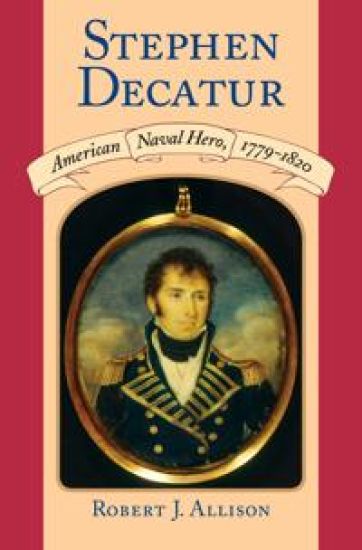
Born to an immigrant Philadelphia family in 1779, Stephen Decatur became at age twenty-five the youngest man ever to serve as a captain in the U.S. Navy. His intrepid heroism, leadership, and devotion to duty made him a perfect symbol of the aspirations of the growing nation. Leading men to victory in Tripoli, the War of 1812, and the Algerian war of 1815, and coining the phrase ""Our country, right or wrong,"" Decature created an enduring legend of bravery, celebrated in poetry, song, paintings, and the naming of dozens of towns - from Georgia to Alabama to Illinois. Decatur's friendships with James Madison, John Quincy Adams, and others made him a rising star in national politics. He and his wife Susan built an elegant home near the White House, which became a center of Washington society. The capital and the nation were shocked when Decatur was killed at the age of forty-one in a duel with a rival navy captain. Although he died prematurely, Decatur played a significant role in the shaping of the nation's identity at a time when the American people were deciding what kind of nation they would become.
Stephen Florida

Stephen Florida

Gabe Habash

Coffee House Press
2018
nidottu
Foxcatcher meets The Art of Fielding, Stephen Florida follows a wrestler in North Dakota during his senior season, when every practice, every match, is a step closer to greatness and a step further from sanity. Profane, manic, and tipping into the uncanny, it's a story of loneliness, obsession, and the drive to leave a mark.
Stephen Hartke Piano Album, Volume. 2: Piano Sonatas
(LKM Music). Grammy-winning composer Stephen Hartke is widely recognized as one of the leading voices of his generation whose work has been hailed for both its singularity of voice and the inclusive breadth of its inspiration. This second volume of his collected piano music brings together two very distinctive sonatas: Sonata for Solo Piano (1998) composed for and recorded by Vicki Ray on CRI records, and Sonata for Piano Four-Hands (2014), which was written for the piano duet team of Anna Plonsky and Orion Weiss.
Stephen King

Stephen King

Salem Press Inc
2010
sidottu
Stephen King has been terrorizing America ever since Carrie was published in 1974. For nearly forty years, he has fed our imaginations with a panoply of spooks and monsters, from telekinetic teenagers, vampires, and malevolent clowns to space aliens, crazed fans, haunted hotels, and our own psyches. Moreover, he is one of the country's most commercially successful writers: His books regularly shoot to the tops of best-seller lists, and in 2009 alone he earned an estimated $30 million. Yet for all of King's popular success, critics have long been hesitant to welcome him into the pantheon of American literature. Though the National Book Foundation awarded King its Medal for Distinguished Contribution to American Letters in 2003, critics such as Harold Bloom have continued to dismiss him as just another catalyst in "the shocking process of dumbing down our cultural life."Edited and with an introduction by Gary Hoppenstand, Professor of American Cultures at Michigan State University, this volume in the Critical Insights series brings together a variety of perspectives on King's contribution to American literature and popular culture. Hoppenstand's introduction situates King within the horror genre and American popular and literary fiction, and Nathaniel Rich of The Paris Review offers a writer's appreciation of King's fictive powers.A brief biography acquaints readers with the essential details of King's life, and a quartet of new essays helps them build a framework for in-depth study. Amy Palko describes how King has attempted to straddle the gap between popular fiction and serious literature, and Philip L. Simpson reviews King's popular and critical reception. Dominick Grace examines the metafictional elements of three King works, and Matthew J. Bolton demonstrates how Robert Browning and T. S. Eliot were sources of inspiration for King's Dark Tower series.Continuing the discussion is a selection of essays from the growing body of King criticism. Horror novelist Clive Barker meditates on King's imaginative abilities and his relation to the horror genre, and Michael R. Collings surveys King's fortunes among book reviewers, academics, and his peers and readers. Douglas E. Winter explores the tensions between fantasy and reality across King's work, and Heidi Strengel analyzes how American culture has shaped King's body of work. Through a series of close readings, Samuel Schuman makes a case for King's artistry, and Jonathan P. Davis turns his attention to King's particular brand of morality. Tony Magistrale links King to the American gothic and romance traditions, and James Egan offers an examination of King's dystopian attitude toward science and technology. Patrick McAleer analyzes the ending of King's Dark Tower series, and Tom Newhouse attends to King's teenaged characters and their revolts against the modern world. Edward J. Ingebretsen argues that, in his novels and short stories, King transmutes American culture's religious discourse into fictional horror. Finally, Mary Findley attempts to re-vision the film adaptation of Misery to cast it, along with The Shawshank Redemption and The Green Mile, as part of King's "prison film trilogy.
Stephen Hawking

Stephen Hawking

Larsen Kristine

Prometheus Books
2007
pokkari
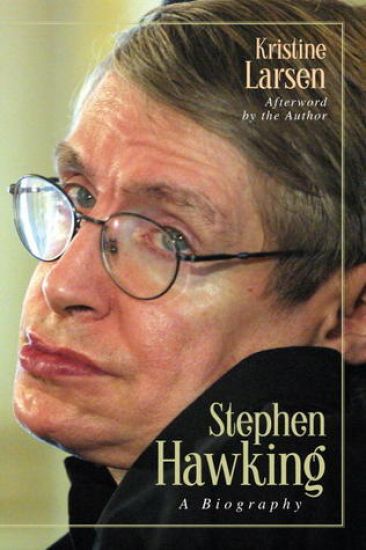
Stephen Hawking is arguably the most famous physicist since Albert Einstein. His decades-long struggle with ALS (Lou Gehrig's disease), combined with his singular brilliance as a cosmologist, has fascinated both the public and his colleagues in science. In this engagingly written biography, Kristine Larsen, a physicist and astronomer herself, presents a candid and insightful portrait of Hawking's personal and professional life. Avoiding the hero-worship sometimes found in popular works on Hawking, Larsen emphasizes that Hawking is first and foremost a scientist whose work has made significant contributions to our understanding of the nature and origins of the universe. Writing in nontechnical language for the lay reader, Larsen clearly explains Hawking's complex scientific accomplishments, while telling the story of his challenging life. Topics include Hawking's early lack of focus as a college student; the impact of ALS on his career and personal life; his groundbreaking work on radiating black holes; his later cutting-edge theories of black holes, cosmology, and the anthropic principle; the amazing publishing success of A Brief History of Time; and his status as a pop icon and spokesperson for the interplay of science and society. Larsen situates Hawking's sometimes-controversial work within the broader context of scientific peer review and public debate, and discusses his personal life with compassion, respect, and honesty.
Stephen Shore: Uncommon Places: The Complete Works
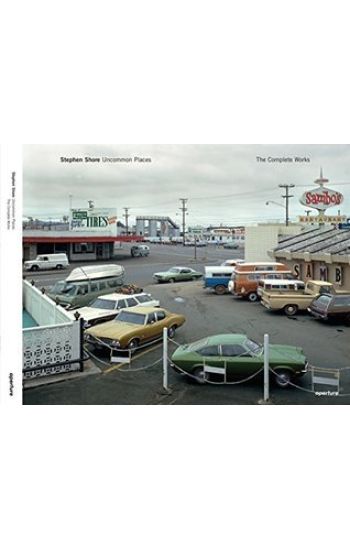
Originally published in 1982, Stephen Shore's legendary "Uncommon Places" has influenced more than a generation of photographers. Shore was among the first artists to take color beyond the domain of advertising and fashion photography, and his large-format color work on the American vernacular landscape inaugurated a vital photographic tradition. "Uncommon Places: The Complete Works," published by Aperture in 2005, presented a definitive collection of the landmark series, and in the span of a decade has become a contemporary classic. Now, for this lushly produced reissue, the artist has added nearly 20 rediscovered images and a statement explaining what it means to expand a classic series. Like Robert Frank and Walker Evans before him, Shore discovered a hitherto unarticulated vision of America via highway and camera. Approaching his subjects with cool objectivity, Shore retains precise systems of gestures in composition and light through which a hotel bedroom or a building on a side street assumes both an archetypal aura and an ambiguously personal importance. An essay by critic and curator Stephan Schmidt-Wulffen and a conversation with Shore by writer Lynne Tillman examine his methodology and elucidate his roots in Pop and Conceptual art. The texts are illustrated with reproductions from Shore's earlier series "American Surfaces" and "Amarillo: Tall in Texas."
Stephen Shore
Stephen Shore has had a significant influence on multiple generations of artists and photographers. Even for the youngest photographers working today, his work remains an ongoing and indisputable reference point. This book copublished with Fundación MAPFRE in conjunction with the first-ever retrospective exhibition, includes over 250 images that span Shore’s impressive and productive career. The images range from 1969 to 2013, with series such as Early Works, Amarillo, New York City, American Surfaces, and Uncommon Places, among others. Stephen Shore: Survey elucidates Shore’s contributions, as well as the historiographical interpretations of his work that have influenced photographic culture over the past four decades. Both the exhibition and the narrative of the catalogue are conceptualized around three particularly revealing aspects of Shore’s work, including his analysis of photographic and visual language, his topographical approach to the contemporary landscape, and his significant use of color within a photographic context.
Stephen Shore

Stephen Shore

Stephen Shore

Aperture
2017
sidottu
Stephen Shore’s Uncommon Places is indisputably a canonic body of work—a touchstone for those interested in photography and the American landscape. Remarkably, despite having been the focus of numerous shows and books, including the eponymous 1982 Aperture classic (expanded and reissued several times), this series of photographs has yet to be explored in its entirety. Over the past five years, Shore has scanned hundreds of negatives shot between 1973 and 1981. In this volume, Aperture has invited an international group of fifteen photographers, curators, authors, and cultural figures to select ten images apiece from this rarely seen cache of images. Each portfolio offers an idiosyncratic and revealing commentary on why this body of work continues to astound; how it has impacted the work of new generations of photography and the medium at large; and proposes new insight on Shore’s unique vision of America as transmuted in this totemic series.