Kirjojen hintavertailu. Mukana 11 244 527 kirjaa ja 12 kauppaa.

Kirjahaku

Etsi kirjoja tekijän nimen, kirjan nimen tai ISBN:n perusteella.

1000 tulosta hakusanalla Steven Cook

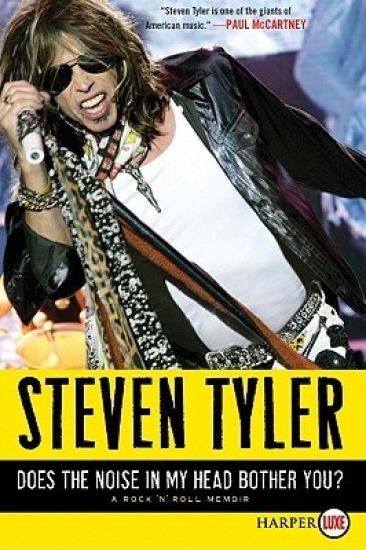
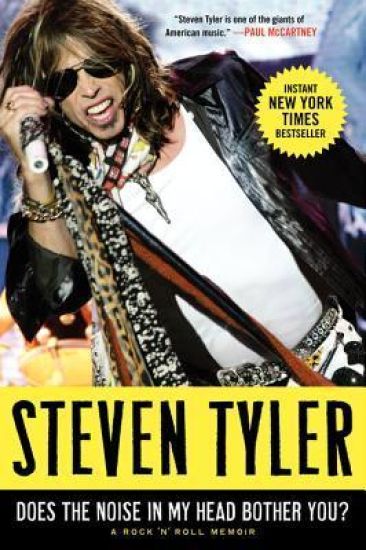
Does the Noise in My Head Bother You?: A Rock 'n' Roll Memoir
"Steven Tyler is one of the giants of American music, who's been influential for a whole generation of Rock 'n' Roll fans around the world. Long May He Rock "--Sir Paul McCartneyDoes the Noise in My Head Bother You? is the rock memoir to end all rock memoirs -- the straight-up, no-holds-barred story of Grammy Award-winning, Rock 'n' Roll Hall of Fame inductee, and all around superstar legend Steven Tyler, lead singer of Aerosmith (and celebrity judge on American Idol).The rock and roll epic that is Tyler's life begins with Tyler's youth in the Bronx, tracing his early music career and influences, his legendary partnership with Joe Perry, the meteoric rise, fall, and rise of Aerosmith over the last three decades, their music, Tyler's battles with substance abuse, his epic romantic life, his relationship with his four children (including actress Liv Tyler), life on the road and in the spotlight, the economics of the rock star business --and all the sex, drugs, and rock and roll that anyone could ask for.In Tyler's own words: "I've been mythicized, Mick-icized, eulogized and fooligized, I've been Cole-Portered and farmer's-daughtered, I've been Led Zepped and 12-stepped. I'm a rhyming fool and so cool that me, Fritz the Cat, and Mohair Sam are the baddest cats that am. I have so many outrageous stories, too many, and I'm gonna tell 'em all. All the unexpurgated, brain-jangling tales of debauchery, sex & drugs, transcendence & chemical dependence you will ever want to hear. And this is not just my take, this is the unbridled truth, the in-your-face, up-close and prodigious tale of Steven Tyler straight from the horse's lips."
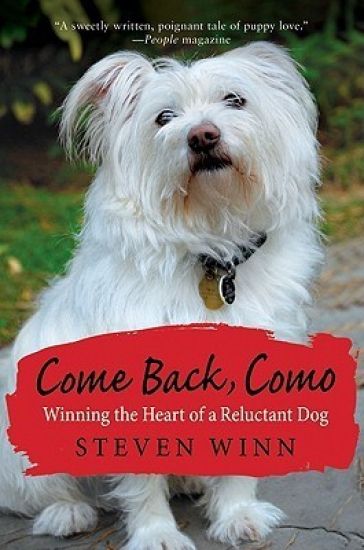
Come Back, Como: Winning The Heart Of A Reluctant Dog
Based on a beloved ten-part series in the San Francisco Chronicle, Come Back, Como is Steven Winn's tender and hilarious memoir of his uncommonly rich experience with a dog who wanted nothing whatsoever to do with him. With humor and pathos, Winn describes the exasperating but ultimately rewarding effects the pet had on his family, the ordeals he and his dog endured together, and the greatest lesson Como taught him: that loving a dog can somehow make us more human.
Does The Noise in My Head Bother You? LP
"Steven Tyler is one of the giants of American music, who's been influential for a whole generation of Rock 'n' Roll fans around the world. Long May He Rock "--Sir Paul McCartneyDoes the Noise in My Head Bother You? is the rock memoir to end all rock memoirs--the straight-up, no-holds-barred life of Grammy Award-winning, Rock 'n' Roll Hall of Fame inductee, and all around superstar legend Steven Tyler, lead singer of Aerosmith (and celebrity judge on American Idol). This is it--"the unbridled truth, the in-your-face, up-close and prodigious tale of Steven Tyler straight from the horse's lips"--as Tyler tells all, from the early years through the glory days, "All the unexpurgated, brain-jangling tales of debauchery, sex & drugs. and transcendence you will ever want to hear."
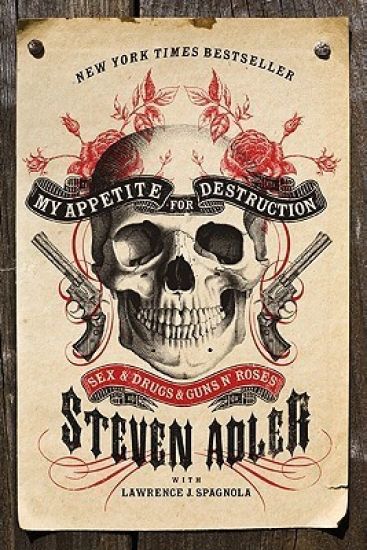
My Appetite for Destruction

My Appetite for Destruction

Steven Adler; Lawrence J. Spagnola

It Books
2011
nidottu
From Steven Adler, the original drummer for Guns N' Roses, comes My Appetite for Destruction, the inside story of GNR. Offering a different perspective from the bestselling Slash, Adler chronicles his life with the band, and own intense struggle with addiction, as seen on Dr. Drew's Celebrity Rehab and Sober House.
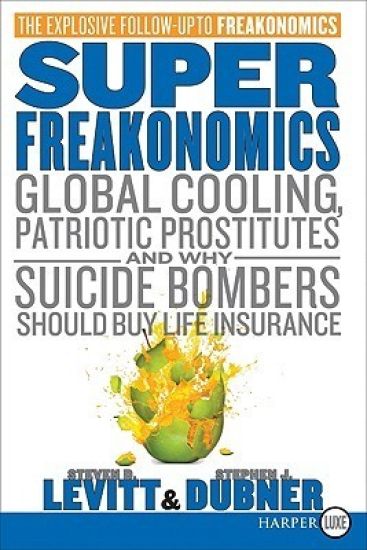
Superfreakonomics: Global Cooling, Patriotic Prostitutes, and Why Suicide Bombers Should Buy Life Insurance
Freakonomics lived on the New York Times bestseller list for an astonishing two years. Now authors Steven D. Levitt and Stephen J. Dubner return with more iconoclastic insights and observations in SuperFreakonomics--the long awaited follow-up to their New York Times Notable blockbuster. Based on revolutionary research and original studies SuperFreakonomics promises to once again challenge our view of the way the world really works.
Superfreakonomics: Global Cooling, Patriotic Prostitutes, and Why Suicide Bombers Should Buy Life Insurance
Freakonomics lived on the New York Times bestseller list for an astonishing two years. Now authors Steven D. Levitt and Stephen J. Dubner return with more iconoclastic insights and observations in SuperFreakonomics--the long awaited follow-up to their New York Times Notable blockbuster. Based on revolutionary research and original studies SuperFreakonomics promises to once again challenge our view of the way the world really works.
Superfreakonomics

Superfreakonomics

Steven D. Levitt; Stephen J. Dubner

Harper
2011
pokkari
Freakonomics lived on the New York Times bestseller list for an astonishing two years. Now authors Steven D. Levitt and Stephen J. Dubner return with more iconoclastic insights and observations in SuperFreakonomics--the long awaited follow-up to their New York Times Notable blockbuster. Based on revolutionary research and original studies SuperFreakonomics promises to once again challenge our view of the way the world really works.
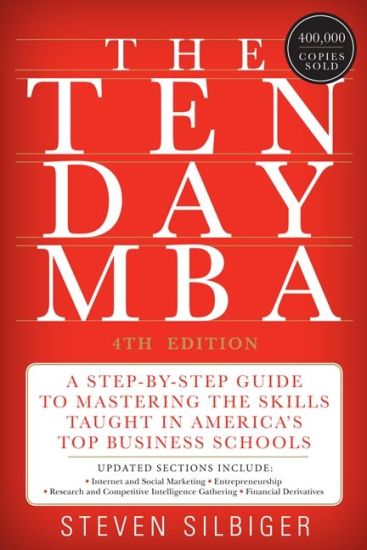
The Ten-Day MBA: A Step-By-Step Guide to Mastering the Skills Taught in America's Top Business Schools
Revised and updated to answer the challenges of a rapidly changing business world, the 4th edition of The Ten-Day MBA includes the latest topics taught at America's top business schools, from corporate ethics and compliance to financial planning and real estate to leadership and negotiation. With more than 400,000 copies sold around the world, this internationally acclaimed guide distills the lessons of the most popular business school courses taught at Harvard, Stanford, the University of Pennsylvania, the University of Chicago, Northwestern, and the University of Virginia. Author Steven A. Silbiger delivers research straight from the notes of real MBA students attending these top programs today--giving you the tools you need to get ahead in business and in life.
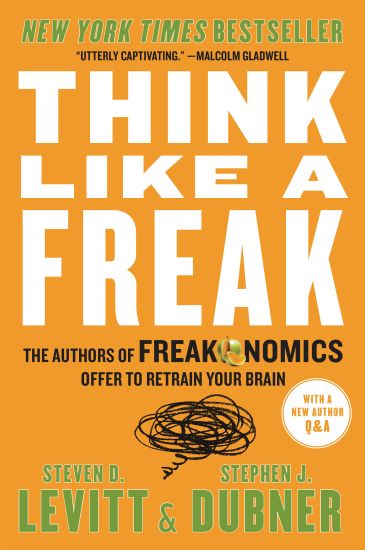
Think Like a Freak: The Authors of Freakonomics Offer to Retrain Your Brain

Think Like a Freak: The Authors of Freakonomics Offer to Retrain Your Brain

Steven D. Levitt; Stephen J. Dubner

William Morrow Company
2014
sidottu
The New York Times bestselling Freakonomics changed the way we see the world, exposing the hidden side of just about everything. Then came SuperFreakonomics, a documentary film, an award-winning podcast, and more.Now, with Think Like a Freak, Steven D. Levitt and Stephen J. Dubner have written their most revolutionary book yet. With their trademark blend of captivating storytelling and unconventional analysis, they take us inside their thought process and teach us all to think a bit more productively, more creatively, more rationally--to think, that is, like a Freak.Levitt and Dubner offer a blueprint for an entirely new way to solve problems, whether your interest lies in minor lifehacks or major global reforms. As always, no topic is off-limits. They range from business to philanthropy to sports to politics, all with the goal of retraining your brain. Along the way, you'll learn the secrets of a Japanese hot-dog-eating champion, the reason an Australian doctor swallowed a batch of dangerous bacteria, and why Nigerian e-mail scammers make a point of saying they're from Nigeria.Some of the steps toward thinking like a Freak: First, put away your moral compass--because it's hard to see a problem clearly if you've already decided what to do about it. Learn to say "I don't know"--for until you can admit what you don't yet know, it's virtually impossible to learn what you need to. Think like a child--because you'll come up with better ideas and ask better questions. Take a master class in incentives--because for better or worse, incentives rule our world. Learn to persuade people who don't want to be persuaded--because being right is rarely enough to carry the day. Learn to appreciate the upside of quitting--because you can't solve tomorrow's problem if you aren't willing to abandon today's dud.Levitt and Dubner plainly see the world like no one else. Now you can too. Never before have such iconoclastic thinkers been so revealing--and so much fun to read.
Think Like a Freak: The Authors of Freakonomics Offer to Retrain Your Brain

Think Like a Freak: The Authors of Freakonomics Offer to Retrain Your Brain

Steven D. Levitt; Stephen J. Dubner

William Morrow Company
2015
nidottu
In this major national bestseller and follow-up to Superfreakonomics, the Freakonomics authors are back to take us behind the phenomenon and unveil the tools for thinking like a freak.With their trademark blend of captivating storytelling and unconventional analysis, Steven D. Levitt and Stephen J. Dubner take us inside their thought process and teach us all how to think a bit more productively, more creatively, more rationally. In Think Like A Freak, they offer a blueprint for an entirely new way to solve problems, whether your interest lies in minor lifehacks or major global reforms. The topics range from business to philanthropy to sports to politics, all with the goal of retraining your brain. Along the way, you'll learn the secrets of a Japanese hot-dog-eating champion, the reason an Australian doctor swallowed a batch of dangerous bacteria, and why Nigerian e-mail scammers make a point of saying they're from Nigeria.Levitt and Dubner plainly see the world like no one else. Now you can too. Never before have such iconoclastic thinkers been so revealing--and so much fun to read.This paperback edition includes a new Q&A with the authors.
Think Like a Freak CD: The Authors of Freakonomics Offer to Retrain Your Brain
The New York Times bestselling Freakonomics changed the way we see the world, exposing the hidden side of just about everything. Then came SuperFreakonomics, a documentary film, an award-winning podcast, and more.Now, with Think Like a Freak, Steven D. Levitt and Stephen J. Dubner have written their most revolutionary book yet. With their trademark blend of captivating storytelling and unconventional analysis, they take us inside their thought process and teach us all to think a bit more productively, more creatively, more rationally--to think, that is, like a Freak.Levitt and Dubner offer a blueprint for an entirely new way to solve problems, whether your interest lies in minor lifehacks or major global reforms. As always, no topic is off-limits. They range from business to philanthropy to sports to politics, all with the goal of retraining your brain. Along the way, you'll learn the secrets of a Japanese hot-dog-eating champion, the reason an Australian doctor swallowed a batch of dangerous bacteria, and why Nigerian e-mail scammers make a point of saying they're from Nigeria.Some of the steps toward thinking like a Freak: First, put away your moral compass--because it's hard to see a problem clearly if you've already decided what to do about it. Learn to say "I don't know"--for until you can admit what you don't yet know, it's virtually impossible to learn what you need to. Think like a child--because you'll come up with better ideas and ask better questions. Take a master class in incentives--because for better or worse, incentives rule our world. Learn to persuade people who don't want to be persuaded--because being right is rarely enough to carry the day. Learn to appreciate the upside of quitting--because you can't solve tomorrow's problem if you aren't willing to abandon today's dud.Levitt and Dubner plainly see the world like no one else. Now you can too. Never before have such iconoclastic thinkers been so revealing--and so much fun to read.
50 Children: One Ordinary American Couple's Extraordinary Rescue Mission Into the Heart of Nazi Germany
Two Ordinary Americans. Fifty Innocent Lives. One Unforgettable Journey.In early 1939, few Americans were thinking about the darkening storm clouds over Europe. Nor did they have much sympathy for the growing number of Jewish families who were increasingly threatened and brutalized by Adolf Hitler's policies in Germany and Austria.But one ordinary American couple decided that something had to be done. Despite overwhelming obstacles--both in Europe and in the United States--Gilbert and Eleanor Kraus made a bold and unprecedented decision to travel into Nazi Germany in an effort to save a group of Jewish children. This is their story.
Think Like a Freak LP

Think Like a Freak LP

Steven D. Levitt; Stephen J. Dubner

William Morrow Large Print
2014
nidottu
The New York Times bestselling Freakonomics changed the way we see the world, exposing the hidden side of just about everything. Then came SuperFreakonomics, a documentary film, an award-winning podcast, and more.Now, with Think Like a Freak, Steven D. Levitt and Stephen J. Dubner have written their most revolutionary book yet. With their trademark blend of captivating storytelling and unconventional analysis, they take us inside their thought process and teach us all to think a bit more productively, more creatively, more rationally--to think, that is, like a Freak.Levitt and Dubner offer a blueprint for an entirely new way to solve problems, whether your interest lies in minor lifehacks or major global reforms. As always, no topic is off-limits. They range from business to philanthropy to sports to politics, all with the goal of retraining your brain. Along the way, you'll learn the secrets of a Japanese hot-dog-eating champion, the reason an Australian doctor swallowed a batch of dangerous bacteria, and why Nigerian e-mail scammers make a point of saying they're from Nigeria.Some of the steps toward thinking like a Freak: First, put away your moral compass--because it's hard to see a problem clearly if you've already decided what to do about it.Learn to say "I don't know"--for until you can admit what you don't yet know, it's virtually impossible to learn what you need to.Think like a child--because you'll come up with better ideas and ask better questions.Take a master class in incentives--because for better or worse, incentives rule our world.Learn to persuade people who don't want to be persuaded--because being right is rarely enough to carry the day.Learn to appreciate the upside of quitting--because you can't solve tomorrow's problem if you aren't willing to abandon today's dud.Levitt and Dubner plainly see the world like no one else. Now you can too. Never before have such iconoclastic thinkers been so revealing--and so much fun to read.
Root to Leaf

Root to Leaf

Steven Satterfield

Harper Wave
2015
sidottu
Finalist for the 2016 IACP Awards: Julia Child First Book Eat More Vegetables. James Beard Award-winning chef of celebrated Atlanta restaurant Miller Union, Steven Satterfield-dubbed the "Vegetable Shaman" by the New York Times' Sam Sifton-has enchanted diners with his vegetable dishes, capturing the essence of fresh produce through a simple, elegant cooking style. Like his contemporaries April Bloomfield and Fergus Henderson, who use the whole animal from nose to tail in their dishes, Satterfield believes in making the most out of the edible parts of the plant, from root to leaf. Satterfield embodies an authentic approach to farmstead-inspired cooking, incorporating seasonal fresh produce into everyday cuisine. His trademark is simple food and in his creative hands he continually updates the region's legendary dishes-easy yet sublime fare that can be made in the home kitchen. Root to Leaf is not a vegetarian cookbook, it's a cookbook that celebrates the world of fresh produce. Everyone, from the omnivore to the vegan, will find something here. Organized by seasons, and with a decidedly Southern flair, Satterfield's collection mouthwatering recipes make the most of available produce from local markets, foraging, and the home garden. A must-have for the home cook, this beautifully designed cookbook, with its stunning color photographs, elevates the bounty of the fruit and vegetable kingdom as never before.
Testimony

Testimony

Steven Spielberg

Newmarket Press,U.S.
2014
sidottu
Few films have resonated through the years as Schindler's List has. Released in December 1993, it not only won seven Oscars - including Best Film and Best Director, and is now ranked numbered 8 on the American Film Institute's list of 100 Best American Films of All Time - it inspired Steven Spielberg to create one of the world's most important visual history resources. This book commemorates that legacy, presenting in one volume both stories: the making of the movie, and the birth and enduring work of the foundation. Exclusively for this milestone anniversary, Spielberg and Universal Pictures opened their archives, providing access to production stills, interviews, call sheets, and other artifacts that bring the filmmaking story to life for the first time. In Part One of this authorized book Spielberg explains why he waited to make the film ten years after the Thomas Keneally novel was first published in the U.S. along with details of pre-production planning, the difficult location shoot in Poland, and the experiences of the cast and crew. Featured throughout Testimony are excerpts from Steven Zaillian's Oscar-winning screenplay and the dramatic black-and-white photographs of David James - which echo the film's acclaimed cinematography. Here too are accounts of startling events on the set, when actual Holocaust survivors would show up unannounced and ask to speak only to Spielberg. These encounters were what inspired him to establish a way to video-record and preserve testimonies of Holocaust survivors and witnesses while they were still alive. Part Two of the book focuses on the story of the Shoah Foundation, and its urgent mission to collect and preserve the Holocaust testimonies, so that these eyewitnesses could become teachers of humanity for generations to come. Here's how they raced against time and were able, during the first five years, to gather more than 50,000 testimonies in 56 countries and 32 languages; how they developed pioneering interviewing methodology, state-of-the art technologies for indexing, cataloging, and preservation, and groundbreaking means and educational programs to share the testimonies with the world - especially with young people. In 2006, the Foundation became part of the University of Southern California, and has broadened their mission to collect and preserve testimonies from other genocides, including those in Armenia, Cambodia and the Rwandan Tutsi genocide.
Think Like a Freak

Think Like a Freak

Steven D. Levitt; Stephen J. Dubner

HarperCollins USA
2014
nidottu
The New York Times bestselling Freakonomics changed the way we see the world, exposing the hidden side of just about everything. Then came SuperFreakonomics, a documentary film, an award-winning podcast, and more.Now, with Think Like a Freak, Steven D. Levitt and Stephen J. Dubner have written their most revolutionary book yet. With their trademark blend of captivating storytelling and unconventional analysis, they take us inside their thought process and teach us all to think a bit more productively, more creatively, more rationally--to think, that is, like a Freak.Levitt and Dubner offer a blueprint for an entirely new way to solve problems, whether your interest lies in minor lifehacks or major global reforms. As always, no topic is off-limits. They range from business to philanthropy to sports to politics, all with the goal of retraining your brain. Along the way, you'll learn the secrets of a Japanese hot-dog-eating champion, the reason an Australian doctor swallowed a batch of dangerous bacteria, and why Nigerian e-mail scammers make a point of saying they're from Nigeria.Some of the steps toward thinking like a Freak: First, put away your moral compass--because it's hard to see a problem clearly if you've already decided what to do about it. Learn to say "I don't know"--for until you can admit what you don't yet know, it's virtually impossible to learn what you need to. Think like a child--because you'll come up with better ideas and ask better questions. Take a master class in incentives--because for better or worse, incentives rule our world. Learn to persuade people who don't want to be persuaded--because being right is rarely enough to carry the day. Learn to appreciate the upside of quitting--because you can't solve tomorrow's problem if you aren't willing to abandon today's dud.Levitt and Dubner plainly see the world like no one else. Now you can too. Never before have such iconoclastic thinkers been so revealing--and so much fun to read.
To Explain the World: The Discovery of Modern Science
A masterful commentary on the history of science from the Greeks to modern times, by Nobel Prize-winning physicist Steven Weinberg--a thought-provoking and important book by one of the most distinguished scientists and intellectuals of our time.In this rich, irreverent, and compelling history, Nobel Prize-winning physicist Steven Weinberg takes us across centuries from ancient Miletus to medieval Baghdad and Oxford, from Plato's Academy and the Museum of Alexandria to the cathedral school of Chartres and the Royal Society of London. He shows that the scientists of ancient and medieval times not only did not understand what we understand about the world--they did not understand what there is to understand, or how to understand it. Yet over the centuries, through the struggle to solve such mysteries as the curious backward movement of the planets and the rise and fall of the tides, the modern discipline of science eventually emerged. Along the way, Weinberg examines historic clashes and collaborations between science and the competing spheres of religion, technology, poetry, mathematics, and philosophy.An illuminating exploration of the way we consider and analyze the world around us, To Explain the World is a sweeping, ambitious account of how difficult it was to discover the goals and methods of modern science, and the impact of this discovery on human knowledge and development.
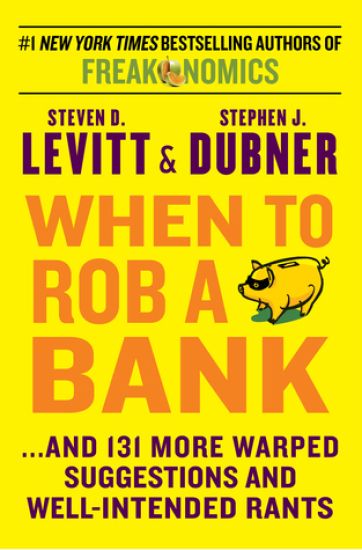
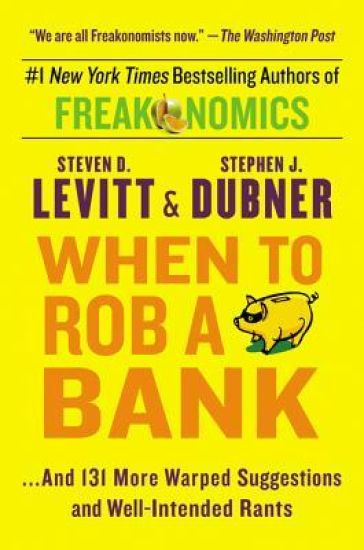
When to Rob a Bank: ...and 131 More Warped Suggestions and Well-Intended Rants

When to Rob a Bank: ...and 131 More Warped Suggestions and Well-Intended Rants

Steven D. Levitt; Stephen J. Dubner

William Morrow Company
2015
sidottu
In celebration of the 10th anniversary of the landmark book Freakonomics comes this curated collection from the most readable economics blog in the universe. It's the perfect solution for the millions of readers who love all things Freakonomics. Surprising and erudite, eloquent and witty, When to Rob a Bank demonstrates the brilliance that has made the Freakonomics guys an international sensation, with more than 7 million books sold in 40 languages, and 150 million downloads of their Freakonomics Radio podcast.When Freakonomics was first published, the authors started a blog--and they've kept it up. The writing is more casual, more personal, even more outlandish than in their books. In When to Rob a Bank, they ask a host of typically off-center questions: Why don't flight attendants get tipped? If you were a terrorist, how would you attack? And why does KFC always run out of fried chicken?Over the past decade, Steven D. Levitt and Stephen J. Dubner have published more than 8,000 blog posts on the Freakonomics website. Many of them, they freely admit, were rubbish. But now they've gone through and picked the best of the best. You'll discover what people lie about, and why; the best way to cut gun deaths; why it might be time for a sex tax; and, yes, when to rob a bank. (Short answer: never; the ROI is terrible.) You'll also learn a great deal about Levitt and Dubner's own quirks and passions, from gambling and golf to backgammon and the abolition of the penny.
When to Rob a Bank: ...and 131 More Warped Suggestions and Well-Intended Rants

When to Rob a Bank: ...and 131 More Warped Suggestions and Well-Intended Rants

Steven D. Levitt; Stephen J. Dubner

William Morrow Company
2016
nidottu
In celebration of the 10th anniversary of the landmark book Freakonomics comes this curated collection from the most readable economics blog in the universe. It's the perfect solution for the millions of readers who love all things Freakonomics. Surprising and erudite, eloquent and witty, When to Rob a Bank demonstrates the brilliance that has made the Freakonomics guys an international sensation, with more than 7 million books sold in 40 languages, and 150 million downloads of their Freakonomics Radio podcast.When Freakonomics was first published, the authors started a blog--and they've kept it up. The writing is more casual, more personal, even more outlandish than in their books. In When to Rob a Bank, they ask a host of typically off-center questions: Why don't flight attendants get tipped? If you were a terrorist, how would you attack? And why does KFC always run out of fried chicken?Over the past decade, Steven D. Levitt and Stephen J. Dubner have published more than 8,000 blog posts on the Freakonomics website. Many of them, they freely admit, were rubbish. But now they've gone through and picked the best of the best. You'll discover what people lie about, and why; the best way to cut gun deaths; why it might be time for a sex tax; and, yes, when to rob a bank. (Short answer: never; the ROI is terrible.) You'll also learn a great deal about Levitt and Dubner's own quirks and passions, from gambling and golf to backgammon and the abolition of the penny.