Kirjojen hintavertailu. Mukana 12 354 173 kirjaa ja 12 kauppaa.

Kirjahaku

Etsi kirjoja tekijän nimen, kirjan nimen tai ISBN:n perusteella.

1000 tulosta hakusanalla Steven J. Howell

Metz 1944

Metz 1944

Steven J. Zaloga

Osprey Publishing
2012
nidottu
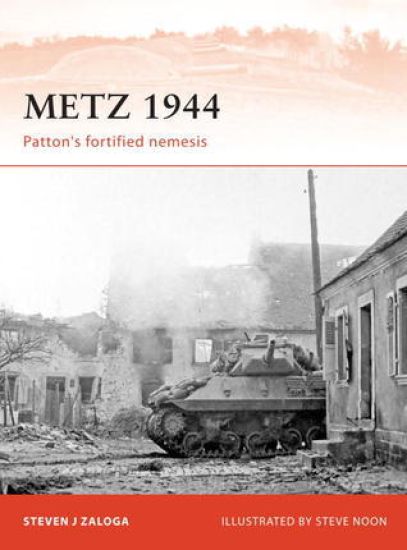
A complete examination of Patton's campaign to take the fortified city of Metz.General George Patton's most controversial campaign was the series of battles in autumn 1944 battles along the German frontier which centered on the fortified city of Metz. In part, the problem was logistics. As was the case with the rest of the Allied forces in the European Theatre, supplies were limited until the port of Antwerp could finally be cleared. Also problematic was the weather. The autumn of 1944 was one of the wettest on record, and hardly conducive to the type of mechanized warfare for which Patton was so famous.However at the heart of the problem was the accretion of sophisticated fortifications. Metz had been fortified since ancient times, heavily rebuilt by France in the post-Napoleonic period, modernized by Germany in 1870–1914, and modernized by France during the Maginot effort in 1935–40. The Germans hoped to hold Metz with a thin screen of second-rate troops, counting on the impregnable fortifications.This book covers the entire campaign from beginning to end, offering an unbiased assessment of the success and failures of both the Allied and Axis efforts.
Defense of the Third Reich 1941–45

Defense of the Third Reich 1941–45

Steven J. Zaloga

Osprey Publishing
2012
nidottu
Starting in 1940, Germany was subjected to a growing threat of Allied bomber attack.The RAF night bombing offensive built up in a slow but unrelenting crescendo through the Ruhr campaign in the summer of 1944 and culminating in the attacks on Berlin in the autumn and early winter of 1943-44. They were joined by US daylight raids which first began to have a serious impact on German industry in the autumn of 1943.This book focuses on the land-based infrastructure of Germany's defense against the air onslaught. Besides active defense against air attack, Germany also invested heavily in passive defense such as air raid shelters. While much of this defense was conventional such as underground shelters and the dual use of subways and other structures, Germany faced some unique dilemmas in protecting cities against night fire bomb raids. Steven J. Zaloga shows how, as a result, German architects designed massive above-ground defense shelters which were amongst the most massive defensive structures built in World War II.
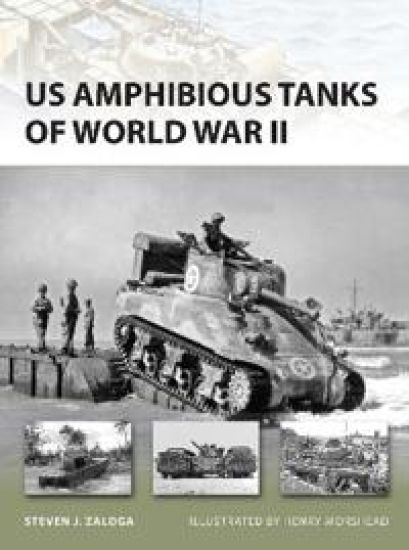
US Amphibious Tanks of World War II

US Amphibious Tanks of World War II

Steven J. Zaloga

Osprey Publishing
2012
nidottu
The advent of combined arms operations in World War II created the need for specialized armored vehicles. In the case of amphibious attacks, the issue arose of how best to land tanks on a beach.Although a variety of specialized landing craft were developed, the Dieppe raid in 1942 encouraged the development of tanks that could be deployed from further off-shore to limit the vulnerability of the LCT craft.The deep-wading equipment that they developed was used throughout Europe - during Operation Husky on Sicily in July 1943, and subsequently for Operations Avalanche (Salerno, September 1943), Shingle (Anzio, January 1944) and Overlord (Normandy, June 1944). However Marines learned from the Tarawa landings in 1943 that unprepared tanks could not be safely landed even in shallow water, so other solutions were sought.A detailed study of specialized US amphibious tanks, this will appeal to those interested in both Pacific and European Theaters, modellers and collectors.
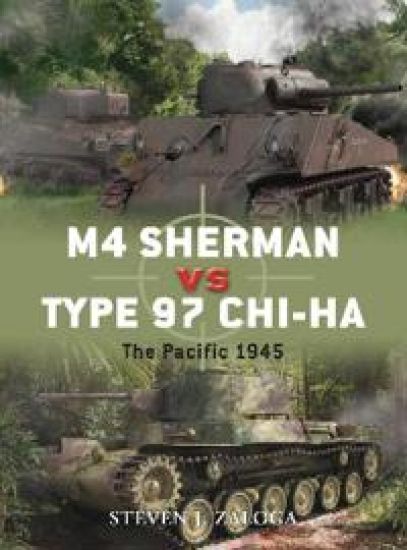
M4 Sherman vs Type 97 Chi-Ha

M4 Sherman vs Type 97 Chi-Ha

Steven J. Zaloga

Osprey Publishing
2012
nidottu
Although US and Japanese tank forces first clashed in 1941, it was on in 1944 that tank-vs-tank action became more common as both sides poured larger numbers of tanks into the combat zone.These battles were a means of demonstrating each side's latest tank technology. For the US, the pinnacle of their tank machinery came in the form of the M4 Sherman and for the Japanese, their most notable feat of engineering was the smaller, yet still effective Type 97 Chi-Ha. The last two campaigns of the war – Iwo Jima and Okinawa – saw tanks used by both sides, the Japanese finally concluding that “the fight against the US Army is a fight against his M4 tanks”.Accompanying Zaloga's detailed analysis are profile illustrations of the Type 97-kai Shinhoto Chi-ha and the M4A3, views showing the ammunition of both types, interior illustrations showing the turret layout in both types, and a battlescene showing the Type 97-kai in combat against US armour.
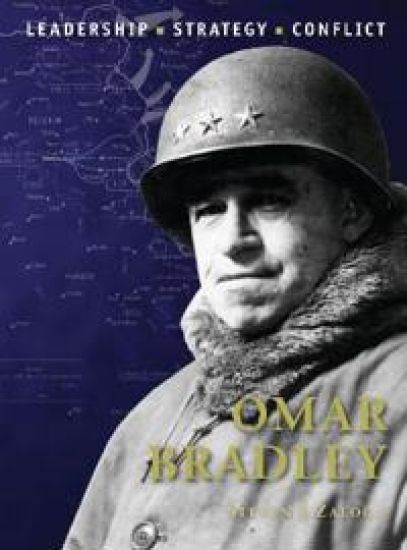
Omar Bradley

Omar Bradley

Steven J. Zaloga

Osprey Publishing
2012
nidottu
General Omar Bradley was the premier US Army tactical commander in the European Theatre of Operations in 1944–45.A West Point classmate of Dwight Eisenhower, Bradley was the quintessential US field commander of World War II, elevated to high command with little combat experience but a solid track record as a skilled planner and organiser. Bradley was part of a small cadre of highly skilled young officers groomed for higher command in the austere and bankrupt 1930s. Bradley was at the centre of nearly all the major US Army victories in 1944–45 from D-Day through the final push into Germany.Along with that combat record came a string of controversies. Bradley's greatest blunder, failing to anticipate the German offensive in the Ardennes, was counter-balanced by a vigorous and skilled response which fatally injured the German Army in the West. Beyond the performance of the US Army in the ETO, Bradley was also intimately wrapped up in other controversies, especially the internecine squabbles with his British counterpart, Bernard Montgomery.
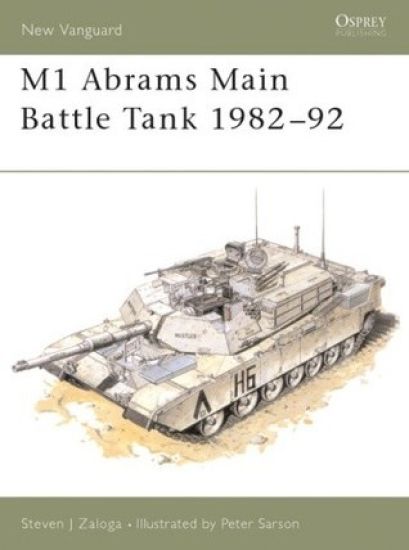
M1 Abrams Main Battle Tank 1982–92

M1 Abrams Main Battle Tank 1982–92

Steven J. Zaloga

Osprey Publishing
1993
nidottu
The M1 Abrams was the most radical departure in US tank design since World War II. Until the advent of the M1 in the early 1980s, the US Army had relied on the steady evolution of the M26 Pershing tank, through the M46, M47, M48 and M60. The M1 design came at a time when there were a host of important new tank technologies coming to fruition, in terms of structure and weaponry: these were integrated into it. This book details the design, development and operational use of one of the world's best main battle tanks.
Sherman Medium Tank 1942–45

Sherman Medium Tank 1942–45

Steven J. Zaloga

Osprey Publishing
1993
nidottu
The M4 Sherman tank was the mainstay of the Western allies between 1942 and 1945. Fast and modern it was better than most of the tanks Britain had to offer. The American Chief of Staff claimed in November 1943 that it had been hailed widely as 'the best tank on the battlefield today'. However, by the time of the Normandy invasion of June 1944 this was not the case. The new heavy tanks being produced by the Germans were able to outclass the Sherman in both armour and armament. This title describes the development and operational use of the Sherman medium tank throughout World War II and beyond.
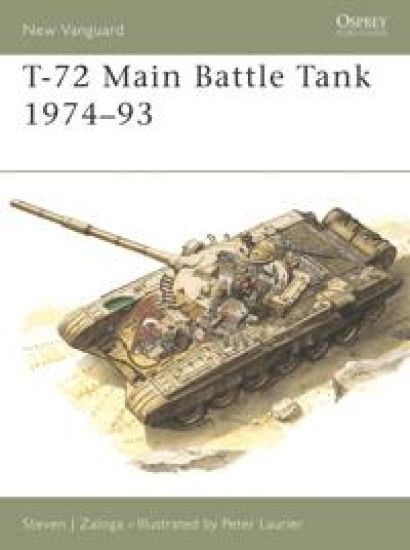
T-72 Main Battle Tank 1974–93

T-72 Main Battle Tank 1974–93

Steven J. Zaloga

Osprey Publishing
1993
nidottu
The Russian T-72 Ural tank is the most widely-deployed main battle tank of the current generation. Used by the armies of the former Warsaw pact and Soviet Union, it has also been exported in large numbers to many of the states in the Middle East. This book reveals the previously secret history behind the tank. Steven J Zaloga examines the conditions under which the T-72 was designed and produced. Technical aspects of the weapon are also discussed, including its EDZ reactive armour which, when it first appeared in December 1984, gave NATO a nasty shock.
T-34/76 Medium Tank 1941–45

T-34/76 Medium Tank 1941–45

Steven J. Zaloga

Osprey Publishing
1994
nidottu
The T-34 was the most influential tank design of World War 2. When first introduced into combat in the summer of 1941, it represented a revolutionary leap forward in tank design. Its firepower, armour protection and mobility were superior to that of any other medium tank of the period. This superiority did not last long. While the T-34 underwent a series of incremental improvements during 1943, it was being surpassed by new German tank designs, most notably the Panther. This title traces the life of the original T-34 through all its difficulties to eventual success.
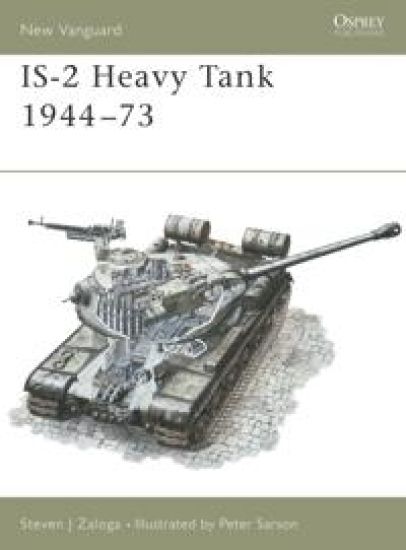
IS-2 Heavy Tank 1944–73

IS-2 Heavy Tank 1944–73

Steven J. Zaloga

Osprey Publishing
1994
nidottu
The Iosef Stalin tanks were the ultimate heavy tanks developed by the Soviet Union and were popularly called 'Victory tanks' due to their close association with the defeat of Germany in 1945. Yet in spite of their reputation, the Stalin tanks emerged from a troubled design, had a brief moment of glory in 1944 and 1945, and disappeared in ignominy after 1960. This title covers the events contributing to the Soviet Union's need to design the new series, with particular reference to the unsuccessful KV series and the advent of a new generation of heavy German tanks including the Tiger. It also covers their development, operational history and myriad variants.
BMP Infantry Fighting Vehicle 1967–94

BMP Infantry Fighting Vehicle 1967–94

Steven J. Zaloga

Osprey Publishing
1994
nidottu
The Russian BMP infantry fighting vehicle (IFV) was one of the most significant innovations in infantry tactics in the latter half of the 20th century. Built in response to the threat of nuclear warfare, it was the world's first IFV, providing the infantry squad with unprecedented firepower, mobility and protection. With over 55,000 manufactured since 1966, the BMP is also numerically one of the most important armoured vehicles ever built. This richly illustrated book examines the development and design of the BMP, detailing its armaments, performance in combat and variants.
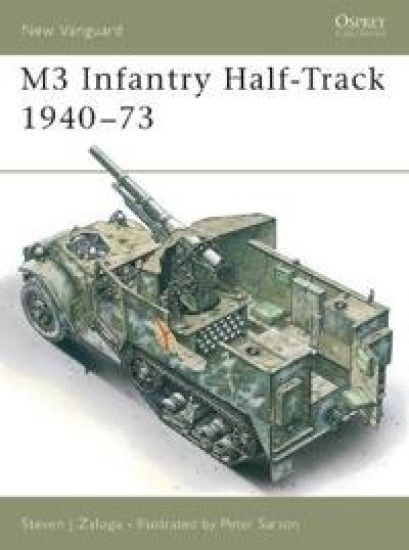
M3 Infantry Half-Track 1940–73

M3 Infantry Half-Track 1940–73

Steven J. Zaloga

Osprey Publishing
1994
nidottu
This work is a history of the US M3 halftrack, one of the most successful infantry vehicles in the history of armoured warfare, which came to symbolize the Allied armed forces of World War II, which also saw distinguished service in the post-war era. The book describes its development and combat history since the 1960s, and includes contemporary photographs, and detailed colour plates and cut-aways.
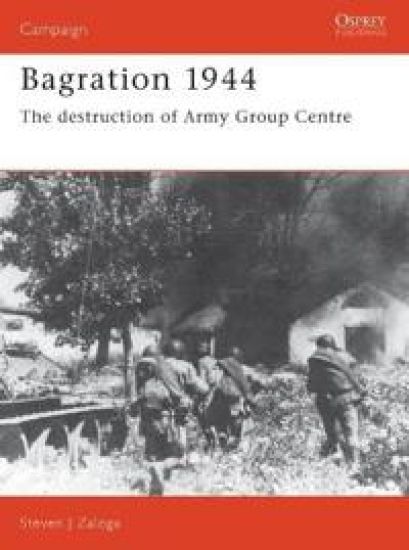
Bagration 1944

Bagration 1944

Steven J. Zaloga

Osprey Publishing
1996
nidottu
A compact, illustrated account of the Soviet army's attack on the Wehrmacht's Army Group Centre and its devastating fallout.On 22 June 1944, three years to the day after Germany's 1941 invasion of the Soviet Union, the Red Army launched a massive offensive in Byelorussia. Codenamed 'Operation Bagration', this campaign climaxed five weeks later with the Red Army at the gates of Warsaw. The Wehrmacht's Army Group Centre was routed, a total of 17 Wehrmacht divisions were utterly destroyed, and over 50 other German divisions were shattered. It was the most calamitous defeat of the German armed forces in World War II.
KV-1 & 2 Heavy Tanks 1939–45

KV-1 & 2 Heavy Tanks 1939–45

Steven J. Zaloga

Osprey Publishing
1995
nidottu
Named after Klimenti Voroshilov, the People's Commissar for Defence, the KVs proved a nasty surprise for German tank crews during the early days of Operation Barbarossa. Although slow, they were extremely heavily armoured. This volume examines the transition from multi-turreted tanks to heavy single-turret vehicles, consisting of the KV-1 and 2, and the increased favour given to the heavy single-turret after the Germans began to develop ammunition capable of penetrating even the thickest armour, whilst detailing the design, development and operational history of the Soviet Union's monstrous KV series of tanks.
T-34-85 Medium Tank 1944–94

T-34-85 Medium Tank 1944–94

Steven J. Zaloga

Osprey Publishing
1996
nidottu
The T-34-85 tank is one of those rare weapons that have remained in service for more than half a century. First introduced in 1944, it has seen combat in nearly every corner of the globe. Steven Zaloga and Jim Kinnear look at this long-serving tank at length. Although long obsolete in Europe, it has proven a reliable and potent weapon in many Third World conflicts, and is still in service with more than a dozen armies around the world.
M2/M3 Bradley Infantry Fighting Vehicle 1983–95

M2/M3 Bradley Infantry Fighting Vehicle 1983–95

Steven J. Zaloga

Osprey Publishing
1996
nidottu
One of the most sophisticated armoured fighting vehicles in the world, the M2/M3 Bradley is the United States equivalent of the British Warrior, combining the role of personnel carrier with the formidable armament of a 25mm cannon and TOW anti-tank missiles. With a maximum road speed of 66kmh it also has a degree of manoeuvrability dreamed of by other armoured vehicles. In this book Steven Zaloga examines the different variants of the Bradley in detail and looks at the changing tactical requirements of the US Army for an armoured personnel carrier.
Amtracs

Amtracs

Steven J. Zaloga

Osprey Publishing
1999
nidottu
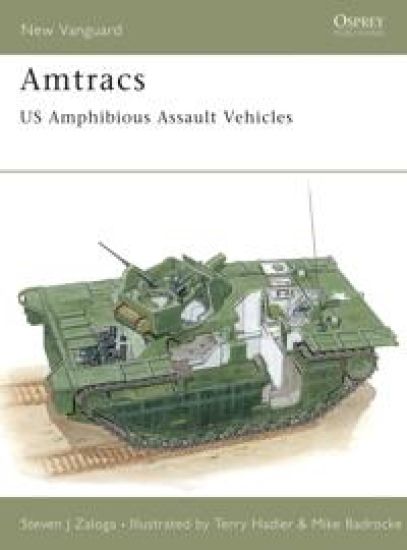
The first prototype for the LVT (Landing Vehicle Tracked) was completed in July 1941, its design based on the Alligator, a tracked amphibious vehicle developed for rescue operations in the swamps of Florida. Though the early conception of amtrac operations envisioned using LVTs solely as supply vehicles, at Tarawa amtracs demonstrated their utility as assault vehicles to carry troops, leading to the development of new models. This book covers the evolution of amtracs, from the first LVT-1 to the LVT-7; their numerous variants; and their use throughout World War II and beyond.
M3 & M5 Stuart Light Tank 1940–45

M3 & M5 Stuart Light Tank 1940–45

Steven J. Zaloga

Osprey Publishing
1999
nidottu
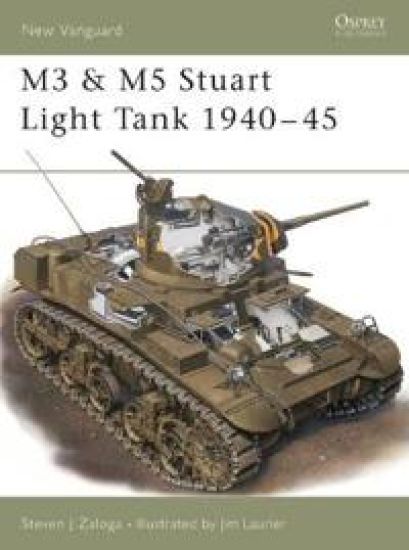
The M3 and M5 family of light tanks were the culmination of American tank development of the 1930s. By the time of the outbreak of the World War II, they were approaching obsolescence, as tank forces in Europe were shifting from light to medium tanks as the main element of their armored forces. First entering combat in the autumn of 1941 in the Western Desert with the British Army, the Stuart quickly proved its inadequacies. The M3 and M5 light tanks proved more suitable in the Pacific theater than in Europe, and fought successfully in many of the major battles including Guadalcanal, Tarawa and Peleliu. This title narrates this distinctive and unusual fighting vehicle's history.
Freud's Technique Papers

Freud's Technique Papers

Steven J. Ellman

Karnac Books
2002
nidottu
This book focuses on how Freudian concepts have been incorporated into modern or contemporary psychoanalytic thought, introducing Freud's papers on technique and presenting his views on the place of the dream in psychoanalytic treatment.
Chaitanyology

Chaitanyology

Steven J Rosen

Bookwrights Press
2024
pokkari
This Second edition of Steven J. Rosen's (Satayaraja dasa) Chaitanyology essays contains nine new offerings, making this edition twice as large as the first edition. More of the history and inner dimensions of Chaitanya's philosophy are explored, leaving us with new insights into Him and the Gaudiya Vaishava tradition He inaugurated. "Steven J. Rosen's latest work on Sri Chaitanya (1486-1534) follows in a line of publications that are dedicated to disseminating knowledge of the Gaudiya Vaishnava tradition, commonly known in the West as the Hare Krishna movement. A collection of his own essays, written for scholar and practitioner alike, Chaitanyology allows entrance into an otherwise esoteric phenomenon, highlighting both its intellectual and mystical elements. In this volume, we find thoroughly researched accounts of Sri Chaitanya's life narrative as well as articles on key subjects that show why his life has special meaning for practitioners today."Steven J. Rosen's latest contribution to the study of Chaitanya, follows in the wake of his lifelong and voluminous contribution to the field, appreciated by scholars and practitioners alike. Rosen, in his signature fashion, brings a scholarly voice to the life, philosophy and historical background of this consequential spiritual fi gure-a voice that contributes both to academic research in this fi eld, and to the intellectual fabric of practitioners' understanding of their own canonical tradition."Drawing on obscure texts, original research, and the research of numerous scholars, Rosen presents an eminently readable and well researched volume of intriguing detail, documenting little known facts and important observations that are sure to not only allow readers entrance into Chaitanya and his world, but also help one in one's own spiritual quest. Essential reading for both scholars of Indian religion and devotees of all persuasions."- Edwin Bryant, Professor of Hindu Philosophy and Religion, Rutgers, the State University of New Jersey