Kirjojen hintavertailu. Mukana 11 244 527 kirjaa ja 12 kauppaa.

Kirjahaku

Etsi kirjoja tekijän nimen, kirjan nimen tai ISBN:n perusteella.

1000 tulosta hakusanalla W. Hall-patch

W. E. B. Du Bois, American Prophet

W. E. B. Du Bois, American Prophet

Edward J. Blum

University of Pennsylvania Press
2009
pokkari
Pioneering historian, sociologist, editor, novelist, poet, and organizer, W. E. B. Du Bois was one of the foremost African American intellectuals of the twentieth century. While Du Bois is remembered for his monumental contributions to scholarship and civil rights activism, the spiritual aspects of his work have been misunderstood, even negated. W. E. B. Du Bois, American Prophet, the first religious biography of this leader, illuminates the spirituality that is essential to understanding his efforts and achievements in the political and intellectual world. Often labeled an atheist, Du Bois was in fact deeply and creatively involved with religion. Historian Edward J. Blum reveals how spirituality was central to Du Bois's approach to Marxism, pan-Africanism, and nuclear disarmament, his support for black churches, and his reckoning of the spiritual wage of white supremacy. His writings, teachings, and prayers served as articles of faith for fellow activists of his day, from student book club members to Langston Hughes. A blend of history, sociology, literary criticism, and religious reflection in the model of Du Bois's best work, W. E. B. Du Bois, American Prophet recasts the life of this great visionary and intellectual for a new generation of scholars and activists. Honorable Mention, 2007 Gustavus Myers Center Outstanding Book Awards
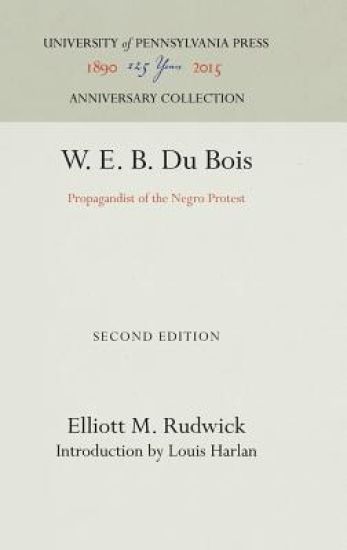
W. E. B. Du Bois

W. E. B. Du Bois

Elliott M. Rudwick

University of Pennsylvania Press
1968
sidottu
This book is a volume in the Penn Press Anniversary Collection. To mark its 125th anniversary in 2015, the University of Pennsylvania Press rereleased more than 1,100 titles from Penn Press's distinguished backlist from 1899-1999 that had fallen out of print. Spanning an entire century, the Anniversary Collection offers peer-reviewed scholarship in a wide range of subject areas.
W. C. Handy

W. C. Handy

David Robertson

The University of Alabama Press
2011
nidottu
David Robertson charts W. C. Handy's rise from a rural-Alabama childhood in the last decades of the nineteenth century to his emergence as one of the most celebrated songwriters of the twentieth century. The child of former slaves, Handy was first inspired by spirituals and folk songs, and his passion for music pushed him to leave home as a teenager, despite opposition from his preacher father. Handy soon found his way to St. Louis, where he spent a winter sleeping on cobblestone docks before lucking into a job with an Indiana brass band. It was in a minstrel show, playing to racially mixed audiences across the country, that he got his first real exposure as a professional musician, but it was in Memphis, where he settled in 1905, that he hit his full stride as a composer. At once a testament to the power of song and a chronicle of race and black music in America, W. C. Handy's life story is in many ways the story of the birth of our country's indigenous culture - and a riveting must read for anyone interested in the history of American music.
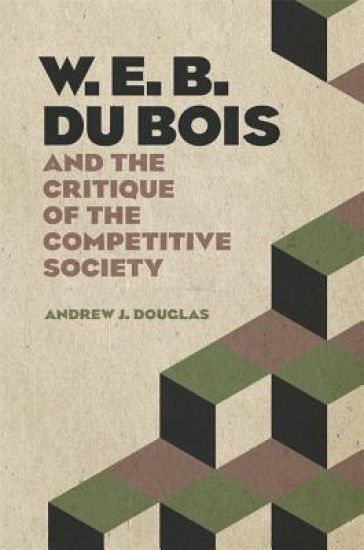
W. E. B. Du Bois and the Critique of the Competitive Society

W. E. B. Du Bois and the Critique of the Competitive Society

Andrew J. Douglas

University of Georgia Press
2019
sidottu
Competition and competitiveness are roundly celebrated as public values and key indicators of a dynamic and forward-thinking society. But the headlong embrace of competitive market principles, increasingly prevalent in our neoliberal age, often obscures the enduring divisiveness of a society set up to produce winners and losers. In this inspired and thoughtfully argued book, Andrew J. Douglas turns to the later writings of W. E. B. Du Bois to reevaluate the very terms of the competitive society.Situating Du Bois in relation to the Depression-era roots of contemporary neoliberal thinking, Douglas shows that into the 1930s Du Bois ratcheted up a race-conscious indictment of capitalism and liberal democracy and posed unsettling questions about how the compulsory pull of market relations breeds unequal outcomes and underwrites the perpetuation of racial animosities. Blending historical analysis with ethical and political theory, and casting new light on several aspects of Du Bois’s thinking, this book makes a compelling case that Du Bois’s sweeping disillusionment with Western liberalism is as timely now as ever.
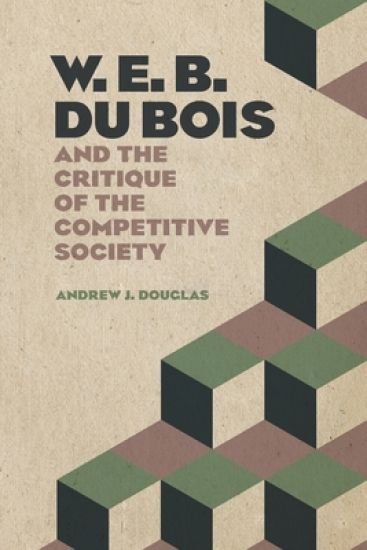
W. E. B. Du Bois and the Critique of the Competitive Society

W. E. B. Du Bois and the Critique of the Competitive Society

Andrew J. Douglas

UNIVERSITY OF GEORGIA PRESS
2022
pokkari
Competition and competitiveness are roundly celebrated as public values and key indicators of a dynamic and forward-thinking society. But the headlong embrace of competitive market principles, increasingly prevalent in our neoliberal age, often obscures the enduring divisiveness of a society set up to produce winners and losers. In this inspired and thoughtfully argued book, Andrew J. Douglas turns to the later writings of W. E. B. Du Bois to reevaluate the very terms of the competitive society.Situating Du Bois in relation to the Depression-era roots of contemporary neoliberal thinking, Douglas shows that into the 1930s Du Bois ratcheted up a race-conscious indictment of capitalism and liberal democracy and posed unsettling questions about how the compulsory pull of market relations breeds unequal outcomes and underwrites the perpetuation of racial animosities. Blending historical analysis with ethical and political theory, and casting new light on several aspects of Du Bois’s thinking, this book makes a compelling case that Du Bois’s sweeping disillusionment with Western liberalism is as timely now as ever.
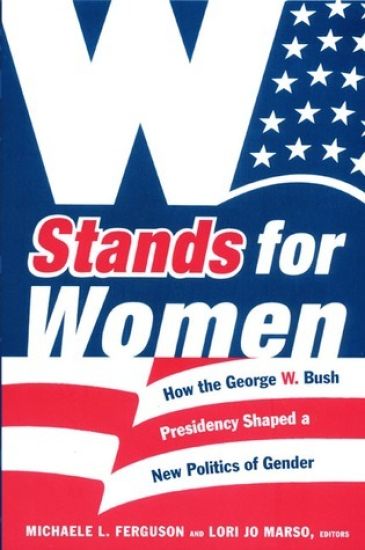
W Stands for Women

W Stands for Women

Duke University Press
2007
pokkari
Taking seriously the “W Stands for Women” rhetoric of the 2004 Bush–Cheney campaign, the contributors to this collection investigate how “W” stands for women. They argue that George W. Bush has hijacked feminist language toward decidedly antifeminist ends; his use of feminist rhetoric is deeply and problematically connected to a conservative gender ideology. While it is not surprising that conservative views about gender motivate Bush’s stance on so-called “women’s issues” such as abortion, what is surprising-and what this collection demonstrates-is that a conservative gender ideology also underlies a range of policies that do not appear explicitly related to gender, most notably foreign and domestic policies associated with the post-9/11 security state. Any assessment of the lasting consequences of the Bush presidency requires an understanding of the gender conservatism at its core.In W Stands for Women ten feminist scholars analyze various aspects of Bush’s persona, language, and policy to show how his administration has shaped a new politics of gender. One contributor points out the shortcomings of “compassionate conservatism,” a political philosophy that requires a weaker class to be the subject of compassion. Another examines Lynndie England’s participation in the abuse of prisoners at Abu Ghraib in relation to the interrogation practices elaborated in the Army Field Manual, practices that often entail “feminizing” detainees by stripping them of their masculine gender identities. Whether investigating the ways that Bush himself performs masculinity or the problems with discourse that positions non-Western women as supplicants in need of saving, these essays highlight the far-reaching consequences of the Bush administration’s conflation of feminist rhetoric, conservative gender ideology, and neoconservative national security policy.Contributors. Andrew Feffer, Michaele L. Ferguson, David S. Gutterman, Mary Hawkesworth, Timothy Kaufman-Osborn, Lori Jo Marso, Danielle Regan, R. Claire Snyder, Iris Marion Young, Karen ZiviMichaela Ferguson and Karen Zivi appeared on KPFA’s Against the Grain on September 11, 2007. Listen to the audio.Michaela Ferguson and Lori Jo Marso appeared on WUNC’s The State of Things on August 30, 2007. Listen to the audio.
W Stands for Women

W Stands for Women

Duke University Press
2007
sidottu
Taking seriously the “W Stands for Women” rhetoric of the 2004 Bush–Cheney campaign, the contributors to this collection investigate how “W” stands for women. They argue that George W. Bush has hijacked feminist language toward decidedly antifeminist ends; his use of feminist rhetoric is deeply and problematically connected to a conservative gender ideology. While it is not surprising that conservative views about gender motivate Bush’s stance on so-called “women’s issues” such as abortion, what is surprising-and what this collection demonstrates-is that a conservative gender ideology also underlies a range of policies that do not appear explicitly related to gender, most notably foreign and domestic policies associated with the post-9/11 security state. Any assessment of the lasting consequences of the Bush presidency requires an understanding of the gender conservatism at its core.In W Stands for Women ten feminist scholars analyze various aspects of Bush’s persona, language, and policy to show how his administration has shaped a new politics of gender. One contributor points out the shortcomings of “compassionate conservatism,” a political philosophy that requires a weaker class to be the subject of compassion. Another examines Lynndie England’s participation in the abuse of prisoners at Abu Ghraib in relation to the interrogation practices elaborated in the Army Field Manual, practices that often entail “feminizing” detainees by stripping them of their masculine gender identities. Whether investigating the ways that Bush himself performs masculinity or the problems with discourse that positions non-Western women as supplicants in need of saving, these essays highlight the far-reaching consequences of the Bush administration’s conflation of feminist rhetoric, conservative gender ideology, and neoconservative national security policy.Contributors. Andrew Feffer, Michaele L. Ferguson, David S. Gutterman, Mary Hawkesworth, Timothy Kaufman-Osborn, Lori Jo Marso, Danielle Regan, R. Claire Snyder, Iris Marion Young, Karen ZiviMichaela Ferguson and Karen Zivi appeared on KPFA’s Against the Grain on September 11, 2007. Listen to the audio.Michaela Ferguson and Lori Jo Marso appeared on WUNC’s The State of Things on August 30, 2007. Listen to the audio.
W.B. Yeats

W.B. Yeats

A. Norman Jeffares

Continuum International Publishing Group Ltd.
2001
nidottu
This volume, a reissue of the 1990 edition of Jeffares's biography of Yeats, with a new introduction and bibliography, is an account of Yeats's life and work. It features a collection of previously unpublished letters, photographs and poetry.
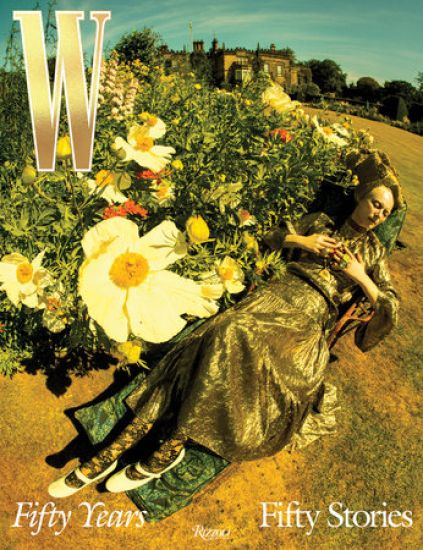
W Magazine

W Magazine

Sara Moonves

RIZZOLI INTERNATIONAL PUBLICATIONS
2022
sidottu
Over the last 50 years, W has been the unparalleled laboratory for the world s top-tier photographers and writers, providing a platform for publishing their most ambitious and creative works. The photos and essays presented here will cover all categories including fashion, design, art, celebrity, film, and interiors. Historic and ground-breaking stories include the controversial shoot by Steven Meisel, 'A Sexual Revolution' featuring male and female models (including Jessica Stam and Karen Elson) depicted in gender-bending styles and provocative poses; photographer Steven Klein s notorious Angelina Jolie and Brad Pitt photos entitled 'Domestic Bliss.' Tom Ford s racy shoot and accompanying article on sexuality in fashion; Bruce Weber s tribute to New Orleans; Hallucinatory photographs of Tilda Swinton by photographer Tim Walker; artist Alex de Corta photos of interiors by Jacques Grange. Many have allowed W into their homes for the magazine s 'W House Tours' feature and include Marc Jacobs, Sir Evelyn Rothschild, Imelda Marcos, and Dua Lipa. This book will appeal to the culturally-curious with a great appreciation for photography, design, art, architecture, the stories behind things, and the people that make them unique.
W. S. Graham

W. S. Graham

Liverpool University Press
2004
nidottu
Graham’s work was published by T. S. Eliot in the 1940s and 50s, but as a major post-war poet, his work has received astonishingly little critical attention given its prestige and influence. This collection of essays covers all aspects of Graham’s work – its critical reception, recent influence and its relations with other developments in the arts, in particular the work of the St Ives School of visual artists. It includes some biographical material (brief reminiscences by and interviews with those who knew him) and discussions of the material contained in several collections of manuscripts. Nothing so far published has paid attention to these manuscript collections or to the large number of uncollected poems published since his death. Neither has enough been written about Graham’s importance to poets of the 1980s and 1990s. ‘I first read a W. S. Graham poem in 1949. It sent a shiver down my spine. Forty-five years later nothing has changed. His song is unique and his work an inspiration.’ Harold Pinter
W.E.B. Du Bois and Race

W.E.B. Du Bois and Race

Sarah Gardner; Chester J. Fontenot; Mary Alice Morgan

Mercer University Press
2001
sidottu
This collection of essays emerged from a symposium held at Mercer University which examined the ways in which W. E. B. DuBois's theories of race have shaped racial discussion and public policy in the twentieth-century. The essays also examine the application of Du Bois's theories to the new millennium, as well as his contributions to the study of the humanities.
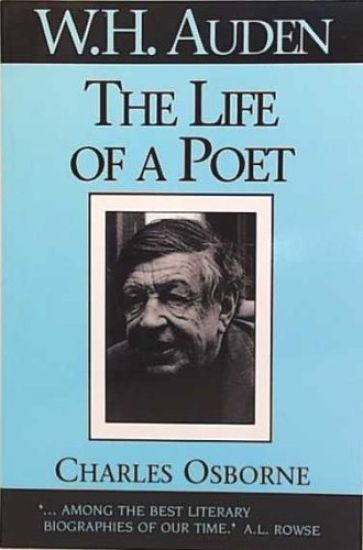
W.H.Auden

W.H.Auden

Charles Osborne

M EvansCo, Inc
1995
nidottu
A biography of W.H. Auden, which looks at his career as a poet, and also offers an insight into the personality of the private man behind the public reputation. First published in 1979.
W.B. Yeats

W.B. Yeats

Martin Heather C.

WILFRID LAURIER UNIVERSITY PRESS
1986
sidottu
W. B. Yeats spent a great deal of his life immersing himself in magical, mystical, and philosophic studies in order, as he claimed, to devise a personal system of thought "that would leave [his] ... imagination free to create as it chose and yet make all that it created, or could create, part of the one history, and that the soul's." He succeeded in developing a cohesive metaphysics, and one which is surprisingly original. While he set it down in a series of philosophical treatises culminating in A Vision, it is most clearly elaborated in his plays, which breathe life and meaning into the rather obscure statements of the treatises. In this book, the author traces "the history of the soul" as it is developed in Yeats's plays. She elucidates the underlying system of thought in the drama and establishes its importance to the aim and execution of the plays by drawing attention to a few of the central themes, metaphors, and symbols through which it is developed. The manuscript and the earliest published versions of the plays are indispensable to this study as they retain much of the abstract thought which Yeats eliminated from the later versions. Martin traces the development of the metaphors and images which gradually replaced Yeats's abstractions. In the process, she is able to uncover new meaning in the plays, as many subtle and obscure passages become clearly understandable.