Kirjojen hintavertailu. Mukana 12 284 781 kirjaa ja 12 kauppaa.

Kirjahaku

Etsi kirjoja tekijän nimen, kirjan nimen tai ISBN:n perusteella.

1000 tulosta hakusanalla Warren Singer

Selected Letters of Robert Penn Warren

Selected Letters of Robert Penn Warren

Robert Penn Warren

Louisiana State University Press
2008
sidottu
Volume four of the Selected Letters of Robert Penn Warren covers a crucial time of personal and professional rejuvenation in Warren's life. During the fifteen-year period spanned by this correspondence, he completed Brother to Dragons; Segregation: The Inner Conflict in the South; and Who Speaks for the Negro? As these titles suggest, these years were marked by Warren's immersion in American history and his maturing interest in race relations. They also saw his return to lyric poetry, after a ten-year hiatus, with the publication of the Pulitzer Prize-winning collection Promises. Along with seeing the completion of some of his most successful work, this period was a time of momentous change in Warren's life, including his move to Yale University; his marriage to his second wife, Eleanor; and the birth of his two children. As a chronicle of Warren's thoughts on his family, his work, his friends, the state of literary studies, and the culture at large, these letters are invaluable. Unlike many writers, Warren rarely drafted his correspondence with future readers and scholars in mind; he typically saved his prepared statements about the human condition and the state of the world for his poetry, fiction, and social commentary. His letters offer a candid and personal glimpse of Warren's relationships as well as his personal views on literature, politics, and social trends. Their recipients include Ralph Ellison, Allen Tate, Saul Bellow, Robert Lowell, Eudora Welty, and Louis Rubin, as well as Warren's editors, reviewers, collaborators, and other friends. Providing an unusually vivid and personal account of Warren's rich and fully realised life, these missives are equally revealing of his thoughts on the state of contemporary American culture during this dynamic time in American history.
Robert Penn Warren after Audubon

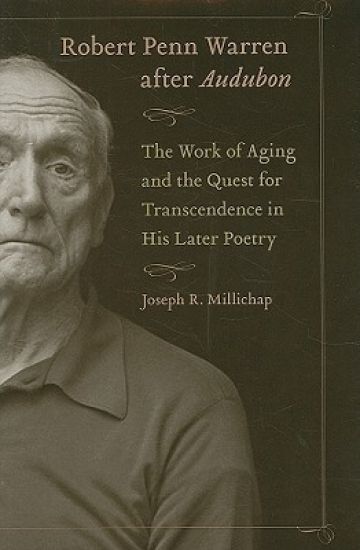
Robert Penn Warren after Audubon

Joseph R. Millichap

Louisiana State University Press
2009
sidottu
Despite nearly universal critical acclaim for Robert Penn Warren's later poetry, much about this large body of work remains unexplored, especially the psychological sources of these poems' remarkable energy. In this groundbreaking work, Warren scholar Joseph R. Millichap takes advantage of current research on developmental psychology, gerontology, and end-of-life studies to offer provocative new readings of Warren's later poems, which he defines as those published after Audubon: A Vision (1969). In these often intricate poems, Millichap sees something like an autobiographical epic focused on the process of aging, the inevitability of death, and the possibility of transcendence. Thus Warren's later poetry reviews an individual life seen whole, contemplates mortality and dissolution, and aspires to the literary sublime.Millichap locates the beginning of Warren's late period in the extraordinary collection Or Else: Poem/Poems 1968-1974, basing his contention on the book's complex, indeed obsessive sequencing of new, previously published, and previously collected poems unified by themes of time, memory, age, and death. Millichap offers innovative readings of Or Else and Warren's five other late gatherings of poems - Can I See Arcturus from Where I Stand?: Poems 1975; Now and Then: Poems 1976-1978, winner of the Pulitzer Prize; Being Here: Poetry 1977-1980; Rumor Verified: Poems 1979-1980; and Altitudes and Extensions 1980-1984.Among the autobiographical elements Millichap brings into his careful readings are Warren's loneliness in these later years, especially after the deaths of family members and friends; his alternating feelings of personal satisfaction and emptiness toward his literary achievements; and his sense of the power, and at times the impotence, of memory. Millichap's analysis explores how Warren often returned to images and themes of his earlier poems, especially those involving youth and midlife, with the new perspective given by advancing age and time's passage. Millichap also relates Warren's work to that of other poets who have dealt profoundly with memory and age, including Robert Frost, T. S. Eliot, Thomas Hardy, and, at times, John Milton, William Wordsworth, and the whole English and American nineteenth-century Romantic tradition.An epilogue traces Warren's changing reputation as a poet from the publication of his last volume in 1985 through his death in 1989 and the centennial of his birth in 2005, concluding persuasively that the finest of all of Warren's literary efforts can be found in his later poetry, concerned as it is with the work of aging and the quest for transcendence.
Selected Letters of Robert Penn Warren

Selected Letters of Robert Penn Warren

Robert Penn Warren

Louisiana State University Press
2011
sidottu
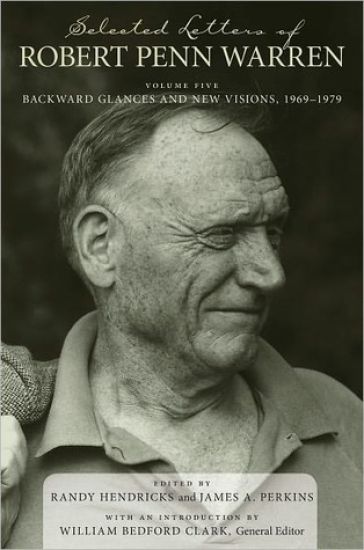
The years 1969 and 1979 bookend a volatile decade in American history. As an articulate witness to the era of the Vietnam War, Watergate, Jimmy Carter, and the national ""malaise,"" Robert Penn Warren produced a phenomenal body of work, securing his place in the canon of American poetry.Volume five of Selected Letters of Robert Penn Warren: Backward Glances and New Visions, 1969-1979 includes Warren's letters to friends, family, peers, editors, inquiring scholars, and critics - recording the details of his personal and professional life and illustrating his pivotal role in twentieth-century American literature.In these turbulent but fruitful years, Warren produced both Audubon: A Vision (1969) and the revised version of Brother to Dragons (1979). In between lay some of Warren's most searching work as poet, novelist, literary critic, and social commentator.During this era Warren's achievements included his highly experimental and complex Or Else - Poem/Poems (1974) and the Pulitzer Prize-winning Now and Then (1978). Before the end of the 1970s three more novels appeared concluding with his final book of fiction, A Place to Come To.This volume provides insight into Warren's inspiration during a remarkably productive era and will prove an essential resource on his life and work.
Selected Letters of Robert Penn Warren

Selected Letters of Robert Penn Warren

Robert Penn Warren

Louisiana State University Press
2013
sidottu
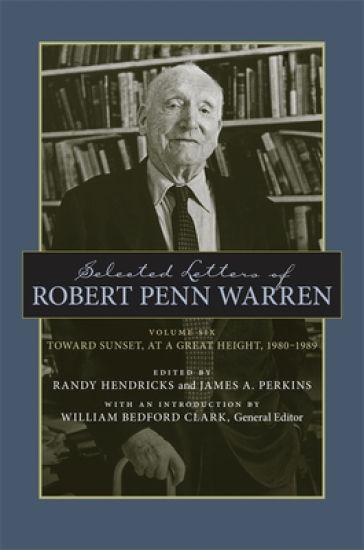
In the last decade of his life, Robert Penn Warren remained a vibrant force in American literature, producing new works of poetry and nonfiction while also dealing courageously with the gradual decline of his health and the diminishment of his poetic powers. Toward Sunset, at a Great Height, 1980-1989, the sixth and final volume of the author's selected letters, provides crucial documentation of this period, containing Warren's correspondence with friends, family, fellow writers, editors, critics, and the scholars studying his works.Warren published several volumes of poetry, including Being Here (1980), Rumor Verified (1981), and Chief Joseph of the Nez Perce (1983), and returned to nonfiction prose with Jefferson Davis Gets His Citizenship Back (1980) and the memoir Portrait of a Father (1988).His letters reveal that he tried to begin writing a novel but was unable to make substantial progress on it, and that from 1985 on he became increasingly dissatisfied with his new poems. Until his death at age eighty-four, however, Warren maintained an active correspondence filled with news about his writings and travels, accounts of the lives of his wife and children, and a stoic attitude about his own physical decline as well as a solicitousness regarding the health of others, such as his brother, Thomas, and sister, Mary. He communicated with rising young scholars and encouraged younger poets he admired.Toward Sunset, at a Great Height offers rich insights into the closing chapter of Robert Penn Warren's professional and personal life, making it an essential resource for understanding the full scope of the author's contribution to American letters.
The County of Warren, North Carolina, 1586-1917

The County of Warren, North Carolina, 1586-1917

Manly Wade Wellman

The University of North Carolina Press
2002
nidottu
This is the story of a region at once representative and unique in the history of Southern culture, which was from its earliest colonial beginnings a focus of strength, intellect, and proud individuality. Warren County, North Carolina, heart of the Roanoke Region, early built for grace and vigor. It bred people who were great in the affairs of the state and the nation. Resolutely it fought for freedom from England, was a harbor of antebellum grace and vigor, sent its sons into the forefront of Civil War battles, weathered Reconstruction's woes, and strove to sustain its ancient tradition of greatness while keeping step with modernity in the world. Here are remembered the beginnings in a primitive wilderness, the pioneer region that grew into a rich empire of luxury and intellectualism, the county that weathered disasters and won deserved rewards. The events of its life as a locality, with the men and women who created those events, are here retold. Warren County's special record of mannered culture and robust folkways, its parade of hunters, builders, scholars, statesmen, soldiers, belles and beaux, wits and merrymakers, its progress and change as noted in five different centuries, are set forth from authentic sources. |Warren County's special record of mannered culture and robust folkways, its parade of hunters, builders, scholars, statesmen, soldiers, its progress and change as noted in five different centuries are set forth from authentic sources. The events of a county's life and the story of the men and women who created those events are retold.
My Search for Warren Harding

My Search for Warren Harding

Robert Plunket

NEW DIRECTIONS PUBLISHING CORPORATION
2023
nidottu
When My Search for Warren Harding, Robert Plunket’s glittering story of literary sleuthing and deceit, first appeared in 1983, it garnered immediate and far-reaching acclaim. Frank Conroy at The Washington Post exclaimed, “The author pulled me in so deftly, moved me up an escalating scale of sly hyperbole so cunningly, that after a hundred pages, I seemed to have turned over the keys, so to speak, of my nervous system”; Florence King at , “The most exciting event in American letters for a very long time: a momentous book.” More recently, though long out of print, it was canonised in The Guardian’s “1000 Novels Everyone Must Read,” ranked by the Washington Post as one of the top five books of “great American comic fiction,” and praised by Michael Leone in The Los Angeles Review of Books as “a classic picaresque novel in the tradition of Cervantes.” Set against the fading light of early-1980s Hollywood, our deeply flawed, bigoted, closeted antihero Elliot Weiner is a historian—Harvard BA, Columbia PhD—with a passion for Morris dancing and Warren Harding, “the shallowest President in history.” After Weiner receives a research grant to write a book on the tumultuous life of Harding, he gets wind of a trunkful of the 29th president’s bawdy billets-doux that is rumoured to be fiercely guarded by his ancient mistress Rebekah Kinney on her declining Hollywood Hills estate. Nothing and no one can stand in the way of Weiner getting his paws on the treasure, and along the way, as the words dance across the page, a hysterical, guffaw-inducing punchline around every corner, Weiner reaches new lows of humiliation and self-delusion.
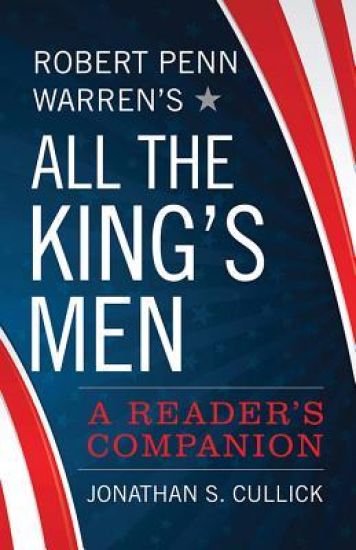
Robert Penn Warren's All the King's Men

Robert Penn Warren's All the King's Men

Jonathan S. Cullick

The University Press of Kentucky
2018
sidottu
Robert Penn Warren is one of the best-known and most consequential Kentucky writers of the twentieth century and the only American writer to have won three Pulitzers in two different genres. All the King's Men, generally considered one of the finest novels ever written on American politics, transcends sensationalism and topicality to stand as art. It was a bestseller, won the Pulitzer Prize, and became an Academy Award--winning movie. Depicting the rise and fall of a dictatorial southern politician -- modeled on Huey Long of Louisiana -- the timeless story and memorable characters raise questions about the importance of history, moral conflicts in public policy, and idealism in government.In Robert Penn Warren's All the King's Men: A Reader's Companion, author Jonathan S. Cullick considers the themes of this famous novel within the context of America's current political climate. He addresses the novel's continuing relevance and interviews a cross-section of elected and appointed officials, as well as journalists, in Kentucky to explore how Warren's novel has influenced their work and approach to politics.By focusing on what Warren's novel has to say about power, populism, ethics, and the force of rhetoric, Cullick encourages readers to think about their own identities and responsibilities as American citizens. This volume promises to be not only an indispensable companion to All the King's Men but it also provides context and a new diverse set of perspectives from which to understand this seminal novel.
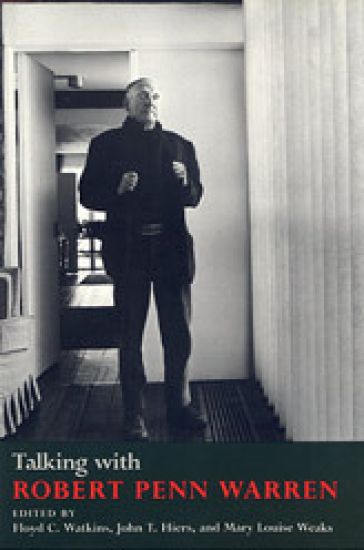
Talking with Robert Penn Warren

Talking with Robert Penn Warren

University of Georgia Press
1990
pokkari
Filled with entertaining anecdotes and personal reflections, this collection of twenty-four conversations with Robert Penn Warren provides an illuminating glimpse of the man and his thoughts on life and literature. Warren's wide interests—history, politics, technological change, teaching, race relations—span a period of more than three decades."Perhaps in no literary genre is an author more completely and accurately himself than in an interview," the editors note. "Every attribute of Robert Penn Warren—his folksiness, his wit, his honesty and openness—or, in short, the full man—is peculiarly adapted to the genre." Strongly apparent, for example, are Warren's feelings about his country. "I'm in love with America; the funny part of it is, I really am," he tells Bill Moyers. Even so, he does not shrink from criticizing America's shortcomings as his comments to Edwin Newman about the Civil War and the country's involvement in Vietnam make clear.Warren's asides are replete with biographical gems. To interviewer Peter Stitt he remarks that he never intended to go to Vanderbilt, but to Annapolis, and that once at Vanderbilt, his original chosen vocation was chemical engineering—a goal that changed after he enrolled in a literature class taught by John Crowe Ransom. Particularly revealing, however—especially to young writers—are Warren's reflections on the creative process. "Don't leave a page until you have it as near what you want as you can make it that day," he advises. When Warren speaks of his own writing career, there is no false modesty in his statements about his "trying" to be a writer or of "inching" along in the creative process. Rather, one sees a man who knows very well the very tentative and makeshift nature of literary effort.While offering views on other writers—from Homer and Shakespeare to Hemingway and Nikki Giovanni—Warren reflects as well on the role of criticism: "All the study about a writer or a work, all the analyses of background or ideas or the structure of a work—he purpose of all this is to prepare the reader to confront the work with innocence, with simplicity, with directness." And when asked if "poetic value" can be defined, Warren answers, "Well, if I could define it today, I wouldn't accept the same definition tomorrow."Robert Penn Warren, the country's first poet laureate and the only writer to win the Pulitzer Prize in both fiction and poetry, left no autobiography. Thus, Warren's conversations become one of the most important single sources for anyone seeking to understand his life and art.
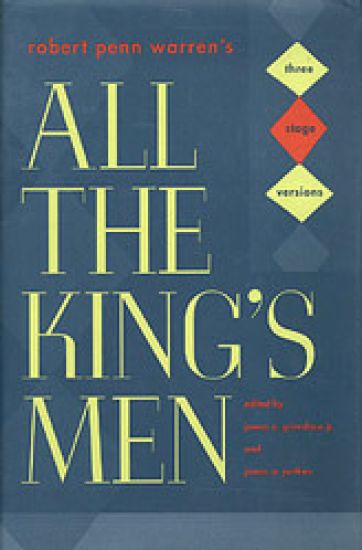
Robert Penn Warren's ""All the King's Men

Robert Penn Warren's ""All the King's Men

Robert Penn Warren; James A. Grimshaw Jr

University of Georgia Press
2000
sidottu
Robert Penn Warren's 1946 Pulitzer Prize-winning novel All the King's Men is one of the undisputed classics of American literature. Fifty years after the novel's publication, Warren's characters still stand as powerful representations of the moral dilemmas faced by individuals in positions of power. All the King's Men had its genesis in Warren's stage play Proud Flesh, unpublished in his lifetime. He also wrote a subsequent unpublished play titled Willie Stark: His Rise and Fall and a later dramatic version of the novel that shared the title All the King's Men. This volume is the first to collect all three dramatic texts and to publish Proud Flesh and Willie Stark. Proud Flesh is particularly fascinating for what it reveals about the development of All the King's Men and Warren's changing perceptions of its characters and themes. The other plays, as post-novel writings, provide a forum for Warren to clarify his intentions in the novel. The editors' introduction to this collection reviews the composition history of the works and their relationship to the novel and to each other. The new perspectives on Warren's writing presented in Robert Penn Warren's "All the King's Men": Three Stage Versions provide a glimpse into a creative mind struggling with a compelling story and offer readers another way of looking at this American classic. This book is an essential reference in Warren studies that will give students of All the King's Men another context from which to consider Warren's novel.
Mercy Otis Warren

Mercy Otis Warren

Mercy Otis Warren

University of Georgia Press
2009
sidottu
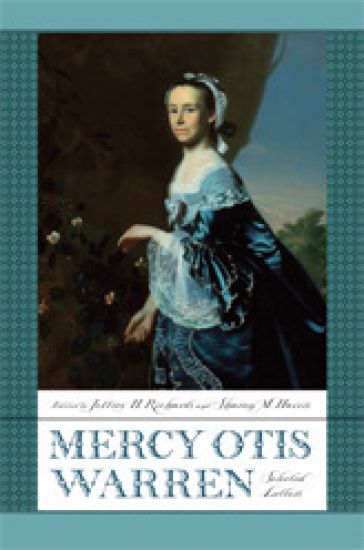
This volume gathers more than one hundred letters-most of them previously unpublished-written by Mercy Otis Warren (1728-1814). Warren, whose works include a three-volume history of the American Revolution as well as plays and poems, was a major literary figure of her era and one of the most important American women writers of the eighteenth century. Her correspondents included Martha and George Washington, Abigail and John Adams, and Catharine Macaulay.Until now, Warren's letters have been published sporadically, in small numbers, and mainly to help complete the collected correspondence of some of the famous men to whom she wrote. This volume addresses that imbalance by focusing on Warren's letters to her family members and other women. As they flesh out our view of Warren and correct some misconceptions about her, the letters offer a wealth of insights into eighteenth-century American culture, including social customs, women's concerns, political and economic conditions, medical issues, and attitudes on child rearing.Letters Warren sent to other women who had lost family members (Warren herself lost three children) reveal her sympathies; letters to a favorite son, Winslow, show her sharing her ambitions with a child who resisted her advice. What readers of other Warren letters may have only sensed about her is now revealed more fully: she was a woman of considerable intellect, religious faith, compassion, literary intelligence, and acute sensitivity to the historical moment of even everyday events in the new American republic.
The Deals of Warren Buffett, Volume 1

The Deals of Warren Buffett, Volume 1

Glen Arnold

Harriman House Publishing
2017
sidottu
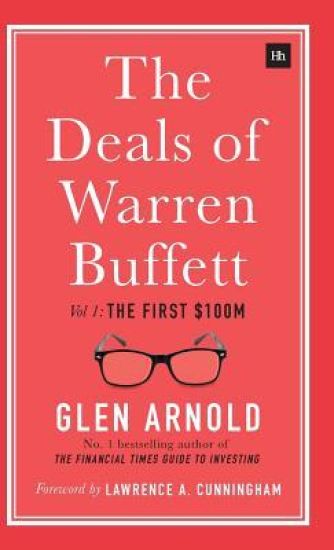
It took the world's greatest investor, Warren Buffett, nearly four decades to make his first $100m. The Deals of Warren Buffett – Volume 1 charts the series of investments that made up that journey.In revealing detail, and with a lucid descriptive style, experienced author and investor Glen Arnold explains Buffett's thinking behind these investment deals and shows how his cumulative returns compounded his wealth over time.In this formative period, from 1941-78, Buffett developed and honed the investment philosophy that would lead him to become so successful as his career progressed. But it was not all plain sailing – Buffett made mistakes along the way – and Arnold shows how Buffett learned through success and failure how to select companies worth backing. Arnold also includes insightful 'learning points' at the end of each chapter, which reveal how investors can learn from the craft of Warren Buffett to improve their own investing.Investments featured in this first volume include: GEICO, American Express, Disney, Berkshire Hathaway, See's Candies, and The Washington Post.With stories and analysis drawn from decades of investing experience, join Glen Arnold and delve deeper in The Deals of Warren Buffett!
The Deals of Warren Buffett, Volume 2

The Deals of Warren Buffett, Volume 2

Glen Arnold

Harriman House Publishing
2019
sidottu
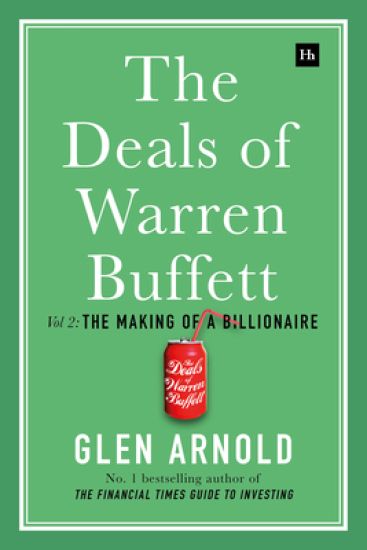
In this second volume of The Deals of Warren Buffett, the story continues as we trace Warren Buffett's journey to his first $1bn. When we left Buffett at the end of Volume 1, he had reached a fortune of $100m. In this enthralling next instalment, we follow Buffett's investment deals over two more decades as he became a billionaire.This is the most exhilarating period of Buffett's career, where he found gem after gem in both the stock market and among tightly-run family firms with excellent economic franchises. In this period, Berkshire Hathaway shares jumped 29-fold from $89 to $2,600, while Buffett made investments in the following companies:GEICO, Buffalo Evening News, Nebraska Furniture Mart, Capital Cities, ABC, Disney, Fechheimer Brothers, Scott Fetzer, Solomon Brothers, Coca-Cola, Borsheims, Gillette, Procter & Gamble, and Duracell.For each of these deals, investing expert and Buffett historian Glen Arnold delves into unprecedented detail to analyse the investment process and the stories of the individuals involved. Arnold's engaging, lucid style transports the reader to the time and place of the deals, to truly appreciate how Buffett was operating.With stories and analysis drawn from decades of investing experience, join Glen Arnold and delve deeper into The Deals of Warren Buffett!
The Deals of Warren Buffett, Volume 3

The Deals of Warren Buffett, Volume 3

Glen Arnold

HARRIMAN HOUSE PUBLISHING
2021
sidottu
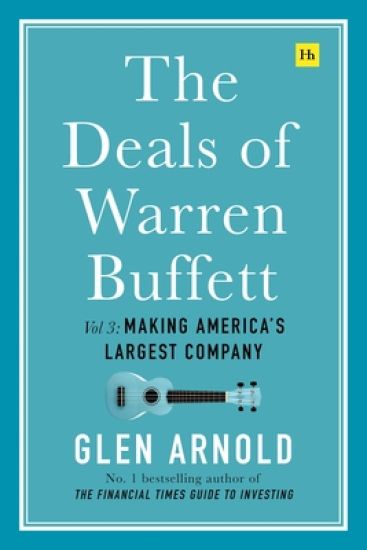
In this third volume of The Deals of Warren Buffett, we trace Warren Buffett's journey as he made Berkshire Hathaway the largest company in America.When we left Buffett at the end of Volume 2, he had reached a fortune of $1bn. In this enthralling next instalment, we follow Buffett's investment deals over the decade from 1989 to 1998, as Berkshire shares jumped 14-fold from $4,700 to $68,000 and its market cap grew from $5bn to $100bn.This was a period of Buffett's career when he was approaching normal retirement age. But far from slowing down, he was just hitting his stride. Buffett was as driven as ever to seek out great companies at good prices. By studying the decision-making that went into his investment deals, and the successful and unsuccessful outcomes, we can learn from Buffett and become better investors ourselves.In this decade, Buffett made investments in the following companies:Wells Fargo, USAir, American Express, The Shoe Group, Helzberg Diamond Shops, RC Willey, FlightSafety International, Dairy Queen, NetJets, and General Re.For each of these deals, investing expert and Buffett historian Glen Arnold dives into unprecedented detail to analyse the investment process and the stories of the individuals involved. Arnold's engaging, lucid style transports the reader to the time and place of the deals, to truly appreciate how Buffett was operating.With stories and analysis drawn from decades of investing experience, join Glen Arnold and delve deeper into The Deals of Warren Buffett!
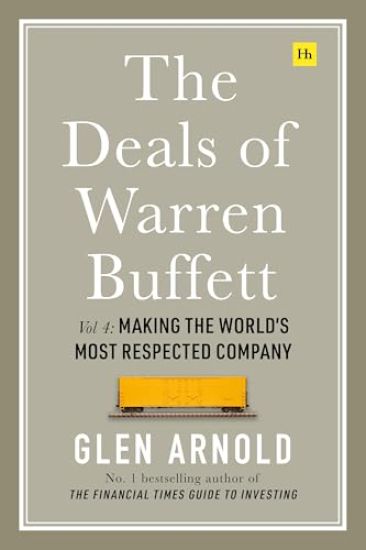
The Deals of Warren Buffett Volume 4

The Deals of Warren Buffett Volume 4

Glen Arnold

HARRIMAN HOUSE PUBLISHING
2025
sidottu
In this fourth volume of The Deals of Warren Buffett, we trace Buffett’s journey as he made Berkshire Hathaway the most respected company in the world.When we left Buffett at the end of Volume 3 towards the end of the 1990s, he was leading the largest corporation in America and his personal fortune had reached $40 billion. In this enthralling next instalment, we follow Buffett’s investment deals over the first few years of the 21st century, as Berkshire grew to become a giant with annual profits north of $4 billion.Buffett, then in his early 70s, was still tap dancing to work, thoroughly enjoying analysing companies, finding bargains and interacting with his growing team of managers.By studying the decision-making that went into his investment deals and the successful and unsuccessful outcomes, we can learn from Buffett and become better investors ourselves.During this period, exploiting the low prices following the dot-com crash, Buffett made investments in the following companies: MidAmerican Energy, CORT, Moody’s, H&R Block, Shaw Industries, Star Furniture, Jordan’s Furniture, Ben Bridge Jeweler, Justin Boot, Acme Brick, Benjamin Moore and CTB.For each of these deals, investing expert and Buffett historian Glen Arnold dives into unprecedented detail to analyse the investment rationale, the stories of the individuals involved and, where possible, the profits Buffett made.
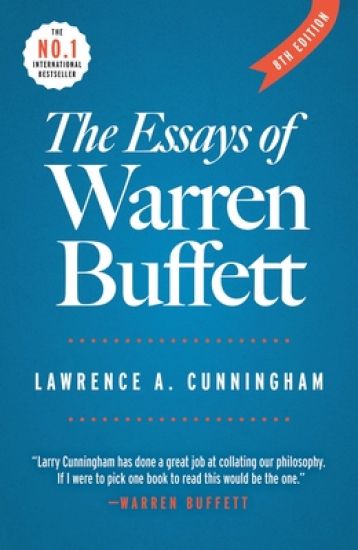
The Essays of Warren Buffett - 8th ed

The Essays of Warren Buffett - 8th ed

Lawrence A. Cunningham

The Cunningham Group
2024
pokkari
A modern classic, The Essays of Warren Buffett: Lessons for Corporate America is the book Buffett autographs most and likes best. Its popularity and longevity over three decades attest to the widespread appetite for this definitive statement of Mr. Buffett’s thoughts that’s uniquely comprehensive, non-repetitive, and digestible. New and experienced readers alike will gain an invaluable informal education by perusing this classic arrangement of Mr. Buffett's best writings.
Robert Penn Warren:

Robert Penn Warren:

Clemson University Press
2018
pokkari
In many ways, Robert Penn Warren was a model of the writer as social animal. As a precocious sixteen-year-old sophomore, he began attending meetings of Nashville's Fugitive group. Decades before creative writing workshops had become a fixture on university campuses, these gifted amateurs would meet on alternate Saturday nights to exchange drafts of poems they were writing. The critical attention no doubt improved their verse, while the shared sense of community solidified their commitment to the literary life. Even a selective account such as this] of Warren's most important literary associations during such a long and active life could fill a good size book.