Kirjojen hintavertailu. Mukana 11 348 496 kirjaa ja 12 kauppaa.

Kirjahaku

Etsi kirjoja tekijän nimen, kirjan nimen tai ISBN:n perusteella.

870 tulosta hakusanalla "Vector"

Invariants as Products and a Vector Interpretation of the Symbolic Method
The book ""Invariants As Products And A Vector Interpretation Of The Symbolic Method"" by Edward Hegeler Carus is a comprehensive guide to the mathematical concept of invariants and their interpretation through the symbolic method. The book delves into the various applications of invariants in different fields, including algebraic geometry, physics, and computer science.The author explains the concept of invariants as products and provides a detailed account of the symbolic method, which involves the use of algebraic symbols to represent mathematical expressions. The book also offers a vector interpretation of the symbolic method, which is a new approach to understanding invariants and their properties.The book is divided into several chapters, each focusing on a specific aspect of invariants and the symbolic method. The first chapter provides an introduction to the topic, while the subsequent chapters delve into the various applications of invariants, including their use in algebraic geometry, physics, and computer science.Throughout the book, the author presents numerous examples and exercises to help readers understand the concepts and apply them to real-world problems. The book is written in a clear and concise style, making it accessible to both students and professionals in the field of mathematics.Overall, ""Invariants As Products And A Vector Interpretation Of The Symbolic Method"" is an essential resource for anyone interested in the mathematical concept of invariants and their applications in various fields. The book offers a unique perspective on the topic and provides readers with a solid foundation for further study and research.This scarce antiquarian book is a facsimile reprint of the old original and may contain some imperfections such as library marks and notations. Because we believe this work is culturally important, we have made it available as part of our commitment for protecting, preserving, and promoting the world's literature in affordable, high quality, modern editions, that are true to their original work.

Atomic Spectra Vol IIAnd The Vector Model
This work has been selected by scholars as being culturally important, and is part of the knowledge base of civilization as we know it. This work was reproduced from the original artifact, and remains as true to the original work as possible. Therefore, you will see the original copyright references, library stamps (as most of these works have been housed in our most important libraries around the world), and other notations in the work.This work is in the public domain in the United States of America, and possibly other nations. Within the United States, you may freely copy and distribute this work, as no entity (individual or corporate) has a copyright on the body of the work.As a reproduction of a historical artifact, this work may contain missing or blurred pages, poor pictures, errant marks, etc. Scholars believe, and we concur, that this work is important enough to be preserved, reproduced, and made generally available to the public. We appreciate your support of the preservation process, and thank you for being an important part of keeping this knowledge alive and relevant.
Transgenesis and the Management of Vector-Borne Disease
Parasitic, bacterial and viral agents continue to challenge the welfare of humans, livestock, wild life and plants worldwide. The public health impact and financial consequences of these diseases are particularly hard on the already overburdened economies of developing countries especially in the tropics. Many of these disease agents utilize insect hosts (vectors) to achieve their transmission to mammals. In the past, these diseases were largely controlled by insecticide-based vector reduction strategies. Now, many of these diseases have reemerged in the tropics, recolonizing their previous range, and expanding into new territories previously not considered to be endemic. Habitat change, irrigation practices, atmospheric and climate change, insecticide and drug resistance as well as increases in global tourism, human traffic and commercial activities, have driven the reemergence and spread of vector borne diseases. While these diseases can be controlled through interventions aimed at both their vertebrate and invertebrate hosts, no effective vaccines exist, and only limited therapeutic prospects are available for their control in mammalian hosts. Molecular technologies such as transgenesis, which is the subject of this book, stand to increase the toolbox and benefit disease management strategies.
An Introduction to Multivariable Analysis from Vector to Manifold

An Introduction to Multivariable Analysis from Vector to Manifold

Piotr Mikusinski; Michael D. Taylor

Springer-Verlag New York Inc.
2012
nidottu
Multivariable analysis is an important subject for mathematicians, both pure and applied. Apart from mathematicians, we expect that physicists, mechanical engi­ neers, electrical engineers, systems engineers, mathematical biologists, mathemati­ cal economists, and statisticians engaged in multivariate analysis will find this book extremely useful. The material presented in this work is fundamental for studies in differential geometry and for analysis in N dimensions and on manifolds. It is also of interest to anyone working in the areas of general relativity, dynamical systems, fluid mechanics, electromagnetic phenomena, plasma dynamics, control theory, and optimization, to name only several. An earlier work entitled An Introduction to Analysis: from Number to Integral by Jan and Piotr Mikusinski was devoted to analyzing functions of a single variable. As indicated by the title, this present book concentrates on multivariable analysis and is completely self-contained. Our motivation and approach to this useful subject are discussed below. A careful study of analysis is difficult enough for the average student; that of multi variable analysis is an even greater challenge. Somehow the intuitions that served so well in dimension I grow weak, even useless, as one moves into the alien territory of dimension N. Worse yet, the very useful machinery of differential forms on manifolds presents particular difficulties; as one reviewer noted, it seems as though the more precisely one presents this machinery, the harder it is to understand.
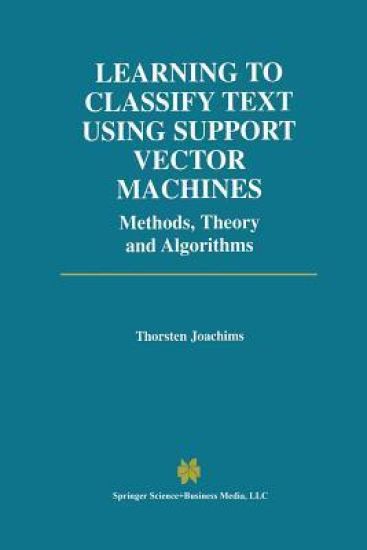
Learning to Classify Text Using Support Vector Machines

Learning to Classify Text Using Support Vector Machines

Thorsten Joachims

Springer-Verlag New York Inc.
2012
nidottu
Based on ideas from Support Vector Machines (SVMs), Learning To Classify Text Using Support Vector Machines presents a new approach to generating text classifiers from examples. The approach combines high performance and efficiency with theoretical understanding and improved robustness. In particular, it is highly effective without greedy heuristic components. The SVM approach is computationally efficient in training and classification, and it comes with a learning theory that can guide real-world applications. Learning To Classify Text Using Support Vector Machines gives a complete and detailed description of the SVM approach to learning text classifiers, including training algorithms, transductive text classification, efficient performance estimation, and a statistical learning model of text classification. In addition, it includes an overview of the field of text classification, making it self-contained even for newcomers to the field. This book gives a concise introduction to SVMs for pattern recognition, and it includes a detailed description of how to formulate text-classification tasks for machine learning.
Quadratic Forms in Infinite Dimensional Vector Spaces

Quadratic Forms in Infinite Dimensional Vector Spaces

Herbert Gross

Springer-Verlag New York Inc.
2013
nidottu
For about a decade I have made an effort to study quadratic forms in infinite dimensional vector spaces over arbitrary division rings. Here we present in a systematic fashion half of the results found du­ ring this period, to wit, the results on denumerably infinite spaces (" ~O- forms") . Certain among the resul ts included here had of course been published at the time when they were found, others appear for the first time (the case, for example, in Chapters IX, X, XII where I in­ clude results contained in the Ph.D.theses by my students w. Allenspach, L. Brand, U. Schneider, M. Studer). If one wants to give an introduction to the geometric algebra of infinite dimensional quadratic spaces, a discussion of ~ -dimensional 0 spaces ideally serves the purpose. First, these spaces show a large nurober of phenomena typical of infinite dimensional spaces. Second, most proofs can be done by recursion which resembles the familiar pro­ cedure by induction in the finite dimensional Situation. Third, the student acquires a good feeling for the linear algebra in infinite di­ mensions because it is impossible to camouflage problems by topological expedients (in dimension ~O it is easy to see, in a given case, wheth­ er topological language is appropriate or not) .
Grassmann Algebra Volume 1: Foundations: Exploring extended vector algebra with Mathematica
Grassmann Algebra Volume 1: Foundations Exploring extended vector algebra with Mathematica Grassmann algebra extends vector algebra by introducing the exterior product to algebraicize the notion of linear dependence. With it, vectors may be extended to higher-grade entities: bivectors, trivectors, ... multivectors. The extensive exterior product also has a regressive dual: the regressive product. The pair behaves a little like the Boolean duals of union and intersection. By interpreting one of the elements of the vector space as an origin point, points can be defined, and the exterior product can extend points into higher-grade located entities from which lines, planes and multiplanes can be defined. Theorems of Projective Geometry are simply formulae involving these entities and the dual products. By introducing the (orthogonal) complement operation, the scalar product of vectors may be extended to the interior product of multivectors, which in this more general case may no longer result in a scalar. The notion of the magnitude of vectors is extended to the magnitude of multivectors: for example, the magnitude of the exterior product of two vectors (a bivector) is the area of the parallelogram formed by them. To develop these foundational concepts, we need only consider entities which are the sums of elements of the same grade. This is the focus of this volume. But the entities of Grassmann algebra need not be of the same grade, and the possible product types need not be constricted to just the exterior, regressive and interior products. For example quaternion algebra is simply the Grassmann algebra of scalars and bivectors under a new product operation. Clifford, geometric and higher order hypercomplex algebras, for example the octonions, may be defined similarly. If to these we introduce Clifford's invention of a scalar which squares to zero, we can define entities (for example dual quaternions) with which we can perform elaborate transformations. Exploration of these entities, operations and algebras will be the focus of the volume to follow this. There is something fascinating about the beauty with which the mathematical structures that Hermann Grassmann discovered describe the physical world, and something also fascinating about how these beautiful structures have been largely lost to the mainstreams of mathematics and science. He wrote his seminal Ausdehnungslehre (Die Ausdehnungslehre. Vollst ndig und in strenger Form) in 1862. But it was not until the latter part of his life that he received any significant recognition for it, most notably by Gibbs and Clifford. In recent times David Hestenes' Geometric Algebra must be given the credit for much of the emerging awareness of Grass-mann's innovation. In the hope that the book be accessible to scientists and engineers, students and professionals alike, the text attempts to avoid any terminology which does not make an essential contribution to an understanding of the basic concepts. Some familiarity with basic linear algebra may however be useful. The book is written using Mathematica, a powerful system for doing mathematics on a computer. This enables the theory to be cross-checked with computational explorations. However, a knowledge of Mathematica is not essential for an appreciation of Grassmann's beautiful ideas.
Linear Algebra over Division Ring: Vector Space

Linear Algebra over Division Ring: Vector Space

Aleks Kleyn

Createspace Independent Publishing Platform
2014
nidottu
In this book I treat linear maps of vector space over division ring.The set of linear maps of left vector space over division ring D is right vector space over division ring D. The concept of twin representations follows from the joint consideration of vector space V and vector space of linear transformations of the vector space V.Considering of twin representations of division ring in Abelian group leads to the concept of D-vector space and their linear map. Based on polylinear map I considered definition of tensor product of rings and tensor product of D-vector spaces.
Void Rivals Volume 3: The Key to Vector Theta
The worlds of G.I. JOE and TRANSFORMERS collide with the red hot VOID RIVALS in this new volume from Robert Kirkman (Invincible, The Walking Dead) and Lorenzo De Felici (Kroma, Oblivion Song). THE ENERGON UNIVERSE IS HOTTER THAN EVER Hot Rod and Pythona make their way to the Sacred Ring Will their arrival bring hope or spell certain doom for the Void Rivals? Meanwhile, Darak's loyalty is put to the test on Agorria. Will he be able to prove his worth to his father -- or will another unexpected arrival incite war on his homeworld? Collects issues #13-18. The game-changing team of Robert Kirkman (The Walking Dead, Invincible) and Lorenzo De Felici (Kroma, Oblivion Song) continue their critically acclaimed series exploring the most unexpected corners of the Energon Universe.
Invariant & Quasiinvariant Measures in Infinite-Dimensional Topological Vector Spaces
This monograph deals with certain aspects of the general theory of systems. The author develops the ergodic theory, which is the theory of quaslinvariant and invariant measures in such infinite-dimensional vector spaces which appear as models of various (physical, economic, genetic, linguistic, social, etc.) processes. The methods of ergodic theory are successful as applied to study properties of such systems. A foundation for ergodic theory was stimulated by the necessity of a consideration of statistic mechanic problems and was directly connected with the works of G. Birkhoff, Kryloff and Bogoliuboff, E. Hoph and other famous mathematicians.
The Less Is More Linear Algebra of Vector Spaces and Matrices

The Less Is More Linear Algebra of Vector Spaces and Matrices

Daniela Calvetti; Erkki Somersalo

SOCIETY FOR INDUSTRIAL APPLIED MATHEMATICS,U.S.
2023
nidottu
Designed for a proof-based course on linear algebra, this rigorous and concise textbook intentionally introduces vector spaces, inner products, and vector and matrix norms before Gaussian elimination and eigenvalues so students can quickly discover the singular value decomposition (SVD)—arguably the most enlightening and useful of all matrix factorizations. Gaussian elimination is then introduced after the SVD and the four fundamental subspaces and is presented in the context of vector spaces rather than as a computational recipe. This allows the authors to use linear independence, spanning sets and bases, and the four fundamental subspaces to explain and exploit Gaussian elimination and the LU factorization, as well as the solution of overdetermined linear systems in the least squares sense and eigenvalues and eigenvectors. This unique textbook also includes examples and problems focused on concepts rather than the mechanics of linear algebra. The problems at the end of each chapter and in an associated website encourage readers to explore how to use the notions introduced in the chapter in a variety of ways. Additional problems, quizzes, and exams will be posted on an accompanying website and updated regularly. The Less Is More Linear Algebra of Vector Spaces and Matrices is for students and researchers interested in learning linear algebra who have the mathematical maturity to appreciate abstract concepts that generalize intuitive ideas. The early introduction of the SVD makes the book particularly useful for those interested in using linear algebra in applications such as scientific computing and data science. It is appropriate for a first proof-based course in linear algebra.
Modelo Black-Litterman con Support Vector Regression: una alternativa para los fondos de pensiones obligatorios colombianos
El modelo pensional colombiano se caracteriza por ser intergeneracional, raz n por la cual se ha visto afectado por tres grandes problemas estructurales: inequidad, baja cobertura e insostenibilidad financiera. Frente a este panorama, el Estado ha reaccionado con medidas de tipo normativo que han aliviado algunos de estos problemas; sin embargo, estas regulaciones prudenciales han impactado la finalidad inherente a un fondo de inversi n, es decir, la generaci n de riqueza para garantizar el consumo intertemporal de la poblaci n colombiana en edad de retiro. En consecuencia, los fondos de pensiones en Colombia requieren que, bajo el marco de las diferentes regulaciones, se estudien nuevas alternativas de estructuraci n de sus portafolios que les permitan un eficiente manejo de los recursos de retiro para su poblaci n. En este sentido, se cre una frontera y un portafolio eficientes mediante la aplicaci n de Support Vector Machine sobre el modelo Black-Litterman para los fondos de pensiones obligatorios colombianos, con el fin de comprobar la utilidad de los algoritmos de aprendizaje en los diferentes mbitos financieros. Los resultados muestran que es posible su aplicabilidad al modelo de estructuraci n de portafolios Black-Litterman mediante mejoras a la matriz de las distribuciones a priori, puntualmente con el uso de Support Vector Regression, que gener portafolios mejor diversificados frente al modelo media varianza de Markowitz, y que son adaptables a los fondos de pensiones obligatorios colombianos.
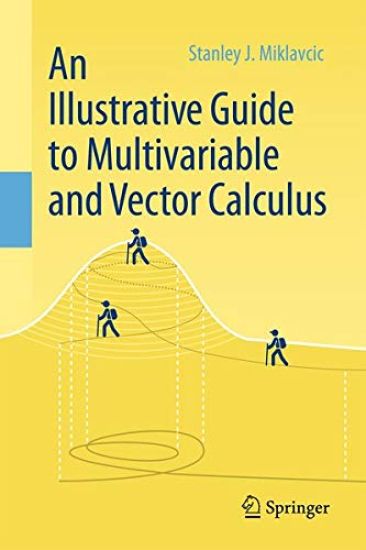
An Illustrative Guide to Multivariable and Vector Calculus

An Illustrative Guide to Multivariable and Vector Calculus

Stanley J. Miklavcic

Springer Nature Switzerland AG
2020
sidottu
This textbook focuses on one of the most valuable skills in multivariable and vector calculus: visualization. With over one hundred carefully drawn color images, students who have long struggled picturing, for example, level sets or vector fields will find these abstract concepts rendered with clarity and ingenuity. This illustrative approach to the material covered in standard multivariable and vector calculus textbooks will serve as a much-needed and highly useful companion. Emphasizing portability, this book is an ideal complement to other references in the area. It begins by exploring preliminary ideas such as vector algebra, sets, and coordinate systems, before moving into the core areas of multivariable differentiation and integration, and vector calculus. Sections on the chain rule for second derivatives, implicit functions, PDEs, and the method of least squares offer additional depth; ample illustrations are woven throughout. Mastery Checks engage students in material on the spot, while longer exercise sets at the end of each chapter reinforce techniques. An Illustrative Guide to Multivariable and Vector Calculus will appeal to multivariable and vector calculus students and instructors around the world who seek an accessible, visual approach to this subject. Higher-level students, called upon to apply these concepts across science and engineering, will also find this a valuable and concise resource.
An Illustrative Guide to Multivariable and Vector Calculus

An Illustrative Guide to Multivariable and Vector Calculus

Stanley J. Miklavcic

Springer Nature Switzerland AG
2021
nidottu
This textbook focuses on one of the most valuable skills in multivariable and vector calculus: visualization. With over one hundred carefully drawn color images, students who have long struggled picturing, for example, level sets or vector fields will find these abstract concepts rendered with clarity and ingenuity. This illustrative approach to the material covered in standard multivariable and vector calculus textbooks will serve as a much-needed and highly useful companion. Emphasizing portability, this book is an ideal complement to other references in the area. It begins by exploring preliminary ideas such as vector algebra, sets, and coordinate systems, before moving into the core areas of multivariable differentiation and integration, and vector calculus. Sections on the chain rule for second derivatives, implicit functions, PDEs, and the method of least squares offer additional depth; ample illustrations are woven throughout. Mastery Checks engage students in material on the spot, while longer exercise sets at the end of each chapter reinforce techniques. An Illustrative Guide to Multivariable and Vector Calculus will appeal to multivariable and vector calculus students and instructors around the world who seek an accessible, visual approach to this subject. Higher-level students, called upon to apply these concepts across science and engineering, will also find this a valuable and concise resource.