

Kirjahaku
Etsi kirjoja tekijän nimen, kirjan nimen tai ISBN:n perusteella.
1000 tulosta hakusanalla Adam Dailey

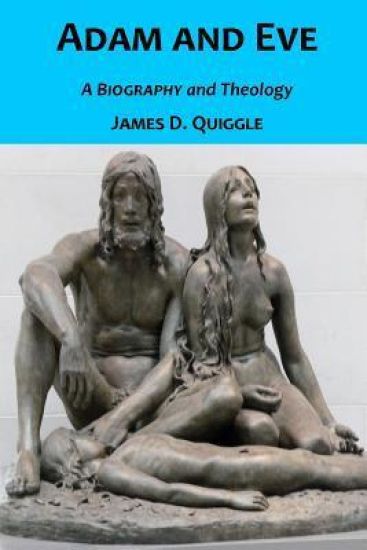
Adam and Eve, A Biography and Theology
James D. Quiggle
Createspace Independent Publishing Platform
2011
nidottu


Adam's Story: The Calloway Chronicles
H. M. Swift
Createspace Independent Publishing Platform
2011
nidottu
1936 - New YorkAdam Calloway knows what it's like to be alone. Determined to make a life on his own terms, he seizes the first chance he has to escape his hometown and travels to New York, a thriving metropolis caught up in the nationwide struggles of the Great Depression. In a miraculous stroke of luck, a wealthy biologist sees potential in Adam and gives him a chance to prove his worth, and he flourishes under the protection of his new mentor.But a terrible secret lurks within the heart of the starving city. Helena has her sights set on Adam, and as she draws him further into her web, he faces an entirely new type of hunger-one that threatens his very humanity.



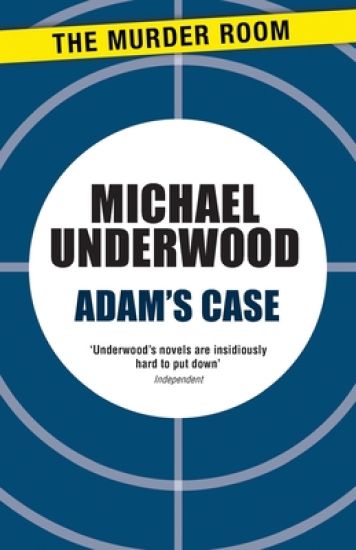
Adam Cape - a young barrister - prosecutes a case of assault at the Old Bailey. On the face of it, it's a straightforward trial but its aftermath brings him uncomfortably close to death and Adam is unable to free himself from a murder that results. With the best of motives, and the most unprofessional behavior, he becomes a bane to police; lands in hospital; is on hand when a bank robbery is averted - and, remarkably, bumbles into the truth of the case.
Adam Smith and Law
Routledge
2016
sidottu
The essays selected for this volume highlight the contributions of Adam Smith to our understanding of law and jurisprudence. The collection provides a detailed and overarching analysis of Smith’s work related to law and shows how Smith connected jurisprudence to moral philosophy and to economics. In this regard, the volume is unique and stands out in comparison to the many books which explore Smith’s contributions to economics. Contributions to this volume form the core of an essential research collection on Adam Smith and law by reproducing key works of scholarship in a form that permits the user to authoritatively cite the original publications; maintaining the original pagination and references.
Adam in Seventeenth Century Political Writing in England and New England
Julia Ipgrave
Routledge
2016
sidottu
Designed to contribute to a greater understanding of the religious foundations of seventeenth century political writing, this study offers a detailed exploration of the significance of the figure and story of Adam at that time. The book investigates seventeenth-century writings from England and New England-examining writings by Roger Williams and John Eliot, Gerrard Winstanley, John Milton, and John Locke-to explore the varying significance afforded to the Biblical figure of Adam in theories of the polity. In so doing, it counters over-simplified views of modern secular political thought breaking free from the confines of religion, by showing the diversity of political models and possibilities that Adamic theories supported. It provides contextual background for the appreciation of seventeenth-century culture and other cultural artefacts, and feeds into current scholarly interest in the relationship between religion and the public sphere, and in stories of origins and Creation.
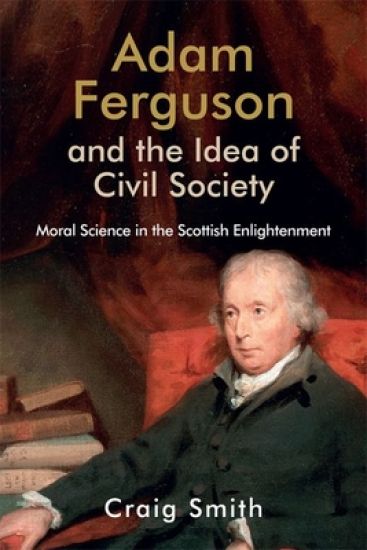
Adam Ferguson, a friend of David Hume and Adam Smith, was among the leading Scottish Enlightenment figures who worked to develop a science of man. He created a methodology for moral science that combined empirically based social theory with normative moralising. He was among the first in the English-speaking world to make use of the terms civilization, civil society and political science. Craig Smith explores Ferguson's thought, and examines his attempt to develop a genuine moral science and its place in providing a secure basis for the virtuous education of the new elite of Hanoverian Britain. The Ferguson that emerges is far from the stereotyped image of a republican sceptical about commercial society and much closer to the mainstream of the Scottish Enlightenment and its defence of the new British commercial order.
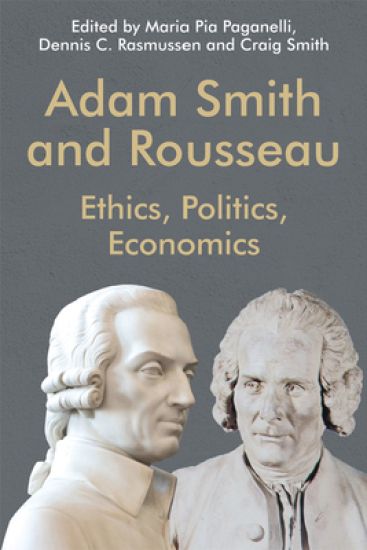
Adam Smith and Rousseau
Edinburgh University Press
2018
sidottu
Looks at all aspects of the pivotal intellectual relationship between two key figures of the EnlightenmentThis collection brings together an international and interdisciplinary group of Adam Smith and Jean-Jacques Rousseau scholars to explore the key shared concerns of these two great thinkers in politics, philosophy, economics, history and literature.Rousseau (1712 78) and Smith (1723 90) are two of the foremost thinkers of the European Enlightenment. They both made seminal contributions to moral and political philosophy and shaped some of the key concepts of modern political economy. Among Smith's first published works was a letter to the 'Edinburgh Review' where he discusses Rousseau's 'Discourse on the Origin of Inequality'. Smith continued to engage with Rousseau's work and to explore many shared themes such as sympathy, political economy, sentiment and inequality. Though we have no solid evidence that they met in person, we do know that they shared many friends and interlocutors. In particular, David Hume was Smith's closest intellectual associate and was also the one who arranged for Rousseau's stay in England in 1766.ContributorsTabitha Baker, University of Warwick, UK.Christel Fricke, University of Oslo, Norway.Charles L. Griswold, Boston University, USA.Ryan Patrick Hanley, Marquette University, USA.Mark Hill, London School of Economics, UK.Mark Hulliung, Brandeis University, USA.Jimena Hurtado, Universidad de los Andes, Columbia.John McHugh, Denison University, USA.Jason Neidleman, University of La Verne, USA.Maria Pia Paganelli, Trinity University, USA.Dennis C. Rasmussen, Tufts University, USA. Neil Saccamano, Cornell University, USA. Michael Schleeter, Pacific Lutheran University, USA. . Adam Schoene, Cornell University, USA. Craig Smith, University of Glasgow, UK.
Adam Smith and Rousseau
Edinburgh University Press
2019
nidottu
Looks at all aspects of the pivotal intellectual relationship between two key figures of the EnlightenmentJean-Jacques Rousseau (171278) and Adam Smith (172390) are two of the foremost thinkers of the European Enlightenment. They who made seminal contributions to moral and political philosophy and shaped some of the key concepts of modern political economy. Though we have no solid evidence that they met in person, we do know that they shared many friends and interlocutors.In particular, David Hume was Smith's closest intellectual associate and was also the one who arranged for Rousseau's stay in England in 1766. This collection brings together an international and interdisciplinary group of Adam Smith and Rousseau scholars to explore the key shared concerns of these two great thinkers in politics, philosophy, economics, history and literature
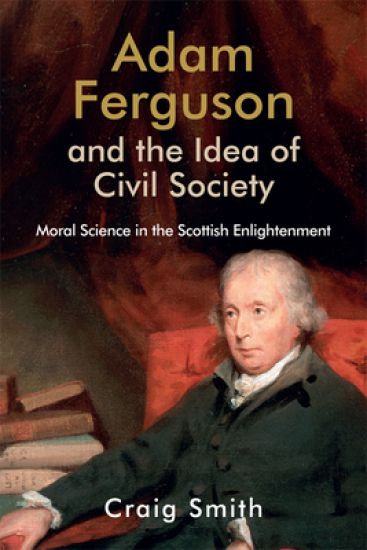
Adam Ferguson, a friend of David Hume and Adam Smith, was among the leading Scottish Enlightenment figures who worked to develop a science of man. He created a methodology for moral science that combined empirically based social theory with normative moralising. He was among the first in the English-speaking world to make use of the terms civilization, civil society and political science. Craig Smith explores Ferguson's thought, and examines his attempt to develop a genuine moral science and its place in providing a secure basis for the virtuous education of the new elite of Hanoverian Britain. The Ferguson that emerges is far from the stereotyped image of a republican sceptical about commercial society and much closer to the mainstream of the Scottish Enlightenment and its defence of the new British commercial order.