Kirjojen hintavertailu. Mukana 11 627 220 kirjaa ja 12 kauppaa.

Kirjahaku

Etsi kirjoja tekijän nimen, kirjan nimen tai ISBN:n perusteella.

1000 tulosta hakusanalla Adrian Rodriguez

The System of the Constitution

The System of the Constitution

Adrian Vermeule

Oxford University Press Inc
2012
sidottu
A constitutional order is a system of systems. It is an aggregate of interacting institutions, which are themselves aggregates of interacting individuals. In The System of the Constitution, Adrian Vermeule analyzes constitutionalism through the lens of systems theory, originally developed in biology, computer science, political science and other disciplines. Systems theory illuminates both the structural constitution and constitutional judging, and reveals that standard views and claims about constitutional theory commit fallacies of aggregation and are thus invalid. By contrast, Vermeule explains and illustrates an approach to constitutionalism that considers the systemic interactions of legal and political institutions and of the individuals who act within them.
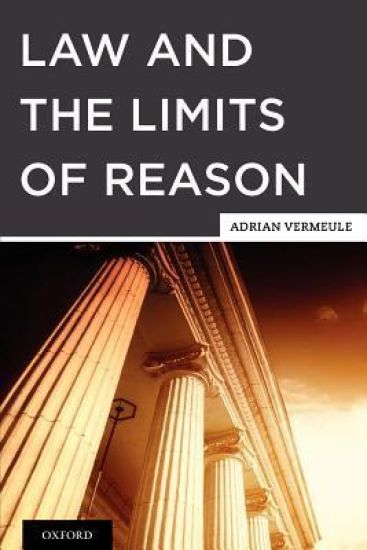
Law and the Limits of Reason

Law and the Limits of Reason

Adrian Vermeule

Oxford University Press Inc
2012
nidottu
Human reason is limited. What are the consequences of this fact for the contested lawmaking claims between courts, legislatures and the executive branch? In light of the limits of reason, how should legal institutions be designed? In Law and the Limits of Reason, Adrian Vermeule criticizes the view that the limits of reason counsel in favor of judicial lawmaking in the style of the common law. He argues that there is no logical connection between the limits of reason, on the one hand, and the superiority of common law or of judge-made constitutional law on the other. The relatively small number of judges on relevant courts, their limited informational base and generalist rather than specialized skills, ensure that judicial reason is itself sharply limited and that the argument to judicial lawmaking from the limits of reason outruns the logical, causal, and evidentiary support. Instead, Adrian Vermeule proposes and defends a "codified constitution" - a regime in which legislatures have the primary authority to develop constitutional law over time, through statutes and constitutional amendments. Precisely because of the limits of human reason, large modern legislatures, with their numerous membership, complex internal structures for processing information and their abundant informational resources, are the most effective lawmaking institutions. Law and the Limits of Reason, now in paperback, serves as a thought-provoking companion to any constitutional law course of study.
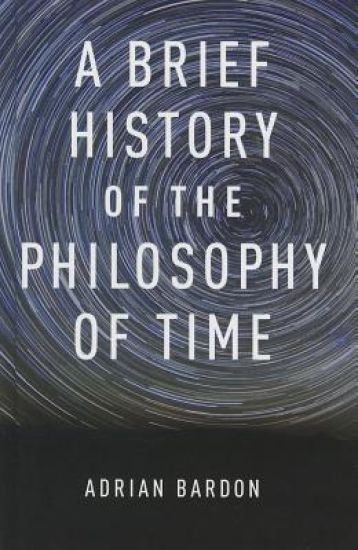
A Brief History of the Philosophy of Time

A Brief History of the Philosophy of Time

Adrian Bardon

Oxford University Press Inc
2013
sidottu
Adrian Bardon's A Brief History of the Philosophy of Time is a short yet thorough introduction to the history, philosophy, and science of the study of time-from the pre-Socratic philosophers through Einstein and beyond. Its treatment is roughly chronological, starting with the ancient Greek philosophers Heraclitus and Parmenides and proceeding through the history of Western philosophy and science up to the present. Using illustrations and keeping technical language to a minimum, A Brief History of the Philosophy of Time covers subjects such as time and change, the experience of time, physical and metaphysical approaches to the nature of time, the direction of time, time-travel, time and freedom of the will, and scientific and philosophical approaches to eternity and the beginning of time. Bardon brings the resources of over 2500 years of philosophy and science to bear on some of humanity's most fundamental and enduring questions.
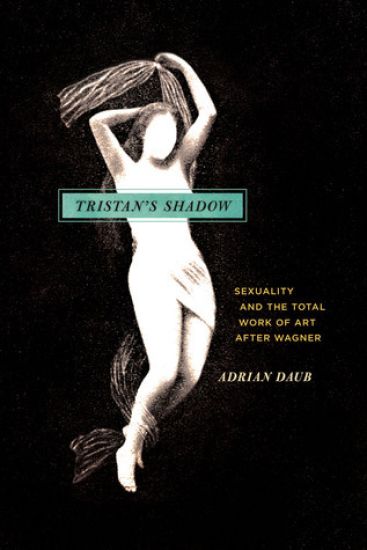
Tristan`s Shadow – Sexuality and the Total Work of Art after Wagner
Das Rheingold, Die Walkure, and Siegfried. Parsifal. Tristan und Isolde. Both revered and reviled, Richard Wagner conceived some of the nineteenth century's most important operatic productions - and created some of the most indelible characters ever to grace the stage. But over the course of his polarizing career, Wagner also composed nearly twenty volumes of writing on opera. His influential concept of Gesamtkunstwerk - the "total work of art" - famously and controversially offered a way to unify the different media of an opera into a coherent whole. Less well-known, however, are Wagner's strange theories on sexuality - like his ideas about erotic acoustics and the metaphysics of sexual difference. Drawing on the discourses of psychoanalysis, evolutionary biology, and other developing fields of study that informed Wagner's world, Adrian Daub traces the influence of Gesamtkunstwerk and eroticism from their classic expressions in Tristan und Isolde into the work of the generation of composers that followed, including Zemlinsky, d'Albert, Schreker, and Strauss. For decades after Wagner's death, Daub writes, these composers continued to grapple with his ideas and with his overwhelming legacy, trying in vain to write their way out from Tristan's shadow.
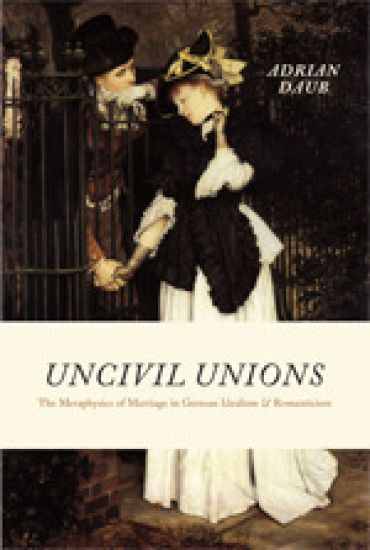
Uncivil Unions

Uncivil Unions

Adrian Daub

University of Chicago Press
2012
sidottu
"What a strange invention marriage is!" wrote Kierkegaard. "Is it the expression of that inexplicable erotic sentiment, that concordant elective affinity of souls, or is it a duty or a partnership...or is it a little of all that?" Like Kierkegaard a few decades later, many of Germany's most influential thinkers at the turn of the eighteenth century wondered about the nature of marriage but rejected the easy answers provided by biology and theology. In "Uncivil Unions", Adrian Daub presents a truly interdisciplinary look at the story of a generation of philosophers, poets, and intellectuals who turned away from theology, reason, common sense, and empirical observation to provide a purely metaphysical justification of marriage. Through close readings of philosophers like Fichte and Schlegel, and novelists like Sophie Mereau and Jean Paul, Daub charts the development of this new concept of marriage with an insightful blend of philosophy, cultural studies, and theory. The author delves deeply into the lives and work of the romantic and idealist poets and thinkers whose beliefs about marriage continue to shape ideas about gender, marriage, and sex to the present day.
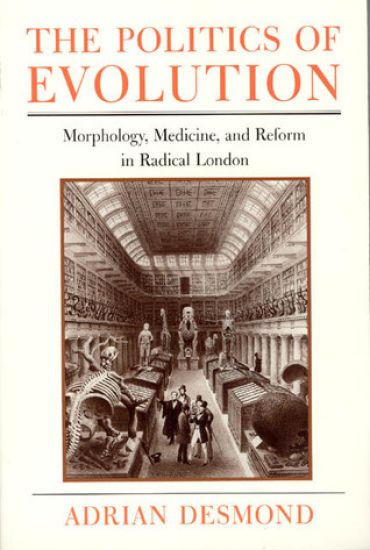
The Politics of Evolution

The Politics of Evolution

Adrian Desmond

University of Chicago Press
1992
nidottu
Looking for the first time at the cut-price anatomy schools rather than genteel Oxbridge, Desmond winkles out pre-Darwinian evolutionary ideas in reform-minded and politically charged early nineteenth-century London. In the process, he reveals the underside of London intellectual and social life in the generation before Darwin as it has never been seen before. "The Politics of Evolution is intellectual dynamite, and certainly one of the most important books in the history of science published during the past decade."—Jim Secord, Times Literary Supplement"One of those rare books that not only stakes out new territory but demands a radical overhaul of conventional wisdom."—John Hedley Brooke, Times Higher Education Supplement
Piracy

Piracy

Adrian Johns

University of Chicago Press
2010
sidottu
Since the rise of Napster and other file-sharing services in its wake, most of us have assumed that intellectual piracy is a product of the digital age and that it threatens creative expression as never before. The Motion Picture Association of America, for instance, claimed that in 2005 the film industry lost $2.3 billion in revenue to piracy online. But here Adrian Johns shows that piracy has a much longer and more vital history than we have realized - one that has been largely forgotten and is little understood. "Piracy" explores the intellectual property wars from the advent of print culture in the fifteenth century to the reign of the Internet in the twenty-first. Brimming with broader implications for today's debates over open access, fair use, free culture, and the like, Johns' book ultimately argues that piracy has always stood at the center of our attempts to reconcile creativity and commerce - and that piracy has been an engine of social, technological, and intellectual innovations as often as it has been their adversary. From Cervantes to Sonny Bono, from Maria Callas to Microsoft, from Grub Street to Google, no chapter in the story of piracy evades Johns' graceful analysis in what will be the definitive history of the subject for years to come.
Piracy

Piracy

Adrian Johns

University of Chicago Press
2011
nidottu
Since the rise of Napster and other file-sharing services in its wake, most of us have assumed that intellectual piracy is a product of the digital age and that it threatens creative expression as never before. The Motion Picture Association of America, for instance, claimed that in 2005 the film industry lost $2.3 billion in revenue to piracy online. But here Adrian Johns shows that piracy has a much longer and more vital history than we have realized - one that has been largely forgotten and is little understood. "Piracy" explores the intellectual property wars from the advent of print culture in the fifteenth century to the reign of the Internet in the twenty-first. Brimming with broader implications for today's debates over open access, fair use, free culture, and the like, Johns' book ultimately argues that piracy has always stood at the center of our attempts to reconcile creativity and commerce - and that piracy has been an engine of social, technological, and intellectual innovations as often as it has been their adversary. From Cervantes to Sonny Bono, from Maria Callas to Microsoft, from Grub Street to Google, no chapter in the story of piracy evades Johns' graceful analysis in what will be the definitive history of the subject for years to come.
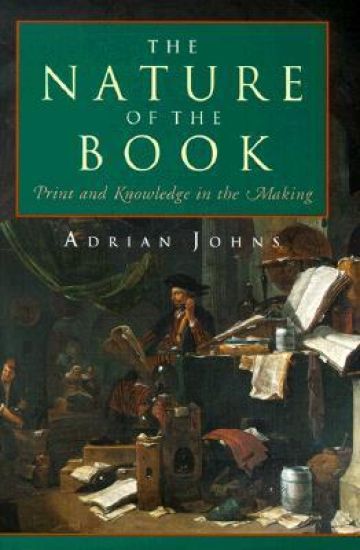
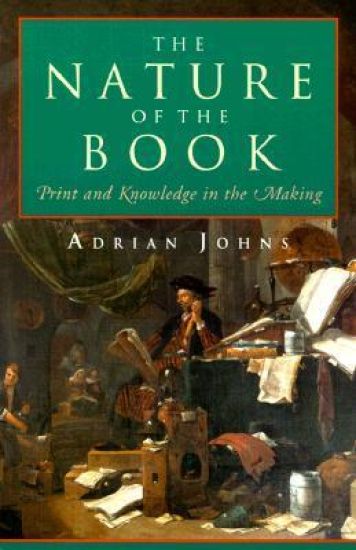
The Nature of the Book

The Nature of the Book

Adrian Johns

University of Chicago Press
1998
sidottu
This text takes a look at early modern England and the creative and commercial forces in which print culture was formed and its many arenas - commercial, intellectual, political and individual. It includes detailed information on booksellers shops, the Royal Society, paper manufactories and type foundaries. Also featured are replications of the bitter disputes between authors and printers, printers and booksellers and clerics and individuals as they debate and resolve the meaning and rights attached to the creation of ideas, their appearance in written form and then in print, and the opportunity to sell, buy, and read printed work. Focusing on the interplay between the scientific and print revolutions and on their roles, both complementary and antagonistic, the text looks at production and dissemination of knowledge. Print also being used to manipulate those findings for political, religious or idealogical reasons.
The Nature of the Book

The Nature of the Book

Adrian Johns

University of Chicago Press
2000
nidottu
In The Nature of the Book, a tour de force of cultural history, Adrian Johns constructs an entirely original and vivid picture of print culture and its many arenas—commercial, intellectual, political, and individual."A compelling exposition of how authors, printers, booksellers and readers competed for power over the printed page. . . . The richness of Mr. Johns's book lies in the splendid detail he has collected to describe the world of books in the first two centuries after the printing press arrived in England."—Alberto Manguel, Washington Times"[A] mammoth and stimulating account of the place of print in the history of knowledge. . . . Johns has written a tremendously learned primer."—D. Graham Burnett, New Republic"A detailed, engrossing, and genuinely eye-opening account of the formative stages of the print culture. . . . This is scholarship at its best."—Merle Rubin, Christian Science Monitor"The most lucid and persuasive account of the new kind of knowledge produced by print. . . . A work to rank alongside McLuhan."—John Sutherland, The Independent"Entertainingly written. . . . The most comprehensive account available . . . well documented and engaging."—Ian Maclean, Times Literary Supplement
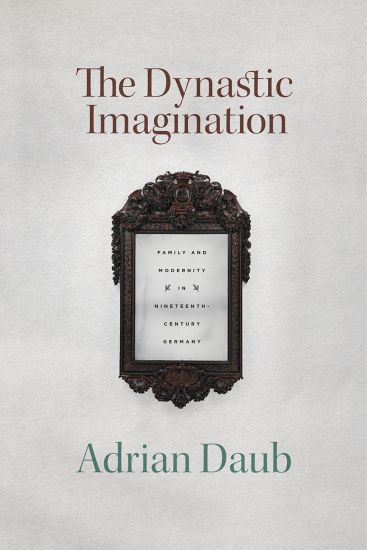
The Dynastic Imagination

The Dynastic Imagination

Adrian Daub

University of Chicago Press
2021
sidottu
Adrian Daub’s The Dynastic Imagination offers an unexpected account of modern German intellectual history through frameworks of family and kinship. Modernity aimed to brush off dynastic, hierarchical authority and to make society anew through the mechanisms of marriage, siblinghood, and love. It was, in other words, centered on the nuclear family. But as Daub shows, the dynastic imagination persisted, in time emerging as a critical stance by which the nuclear family’s conservatism and temporal limits could be exposed. Focusing on the complex interaction between dynasties and national identity-formation in Germany, Daub shows how a lingering preoccupation with dynastic modes of explanation, legitimation, and organization suffused German literature and culture. Daub builds this conception of dynasty in a syncretic study of the literature, sciences, and history of ideas into the twentieth century. As early modernism discovered a standpoint from which to critique the nuclear family, remnants of dynastic ideology kept their hold variously on Richard Wagner, Émile Zola, Stefan George, and Sigmund Freud. At every stage of cultural progression, Daub reveals how the relation of dynastic to nuclear families inflected modern intellectual history.
The Dynastic Imagination

The Dynastic Imagination

Adrian Daub

University of Chicago Press
2021
nidottu
Adrian Daub’s The Dynastic Imagination offers an unexpected account of modern German intellectual history through frameworks of family and kinship. Modernity aimed to brush off dynastic, hierarchical authority and to make society anew through the mechanisms of marriage, siblinghood, and love. It was, in other words, centered on the nuclear family. But as Daub shows, the dynastic imagination persisted, in time emerging as a critical stance by which the nuclear family’s conservatism and temporal limits could be exposed. Focusing on the complex interaction between dynasties and national identity-formation in Germany, Daub shows how a lingering preoccupation with dynastic modes of explanation, legitimation, and organization suffused German literature and culture. Daub builds this conception of dynasty in a syncretic study of the literature, sciences, and history of ideas into the twentieth century. As early modernism discovered a standpoint from which to critique the nuclear family, remnants of dynastic ideology kept their hold variously on Richard Wagner, Émile Zola, Stefan George, and Sigmund Freud. At every stage of cultural progression, Daub reveals how the relation of dynastic to nuclear families inflected modern intellectual history.
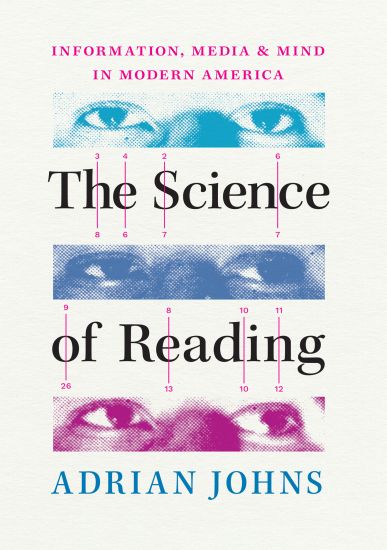
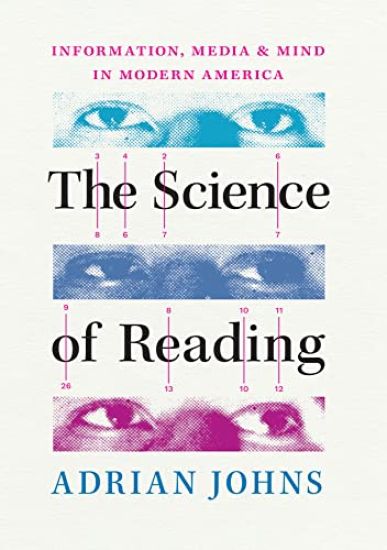
The Science of Reading

The Science of Reading

Adrian Johns

THE UNIVERSITY OF CHICAGO PRESS
2023
sidottu
For the first time, the story of how and why we have plumbed the mysteries of reading, and why it matters today. Reading is perhaps the essential practice of modern civilization. For centuries, it has been seen as key to both personal fulfillment and social progress, and millions today depend on it to participate fully in our society. Yet, at its heart, reading is a surprisingly elusive practice. This book tells for the first time the story of how American scientists and others have sought to understand reading, and, by understanding it, to improve how people do it. Starting around 1900, researchers—convinced of the urgent need to comprehend a practice central to industrial democracy—began to devise instruments and experiments to investigate what happened to people when they read. They traced how a good reader’s eyes moved across a page of printed characters, and they asked how their mind apprehended meanings as they did so. In schools across the country, millions of Americans learned to read through the application of this science of reading. At the same time, workers fanned out across the land to extend the science of reading into the social realm, mapping the very geography of information for the first time. Their pioneering efforts revealed that the nation’s most pressing problems were rooted in drastic informational inequities, between North and South, city and country, and white and Black—and they suggested ways to tackle those problems. Today, much of how we experience our information society reflects the influence of these enterprises. This book explains both how the science of reading shaped our age and why, with so-called reading wars still plaguing schools across the nation, it remains bitterly contested.
The Science of Reading

The Science of Reading

Adrian Johns

THE UNIVERSITY OF CHICAGO PRESS
2024
nidottu
For the first time, the story of how and why we have plumbed the mysteries of reading, and why it matters today. Reading is perhaps the essential practice of modern civilization. For centuries, it has been seen as key to both personal fulfillment and social progress, and millions today depend on it to participate fully in our society. Yet, at its heart, reading is a surprisingly elusive practice. This book tells for the first time the story of how American scientists and others have sought to understand reading, and, by understanding it, to improve how people do it. Starting around 1900, researchers—convinced of the urgent need to comprehend a practice central to industrial democracy—began to devise instruments and experiments to investigate what happened to people when they read. They traced how a good reader’s eyes moved across a page of printed characters, and they asked how their mind apprehended meanings as they did so. In schools across the country, millions of Americans learned to read through the application of this science of reading. At the same time, workers fanned out across the land to extend the science of reading into the social realm, mapping the very geography of information for the first time. Their pioneering efforts revealed that the nation’s most pressing problems were rooted in drastic informational inequities, between North and South, city and country, and white and Black—and they suggested ways to tackle those problems. Today, much of how we experience our information society reflects the influence of these enterprises. This book explains both how the science of reading shaped our age and why, with so-called reading wars still plaguing schools across the nation, it remains bitterly contested.
Contesting Zion

Contesting Zion

Adrian Ciani

MCGILL-QUEEN'S UNIVERSITY PRESS
2025
nidottu
The modern relationship between the Vatican and the State of Israel is rooted in a long history of hostility between Judaism and Roman Catholicism. Through the centuries, popes and theologians marginalized the Jewish people, assigning them collective guilt for the death of Jesus Christ and claiming that the sacred territory of Palestine was the true patrimony of the Roman Catholic Church. With the advent of political Zionism in the nineteenth century, Catholic fears of a Jewish-dominated Palestine were renewed.Contesting Zion examines the relationship between the Vatican and the Zionist movement from the Balfour Declaration in 1917 to the first decade of Israeli statehood. Adrian Ciani considers the transnational nature of Catholic responses to Zionism and the creation of Israel, with a focus on the Catholic Church in the United States. From the 1920s through the 1950s, American Catholic leaders became crucial intermediaries between Washington and the Vatican. Speaking as both loyal American citizens and devout Catholics, they were uniquely positioned to articulate the Vatican’s policy objectives to the American government, including on the future of Palestine. American Catholics were also instrumental in advocating the church’s Palestine policy at the United Nations, playing a central role in the Holy See’s attempts to shape the twentieth-century international order.From the 1920s through the 1960s, Contesting Zion argues convincingly, American Catholics were at the forefront of the Vatican’s efforts to sway the fate of Palestine and to influence the future of the wider region.
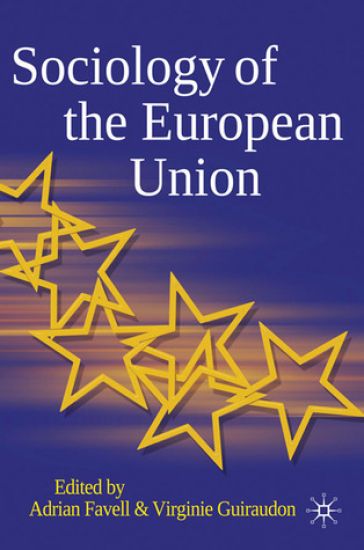
Sociology of the European Union

Sociology of the European Union

Adrian Favell; Virginie Guiraudon

Red Globe Press
2011
nidottu
Sociology of the European Union examines how core sociological theories, concepts and methods can be applied to the study of the EU. Carefully integrating theory and empirical research, the book: - Explores key concepts in European studies, such as Europeanization, integration and transnationalism - Assesses the social foundations of Europe, from class and citizenship to mobility and culture - Includes contributions by internationally renowned names in political, economic and cultural sociology - Contains a postface from George Ross, one of the leading figures in contemporary European Studies This thought-provoking book opens up new questions and debates whilst introducing readers to essential ideas and cutting-edge research. It is invaluable reading for students of Sociology, European Studies, Politics and International Relations.
The Talented Manager

The Talented Manager

Adrian F. Furnham

Palgrave Macmillan
2012
nidottu
In this new collection of articles on talent acquisition and retention, Adrian Furnham, author of The Elephant in the Boardroom , offers an engaging and witty look into the world of the talented manager. Based on solid research this book offers a substantial introduction to the importance of talent in the workplace.