Kirjojen hintavertailu. Mukana 12 016 292 kirjaa ja 12 kauppaa.

Kirjahaku

Etsi kirjoja tekijän nimen, kirjan nimen tai ISBN:n perusteella.

1000 tulosta hakusanalla Andrew Merrifield

Helen of Troy Andrew Lang

Helen of Troy Andrew Lang

Andrew Lang

Createspace Independent Publishing Platform
2016
nidottu
In Greek mythology, Helen, better known as Helen of Sparta or Helen of Troy, was daughter of Zeus and Leda, wife of king Menelaus of Sparta and sister of Castor, Polydeuces and Clytemnestra. Her abduction by Paris brought about the Trojan War. Helen was described as having the face that launched a thousand ships. Helen or Helene is probably derived from the Greek word meaning "torch" or "corposant" or might be related to "selene" meaning "moon".
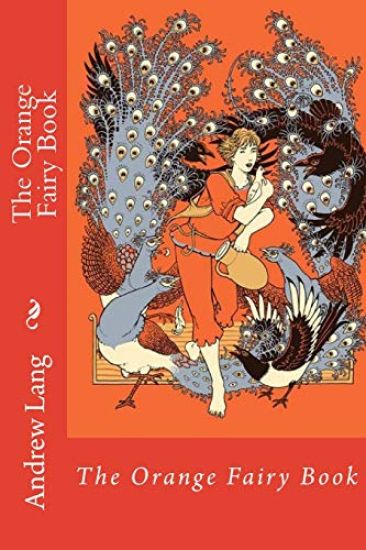
The Grey Fairy Book Andrew Lang

The Grey Fairy Book Andrew Lang

Andrew Lang

Createspace Independent Publishing Platform
2017
nidottu
"The Grey Fairy Book," the sixth in the series, was originally published in 1900. This edition contains all thirty-five of the original stories and all fifty-eight of the original black-and-white illustrations. *** The collections were specifically intended for children, and consequently edited for that end. *** When Andrew began publishing these books there were almost no English fairy tale books in circulation. The series proved of great influence in children's literature, and inspired a host of imitators. The series also proved to be an inspiration to J.R. Tolken and his Middle-Earth collection of novels. *** This book contains these stories: Donkey Skin; The Goblin Pony; An Impossible Enchantment; The Story of Dschemil and Dachemila; Janni and the Draken; The Partnership of the Thief and the Liar; Fortunatus and his Purse...
The Crimson Fairy Book Andrew Lang

The Crimson Fairy Book Andrew Lang

Andrew Lang

Createspace Independent Publishing Platform
2017
nidottu
Each Fairy Book demands a preface from the Editor, and these introductions are inevitably both monotonous and unavailing. A sense of literary honesty compels the Editor to keep repeating that he is the Editor, and not the author of the Fairy Tales, just as a distinguished man of science is only the Editor, not the Author of Nature. Like nature, popular tales are too vast to be the creation of a single modern mind. The Editor's business is to hunt for collections of these stories told by peasant or savage grandmothers in many climes, from New Caledonia to Zululand; from the frozen snows of the Polar regions to Greece, or Spain, or Italy, or far Lochaber. When the tales are found they are adapted to the needs of British children by various hands, the Editor doing little beyond guarding the interests of propriety, and toning down to mild reproofs the tortures inflicted on wicked stepmothers, and other naughty characters.
The Yellow Fairy Book Andrew Lang

The Yellow Fairy Book Andrew Lang

Andrew Lang

Createspace Independent Publishing Platform
2017
nidottu
The Editor thinks that children will readily forgive him for publishing another Fairy Book. We have had the Blue, the Red, the Green, and here is the Yellow. If children are pleased, and they are so kind as to say that they are pleased, the Editor does not care very much for what other people may say.
Andrew's First Gig

Andrew's First Gig

Joshua Galindo

Authorhouse
2019
pokkari
What is a gig? Gig is a slang word for a musician's performance. What about conga drums? The word conga refers to three things: 1. The drum-the conga drum is a type of makuta Congolese (from the Congo) African drum. 2. The music-in Cuba, where these drums were developed, the word conga is usually only applied to a drum and the rhythm played. 3. The dance-the conga dance is a celebratory dance that many do in a line, involving three steps and a tap to the side.
Andrew the Blue Eared Puppy

Andrew the Blue Eared Puppy

Marla Huehmer

Createspace Independent Publishing Platform
2017
nidottu
Andrew The Blue-Eared Puppy is a beautiful book by a mother and her daughter. Making new friends can feel frightening at first. It can be challenging to find the right thing to say and find the right thing to play. When you take your time to get to know someone, you find that they could have many things in common with you. Andrew The Blue-Eared Puppy is about a little girl who purchased a stuffed animal puppy from a local bookstore. The girl takes Andrew the puppy home and begins to introduce him to her toys. At first, Andrew is nervous when meeting his new friends. The girl notices this and begins to share personal stories about each one slowly. This slow introduction makes meeting his new friends less frightening.
Andrew Jackson

Andrew Jackson

Richard E. Ellis

CQ Press
2003
sidottu
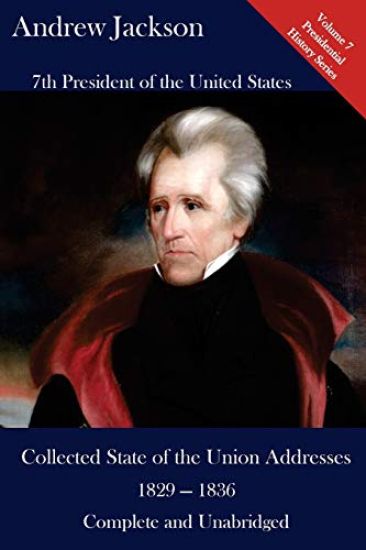
Each volume in the American Presidents Reference Series is organized around an individual presidency and gathers a host of biographical, analytical, and primary source historical material that will analyze the presidency and bring the president, his administration, and his times to life. The series focuses on key moments in U.S. political history as seen through the eyes of the most influential presidents to take the oath of office. Unique headnotes provide the context to data, tables and excerpted primary source documents. Andrew Jackson, born in 1767, attained the rank of major general. Through his military exploits during the war of 1812, Jackson was nicknamed "Old Hickory." His victory in the Battle of New Orleans helped launch his political career. Although Senator Jackson won the most electoral votes in the 1824 presidential election, the race was thrown in the House of Representatives where John Quincy Adams prevailed. Four years later he defeated Adams and became the seventh president of the United States. He was the first westerner to be elected by the common man and not the elite, and the first to be a target of a presidential assassin. With the turmoil of the times, Jackson was confronted with sectional politics, nullification threats, and the responsibility of removing Native Americans from their ancestral homes. Jackson died in 1845. This new volume on the Andrew Jackson presidency will cover: Economic developmentThe new Democratic PartyNative AmericansThe Bank of the United StatesSectionalismHis military careerPersonal scandal
Andrew Glassner's Other Notebook

Andrew Glassner's Other Notebook

Andrew Glassner

A K Peters
2002
nidottu
Once again, Andrew Glassner opens his notebook and invites readers in a wide range of stimulating explorations of art, nature, and computer graphics. The text of this book is accessible and informal, and richly illustrated with hundreds of images illustrating topics from Celtic knotwork and lightning to soap bubbles and the mysteries of camera shutters. This well-known author brings decades of experience as a researcher and writer to create discussions that are as clear as they are captivating. The book is intended for hobbyists, researchers, students, and anyone interested in computer graphics and its uses for creative exploration.
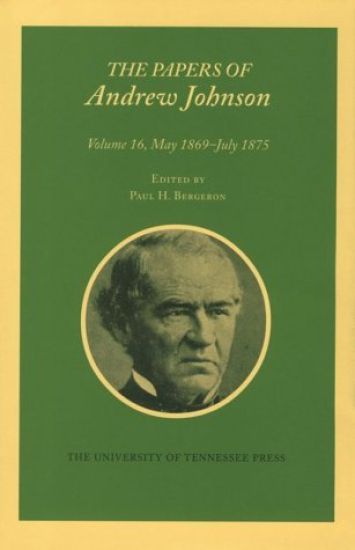
The Papers of Andrew Johnson

The Papers of Andrew Johnson

Andrew Johnson

University of Tennessee Press
2000
sidottu
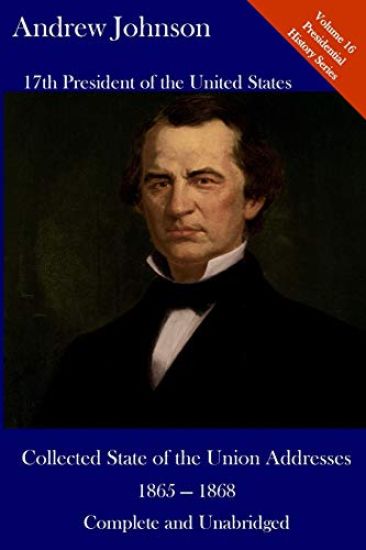
Is there life after the presidency? That is the question with which Andrew Johnson wrestled after his return to Tennessee in March 1869 until his death in the summer of 1875. He answered that question with a resounding “yes” and revitalized his political ambitions. For his six post-presidential years, Johnson relentlessly pursued a vindication of earlier setbacks and embarrassments. He had hardly arrived back in Greenville before he began mapping his strategy to recapture public acclaim. Johnson eschewed the opportunity to compete for the governor’s chair and opted instead to set his sights on the prospects of going back to the nation’s capital, preferably as a U. S. senator. Johnson engaged in three separate campaigns, one in 1869, one in 1872, and the final one is 1874-75. In the first, he sought election to the U. S. Senate. At the very last minute the tide went against him in the legislature, and Johnson thereby lost a wonderful opportunity to return to Washington only a few months after the end of his presidency. In 1872, Tennessee stipulated that its new congressional seat would be an at-large one. This suited Johnson, who favored a statewide, rather than a district, race. When he could not secure the formal nomination of the state’s Democratic part, he boldly declared himself an independent candidate. Although he knew full well that his actual chances of election over either a Republican or a Democratic rival were slim, Johnson stayed in the fray. Confederates exerted one the Democratic party, and he succeeded. The Republican contender emerged victorious, much as Johnson had calculated, and therefore in a somewhat perverse this strengthened Johnson’s political clout for another day. The day came in 1874, when he launched his campaign for the U.S. Senate. Johnson labored mightily throughout the state in this cause: by the time the legislature convened, he was the major contender for the post. But Democratic party successes in the gubernatorial and legislative elections had encouraged a number of other hopefuls. Eventually, the legislature staged fifty-five ballots before Johnson carried the day in late January 1875. As fate would have it, President Grant summoned a special session if the U. S. Senate to meet in March, enabling Johnson to claim his seat well ahead of the normal schedule. The ex-president strode confidently into the Senate chamber, the scene of his impeachment embarrassment in 1868, and took the oath of office. Many well-wishers, as well as old foes, greeted the battle-scarred political veteran whose vindication had been achieved at last. After lingering in Washington after the close of the Senate session, Johnson returned to Tennessee, where he lived out the short remainder of his days. With the exception of serious financial reverses and a nearly fatal battle with cholera in 1873, Johnson’s sole focus had been his political rehabilitation. Considering his return to the Senate, albeit brief, the argument could be made that he succeeded. But, considering the verdict of most historians, it remains debatable whether he achieved his aims. The Editor: Paul H. Bergeron is professor of history at the University of Tennessee, Knoxville.
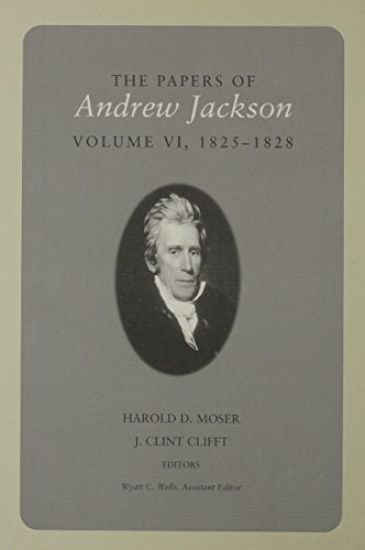
The Papers of Andrew Jackson

The Papers of Andrew Jackson

Andrew Jackson

University of Tennessee Press
2002
sidottu
This sixth volume of The Papers of Andrew Jackson documents the election on Andrew Jackson, the first westerner and the last veteran of the American Revolution, to the presidency.The four years of this volume chronicle the presidential campaign of 1828. Jackson, winner of the popular vote in 1824 but loser of the election, was once again the reluctant candidate, called into service by the voice of the voters. The campaign, one of the longest in American history, pitted Jackson against the incumbent John Quincy Adams; it was also one of the dirtiest campaigns in American history.The brunt of the mudslinging was aimed at Jackson, and it is covered in detail in this volume. Every aspect of the public and private life of the fifty-eight-year-old former major general in the United States Army came under scrutiny, and in both his opponents found him deficient. According to his detractors, he lacked the moral principles, the temperament, the education, and the family background requisite for a president of the United States. In sum, Jackson resembled the “devil incarnate,” to use his own words. The mudslinging left Jackson livid, anxious for retribution but constrained by the cause in which he was engaged. The presidential campaign of 1828, in the minds of Jackson and his supporters, was for the cause of truth and democracy against corrupt, self-seeking politicians, an aristocracy of power built upon bargains and dubious political alliances dedicated to its perpetuation in office.The four years covered in this volume were some of the most trying in Jackson’s life, but the one event that hurt Jackson the most was the death of his wife. Until his dying day, Jackson contended that her death had been hastened by the slanders of his opponents in the campaign. As great as the loss was for him personally, Jackson nonetheless rejoiced in the results of the election for, in his eyes, the voice of the people had finally been heard. Liberty, not power, had triumphed. Reform was at hand, and retribution would surely follow.
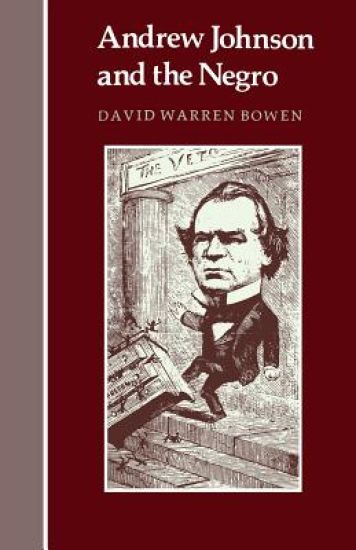
Andrew Johnson And The Negro

Andrew Johnson And The Negro

David Warren Bowen

University of Tennessee Press
2005
nidottu
Andrew Johnson, who was thrust into the office of presidency by Lincoln’s assassination, described himself as a “friend of the colored man.” Twentieth century historians have assessed Johnson’s racial attitudes differently.In his revisionist study, David Bowen explores Johnson’s racist bias more deeply than other historians to date, and maintains that racism was, in fact, a prime motivator of his policies as a public official. A slave owner who defended the institution until the Civil War, Jonson accepted emancipation. Once Johnson became president, however, his racial prejudice reasserted itself as a significant influence on his Reconstruction policies.Bowen’s study deftly analyzes the difficult personality of the seventeenth president and the political influences that molded him. This portrait of a man who, despite his many egalitarian notions, practiced racism, will intrigue historians and readers interested in Civil War and Reconstruction history alike.