Questi pezzi fantastici sono dei Cabaret di periferia, cupio dissolvi di voci, serraglio di congegni meccanici dominati dai fili delle parche o del fantomatico dottor Limbo o Prodigio se mai esiste o esistito? Le parole sono fili recisi, proiezioni di piccoli libri, perch si deve dire, si deve scrivere, si deve immaginare di raccontare ancora storie & personaggi e non di essere raccontati da qualcuno, forse un nostro doppio, un altro io che non pi io e nemmeno lui o esso, un altro che si volge verso di noi. Un lampo di stupore lo attraversa nel vederci, vedersi, non pi io o lui. Allora con una mano cominciamo a togliere le bende. Lasciamo apparire una met inferiore del volto. Un orrendo sorriso disarticolato ci allarga la bocca...
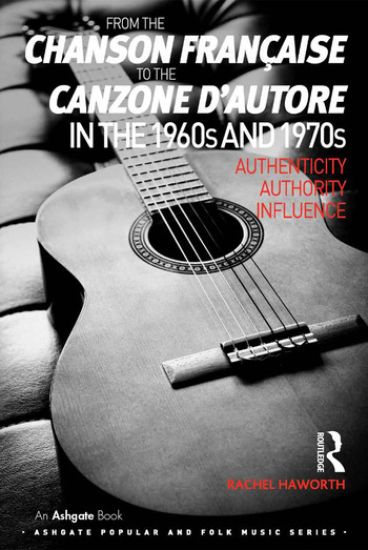
The similarities between the chanson française and the canzone d'autore have been often noted but never fully explored. Both genres are national forms which involve the figure of the singer-songwriter, both experienced their golden age of production in the post-World War II period and both are enduringly popular, still accounting for a large proportion of record sales in their respective countries. Rachel Haworth looks beyond these superficial similarities, and investigates the nature of the relationship between the two genres. Taking a multidisciplinary approach, encompassing textual analysis of song lyrics, cultural history and popular music studies, Haworth considers the different ways in which French and Italian song is thought about, written about and constructed. Through an in-depth study of the discourse surrounding chanson and the canzone d'autore, the volume analyses the development of the genres' rules and rhetoric, identifying the key themes of Authority, Authenticity and Influence. The book finally considers the legacy of major artists, looking at modern perspectives on Georges Brassens, Jacques Brel, Léo Ferré, Fabrizio De André and Giorgio Gaber, ultimately affording a deeper understanding of the notions of quality and value in the context of chanson française and the canzone d'autore.
Title: Roderick. By the autor of "John Arnold," etc. i.e. William Wilson, Minister at Etal.]Publisher: British Library, Historical Print EditionsThe British Library is the national library of the United Kingdom. It is one of the world's largest research libraries holding over 150 million items in all known languages and formats: books, journals, newspapers, sound recordings, patents, maps, stamps, prints and much more. Its collections include around 14 million books, along with substantial additional collections of manuscripts and historical items dating back as far as 300 BC.The GENERAL HISTORICAL collection includes books from the British Library digitised by Microsoft. This varied collection includes material that gives readers a 19th century view of the world. Topics include health, education, economics, agriculture, environment, technology, culture, politics, labour and industry, mining, penal policy, and social order. ++++The below data was compiled from various identification fields in the bibliographic record of this title. This data is provided as an additional tool in helping to insure edition identification: ++++ British Library Anonymous; Wilson, William; 1871. 3 vol.; 8 . 12632.l.11.
Title: Roderick. By the autor of "John Arnold," etc. i.e. William Wilson, Minister at Etal.]Publisher: British Library, Historical Print EditionsThe British Library is the national library of the United Kingdom. It is one of the world's largest research libraries holding over 150 million items in all known languages and formats: books, journals, newspapers, sound recordings, patents, maps, stamps, prints and much more. Its collections include around 14 million books, along with substantial additional collections of manuscripts and historical items dating back as far as 300 BC.The GENERAL HISTORICAL collection includes books from the British Library digitised by Microsoft. This varied collection includes material that gives readers a 19th century view of the world. Topics include health, education, economics, agriculture, environment, technology, culture, politics, labour and industry, mining, penal policy, and social order. ++++The below data was compiled from various identification fields in the bibliographic record of this title. This data is provided as an additional tool in helping to insure edition identification: ++++ British Library Anonymous; Wilson, William; 1871. 3 vol.; 8 . 12632.l.11.
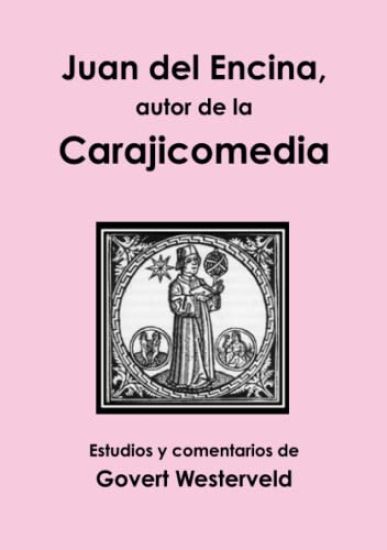
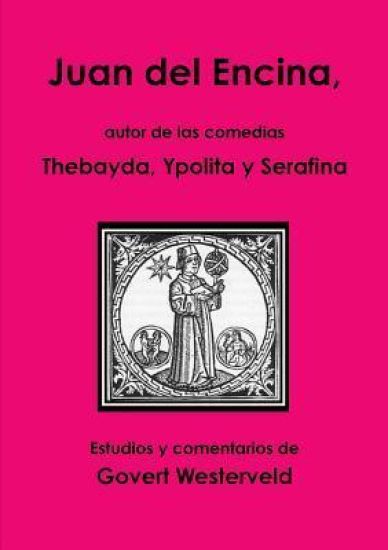
Ya han pasado cuatro anos desde la publicacion de mi otro libro, en el cual anunciaba que la comedia La Thebayda podria haber sido escrita por Juan del Encina. Con esta idea tan fuera de "la realidad", se habia iniciado un proceso de revisar todo lo que se creia y se aceptaba como la verdad. La teoria puede darnos una base para los estudios, pero debemos tener cuidado en no caer en la trampa de la teoria; es decir, en no pretender encontrar "otras verdades". Entre tanto parecen ser que los nuevos metodos estilisticos confirman mi hipotesis. Esto es el motivo de escribir este libro para reconfirmar mi punto de vista del ano 2009, de que Juan del Encina es el autor de la comedia Thebayda, ypolita y Serafina.
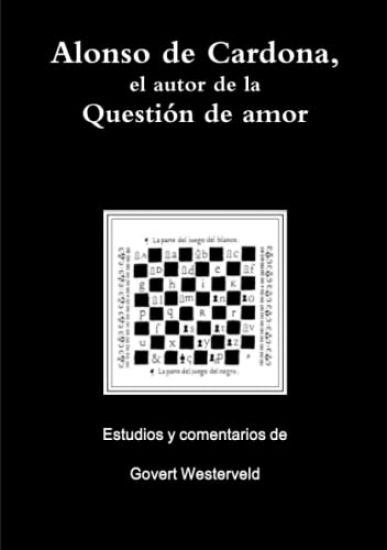
Ya han pasado cuatro anos desde la publicacion de mis libros, en el cual anunciaba que la obra Question de amor podria haber sido escrita por Juan del Encina. Entre tanto parece ser que los metodos estilisticos confirman lo contrario. Las investigaciones de Gregory Peter Andrachuk, un profesor de la Universidad de Victoria en Canada rompieron completamente mis ilusiones y esquemas. Gregory Peter Andrachuk observo importantes semejanzas tematicas entre la poesia de Cardona y la del poeta de la Question de amor, teniendo en cuenta la voz de Vasquiran. Este profesor escribio muchos articulos sobre Alonso de Cardona como posible autor de la obra Question de amor. Todos sus estudios son de un nivel excepcional. Despues de muchos analisis estilisticos hemos llegado a la conclusion de que efectivamente Alonso de Cardona es el autor de Question de amor.
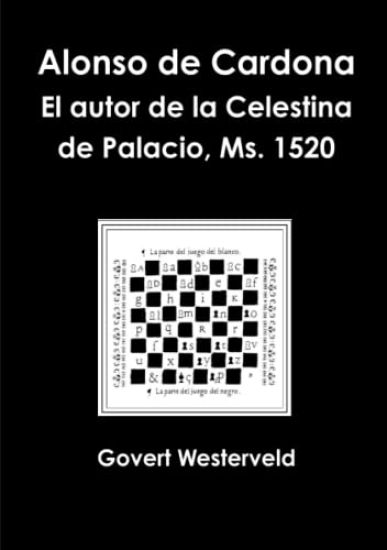
Jose Guillermo Garcia Valdecasas, Jose Bilbeny, Alejandro Sendra y Josep Maria Orteu son nombres de algunos investigadores que creen que el autor de la Celestina se tiene que buscar en Valencia. Hay una referencia en el libro Agudeza y arte de ingenio de Baltasar Gracian que habla literalmente del "autor aragones encubierto".Esto ya habia llevado a diversos autores a cuestionar que "La Celestina" transcurra en Castilla, pues en aquella epoca Castilla tenia prohibido importar vino y por tanto, eso hubiera sido imposible. Ya han pasado cuatro anos desde la publicacion de mis libros, en el cual anunciaba que la obra La Celestina podria haber sido escrita por tres autores, entre ellos Juan del Encina. Entre tanto parecen ser que los nuevos analisis estilisticos confirman cosas inesperadas. Efectivamente tenemos que pensar ahora en Valencia y en un "autor aragones encubierto".
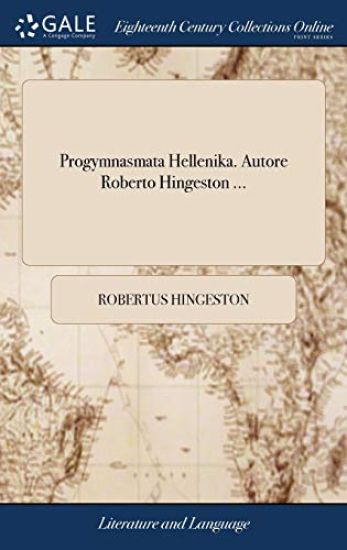
The 18th century was a wealth of knowledge, exploration and rapidly growing technology and expanding record-keeping made possible by advances in the printing press. In its determination to preserve the century of revolution, Gale initiated a revolution of its own: digitization of epic proportions to preserve these invaluable works in the largest archive of its kind. Now for the first time these high-quality digital copies of original 18th century manuscripts are available in print, making them highly accessible to libraries, undergraduate students, and independent scholars.Western literary study flows out of eighteenth-century works by Alexander Pope, Daniel Defoe, Henry Fielding, Frances Burney, Denis Diderot, Johann Gottfried Herder, Johann Wolfgang von Goethe, and others. Experience the birth of the modern novel, or compare the development of language using dictionaries and grammar discourses. ++++The below data was compiled from various identification fields in the bibliographic record of this title. This data is provided as an additional tool in helping to insure edition identification: ++++British LibraryT110772The first two words are transliterated from the Greek. Parallel Latin and Greek text. E3 is a cancel.Cantabrigi typis Academicis excudit J. Bentham. Veneunt apud Gul. Thurlbourn Cantabrigi ; A. Dodd, Londini; et J. Hildyard Eboracensis, 1753. 4],40p.; 8
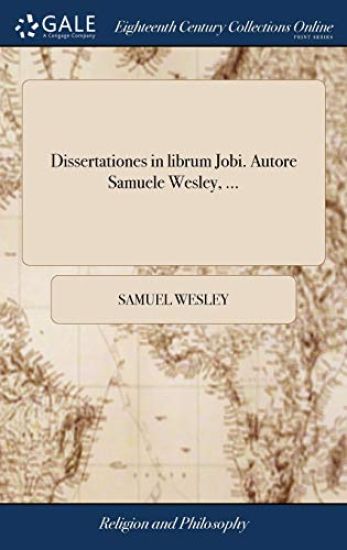
The 18th century was a wealth of knowledge, exploration and rapidly growing technology and expanding record-keeping made possible by advances in the printing press. In its determination to preserve the century of revolution, Gale initiated a revolution of its own: digitization of epic proportions to preserve these invaluable works in the largest archive of its kind. Now for the first time these high-quality digital copies of original 18th century manuscripts are available in print, making them highly accessible to libraries, undergraduate students, and independent scholars.The Age of Enlightenment profoundly enriched religious and philosophical understanding and continues to influence present-day thinking. Works collected here include masterpieces by David Hume, Immanuel Kant, and Jean-Jacques Rousseau, as well as religious sermons and moral debates on the issues of the day, such as the slave trade. The Age of Reason saw conflict between Protestantism and Catholicism transformed into one between faith and logic -- a debate that continues in the twenty-first century.++++The below data was compiled from various identification fields in the bibliographic record of this title. This data is provided as an additional tool in helping to insure edition identification: ++++British LibraryT077011A re-issue of the 1736 edition with a new titlepage, frontispiece, and list of subscribers.Londini: typis Gulielmi Bowyer: prostant venales apud C. Rivington & S. Birt; R. Clements & M. Fletcher, Oxonienses; C. Crownfield & W. Thurlboubn sic], Cantabrigienses, 1736. 14],599, 1]p., plates; 2
The similarities between the chanson française and the canzone d'autore have been often noted but never fully explored. Both genres are national forms which involve the figure of the singer-songwriter, both experienced their golden age of production in the post-World War II period and both are enduringly popular, still accounting for a large proportion of record sales in their respective countries. Rachel Haworth looks beyond these superficial similarities, and investigates the nature of the relationship between the two genres. Taking a multidisciplinary approach, encompassing textual analysis of song lyrics, cultural history and popular music studies, Haworth considers the different ways in which French and Italian song is thought about, written about and constructed. Through an in-depth study of the discourse surrounding chanson and the canzone d'autore, the volume analyses the development of the genres' rules and rhetoric, identifying the key themes of Authority, Authenticity and Influence. The book finally considers the legacy of major artists, looking at modern perspectives on Georges Brassens, Jacques Brel, Léo Ferré, Fabrizio De André and Giorgio Gaber, ultimately affording a deeper understanding of the notions of quality and value in the context of chanson française and the canzone d'autore.
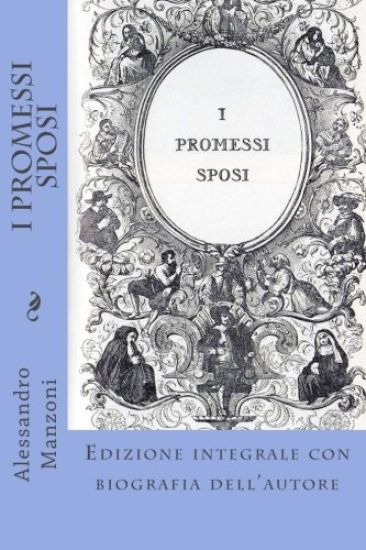
I promessi sposi un celebre romanzo storico di Alessandro Manzoni, ritenuto il pi famoso e il pi letto tra quelli scritti in lingua italiana. Preceduto dal Fermo e Lucia, spesso considerato romanzo a s , fu edito in una prima versione nel 1827 (detta edizione ventisettana); rivisto in seguito dallo stesso autore, soprattutto nel linguaggio, fu ripubblicato nella versione definitiva fra il 1840 e il 1841-42 (edizione quarantana). Ambientato dal 1628 al 1630 in Lombardia durante il dominio spagnolo, fu il primo esempio di romanzo storico della letteratura italiana. Secondo un'interpretazione risorgimentista, il periodo storico era stato scelto da Manzoni con l'intento di alludere al dominio austriaco sul nord Italia. Quella che Manzoni vuole descrivere la societ italiana di ogni tempo, con tutti i suoi difetti che tuttora mantiene. Il romanzo si basa su una rigorosa ricerca storica e gli episodi del XVII secolo, come ad esempio le vicende della Monaca di Monza e la grande peste del 1629-1631, si fondano tutti su documenti d'archivio e cronache dell'epoca. Il romanzo di Manzoni viene considerato non solo una pietra miliare della letteratura italiana, ma anche un passaggio fondamentale nella nascita stessa della lingua italiana. Nei dialoghi, riporta anche diversi esempi di parlato spontaneo non ammissibili nella lingua standard.

![Roderick. by the Autor of "John Arnold," Etc. [I.E. William Wilson, Minister at Etal.]](/covers/9781241385125.jpg)
![Roderick. by the Autor of "John Arnold," Etc. [I.E. William Wilson, Minister at Etal.]](/covers/9781241402167.jpg)
![Roderick. by the Autor of "John Arnold," Etc. [I.E. William Wilson, Minister at Etal.]](/covers/9781241407643.jpg)