Princess Evangeline is about to face the biggest hurdle of her life: arranged marriage. But two traumatic events change her destiny forever, and not only hers. A mysterious boy with but a letter for a name has been forced to face her obstacles with her. This is the first story in a series with two people from very different backgrounds facing destiny together.
Off on an adventure in search of dessert, Rides Wolf on his motorbike, ever alert. The ride there and back will be more than it seems, And the friends that he meets, even better than ice cream
Sprout and a Dewdrop of FaithWritten by Brett Blaylock (author of Elo and the Stars), Sprout and a Dewdrop of Faith follows a leaf-boy named Sprout who, when faced with a mysterious dew drought and ruthless storms, embarks on a transformative journey, where he discovers the enduring value of humility, prayer, and perseverance.
On Spain's ancient Camino de Santiago pilgrimage trail, volunteer innkeepers called hospitaleros care for pilgrims and manage the inns along the route. This is a quick book--a pamphlet, really--that explores the spirit of innkeeping and the countless choices every innkeeper must make. And it's not just for innkeepers. Anyone who volunteers will find it useful. Approximately 78 paperback pages. A quick read that's light in your backpack. Topics: Pre-DepartureMaking the TransitionThe HandoffOn the Other SideAmbianceThe RulesWhy?People from the PastResponsibilityWho Will Show Up?The WelcomeWho Can Stay, Who Can't?Getting MobbedFamiliesStoriesDinnersUninvited GuestsBedtimeOverflowWorkShopping (if you have a budget)Shopping (if you're tight on cash)CrimeBad MouthingOwnership or Lack ThereofCommunity IssuesDiscretionSpoilersLost StuffKeysReading the GuestbookStates of Mind and BodyQuestionsTriggersAvoiding Stress CarryoverDecompression/Recompression Hospitalero, Summer 2007Viana, Refugio Parroquial, 13 beds, with Erik and N ria from BarcelonaN jera, Albergue de la Asociaci n de Amigos del Camino de N jera, 93 beds, with Pam from HawaiiSanto Domingo de la Calzada, Casa del Santo, 115 beds, with Jos ngel from Madrid
"It's time for you to wake up and become your own guide. Know Who The F*ck You Are written by Dr. Brett Jones shows you how to do just that." - Daniel DiPiazza. These RAW & UNFILTERED TRANSMISSIONS channeled by Dr. Brett Jones will help you Remember Who You Really Are. A visionary, an entrepreneur, a shaman, a father, a husband, and humble servant of the divine principles of life, Dr. Brett Jones is undoubtedly a rare and unique expression of a human. His artistry takes many forms from working hands-on with people through chiropractic adjustments, speaking and teaching internationally, creating online programs that span the globe, educating through workshops and social media, to connecting with his local community. This book was channeled for a coaching group, The Unshakeables, for the purpose of helping people discover their inherent power and wisdom. The daily messages were transcribed, edited, and formatted into a book in order to offer this wisdom to anyone ready to step fully into their power. Dr. Brett's ability to ground expertise in several fields of study through access to greater spiritual wisdom shines through in this awe-inspiring and deeply grounded text. By the end of Know Who The F*ck You Are, you will have a deeper sense of what stands in your way of BEING the best YOU with a multitude of tools to help you never forget.
Over 125 Haikus written by a drug addict and alcoholic currently in recovery. The Haikus are from new ideas and ideas from "More Poetry of an Addict" also written by Brett C. Persson
The Quiet Millionaire discloses step-by-step how to plan and manage your finances with less stress. There are thousands of financial advisors professing to be wise, but too often are not. Not only will this book provide helpful information to ensure you enjoy a lifetime of financial security and independence, it will inform you how to distinguish between the good and bad financial advice. Brett Wilder's proven strategies will give you the knowledge and tools you need to achieve your lifelong goals and objectives--whether on your own or by working with a properly qualified financial advisor.
Constructing International Security helps policy makers and students recognize effective third-party strategies for balancing deterrence and restraint in security relationships. Brett V. Benson shows that there are systematic differences among types of security commitments. Understanding these commitments is key, because commitments, such as formal military alliances and extended deterrence threats, form the basis of international security order. Benson argues that sometimes the optimal commitment conditions military assistance on specific hostile actions the adversary might take. At other times, he finds, it is best to be ambiguous by leaving an ally and adversary uncertain about whether the third party will intervene. Such uncertainty transfers risk to the ally, thereby reducing the ally's motivation to behave too aggressively. The choice of security commitment depends on how well defenders can observe hostilities leading to war and on their evaluations of dispute settlements, their ally's security and the relative strength of the defender.
Stress and accent are central to the study of sound systems in language. This book surveys key work carried out on stress and accent and provides a comprehensive conceptual foundation to the field. It offers an up-to-date set of tools to examine stress and accent from a range of perspectives within metrical stress theory, connecting the acoustic phenomenon to a representation of timing, and to groupings of individual speech sounds. To develop connections, it draws heavily on the results of research into the perception of musical meter and rhythm. It explores the theory by surveying the types of stress and accent patterns found among the world's languages, introducing the tools that the theory provides, and then showing how the tools can be deployed to analyse the patterns. It includes a full glossary and there are lists of further reading materials and discussion points at the end of each chapter.
Australian languages form a large genetic group with many interesting and distinctive phonological and morphological properties. Written by two experts in the field, this is the first book-length treatment of this topic, providing an in-depth discussion of a wealth of little-known data on the sound systems and word structures of Australian Indigenous languages. It includes a critical evaluation of theoretical approaches from the 1950s up to the current day, including recent experimental, psycholinguistic and processing-based research. Each chapter addresses a major aspect of phonology, including the segmental inventories, complex phonotactic systems, alternations, prosodic phonology and morphology, the behaviour of phonological domains, and the unusual nature of sound change in Australia. The authors also add to this their own groundbreaking findings, and frame each chapter to inform future phonological research and theory. It is essential reading for scholars and students in phonology, phonetics, speech science, morphology, and language typology.
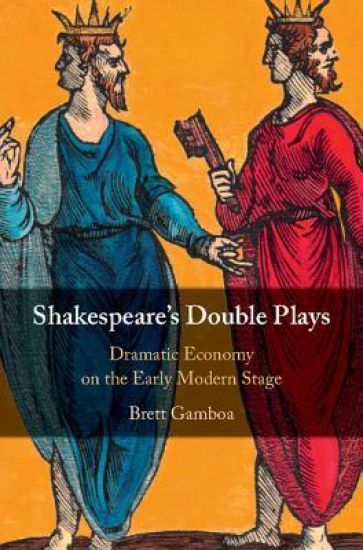
In the first comprehensive study of how Shakespeare designed his plays to suit his playing company, Brett Gamboa demonstrates how Shakespeare turned his limitations to creative advantage, and how doubling roles suited his unique sense of the dramatic. By attending closely to their dramaturgical structures, Gamboa analyses casting requirements for the plays Shakespeare wrote for the company between 1594 and 1610, and describes how using the embedded casting patterns can enhance their thematic and theatrical potential. Drawing on historical records, dramatic theory, and contemporary performance this innovative work questions received ideas about early modern staging and provides scholars and contemporary theatre practitioners with a valuable guide to understanding how casting can help facilitate audience engagement. Supported by an appendix of speculative doubling charts for plays, illustrations, and online resources, this is a major contribution to the understanding of Shakespeare's dramatic craft.
In the first comprehensive study of how Shakespeare designed his plays to suit his playing company, Brett Gamboa demonstrates how Shakespeare turned his limitations to creative advantage, and how doubling roles suited his unique sense of the dramatic. By attending closely to their dramaturgical structures, Gamboa analyses casting requirements for the plays Shakespeare wrote for the company between 1594 and 1610, and describes how using the embedded casting patterns can enhance their thematic and theatrical potential. Drawing on historical records, dramatic theory, and contemporary performance this innovative work questions received ideas about early modern staging and provides scholars and contemporary theatre practitioners with a valuable guide to understanding how casting can help facilitate audience engagement. Supported by an appendix of speculative doubling charts for plays, illustrations, and online resources, this is a major contribution to the understanding of Shakespeare's dramatic craft.
In this book, Brett Maiden employs the tools, research, and theories from the cognitive science of religion to explore religious thought and behavior in ancient Israel. His study focuses on a key set of distinctions between intuitive and reflective types of cognitive processing, implicit and explicit concepts, and cognitively optimal and costly religious traditions. Through a series of case studies, Maiden examines a range of topics including popular and official religion, Deuteronomic theology, hybrid monsters in ancient iconography, divine cult statues in ancient Mesopotamia and the biblical idol polemics, and the Day of Atonement ritual in Leviticus 16. The range of media, including ancient texts, art, and archaeological data from ancient Israel, as well theoretical perspectives demonstrates how a dialogue between biblical scholars and cognitive researchers can be fostered.
Every day, new warnings emerge about artificial intelligence rebelling against us. All the while, a more immediate dilemma flies under the radar. Have forces been unleashed that are thrusting humanity down an ill-advised path, one that's increasingly making us behave like simple machines? In this wide-reaching, interdisciplinary book, Brett Frischmann and Evan Selinger examine what's happening to our lives as society embraces big data, predictive analytics, and smart environments. They explain how the goal of designing programmable worlds goes hand in hand with engineering predictable and programmable people. Detailing new frameworks, provocative case studies, and mind-blowing thought experiments, Frischmann and Selinger reveal hidden connections between fitness trackers, electronic contracts, social media platforms, robotic companions, fake news, autonomous cars, and more. This powerful analysis should be read by anyone interested in understanding exactly how technology threatens the future of our society, and what we can do now to build something better.
This Element examines visual perception in the context of activities that involve moving about in complex, dynamic environments. A central theme is that the ability of humans and other animals to perceive their surroundings based on vision is profoundly shaped by the need to adaptively regulate locomotion to variations in the environment. As such, important new insights into what and how we perceive can be gleaned by investigating the connection between vision and the control of locomotion. I present an integrated summary of decades of research on the perception of self-motion and object motion based on optic flow, the perception of spatial layout and affordances, and the control strategies for guiding locomotion based on visual information. I also explore important theoretical issues and debates, including the question of whether visual control relies on internal models.
Only one elite Imperial Japanese Navy destroyer survived the cruel ocean battlefields of World War II. This is her story. Brett Walker, historian and captain, delves into questions of mechanics, armaments, navigation, training, and even indoctrination, illustrating the daily realities of war for Yukikaze and her crew. By shifting our perspective of the Pacific War away from grand Imperial strategies, and toward the intricacies of fighting on the water, Walker allows us to see the war from Yukikaze's bridge during the most harrowing battles, from Midway to Okinawa. Walker uncovers the ordinary sailor's experience, and we see sailors fight while deep-running currents of Japanese history unfold before their war-weary eyes. As memories of World War II fade, Yukikaze's story becomes ever more important, providing valuable lessons in our contemporary world of looming energy shortfalls, menacing climate uncertainties, and aggressive totalitarian regimes.