Have you ever had a toothache? Or gotten your teeth cleaned? Dr. Florez could help you out She's a dentist, and today she has an office full of curious visitors. They try out her dentist's chair and look at X-rays of teeth. They also learn how she helps patients keep their teeth clean and healthy. Hooray for dentists So many people help out in our communities In these books, young students talk with different community helpers to find out what they do, what skills and training they need, and how their work benefits people in the community.
Let's Meet a Teacher Whiteboards, computers, and stickers. What do these things have in common? They're all tools Ms. Crawford uses in her job. Ms. Crawford is a fourth grade teacher. She invites a group of students learning about community helpers to visit her classroom. She shows them the many ways she helps her students learn. Hooray for teachers "Cartoon-style animated drawings in bright colors introduce diverse characters who will capture children's interest." --School Library Journal "In each book introducing a community-benefiting career, schoolchildren meet one adult to learn about his or her job; information includes the training required to become a firefighter, doctor, etc., daily routines, and primary responsibilities. The content is inclusive and up-to-date but delivered though vapid stories. Peppy computer-generated cartoons are amateur." - The Horn Book Guide Free downloadable series teaching guide available.
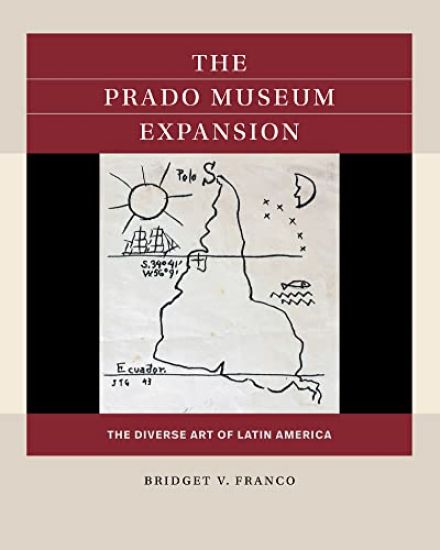
From 2001 to 2007, the world-renowned Prado Museum in Madrid, Spain, underwent an ambitious expansion project that reorganized the spatial design of the museum and allowed for additional exhibition space. Coinciding with the completion of this large construction project were a series of celebrations surrounding the 2010 bicentenary of South American independence movements, a clear reminder of the complicated relationship between Spain and its former colonies in Latin America. Inspired by this significant historical moment and with an eye to diversifying its predominantly Spanish-centered permanent collection, the Prado Museum decides to host a competition for a new gallery of Latin American art. The game begins in 2010 as students, assuming the roles of curators, art patrons, living artists, and art dealers, set into motion a series of negotiation sessions that will help the museum decide which artworks to choose for the new gallery. Students will analyze a broad range of artistic movements and styles related to Latin American art from the twentieth to the twenty-first centuries, in an effort to support the acquisition of paintings that best represent the diverse artistic legacies and historical heritage of the region.
This is the story of my life as a journey and a rite of passage. This safari encompasses my ancestral roots, education, work and some of my journeys. I include adventures in England, Ireland, the Balkans, Uzbekistan and sub-Saharan Africa.
Through its themes of subjectivity, surgery, and self-stylization this book critically examines the cultural constraints and incitements that shape the practice of cosmetic surgery by older people. The book problematizes anti-ageing discourses to provide a nuanced descriptive, ethical, and political reading of ‘older’ identity politics nested within the contemporary ethico-political terrain of self-care.A New Ethic of ‘Older’ aims to de-territorialize the ‘older’ subject from normative discourses of ageing and theorize becoming ‘older’. Evidence of an active cultural politics of ‘older’ emerges from the critically reflexive engagement of older people with cosmetic surgery. This engagement constitutes a ‘cutting critique’ of ageing discourses enmeshed in an aesthetic mode of subjectivation that underpins ‘a new ethics of old age’.The book will appeal to those in the fields of Cultural Gerontology, Ageing Studies, Critical Psychology, Sociology, and Cultural Geography. The methodological approach will be of interest to academics and students exploring the application of Foucault’s work on care of the self to contemporary contexts and practices.
Why did certain domestic murders fire the Victorian imagination? In her analysis of literary and cultural representations of this phenomenon across genres, Bridget Walsh traces how the perception of the domestic murderer changed across the nineteenth century and suggests ways in which the public appetite for such crimes was representative of wider social concerns. She argues that the portrayal of domestic murder did not signal a consensus of opinion regarding the domestic space, but rather reflected significant discontent with the cultural and social codes of behaviour circulating in society, particularly around issues of gender and class. Examining novels, trial transcripts, medico-legal documents, broadsides, criminal and scientific writing, illustration and, notably, Victorian melodrama, Walsh focuses on the relationship between the domestic sphere, so central to Victorian values, and the desecration of that space by the act of murder. Her book encompasses the gendered representation of domestic murder for both men and women as it tackles crucial questions related to Victorian ideas of nationhood, national health, political and social inequality, newspaper coverage of murder, unstable and contested models of masculinity and the ambivalent portrayal of the female domestic murderer at the fin de siècle.
For Bridget Praytor, every woman's magazine on the supermarket checkout line rack and every weight loss book on the Internet promised magic: a perfect body in a month, if she just followed this week's fad diet. But how long could someone eat only grapefruit, only beef, or only cabbage soup? At the drugstore, boxes of "magic pills" promised "Lose 10 Pounds in a Week " in a huge font that nearly-but not quite-distracted her from the tiny "may cause death or permanent health problems" warning. The gym promised her health and happiness-so why after torturing herself on the treadmill two hours every day, did she feel fat and miserable? Then, after spending most of her adulthood giving in to the seductive call of convenience-store powdered donuts (small, cute, and six to a cellophane package), drinking twelve-packs of diet soda to try to fill herself up, taking diet pills, buying every kind of magic protein shake imaginable, running in a marathon without training for it, training three hours a day for an Ironman just to try to lose weight, and spending hours at the gym because she felt guilty about her weight (followed by evenings of guilt-eating because all that gym time cut into being with her family), Bridget's life changed in an instant. Rear-ended by a driver who hadn't noticed the light had turned red, Bridget was devastated to learn that she wouldn't be able to exercise strenuously for months. No more ironman. No more treadmill. No more no-pain, no-gain excessive workouts. The only thing she could even do at the gym (where a little free childcare-salvation for a mother of three children under four-came with the membership) was sit in the hot tub. And so she sat. And listened to people talk as they sat next to her. And started to think. Beautiful women were calling their toned bodies "saggy." Buff men were pinching invisible fat. Women who had just worked out for two hours were spending the next hour talking about how they hated the very bodies that they'd just worked out, the bodies that had birthed their children, the bodies that took them where they needed to go. How could all these people think such negative things about their bodies? Bridget wondered. And then, How can I say and think such terrible things about mine? Over the course of the next several months, as Bridget changed her mindset about her body, her weight, her goals, and the meaning of "healthy," her body changed, too. Pounds started to melt away. The "magic" she'd been searching for didn't exist in a fad diet, a pill, a surgeon's office, or even the gym. The magic had been inside her all along. And it's inside you, too. The Hot Tub Diet is a book for anyone who is tired of diets that don't work, tired of punishing exercises, tired of buying shoes because only accessories "look cute" on you, and tired of feeling bad about yourself-and anyone who is ready to change your mindset, feel confident, and finally have a body you love.