Kirjojen hintavertailu. Mukana 11 699 587 kirjaa ja 12 kauppaa.

Kirjahaku

Etsi kirjoja tekijän nimen, kirjan nimen tai ISBN:n perusteella.

1000 tulosta hakusanalla Colin Channer

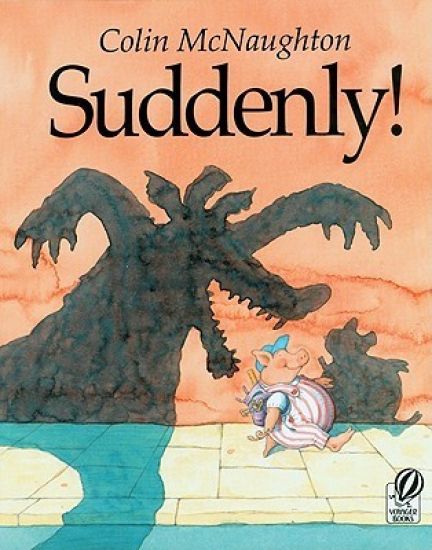
Suddenly!

Suddenly!

Colin McNaughton

Clarion Books
1994
pokkari
A large, toothy, mean-looking wolf zealously stalks Preston the pig. But each time the wolf gets close, Preston suddenly changes course and unknowingly eludes his pursuer. Colin McNaughton's humorous illustrations enhance the element of surprise each time Preston "outsmarts" the wolf. Young readers will laugh with delight as this suspenseful tale unfolds. "Zany fun that's perfect for young audiences."--School Library Journal
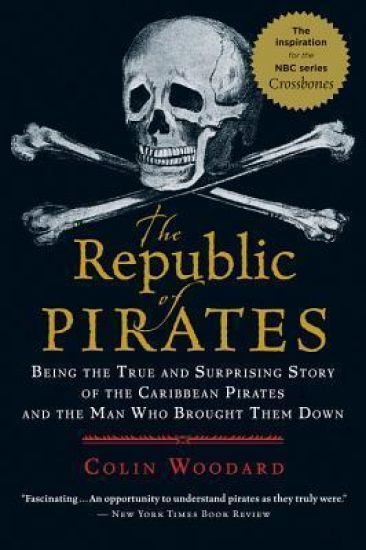
The Republic of Pirates: Being the True and Surprising Story of the Caribbean Pirates and the Man Who Brought Them Down
Describes how a group of powerful pirate captains, led by Edward "Blackbeard" Teach and "Black Sam" Bellamy, joined forces to create not only a cadre of thieves but also to establish a distinctive form of democracy in the Bahamas, one that ultimately was destroyed by their arch-nemesis, Captain Woodes Rogers, a merchant fleet owner and former privateer. Reprint.
The Indian World of George Washington

The Indian World of George Washington

Colin G. Calloway

Oxford University Press Inc
2019
nidottu
George Washington's place in the foundations of the Republic remains unrivalled. His life story--from his beginnings as a surveyor and farmer, to colonial soldier in the Virginia Regiment, leader of the Patriot cause, commander of the Continental Army, and finally first president of the United States--reflects the narrative of the nation he guided into existence. There is, rightfully, no more chronicled figure. Yet American history has largely forgotten what Washington himself knew clearly: that the new Republic's fate depended less on grand rhetoric of independence and self-governance and more on land--Indian land. Colin G. Calloway's biography of the greatest founding father reveals in full the relationship between Washington and the Native leaders he dealt with intimately across the decades: Shingas, Tanaghrisson, Guyasuta, Attakullakulla, Bloody Fellow, Joseph Brant, Cornplanter, Red Jacket, and Little Turtle, among many others. Using the prism of Washington's life to bring focus to these figures and the tribes they represented--the Iroquois Confederacy, Lenape, Miami, Creek, Delaware--Calloway reveals how central their role truly was in Washington's, and therefore the nation's, foundational narrative. Calloway gives the First Americans their due, revealing the full extent and complexity of the relationships between the man who rose to become the nation's most powerful figure and those whose power and dominion declined in almost equal degree during his lifetime. His book invites us to look at America's origins in a new light. The Indian World of George Washington is a brilliant portrait of both the most revered man in American history and those whose story during the tumultuous century in which the country was formed has, until now, been only partially told.
Age of Iron

Age of Iron

Colin Dueck

Oxford University Press Inc
2019
sidottu
The rise of a populist conservative nationalism in the United States has triggered unease at home and abroad. Riding the populist wave, Donald Trump achieved the presidency advocating a hardline nationalist approach. Yet critics frequently misunderstand the Trump administration's foreign policy, along with American nationalism. In Age of Iron, leading authority on Republican foreign policy Colin Dueck demonstrates that conservative nationalism is the oldest democratic tradition in US foreign relations. Designed to preserve self-government, conservative nationalism can be compatible with engagement overseas. But 21st century diplomatic, economic, and military frustrations led to the resurgence of a version that emphasizes US material interests. No longer should the US allow its allies to free-ride, and nor should it surrender its sovereignty to global governance institutions. Because this return is based upon forces larger than Trump, it is unlikely to disappear when he leaves office. Age of Iron describes the shifting coalitions over the past century among foreign policy factions within the Republican Party, and shows how Trump upended them starting in 2015-16. Dueck offers a balanced summary and assessment of President Trump's foreign policy approach, analyzing its strengths and weaknesses. He also describes the current interaction of conservative public opinion and presidential foreign policy leadership in the broader context of political populism. Finally, he makes the case for a forward-leaning realism, based upon the understanding that the US is entering a protracted period of geopolitical competition with other major powers. The result is a book that captures the past, present, and, possibly, future of conservative foreign policy nationalism in the US.
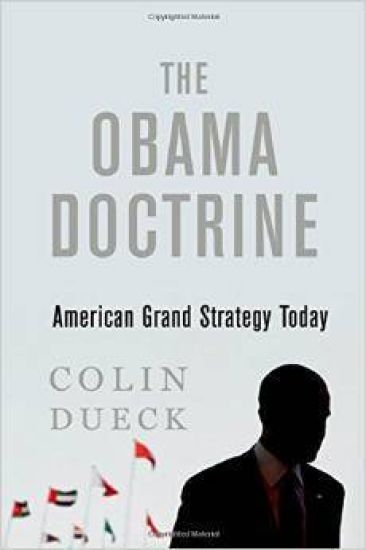
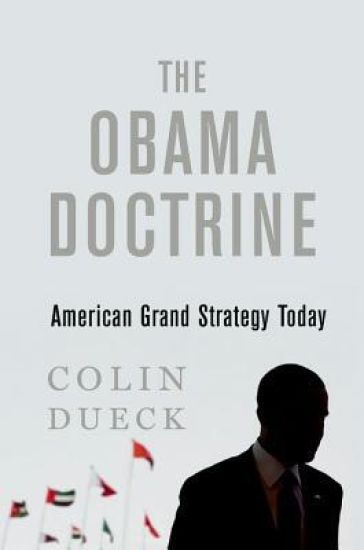
The Obama Doctrine

The Obama Doctrine

Colin Dueck

Oxford University Press Inc
2015
sidottu
By mid-2015, the Obama presidency will be entering its final stages, and the race among the successors in both parties will be well underway. And while experts have already formed a provisional understanding of the Obama administration's foreign policy goals, the shape of the 'Obama Doctrine' is finally coming into full view. It has been consistently cautious since Obama was inaugurated in 2009, but recent events in the Middle East, Eastern Europe, and the Far East have led an increasingly large number of foreign policy experts to conclude that caution has transformed into weakness. In The Obama Doctrine, Colin Dueck analyzes and explains what the Obama Doctrine in foreign policy actually is, and maps out the competing visions on offer from the Republican Party. Dueck, a leading scholar of U.S. foreign policy, contends it is now becoming clear that Obama's policy of international retrenchment is in large part a function of his emphasis on achieving domestic policy goals. There have been some successes in the approach, but there have also been costs. For instance, much of the world no longer trusts the US to exert its will in international politics, and America's adversaries overseas have asserted themselves with increasing frequency. The Republican Party will target these perceived weaknesses in the 2016 presidential campaign and develop competing counter-doctrines in the process. Dueck explains that within the Republican Party, there are two basic impulses vying with each other: neo-isolationism and forceful internationalism. Dueck subdivides each impulse into the specific agenda of the various factions within the party: Tea Party nationalism, neoconservatism, conservative internationalism, and neo-isolationism. He favors a realistic but forceful US internationalism, and sees the willingness to disengage from the world by some elements of the party as dangerous. After dissecting the various strands, he articulates an agenda of forward-leaning American realism-that is, a policy in which the US engages with the world and is willing to use threats of force for realist ends. The Obama Doctrine not only provides a sharp appraisal of foreign policy in the Obama era; it lays out an alternative approach to marshaling American power that will help shape the foreign policy debate in the run-up to the 2016 elections.
Pen and Ink Witchcraft

Pen and Ink Witchcraft

Colin G. Calloway

Oxford University Press Inc
2014
nidottu
Indian peoples made some four hundred treaties with the United States between the American Revolution and 1871, when Congress prohibited them. They signed nine treaties with the Confederacy, as well as countless others over the centuries with Spain, France, Britain, Mexico, the Republic of Texas, Canada, and even Russia, not to mention individual colonies and states. In retrospect, the treaties seem like well-ordered steps on the path of dispossession and empire. The reality was far more complicated. In Pen and Ink Witchcraft, eminent Native American historian Colin G. Calloway narrates the history of diplomacy between North American Indians and their imperial adversaries, particularly the United States. Treaties were cultural encounters and human dramas, each with its cast of characters and conflicting agendas. Many treaties, he notes, involved not land, but trade, friendship, and the resolution of disputes. Far from all being one-sided, they were negotiated on the Indians' cultural and geographical terrain. When the Mohawks welcomed Dutch traders in the early 1600s, they sealed a treaty of friendship with a wampum belt with parallel rows of purple beads, representing the parties traveling side-by-side, as equals, on the same river. But the American republic increasingly turned treaty-making into a tool of encroachment on Indian territory. Calloway traces this process by focusing on the treaties of Fort Stanwix (1768), New Echota (1835), and Medicine Lodge (1867), in addition to such events as the Peace of Montreal in 1701 and the treaties of Fort Laramie (1851 and 1868). His analysis demonstrates that native leaders were hardly dupes. The records of negotiations, he writes, show that "Indians frequently matched their colonizing counterparts in diplomatic savvy and tried, literally, to hold their ground." Each treaty has its own story, Calloway writes, but together they tell a rich and complicated tale of moments in American history when civilizations collided.
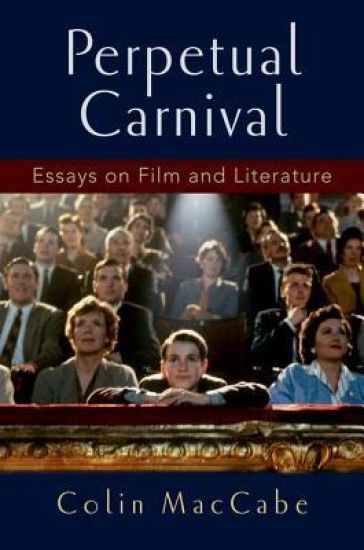
Perpetual Carnival

Perpetual Carnival

Colin MacCabe

Oxford University Press Inc
2017
sidottu
Upholding literature and film together as academically interwoven, Perpetual Carnival underscores the everlasting coexistence of realism and modernism, eschewing the popularly accepted view that the latter is itself a rejection of the former. Mining examples from both film and literature, Colin MacCabe asserts that the relationship between film and literature springs to life a wealth of beloved modernist art, from Jean-Luc Godard's Pierre le Fou to James Joyce's Ulysses, enriched by realism's enduring legacy. The intertextuality inherent in adaptation furthers this assertion in MacCabe's inclusion of Roman Polanski's Tess, a 1979 adaptation of Thomas Hardy's nineteenth-century realist novel, Tess of the d'Urbervilles. Showcasing essays enlivened by cosmopolitan interests, theoretical insight, and strong social purpose, Perpetual Carnival supports a humanities which repudiates narrow specialization and which seeks to place the discussion of film and literature firmly in the reality of current political and ideological discussion. It argues for the writers and directors, the thinkers and critics, who have most fired the contemporary imagination.
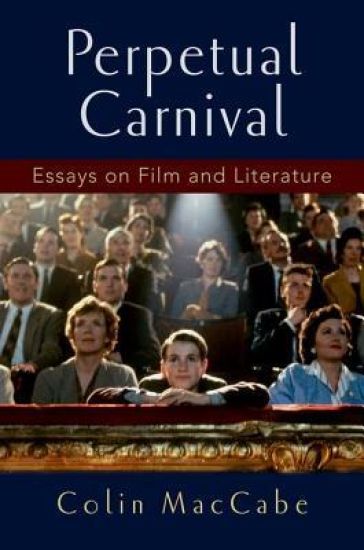
Perpetual Carnival

Perpetual Carnival

Colin MacCabe

Oxford University Press Inc
2017
nidottu
Upholding literature and film together as academically interwoven, Perpetual Carnival underscores the everlasting coexistence of realism and modernism, eschewing the popularly accepted view that the latter is itself a rejection of the former. Mining examples from both film and literature, Colin MacCabe asserts that the relationship between film and literature springs to life a wealth of beloved modernist art, from Jean-Luc Godard's Pierre le Fou to James Joyce's Ulysses, enriched by realism's enduring legacy. The intertextuality inherent in adaptation furthers this assertion in MacCabe's inclusion of Roman Polanski's Tess, a 1979 adaptation of Thomas Hardy's nineteenth-century realist novel, Tess of the d'Urbervilles. Showcasing essays enlivened by cosmopolitan interests, theoretical insight, and strong social purpose, Perpetual Carnival supports a humanities which repudiates narrow specialization and which seeks to place the discussion of film and literature firmly in the reality of current political and ideological discussion. It argues for the writers and directors, the thinkers and critics, who have most fired the contemporary imagination.
The Victory with No Name

The Victory with No Name

Colin G. Calloway

Oxford University Press Inc
2016
nidottu
In 1791, General Arthur St. Clair led the United States army in a campaign to destroy a complex of Indian villages at the Maumee River in northwestern Ohio. Almost within reach of their objective, St. Clair's 1,400 men were attacked by about one thousand Indians. The U.S. force was decimated, suffering nearly one thousand casualties in killed and wounded, while Indian casualties numbered only a few dozen. But despite the lopsided result, it wouldn't appear to carry much significance; it involved only a few thousand people, lasted less than three hours, and the outcome, which was never in doubt, was permanently reversed a mere three years later. Neither an epic struggle nor a clash that changed the course of history, the battle doesn't even have a name. Yet, as renowned Native American historian Colin Calloway demonstrates here, St. Clair's Defeat--as it came to be known-- was hugely important for its time. It was both the biggest victory the Native Americans ever won, and, proportionately, the biggest military disaster the United States had suffered. With the British in Canada waiting in the wings for the American experiment in republicanism to fail, and some regions of the West gravitating toward alliance with Spain, the defeat threatened the very existence of the infant United States. Generating a deluge of reports, correspondence, opinions, and debates in the press, it produced the first congressional investigation in American history, while ultimately changing not only the manner in which Americans viewed, raised, organized, and paid for their armies, but the very ways in which they fought their wars. Emphasizing the extent to which the battle has been overlooked in history, Calloway illustrates how this moment of great victory by American Indians became an aberration in the national story and a blank spot in the national memory. Calloway shows that St. Clair's army proved no match for the highly motivated and well-led Native American force that shattered not only the American army but the ill-founded assumption that Indians stood no chance against European methods and models of warfare. An engaging and enlightening read for American history enthusiasts and scholars alike, The Victory with No Name brings this significant moment in American history back to light.
The Indian World of George Washington

The Indian World of George Washington

Colin G. Calloway

Oxford University Press Inc
2018
sidottu
George Washington dominates the narrative of the nation's birth, yet American history has largely forgotten what he knew: that the country's fate depended less on grand rhetorical statements of independence and self-governance than on land--Indian land. While other histories have overlooked the central importance of Indian power during the country's formative years, Colin G. Calloway here gives Native American leaders their due, revealing the relationship between the man who rose to become the most powerful figure in his country and the Native tribes whose dominion he usurped. In this sweeping new biography, Calloway uses the prism of Washington's life to bring focus to the great Native leaders of his time--Shingas, Tanaghrisson, Bloody Fellow, Joseph Brant, Red Jacket, Little Turtle--and the tribes they represented: the Iroquois Confederacy, Lenape, Miami, Creek, Delaware; in the process, he returns them to their rightful place in the story of America's founding. The Indian World of George Washington spans decades of Native American leaders' interaction with Washington, from his early days as surveyor of Indian lands, to his military career against both the French and the British, to his presidency, when he dealt with Native Americans as a head of state would with a foreign power, using every means of diplomacy and persuasion to fulfill the new republic's destiny by appropriating their land. By the end of his life, Washington knew more than anyone else in America about the frontier and its significance to the future of his country. The Indian World of George Washington offers a fresh portrait of the most revered American and the Native Americans whose story has been only partially told. Calloway's biography invites us to look again at the story of America's beginnings and see the country in a whole new light.
The Obama Doctrine

The Obama Doctrine

Colin Dueck

Oxford University Press Inc
2017
nidottu
By mid-2015, the Obama presidency will be entering its final stages, and the race among the successors in both parties will be well underway. And while experts have already formed a provisional understanding of the Obama administration's foreign policy goals, the shape of the "Obama Doctrine" is finally coming into full view. It has been consistently cautious since Obama was inaugurated in 2009, but recent events in the Middle East, Eastern Europe, and the Far East have led an increasingly large number of foreign policy experts to conclude that caution has transformed into weakness. In The Obama Doctrine, Colin Dueck analyzes and explains what the Obama Doctrine in foreign policy actually is, and maps out the competing visions on offer from the Republican Party. Dueck, a leading scholar of US foreign policy, contends it is now becoming clear that Obama's policy of international retrenchment is in large part a function of his emphasis on achieving domestic policy goals. There have been some successes in the approach, but there have also been costs. For instance, much of the world no longer trusts the US to exert its will in international politics, and America's adversaries overseas have asserted themselves with increasing frequency. The Republican Party will target these perceived weaknesses in the 2016 presidential campaign and develop competing counter-doctrines in the process. Dueck explains that within the Republican Party, there are two basic impulses vying with each other: neo-isolationism and forceful internationalism. Dueck subdivides each impulse into the specific agenda of the various factions within the party: Tea Party nationalism, neoconservatism, conservative internationalism, and neo-isolationism. He favors a realistic but forceful US internationalism, and sees the willingness to disengage from the world by some elements of the party as dangerous. After dissecting the various strands, he articulates an agenda of forward-leaning American realism--that is, a policy in which the US engages with the world and is willing to use threats of force for realist ends. The Obama Doctrine not only provides a sharp appraisal of foreign policy in the Obama era; it lays out an alternative approach to marshaling American power that will help shape the foreign policy debate in the run-up to the 2016 elections.
James Joyce

James Joyce

Colin MacCabe

Oxford University Press
2021
nidottu
James Joyce is one of the greatest writers in English. His first book, A Portrait of the Artist as A Young Man laid down the template for the Coming of Age novel, while his collection of short stories, Dubliners, is of perennial interest. His great modern epic, Ulysses, took the city of Dublin for its setting and all human life for its subject, and its publication in 1922 marked the beginning of the modern novel. Joyce's final work, Finnegans Wake is an endless experiment in narrative and language. But if Joyce is a great writer he is also the most difficult writer in English. Finnegans Wake is written in a freshly invented language, and Ulysses exhausts all the forms and styles of English. Even the apparently simple Dubliners has plots of endless complexity, while the structure of A Portrait of the Artist as A Young Man is exceptionally intricate. This Very Short Introduction explores the work of this most influential yet complex writer, and analyses how Joyce's difficulty grew out of his situation as an Irish writer unwilling to accept the traditions of his imperialist oppressor, and contemptuous of the cultural banality of the Gaelic revival. Joyce wanted to investigate and celebrate his own life, but this meant investigating and celebrating the drunks of Dublin's pubs and the prostitutes of Dublin's brothels. No subject was alien to him and he developed the naturalist project of recording all aspects of life with the symbolist project of finding significant correspondences in the most unlikely material. Throughout, Colin MacCabe interweaves Joyce's life and history with his books, and draws out their themes and connections. Very Short Introductions: Brilliant, Sharp, Inspiring ABOUT THE SERIES: The Very Short Introductions series from Oxford University Press contains hundreds of titles in almost every subject area. These pocket-sized books are the perfect way to get ahead in a new subject quickly. Our expert authors combine facts, analysis, perspective, new ideas, and enthusiasm to make interesting and challenging topics highly readable.