Kirjahaku
Etsi kirjoja tekijän nimen, kirjan nimen tai ISBN:n perusteella.
1000 tulosta hakusanalla Colin Lago
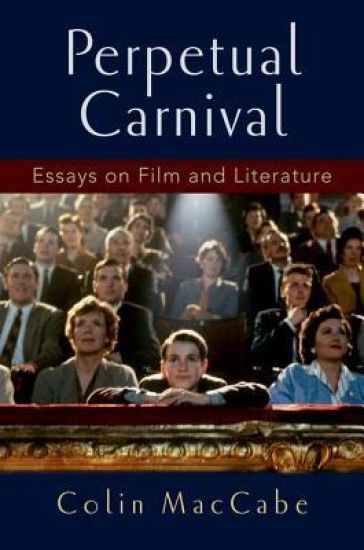
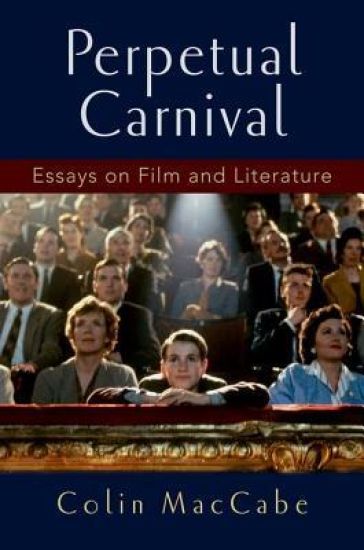
Upholding literature and film together as academically interwoven, Perpetual Carnival underscores the everlasting coexistence of realism and modernism, eschewing the popularly accepted view that the latter is itself a rejection of the former. Mining examples from both film and literature, Colin MacCabe asserts that the relationship between film and literature springs to life a wealth of beloved modernist art, from Jean-Luc Godard's Pierre le Fou to James Joyce's Ulysses, enriched by realism's enduring legacy. The intertextuality inherent in adaptation furthers this assertion in MacCabe's inclusion of Roman Polanski's Tess, a 1979 adaptation of Thomas Hardy's nineteenth-century realist novel, Tess of the d'Urbervilles. Showcasing essays enlivened by cosmopolitan interests, theoretical insight, and strong social purpose, Perpetual Carnival supports a humanities which repudiates narrow specialization and which seeks to place the discussion of film and literature firmly in the reality of current political and ideological discussion. It argues for the writers and directors, the thinkers and critics, who have most fired the contemporary imagination.
In 1791, General Arthur St. Clair led the United States army in a campaign to destroy a complex of Indian villages at the Maumee River in northwestern Ohio. Almost within reach of their objective, St. Clair's 1,400 men were attacked by about one thousand Indians. The U.S. force was decimated, suffering nearly one thousand casualties in killed and wounded, while Indian casualties numbered only a few dozen. But despite the lopsided result, it wouldn't appear to carry much significance; it involved only a few thousand people, lasted less than three hours, and the outcome, which was never in doubt, was permanently reversed a mere three years later. Neither an epic struggle nor a clash that changed the course of history, the battle doesn't even have a name. Yet, as renowned Native American historian Colin Calloway demonstrates here, St. Clair's Defeat--as it came to be known-- was hugely important for its time. It was both the biggest victory the Native Americans ever won, and, proportionately, the biggest military disaster the United States had suffered. With the British in Canada waiting in the wings for the American experiment in republicanism to fail, and some regions of the West gravitating toward alliance with Spain, the defeat threatened the very existence of the infant United States. Generating a deluge of reports, correspondence, opinions, and debates in the press, it produced the first congressional investigation in American history, while ultimately changing not only the manner in which Americans viewed, raised, organized, and paid for their armies, but the very ways in which they fought their wars. Emphasizing the extent to which the battle has been overlooked in history, Calloway illustrates how this moment of great victory by American Indians became an aberration in the national story and a blank spot in the national memory. Calloway shows that St. Clair's army proved no match for the highly motivated and well-led Native American force that shattered not only the American army but the ill-founded assumption that Indians stood no chance against European methods and models of warfare. An engaging and enlightening read for American history enthusiasts and scholars alike, The Victory with No Name brings this significant moment in American history back to light.
George Washington dominates the narrative of the nation's birth, yet American history has largely forgotten what he knew: that the country's fate depended less on grand rhetorical statements of independence and self-governance than on land--Indian land. While other histories have overlooked the central importance of Indian power during the country's formative years, Colin G. Calloway here gives Native American leaders their due, revealing the relationship between the man who rose to become the most powerful figure in his country and the Native tribes whose dominion he usurped. In this sweeping new biography, Calloway uses the prism of Washington's life to bring focus to the great Native leaders of his time--Shingas, Tanaghrisson, Bloody Fellow, Joseph Brant, Red Jacket, Little Turtle--and the tribes they represented: the Iroquois Confederacy, Lenape, Miami, Creek, Delaware; in the process, he returns them to their rightful place in the story of America's founding. The Indian World of George Washington spans decades of Native American leaders' interaction with Washington, from his early days as surveyor of Indian lands, to his military career against both the French and the British, to his presidency, when he dealt with Native Americans as a head of state would with a foreign power, using every means of diplomacy and persuasion to fulfill the new republic's destiny by appropriating their land. By the end of his life, Washington knew more than anyone else in America about the frontier and its significance to the future of his country. The Indian World of George Washington offers a fresh portrait of the most revered American and the Native Americans whose story has been only partially told. Calloway's biography invites us to look again at the story of America's beginnings and see the country in a whole new light.
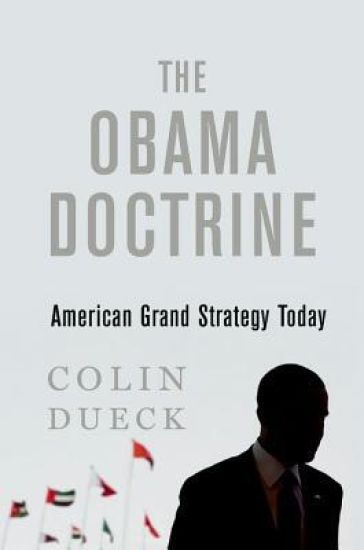
By mid-2015, the Obama presidency will be entering its final stages, and the race among the successors in both parties will be well underway. And while experts have already formed a provisional understanding of the Obama administration's foreign policy goals, the shape of the "Obama Doctrine" is finally coming into full view. It has been consistently cautious since Obama was inaugurated in 2009, but recent events in the Middle East, Eastern Europe, and the Far East have led an increasingly large number of foreign policy experts to conclude that caution has transformed into weakness. In The Obama Doctrine, Colin Dueck analyzes and explains what the Obama Doctrine in foreign policy actually is, and maps out the competing visions on offer from the Republican Party. Dueck, a leading scholar of US foreign policy, contends it is now becoming clear that Obama's policy of international retrenchment is in large part a function of his emphasis on achieving domestic policy goals. There have been some successes in the approach, but there have also been costs. For instance, much of the world no longer trusts the US to exert its will in international politics, and America's adversaries overseas have asserted themselves with increasing frequency. The Republican Party will target these perceived weaknesses in the 2016 presidential campaign and develop competing counter-doctrines in the process. Dueck explains that within the Republican Party, there are two basic impulses vying with each other: neo-isolationism and forceful internationalism. Dueck subdivides each impulse into the specific agenda of the various factions within the party: Tea Party nationalism, neoconservatism, conservative internationalism, and neo-isolationism. He favors a realistic but forceful US internationalism, and sees the willingness to disengage from the world by some elements of the party as dangerous. After dissecting the various strands, he articulates an agenda of forward-leaning American realism--that is, a policy in which the US engages with the world and is willing to use threats of force for realist ends. The Obama Doctrine not only provides a sharp appraisal of foreign policy in the Obama era; it lays out an alternative approach to marshaling American power that will help shape the foreign policy debate in the run-up to the 2016 elections.
James Joyce is one of the greatest writers in English. His first book, A Portrait of the Artist as A Young Man laid down the template for the Coming of Age novel, while his collection of short stories, Dubliners, is of perennial interest. His great modern epic, Ulysses, took the city of Dublin for its setting and all human life for its subject, and its publication in 1922 marked the beginning of the modern novel. Joyce's final work, Finnegans Wake is an endless experiment in narrative and language. But if Joyce is a great writer he is also the most difficult writer in English. Finnegans Wake is written in a freshly invented language, and Ulysses exhausts all the forms and styles of English. Even the apparently simple Dubliners has plots of endless complexity, while the structure of A Portrait of the Artist as A Young Man is exceptionally intricate. This Very Short Introduction explores the work of this most influential yet complex writer, and analyses how Joyce's difficulty grew out of his situation as an Irish writer unwilling to accept the traditions of his imperialist oppressor, and contemptuous of the cultural banality of the Gaelic revival. Joyce wanted to investigate and celebrate his own life, but this meant investigating and celebrating the drunks of Dublin's pubs and the prostitutes of Dublin's brothels. No subject was alien to him and he developed the naturalist project of recording all aspects of life with the symbolist project of finding significant correspondences in the most unlikely material. Throughout, Colin MacCabe interweaves Joyce's life and history with his books, and draws out their themes and connections. Very Short Introductions: Brilliant, Sharp, Inspiring ABOUT THE SERIES: The Very Short Introductions series from Oxford University Press contains hundreds of titles in almost every subject area. These pocket-sized books are the perfect way to get ahead in a new subject quickly. Our expert authors combine facts, analysis, perspective, new ideas, and enthusiasm to make interesting and challenging topics highly readable.
Q: Skills for Success Fourth Edition Level 3 Listening and Speaking Student Book B with Online Practice
Colin S. Ward; Margot F. Gramer; Miles Craven; Kristin D. Sherman
Oxford University Press
2025
muu
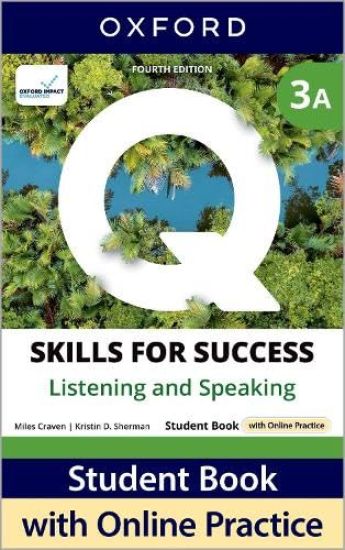
Q: Skills for Success Fourth Edition Level 3 Listening and Speaking Student Book A with Online Practice
Colin S. Ward; Margot F. Gramer; Miles Craven; Kirstin D. Sherman
Oxford University Press
2025
muu
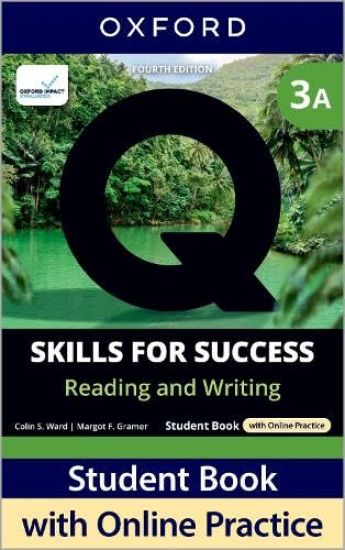
Q: Skills for Success Fourth Edition Level 3 Reading and Writing Student Book A with Online Practice
Colin S. Ward; Margot F. Gramer; Miles Craven; Kristin D. Sherman
Oxford University Press
2025
muu
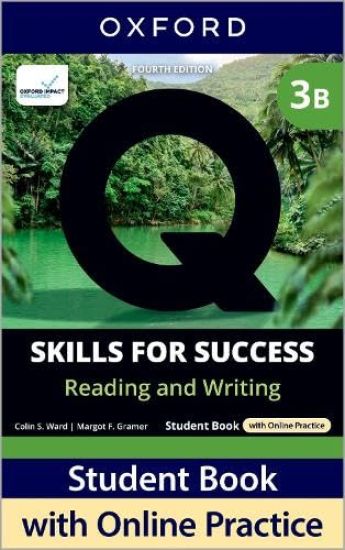
Q: Skills for Success Fourth Edition Level 3 Reading and Writing Student Book B with Online Practice
Colin S. Ward; Margot F. Gramer; Miles Craven; Kristin D. Sherman
Oxford University Press
2025
muu
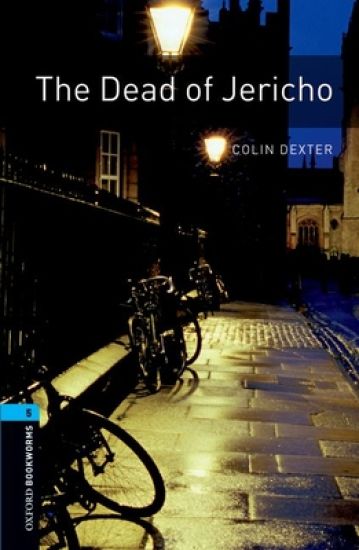
Oxford Bookworms Library: Level 5:: The Dead of Jericho
Colin Dexter
Oxford University Press
2008
nidottu
The most consistent of all series in terms of language control, length, and quality of story. David R. Hill, Director of the Edinburgh Project on Extensive Reading.
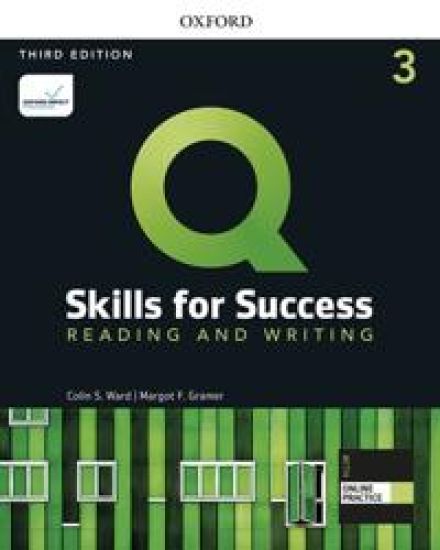
Q: Skills for Success: Level 3: Reading and Writing Student Book with iQ Online Practice
Colin Ward; Margot Gramer
Oxford University Press
2019
muu
Q: Skills for Success is renowned for helping students to achieve academic success in English.The Third Edition helps students to develop the techniques and critical thinking skills they need for academic study with new Critical Thinking Strategies, updated texts and topics and 100% new assessment.
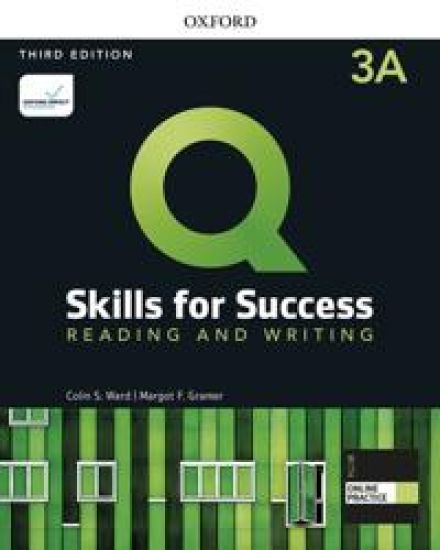
Q: Skills for Success: Level 3: Reading and Writing Split Student Book A with iQ Online Practice
Colin Ward; Margot Gramer
Oxford University Press
2019
muu
Q: Skills for Success is renowned for helping students to achieve academic success in English.The Third Edition helps students to develop the techniques and critical thinking skills they need for academic study with new Critical Thinking Strategies, updated texts and topics and 100% new assessment.
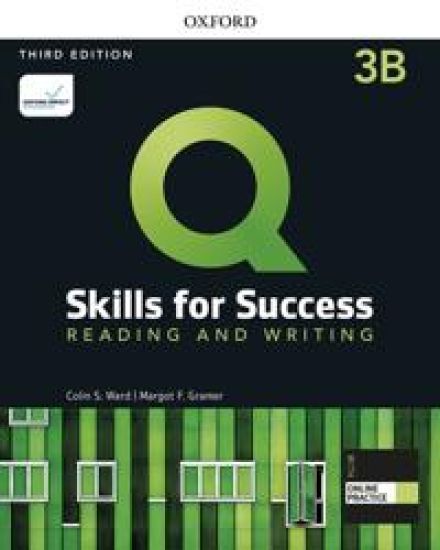
Q: Skills for Success: Level 3: Reading and Writing Split Student Book B with iQ Online Practice
Colin Ward; Margot Gramer
Oxford University Press
2019
muu
Q: Skills for Success is renowned for helping students to achieve academic success in English.The Third Edition helps students to develop the techniques and critical thinking skills they need for academic study with new Critical Thinking Strategies, updated texts and topics and 100% new assessment.
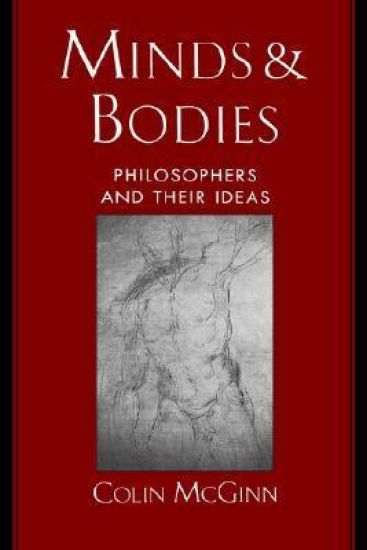
In Minds and Bodies, one of philosophy's most dynamic and versatile thinkers gathers nearly forty review essays written over the past twenty years for non-specialized publications. They cover biography, particularly of Russell and Wittgenstein; philosophy of mind, especially consciousness; and ethics, with an emphasis on applied ethics. Taken together these essays form a vivid picture of contemporary philosophy for the general reader, and will be welcomed by those within the philosophical community for their crisp critical insights and rigorous assessments.
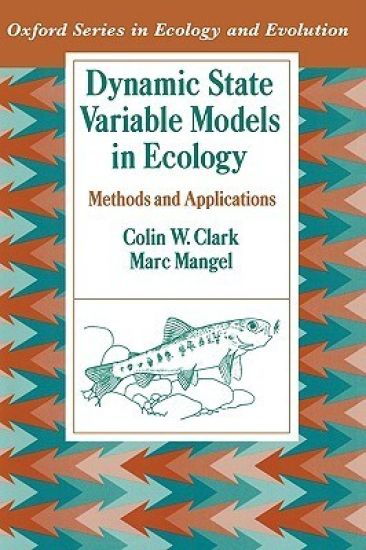
Dynamic State Variable Models in Ecology
Colin W. Clark; Marc Mangel
Oxford University Press Inc
2000
sidottu
This book introduces readers to a set of powerful and extremely flexible modelling techniques, starting at "square one" and continuing with carefully chosen applications. Some of these applications of methodology include insect oviposition behavior, overwinter survival of birds and fish, avian migration, resource management, conservation biology, agroecology, and human behaviour. This book also explains how to construct, test, and use dynamic state variable models in a wide range of contexts in evolutionary ecology. And its complete and up-to-date coverage allows readers to immediately begin using the described techniques. Dynamic State Variable Models in Ecology is designed for self-instruction or for use in upper division undergraduate or graduate courses. It is ideal for students and scientists interested in behaviour, ecology, anthropology, conservation biology, and related fields.
Dynamic State Variable Models in Ecology
Colin W. Clark; Marc Mangel
Oxford University Press Inc
2000
nidottu
This book introduces readers to a set of powerful and extremely flexible modelling techniques, starting at "square one" and continuing with carefully chosen applications. Some of these applications of methodology include insect oviposition behavior, overwinter survival of birds and fish, avian migration, resource management, conservation biology, agroecology, and human behaviour. This book also explains how to construct, test, and use dynamic state variable models in a wide range of contexts in evolutionary ecology, and its complete and up-to-date coverage allows readers to immediately begin using the described techniques. Dynamic State Variable Models in Ecology is designed for self-instruction or for use in upper division undergraduate or graduate courses. It is ideal for students and scientists interested in behaviour, ecology, anthropology, conservation biology, and related fields.
In this superb volume in Oxford's acclaimed Pivotal Moments series, Colin Calloway reveals how the Treaty of Paris of 1763 had a profound effect on American history, setting in motion a cascade of unexpected consequences, as Indians and Europeans, settlers and frontiersmen, all struggled to adapt to new boundaries, new alignments, and new relationships. Britain now possessed a vast American empire stretching from Canada to the Florida Keys, yet the crushing costs of maintaining it would push its colonies toward rebellion. White settlers, free to pour into the West, clashed as never before with Indian tribes struggling to defend their way of life. In the Northwest, Pontiac's War brought racial conflict to its bitterest level so far. Whole ethnic groups migrated, sometimes across the continent: it was 1763 that saw many exiled settlers from Acadia in French Canada move again to Louisiana, where they would become Cajuns. Calloway unfurls this panoramic canvas with vibrant narrative skill, peopling his tale with memorable characters such as William Johnson, the Irish baronet who moved between Indian campfires and British barracks; Pontiac, the charismatic Ottawa chieftain; and James Murray, Britains first governor in Quebec, who fought to protect the religious rights of his French Catholic subjects. Most Americans know the significance of the Declaration of Independence or the Emancipation Proclamation, but not the Treaty of Paris. Yet 1763 was a year that shaped our history just as decisively as 1776 or 1862. This captivating book shows why. Winner of the Society of Colonial Wars Book Award for 2006
In 19th century paintings, the proud Indian warrior and the Scottish highland chief are portrayed in similar wayscolorful and wild, righteous and warlike, the last of their breeds. In 17th and 18th century accounts, they are both presented as barbarians, in need of English language, religion, and civilization. During the Seven Years War, the Cherokees and Highland troops were said to be cousins. By the 19th century, one could hear Cree, Mohawk, Cherokee, and Salish spoken with Gaelic accents. Colin Calloway, in this imaginative work of imperial history, looks at why these two peoples have so much in common. A comparative approach to the American Indians and Scottish Highlanders, this book examines the experiences of clans and tribal societies, which underwent parallel experiences on the peripheries of Britains empire (in Britain, the United States, and Canada) and what happened when they encountered one another on the frontier. Pushed out of their ancestral lands, their traditional food sourcescattle in the Highlands and bison on the Great Plainswere decimated to make way for livestock farming. Chapters of this book explore the storied landscapes, communal land-holding practices, and deep spiritual connections to place they shared; families and clans; Christian missionary activities among both Highlanders and Indians; and the forced removals of both peoples from their ancestral lands. Eventually, the conquering cultures would romanticize the indigenous peoples whose tribal ways of life they destroyed, in art and literature by such authors as Sir Walter Scott and James Fenimore Cooper. In North America, the groups often came together through the fur and deerskin industries and intermarried, and this book examines their relationships in the context of relations with colonial powers. Today, both groups continue to celebrate the survival of their heritages in pow-wows and Highland festivals, and growing numbers of Indians apply for membership in Scottish clan societies. A scholar of American Indians, who is of Scottish Highlander heritage, Calloway is known for his work on the relationships between Indians and colonists in North America. In this book, he complicates the notion of British power by differentiating between the English and Scottish Highlanders, who the English co-opted into serving in their military forces in North America. What one gains is a more finely-tuned understanding of how indigenous peoples with their own rich identities experienced cultural change, economic transformation, and demographic dislocation amidst the growing power of the British empire.
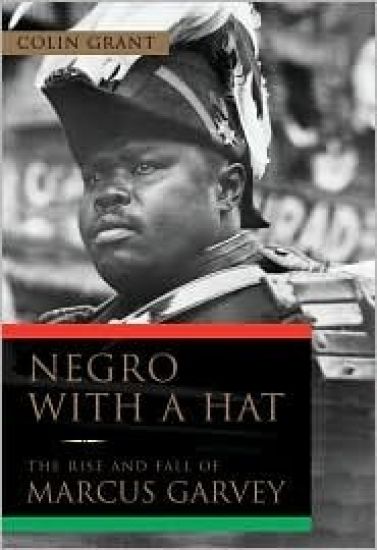
New in paperback, this groundbreaking biography captures the full sweep and epic dimensions of Marcus Garvey's life, the dazzling triumphs and the dreary exile. As Grant shows, Garvey was a man of contradictions: a self-educated, poetry-writing aesthete and unabashed propagandist, an admirer of Lenin, and a dandy given to elaborate public displays. Above all, he was a shrewd promoter whose use of pageantry evoked a lost African civilization and fired the imagination of his followers. Negro With a Hat restores Garvey to his place as one of the founders of black nationalism and a key figure of the 20th century. "A searching, vivid, and (as the title suggests) complex account of Garvey's short but consequential life." --Steve Hahn, The New Republic "The story of Marcus Garvey, the charismatic and tireless black leader who had a meteoric rise and fall in the late 1910s and early '20s, makes for enthralling reading, and Garvey has found an engaging and objective biographer in Colin Grant.... Grant's book is not all politics, ideology, money and lawsuits. It is also an engrossing social history.... Negro With a Hat is an achievement on a scale Garvey might have appreciated." --New York Times Book Review "Dazzling, definitive biography of the controversial activist who led the 1920s 'Back to Africa' movement.... Grant's learned passion for his subject shimmers on every page. A riveting and well-wrought volume that places Garvey solidly in the pantheon of important 20th-century black leaders." --Kirkus Reviews (Starred Review) "This splendid book is certain to become the definitive biography. Garvey was a dreamer and a doer; Grant captures the fascination of both." --Publishers Weekly (Starred Review) "Grant's strength lies in his ability to re-create political moods and offer compelling sketches of colorful individuals and their organizations.... An engaging and readable introduction to a complicated and contentious historical actor who, in his time, possessed a unique capacity to inspire devotion and hatred, adulation and fear." --Chicago Tribune "A monumental, nuanced and broadly sympathetic portrait." --Financial Times