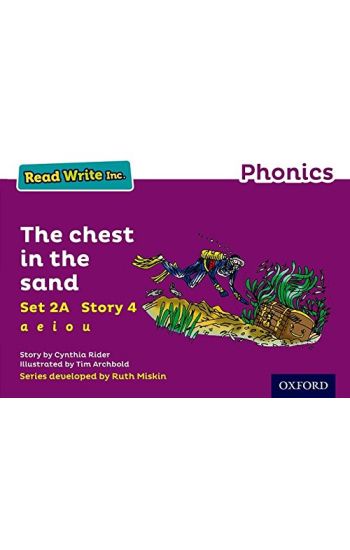
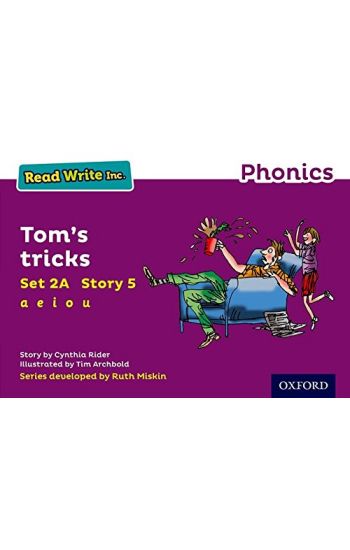
These decodable stories provide practice for children learning to read. The Storybooks include texts in a range of engaging genres such as fairy tales, myths and legends, rhyming stories and familiar settings.
These decodable stories provide practice for children learning to read. The Storybooks include texts in a range of engaging genres such as fairy tales, myths and legends, rhyming stories and familiar settings.
These engaging Storybooks provide structured practice for children learning to read the Read Write Inc. Set 1 and 2 sounds. Each set of books is carefully levelled to match childrens growing phonic knowledge so children can read them with accuracy, fluency and comprehension. The Storybooks include a range of engaging stories such as fairy tales, myths and legends, rhyming stories and familiar settings. Activities at the start of the books help children to practise the sounds and words they will encounter in the story. Questions to talk about at the end of the story provide an extra opportunity for developing childrens comprehension. The books are part of the Read Write Inc. Phonics programme, developed by Ruth Miskin. The programme is designed to create fluent readers, confident speakers and willing writers. It includes Handbooks, Sounds Cards, Word Cards, Storybooks, Non-fiction, Writing books and an Online resource. Read Write Inc. is fully supported by comprehensive professional development from Ruth Miskin Training.
These engaging Storybooks provide structured practice for children learning to read the Read Write Inc. Set 1 and 2 sounds. Each set of books is carefully levelled to match childrens growing phonic knowledge so children can read them with accuracy, fluency and comprehension. The Storybooks include a range of engaging stories such as fairy tales, myths and legends, rhyming stories and familiar settings. Activities at the start of the books help children to practise the sounds and words they will encounter in the story. Questions to talk about at the end of the story provide an extra opportunity for developing childrens comprehension. The books are part of the Read Write Inc. Phonics programme, developed by Ruth Miskin. The programme is designed to create fluent readers, confident speakers and willing writers. It includes Handbooks, Sounds Cards, Word Cards, Storybooks, Non-fiction, Writing books and an Online resource. Read Write Inc. is fully supported by comprehensive professional development from Ruth Miskin Training.
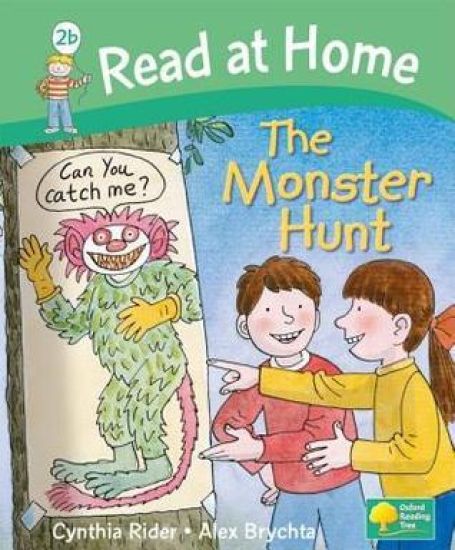
Read at Home is a new series designed for young, beginner readers. It features all the popular Oxford Reading Tree characters in exciting stories specially written for parents to support their children's reading at home. These entertaining stories, with real life and fantasy adventures, are carefully graded across 5 levels, and contain vocabulary repetition and gradual progression within each level, from Book A to Book C. The Monster Hunt, is Level 2B for children Starting to Read - those children who can recognize a few words by sight, can use pictures to read simple sentences and who know some initial letter sounds. The story has 1-2 sentences per page with lots of patterning and repetition. This book is at the same reading level as 2B I Can Trick a Tiger Approx ORT level: Stages 2-3 Highly successful, high profile author and illustrator team: BLRoderick Hunt, author of the original Oxford Reading Tree stories, and Cynthia Rider are superb storytellers with over 50 years educational experience between them. BLAlex Brychta's humorous and detailed illustrations bring the stories alive and are known to and loved by millions of Oxford Reading Tree readers
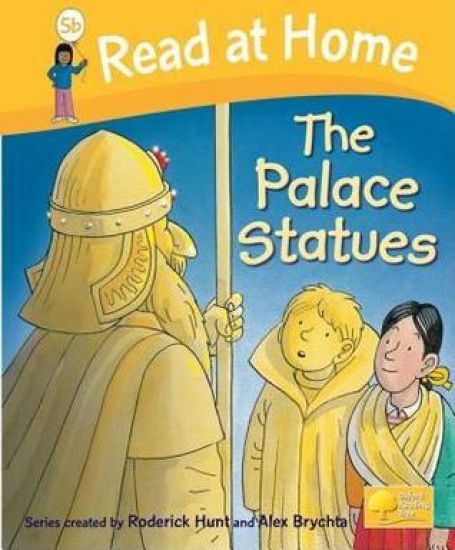
Read at Home is a new series designed for young, beginner readers. It features all the popular Oxford Reading Tree characters in 18 exciting stories specially written for parents to support their children's reading at home. These entertaining stories, with real life and fantasy adventures, are now carefully graded across 5 levels, and contain vocabulary repetition and gradual progression within each level, from Book A to Book C. The Golden Statues, a magic key story, is Level 5b for children Reading with Confidence - those children who can recognize 75+ words by sight, can read with less support and who can read silently and read ahead. The story has 4-6 sentences per page. Approx ORT level: Stage 6-7 BL Highly successful, high profile author and illustrator team: - Roderick Hunt, author of the original Oxford Reading Tree stories, and Cynthia Rider are superb storytellers with over 50 years educational experience between them. - Alex Brychta's humorous and detailed illustrations bring the stories alive and are known to and loved by millions of Oxford Reading Tree readers
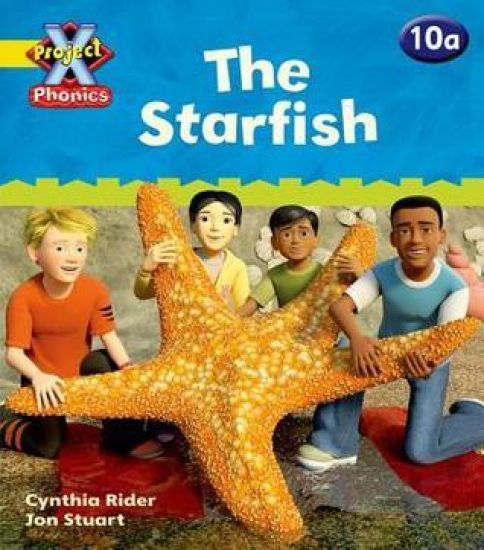
These books are ideal for early readers to help broaden their vocabulary and give them confidence with sounds and words as they learn to read. Introduce and practise new sounds and tricky words in the five Exploring Letters books. Then read the accompanying fiction and non-fiction titles for each book. Read five exciting, action-packed micro-adventures featuring the familiar Project X characters, Max, Cat, Ant and Tiger. Find out about Max's birthday surprise in The Red Box and what happens to Cat and Ant when they build a spaceship in The Rocket. Play hide and seek in Shhh! Explore Tiger's dad's old toy castle in The Fort and discover the secrets of a rock pool in The Starfish. Also explore a variety of subjects with our fun, phonic non-fiction titles: The Fox, A Quick Quiz, Things that Go, Into the Deep and Football Skills. Each book is designed for adults to read to children with appropriate text for children to read, plus there are lots of ideas for talk and other activities to make the learning fun.
Today's police agencies are in a period of both crisis and reform as they try to improve their ability to deliver public safety to citizens in ways that are effective, legitimate, and sustainable. Evidence-based policing offers one such solution - an approach which emphasises the value that research can bring to police officers and, by extension, the public they serve. However, evidence-based policing is not just about the process of understanding and evaluating police practices. It is also about translating and using that knowledge in daily police activities. This unique book examines the scientific evidence for the effectiveness of various police practices and provides tools to help turn research into practice. Part I gives a practitioner's definition of evidence-based policing, a primer on how to judge and interpret research findings, and a review of the Evidence-Based Policing Matrix, a tool for translating research on police crime control interventions. In Part II the authors review the breadth of knowledge about policing interventions for people, places, communities, and technology, focusing on how to optimize operations based on this information. Tools and ideas that can assist in implementing evidence-based practices into patrol, investigations, supervision, management, crime analysis, and leadership are provided in Part III. Finally, in Part IV the authors speak to researchers about how they might continue to work with police agencies to advance evidence-based policing.
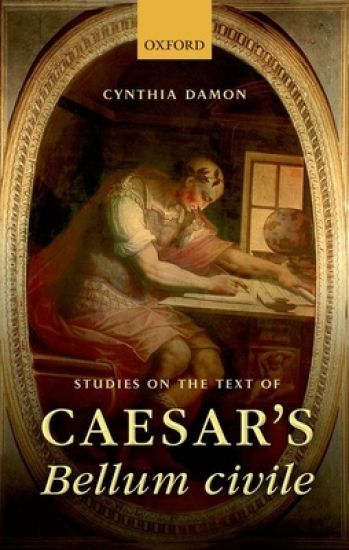
Studies on the Text of Caesar's Bellum civile is a companion volume to Damon's revised Oxford Classical Texts edition of Caesar's Bellum civile, his account of his civil war with Pompey. Comprising three parts, this volume investigates the detailed philological arguments that underpin the revised edition of the text. The first part supplements the preface of the Oxford Classical Texts edition, providing an expanded background on the history of the text and a more detailed argument for the shape of the stemma. The second part is a discussion of nature and the causes of the difficulties present in the text of the Bellum civile and their consequences for the revised edition. The third part presents a series of around 75 notes on different areas of the text, exploring in depth the contentions behind the various remedies suggested in the critical apparatus of the Oxford Classical Texts edition.
This volume explores the effects of transitional justice measures on trust-building and democratization across twelve countries in Central and Eastern Europe and parts of the Former Soviet Union over the period 19892012. The author argues that transitional justice measures have a differentiated impact on political and social trust-building, supporting some aspects of political trust and undermining other aspects of social trust. Moreover, the structure, scope, timing, and implementation of transitional justice measures condition outcomes. More expansive and compulsory institutional change mechanisms register the largest effects, with limited and voluntary change mechanisms having a diminished effect, and more informal and largely symbolic measures having the most attenuated effect. These differentiated and conditional effects are also evident with respect to transition goals like supporting democratic consolidation and reducing corruption, since these goals respond differently to the mixtures of institutional and symbolic reforms found in transitional justice programs. The author develops an original transitional justice typology in order to test hypotheses linking trust-building and transitional justice across twelve cases in the post-communist region. The resulting new datasets allow for a quantitative examination of the relationship between different types of transitional justice programs and a range of possible state building and societal reconciliation goals, including political trust-building, social trust-building, democratization, the strengthening of civil society, the promotion of government effectiveness, and the reduction of corruption. Comparative case studies of four transitional justice programs-Hungary, Romania, Poland, and Bulgariadraw on field work, primary and historical documents, and interview materials to explicate trust-building dynamics, with particular attention to regime complicity challenges, historical memory issues, and communist legacies. Oxford Studies in Democratization is a series for scholars and students of comparative politics and related disciplines. Volumes concentrate on the comparative study of the democratization process that accompanied the decline and termination of the cold war. The geographical focus of the series is primarily Latin America, the Caribbean, Southern and Eastern Europe, and relevant experiences in Africa and Asia. The series editor is Laurence Whitehead, Senior Research Fellow, Nuffield College, University of Oxford.
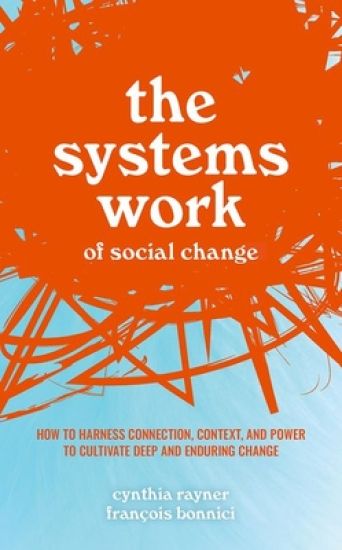
The issues of poverty, inequality, racial justice, and climate change have never been more pressing or paralyzing. Current approaches to social change, which rely on industrial models of production and power to "solve" social problems, are not helping. In fact, they are designed to entrench the status quo. In The Systems Work of Social Change, Cynthia Rayner and François Bonnici draw on two hundred years of history and a treasure trove of stories of committed social changemakers to uncover principles and practices for social change that radically depart from these approaches. Rather than delivering "solutions," these principles and practices focus on the process of change itself. Through rich storytelling and lucid analysis, Rayner and Bonnici show that connection, context, and power sit at the heart of the change process, ensuring broader agency for people and communities to create social systems that are responsive and representative in a rapidly changing world. Simple yet profound, this book distills a timely set of lessons for practitioners, leaders, scholars, and policymakers.
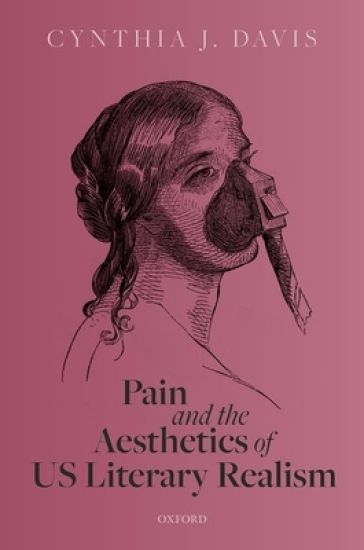
The postbellum period saw many privileged Americans pursuing a civilized ideal premised on insulation from pain. Medico-scientific advances in anesthetics and analgesics and emergent religious sects like Christian Science made pain avoidance seem newly possible. The upper classes could increasingly afford to distance themselves from the suffering they claimed to feel more exquisitely than did their supposedly less refined contemporaries and antecedents. The five US literary realists examined in this study resisted this contemporary revulsion from pain without going so far as to join those who celebrated suffering for its invigorating effects. William Dean Howells, Henry James, Edith Wharton, Mark Twain, and Charles Chesnutt embraced the concept of a heightened sensitivity to pain as a consequence of the civilizing process but departed from their peers by delineating alternative definitions of a superior sensibility indebted to suffering. Although the treatment of pain in other influential nineteenth century literary modes including sentimentalism and naturalism has attracted ample scholarly attention, this book offers the first sustained analysis of pain's importance to US literary realism as practiced by five of its most influential proponents.
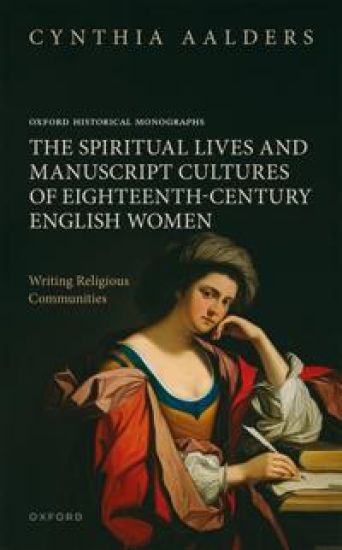
The Spiritual Lives and Manuscript Cultures of Eighteenth-Century English Women explores the vital and unexplored ways in which women's life writings acted to undergird, guide, and indeed shape religious communities. Through an exploration of various significant but understudied personal relationships- including mentorship by older women, spiritual friendship, and care for nonbiological children-the book demonstrates the multiple ways in which women were active in writing religious communities. The women discussed here belonged to communities that habitually communicated through personal writing. At the same time, their acts of writing were creative acts, powerful to build and shape religious communities: these women wrote religious community. The book consists of a series of interweaving case studies and focuses on Catherine Talbot (1721-70), Anne Steele (1717-78), and Ann Bolton (1743-1822), and on their literary interactions with friends and family. Considered together, these subjects and sources allow comparison across denomination, for Talbot was Anglican, Steele a Baptist, and Bolton a Methodist. Further, it considers women's life writings as spiritual legacy, as manuscripts were preserved by female friends and family members and continued to function in religious communities after the death of their authors. Various strands of enquiry weave through the book: questions of gender and religion, themselves inflected by denomination; themes related to life writings and manuscript cultures; and the interplay between the writer as individual and her relationships and communal affiliations. The result is a variegated and highly textured account of eighteenth-century women's spiritual and writing lives.
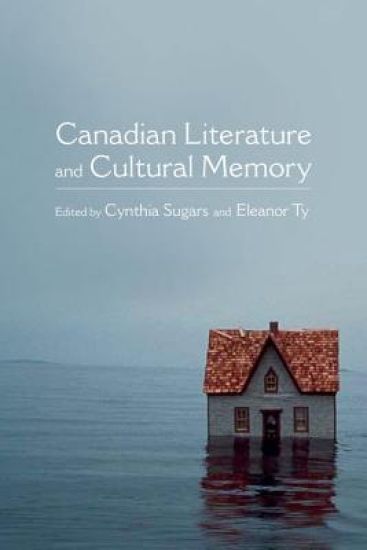
Critics argue that contemporary western societies are immersed in a "culture of memory," devoting resources to national histories and heritage, commemoration, public re-enactments, etc. We use these recollections of our national past to maintain a collective identity in the present, among other uses. These essays, edited by Cynthia Sugars and Eleanor Ty, explore how Canadian literature draws on aspects of cultural memory, past and future. Exploring memory as a "vector of signification" involves a wide range of topics such concepts of as heritage, antiquity, nostalgia, elegy, ancestry, haunting, trauma, affect, aging, authenticity, commemoration, public history. Contributors to this collection consider literary treatments of both mainstream and alternative uses of cultural memory, past and contemporary, urban and rural. From well-known writers like Alice Munro, Al Purdy and Dionne Brand to recreations of Aboriginal pasts and less common topics like food and Mennonites, there is wide representation of Canada's literary diversity. And equally representative is the collection's historical spread, ranging across early explorer narratives to contemporary works. The collection digs into some of the darker moments in our past (immigrant experiences, recollections of interned Japanese-Canadians in World War 2, and memories of Native children in residential schools). The sheer ambition of this collection suggests the multifaceted ways that Canada's past is part of our collective cultural memory now. A four-page colour insert - including Seth cartoons as well as unique, little known photography - provides a compelling visual context for the collection's treatment of the complex, multifaceted character of cultural memory in Canada. The collection is divided into five parts (amnesia, postmemory, recovery work, trauma, and globalization), all areas of research in the emerging field of cultural memory. These thought-provoking essays reflect the many ways the past infuses the present, and the present adapts the past. Students and scholars will find this rich collection useful in upper-level courses in Canadian literature as well as in cultural studies.
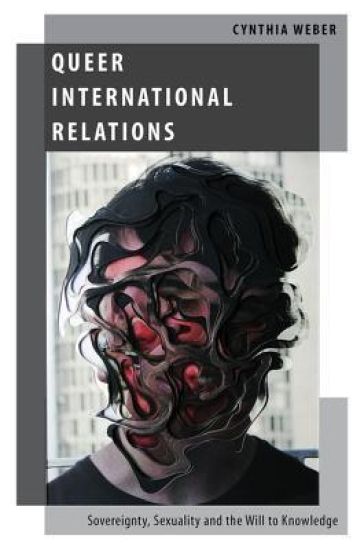
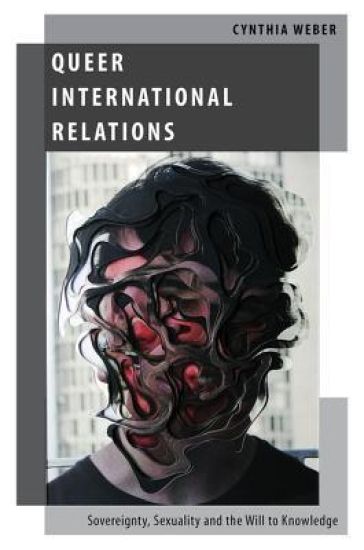
Asked about queer work in international relations, most IR scholars would almost certainly answer that queer studies is a non-issue for the subdiscipline -- a topic beyond the scope and understanding of international politics. Yet queer work tackles problems that IR scholars themselves believe are central to their discipline: questions about political economies, the geopolitics of war and terror, and the national manifestations of sexual, racial, and gendered hierarchies, not to mention their implications for empire, globalization, neoliberalism, sovereignty, and terrorism. And since the introduction of queer work in the 1980s, IR scholars have used queer concepts like "performativity" or "crossing" in relation to important issues like sovereignty and security without acknowledging either their queer sources or their queer function. This agenda-setting book asks how "sexuality" and "queer" are constituted as domains of international political practice and mobilized so that they bear on questions of state and nation formation, war and peace, and international political economy. How are sovereignty and sexuality entangled in contemporary international politics? What understandings of sovereignty and sexuality inform contemporary theories and foreign policies on development, immigration, terrorism, human rights, and regional integration? How specifically is "the homosexual" figured in these theories and policies to support or contest traditional understandings of sovereignty? Queer International Relations puts international relations scholarship and transnational/global queer studies scholarship in conversation to address these questions and their implications for contemporary international politics.
Asked about queer work in international relations, most IR scholars would almost certainly answer that queer studies is a non-issue for the subdiscipline -- a topic beyond the scope and understanding of international politics. Yet queer work tackles problems that IR scholars themselves believe are central to their discipline: questions about political economies, the geopolitics of war and terror, and the national manifestations of sexual, racial, and gendered hierarchies, not to mention their implications for empire, globalization, neoliberalism, sovereignty, and terrorism. And since the introduction of queer work in the 1980s, IR scholars have used queer concepts like "performativity" or "crossing" in relation to important issues like sovereignty and security without acknowledging either their queer sources or their queer function. This agenda-setting book asks how "sexuality" and "queer" are constituted as domains of international political practice and mobilized so that they bear on questions of state and nation formation, war and peace, and international political economy. How are sovereignty and sexuality entangled in contemporary international politics? What understandings of sovereignty and sexuality inform contemporary theories and foreign policies on development, immigration, terrorism, human rights, and regional integration? How specifically is "the homosexual" figured in these theories and policies to support or contest traditional understandings of sovereignty? Queer International Relations puts international relations scholarship and transnational/global queer studies scholarship in conversation to address these questions and their implications for contemporary international politics.
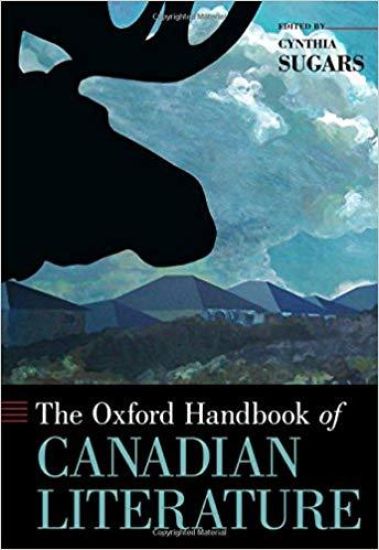
The Oxford Handbook of Canadian Literature provides a broad-ranging introduction to some of the key critical fields, genres, and periods in Canadian literary studies. The essays in this volume, written by prominent theorists in the field, reflect the plurality of critical perspectives, regional and historical specializations, and theoretical positions that constitute the field of Canadian literary criticism across a range of genres and historical periods. The volume provides a dynamic introduction to current areas of critical interest, including (1) attention to the links between the literary and the public sphere, encompassing such topics as neoliberalism, trauma and memory, citizenship, material culture, literary prizes, disability studies, literature and history, digital cultures, globalization studies, and environmentalism or ecocriticism; (2) interest in Indigenous literatures and settler-Indigenous relations; (3) attention to multiple diasporic and postcolonial contexts within Canada; (4) interest in the institutionalization of Canadian literature as a discipline; (5) a turn towards book history and literary history, with a renewed interest in early Canadian literature; (6) a growing interest in articulating the affective character of the "literary" - including an interest in affect theory, mourning, melancholy, haunting, memory, and autobiography. The book represents a diverse array of interests -- from the revival of early Canadian writing, to the continued interest in Indigenous, regional, and diasporic traditions, to more recent discussions of globalization, market forces, and neoliberalism. It includes a distinct section dedicated to Indigenous literatures and traditions, as well as a section that reflects on the discipline of Canadian literature as a whole.
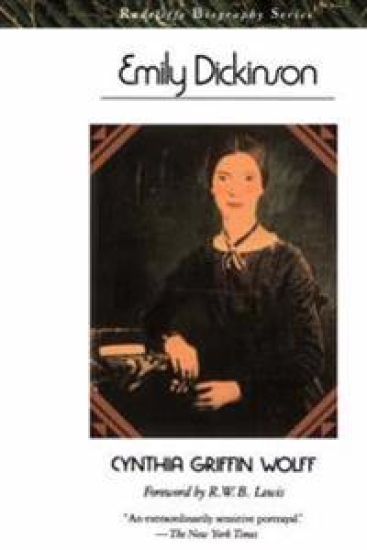
Cynthia Griffin Wolff's brilliant literary biography of Emily Dickinson is the first to unravel the intricate relationship between her life and her poetry. It is a vivid portrait of the poet and her times as well as a fascinating interpretive study of the poems that will enable every reader to approach them with new understanding and delight.
Updated in its 7th edition, Terrorism in the Twenty-First Century helps readers understand terrorism, responses to it, and current trends that affect the future of this phenomenon. Putting terrorism into historical perspective and analyzing it as a form of political violence, this text presents the most essential concepts, the latest data, and numerous case studies to promote effective analysis of terrorist acts. Terrorism in the Twenty-First Century objectively breaks down the who-what-why-how of terrorism, giving readers a way both to understand patterns of behavior and to more critically evaluate forthcoming patterns.
For many years, the interrelated histories of prostitution and cities have perked the ears of urban scholars, but until now the history of urban sex work has dealt only in passing with questions of race. In "I've Got to Make My Livin", Cynthia Blair explores African American women's sex work in Chicago during the decades of some of the city's most explosive growth, expanding not just our view of prostitution, but also of black women's labor, the Great Migration, black and white reform movements, and the emergence of modern sexuality. Focusing on the notorious sex districts of the city's south side, Blair paints a complex portrait of black prostitutes as conscious actors and historical agents, prostitution, she argues here, was an arena of exploitation and abuse, as well as a means of resisting middle-class sexual and economic norms. Blair ultimately illustrates just how powerful these norms were, offering stories about the struggles that emerged among black and white urbanites in response to black women's increasing visibility in the city's sex economy. Through these powerful narratives, "I've Got to Make My Livin" reveals the intersecting racial struggles and sexual anxieties that underpinned the celebration of Chicago as the quintessentially modern twentieth-century city.