

Kirjahaku
Etsi kirjoja tekijän nimen, kirjan nimen tai ISBN:n perusteella.
1000 tulosta hakusanalla D Castleton
D. Guillermo Ramon De Moncada Gran Senescal De Cataluna
Antonio Rubio Y Lluch
KESSINGER PUBLISHING, LLC
2009
pokkari

D. Johann Christian Oersted's Ideen Zu Einer Neuen Architekt
KESSINGER PUBLISHING, LLC
2009
nidottu
Abel, D: Legende Vom Heiligen Johann Von Nepomuk (1855)
D. Otto Abel
KESSINGER PUBLISHING, LLC
2009
nidottu

D'Alembert, J: D'Alembert A Frederic II
Jean Le Rond D'Alembert
KESSINGER PUBLISHING, LLC
2009
nidottu
D. Joao I E A Allianca Ingleza
Kessinger Publishing
2009
pokkari

D. Junii Juvenalis Opera Omnia Ex Editione G. A. Ruperti (1820)
D. Junius Juvenalis; G. A. Ruperti
KESSINGER PUBLISHING, LLC
2009
pokkari
D'Hanins, A: Oliva Pacis Sive Quadrilustres Induciae Carolum
Albert Ignace D'Hanins
KESSINGER PUBLISHING, LLC
2009
nidottu
D'Hanins, A: Pia Vota, Quatuor Linguis Expressa, Serenissimo
Albert Ignace D'Hanins
KESSINGER PUBLISHING, LLC
2009
nidottu


Sermons And Addresses On Various Subjects By D. L. Carroll (1846)
D. L. Carroll
KESSINGER PUBLISHING, LLC
2010
pokkari

A full account of Lawrence, ranging from his talent as a young writer to the continuing genius of his later work, and concentrating on his exceptionally acute powers of observation, both human and natural.

Originally published in 1983, D.H. Lawrence is an annotated bibliographic collection of works by and about D.H. Lawrence. Consisting of three parts, the primary bibliography contains separate bibliographies of Lawrence’s major publications, of collection editions of his works, of his letters, and of concordances to his writings. The secondary bibliography contains bibliographies of biographical and critical publications concerning Lawrence, generally or his individual works. Appendixes and Indexes include an extensive checklist of major foreign-language publications concerning Lawrence and a useful topical and thematic subject index for the guide.

Originally published in 1983, D.H. Lawrence is an annotated bibliographic collection of works by and about D.H. Lawrence. Consisting of three parts, the primary bibliography contains separate bibliographies of Lawrence’s major publications, of collection editions of his works, of his letters, and of concordances to his writings. The secondary bibliography contains bibliographies of biographical and critical publications concerning Lawrence, generally or his individual works. Appnedixes and Indexes include an extensive checklist of major foreign-language publications concerning Lawrence and a useful topical and thematic subject index for the guide.
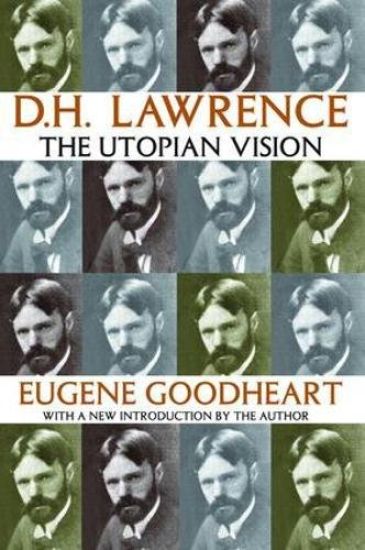
The dominant view of D.H. Lawrence's work has long been that of F. R. Leavis, who confined Lawrence within an exclusively ethical and artistic tradition. In D.H. Lawrence: The Utopian Vision, Eugene Goodheart widens the context in which Lawrence should be understood to include European as well as English writers - Blake, Nietzsche, Rilke, and Freud among others.Goodheart shows that the characteristic impulse of Lawrence's principal discovery was the bodily or physical life that he believed man had once possessed in his pre-civilized past and must now fully recover if future civilized life is possible. Goodheart's argument fully engages the paradoxes of Lawrence's writing. He is at once the last great representative of the moral tradition of the English novel and of the English Protestant imagination and a novelist without precedent, a diabolist in the service of the dark gods. He rejects the claims of society, while simultaneously lamenting the thwarting of the societal instinct. The oppositions and paradoxes in the work are the expression of a single, not always coherent, revolutionary imagination. D.H. Lawrence: The Utopian Vision provides a rigorous and critical analysis of the ideological character of Lawrence's novels and essays, in particular the effect of his utopianism on his views of nature, myth, and religious experience, while responding to his aesthetic achievement. Goodheart's Lawrence is a prophetic artist whose vision is at once inspiring and dangerous.In the new introduction to the book, Goodheart reflects upon the vicissitudes of Lawrence's reputation since the sixties when the book first appeared and his relevance to the concerns of our own time.
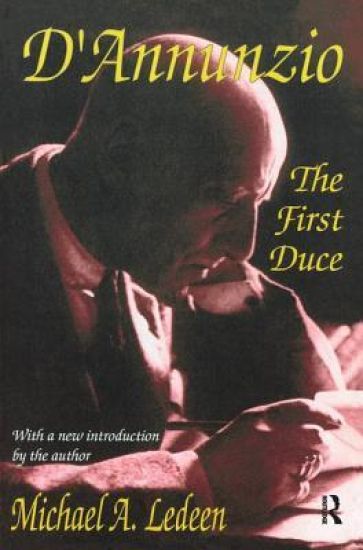
Gabriele D'Annunzio was one of the most flamboyant figures in the political history of modern Europe. A poet in the Byronic style and a popular hero of the First World War, D'Annunzio passionately believed that the sacrifices of war should prelude a new social order. His capture of the city of Fiume in 1919, which had been claimed by Italy as part of the settlement before the Versailles Peace Conference, has been popularized and romanticized ever since. Ledeen uses information gathered from Italian and American archives and from personal interviews to examine the sixteen months of D'Annunzio's personal rule in Fiume, seeing it as a harbinger of successful mass movements of the twentieth century. The connection between D'Annunzio and Fascism is central to Ledeen's narrative. Virtually the entire ritual of Fascist politics made familiar by Mussolini-the balcony address, the Roman salute, the dramatic dialogues with the crowd, the use of religious symbols in a new secular setting-was influenced by D'Annunzio at Fiume. Both were masters of a political style based on personal charisma. Each spoke for a "new" Italy and, eventually, for a new world. Each attempted to transform his countrymen into more heroic types by an ethic of violence and grandeur. But Ledeen brings sharply into focus profound differences between D'Annunzio's vision of a new world and that offered by Fascism. Significantly, D'Annunzio enlisted support from the most diverse elements of society-politicians and businessmen in addition to representatives of radical trade unions, anarchist groups, and the armed forces. Often sensationalized as a precursor of a sixties-style "dolce vita," D'Annunzio's Fiume presented many of the phenomena considered novel or unsettling today: sexual promiscuity, widespread experimentation with drugs, clergymen wanting to marry, women demanding equal rights, youth calling for the elimination of the old, soldiers insisting on a democratic army, poets yearning for a beautiful world instead of a purely utilitarian one, minorities clamoring for their fair share of political power. From the dispassionate distance of half a century, Ledeen views Fiume as a microcosm of the larger chaos of our contemporary scene. Although he was removed from Fiume after a pitched battle on land and sea, D'Annunzio remained an influential figure in Italian politics. Ledeen presents him as "one of the great innovators and watersheds of the modern world." This book will be of interest to historians, political scientists, and those interested in Post World War I Italy. An authority on Italian fascism and contemporary Europe, Michael A. Ledeen is Resident Scholar at the American Enterprise Institute in Washington. In addition to being a frequent contributor to The New Republic, The American Spectator, and 11 Giornale (Milan), he is the author of 15 books on contemporary history and politics.