Ellen has to stop running sometime. She's fled her past all the way across the Atlantic and has given up hope of having the kind of romance she dreamed of as a girl. Bruised, inside and out, she'll be happy just to find a family she can keep house for. Nate Harper has been in Lazarus County, NM for years. His younger sister knows how lonely he is has been seeking a bride for him back East. He's embarrassed but his heart wells up with kindness when he reads about Ellen's hopes for a new life and invites her to his home as a housekeeper. Neither want to admit to their attraction, and Ellen can't shake the feeling that no man will ever love her with her dark past.
During the summer of 2018, young boys are found in shallow graves scattered across Chester County, Pennsylvania, the sites marked only by a red ribbon. There are few clues in the killings and an FBI task force is only slowly finding links between the boys. The ribbon is the killer's desire for recognition, a desire so strong he calls reporter Ellen Parker to make sure all the bodies are found. He is not simply trying for notoriety - he wants recognition and he wants it for protecting a terrible secret.Ellen Parker, with the help of Robert Blasingame, tries to solve the puzzle of the killer. But the puzzle is complicated by a woman with a disquieting secret of her own and a demoralized man whose self-effacing manner hides a growing and dangerous rage. Ellen pursues leads in multiple directions searching for a chance to save the next boy on the killer's list. All time, and all chance, may be running out and all Ellen can do is chase after the killer as he closes in on his next target.The Boy Killer and the Woman Who Talked to a Raven is the sixth novel in the Ellen Parker series.
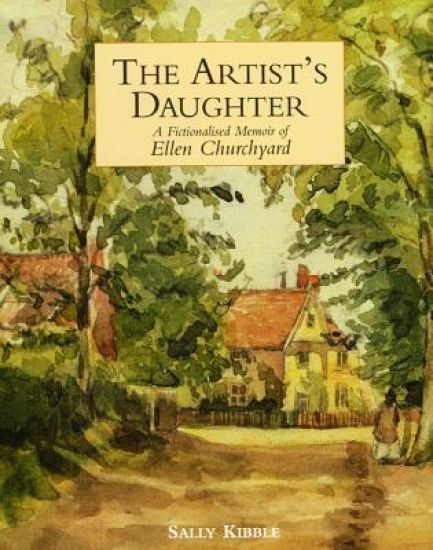
Nearly 200 works by Thomas Churchyard and his variously talented children tell the story of provincial Suffolk just before the advent of photography. Often, the pictures are completely recognisable today and always very familiar to those who love Suffolk. They were drawn from the heart, created for love of the place and nothing more. Like the pages of a diary they show fragments of lives, mementoes of days-out, hand-drawn holiday 'snaps'; a sketch stopped in mid-flow by raindrops or signs of a broken nib; each is alive with the voice of Thomas Churchyard.The fictionalised memoir of Ellen Churchyard, eldest daughter of Thomas, shows us her family and their friends, their lives and talents. Through her we meet Woodbridge, during the middle years of C19 when the market town was really alive; a hub for the surrounding countryside, connected to the world beyond, by the river and later by the railway. As a young girl Ellen learned to care for her family, as her mother's health deteriorated. She earned the love and admiration of Bernard Barton, the Quaker poet, who recognised her talents and strengths. She was loved and admired by Edward Fitzgerald; a much more critical judge of character. Her story unites them all.
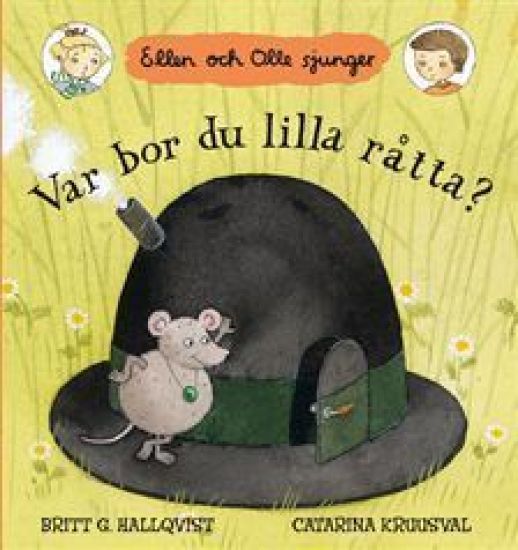
Catarina Kruusvals vispekböcker älskas av både stora och små. Titta på de härliga bilderna och peka och sjung tillsammans - om och om igen!Boken är i kraftig papp och tål oöm behandling.
Vem är egentligen Ellen Key? Vilken är hennes roll och position i Sveriges moderna intellektuella historia? Hon har ofta demoniserats och avfärdats som biologist, som särtänkare och som konservativ. Men stämmer denna bild? I OM kärlek anlägger Claudia Lindén ett modernt feministiskt och genusteoretiskt perspektiv på Key och hennes författarskap. I denna nya belysning framträder hennes gärning i en annan dager. Utifrån en kritik mot distinktionen särart och likhet som analysmodell visas hur en läsning av Keys texter pekar bortom denna dikotomi.
This work has been selected by scholars as being culturally important and is part of the knowledge base of civilization as we know it.This work is in the public domain in the United States of America, and possibly other nations. Within the United States, you may freely copy and distribute this work, as no entity (individual or corporate) has a copyright on the body of the work.Scholars believe, and we concur, that this work is important enough to be preserved, reproduced, and made generally available to the public. To ensure a quality reading experience, this work has been proofread and republished using a format that seamlessly blends the original graphical elements with text in an easy-to-read typeface.We appreciate your support of the preservation process, and thank you for being an important part of keeping this knowledge alive and relevant.
This work has been selected by scholars as being culturally important and is part of the knowledge base of civilization as we know it.This work is in the public domain in the United States of America, and possibly other nations. Within the United States, you may freely copy and distribute this work, as no entity (individual or corporate) has a copyright on the body of the work.Scholars believe, and we concur, that this work is important enough to be preserved, reproduced, and made generally available to the public. To ensure a quality reading experience, this work has been proofread and republished using a format that seamlessly blends the original graphical elements with text in an easy-to-read typeface.We appreciate your support of the preservation process, and thank you for being an important part of keeping this knowledge alive and relevant.
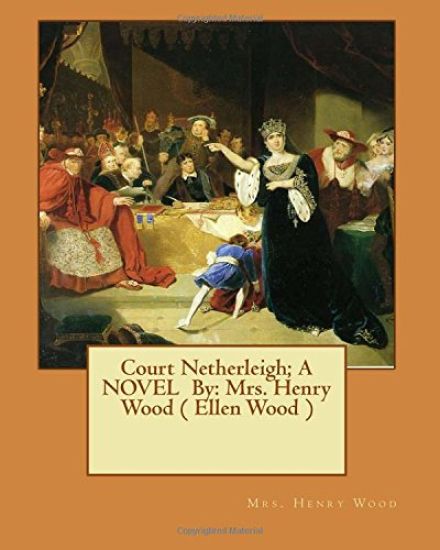
Ellen Wood 17 January 1814 - 10 February 1887), was an English novelist, better known in that respect as Mrs. Henry Wood. She is remembered most for her 1861 novel East Lynne, but many of her books became international bestsellers and widely known in the United States. She surpassed the fame of Charles Dickens in Australia Ellen Price was born in Worcester in 1814. In 1836 she married Henry Wood, who worked in the banking and shipping trade in Dauphin in the South of France, where they lived for 20 years. On the failure of Wood's business, the family (including four children) returned to England and settled in Upper Norwood near London, where Ellen Wood turned to writing. This supported the family (Henry Wood died in 1866). She wrote over 30 novels, many of which (especially East Lynne) enjoyed remarkable popularity. Among the best known are Danesbury House, Oswald Cray, Mrs. Halliburton's Troubles, The Channings, Lord Oakburn's Daughters and The Shadow of Ashlydyat. Her writing tone would be described as "conservative and Christian," occasionally expressing religious rhetoric. In 1867, Wood purchased the English magazine Argosy, which had been founded by Alexander Strahan in 1865.She wrote much of the magazine herself, but other contributors included Hesba Stretton, Julia Kavanagh, Christina Rossetti, Sarah Doudney and Rosa Nouchette Carey. Wood continued as its editor until her death in 1887, when her son Charles Wood took over. Wood's works were translated into many languages, including French and Russian. Leo Tolstoy, in a 9 March 1872 letter to his older brother Sergei, noted that he was "reading Mrs. Wood's wonderful novel In the Maze". Wood wrote several works of supernatural fiction, including "The Ghost" (1862) and the often anthologized "Reality or Delusion?" (1868). At her death (caused by bronchitis), her estate was valued at over 36,000, which was then a very considerable sum. She was buried in Highgate Cemetery, London. A monument to her was unveiled in Worcester Cathedral in 1916.
Ellen Wood 17 January 1814 - 10 February 1887), was an English novelist, better known in that respect as Mrs. Henry Wood. She is remembered most for her 1861 novel East Lynne, but many of her books became international bestsellers and widely known in the United States. She surpassed the fame of Charles Dickens in Australia Ellen Price was born in Worcester in 1814. In 1836 she married Henry Wood, who worked in the banking and shipping trade in Dauphin in the South of France, where they lived for 20 years. On the failure of Wood's business, the family (including four children) returned to England and settled in Upper Norwood near London, where Ellen Wood turned to writing. This supported the family (Henry Wood died in 1866). She wrote over 30 novels, many of which (especially East Lynne) enjoyed remarkable popularity. Among the best known are Danesbury House, Oswald Cray, Mrs. Halliburton's Troubles, The Channings, Lord Oakburn's Daughters and The Shadow of Ashlydyat. Her writing tone would be described as "conservative and Christian," occasionally expressing religious rhetoric. In 1867, Wood purchased the English magazine Argosy, which had been founded by Alexander Strahan in 1865.She wrote much of the magazine herself, but other contributors included Hesba Stretton, Julia Kavanagh, Christina Rossetti, Sarah Doudney and Rosa Nouchette Carey. Wood continued as its editor until her death in 1887, when her son Charles Wood took over. Wood's works were translated into many languages, including French and Russian. Leo Tolstoy, in a 9 March 1872 letter to his older brother Sergei, noted that he was "reading Mrs. Wood's wonderful novel In the Maze". Wood wrote several works of supernatural fiction, including "The Ghost" (1862) and the often anthologized "Reality or Delusion?" (1868). At her death (caused by bronchitis), her estate was valued at over 36,000, which was then a very considerable sum. She was buried in Highgate Cemetery, London. A monument to her was unveiled in Worcester Cathedral in 1916.