Kirjojen hintavertailu. Mukana 11 717 486 kirjaa ja 12 kauppaa.

Kirjahaku

Etsi kirjoja tekijän nimen, kirjan nimen tai ISBN:n perusteella.

1000 tulosta hakusanalla Erin Falligant

Unredeemed Land

Unredeemed Land

Erin Stewart Mauldin

OXFORD UNIVERSITY PRESS INC
2022
nidottu
How did the Civil War and the emancipation of four million slaves reconfigure the natural landscape in the South and the farming economy dependent upon it? An innovative reconsideration of the Civil War's profound impact on southern history, Unredeemed Land traces the environmental constraints that shaped the rural South's transition to capitalism during the late nineteenth century. Dixie's "King Cotton" required extensive land use techniques across large swaths of acreage, fresh soil, and slave-based agriculture in order to remain profitable. But wartime destruction and the rise of the contract labor system closed off those possibilities and necessitated increasingly intensive methods of cultivation that worked against the environment. The resulting disconnect between farmers' use of the land and what the natural environment could support intensified the economic dislocation of freed people, poor farmers, and sharecroppers. Erin Stewart Mauldin demonstrates how the Civil War and emancipation accelerated ongoing ecological change in ways that hastened the postbellum collapse of the region's subsistence economy, encouraged the expansion of cotton production, and ultimately kept cotton farmers trapped in a cycle of debt and tenancy. The first environmental history to bridge the antebellum, Civil War, and Reconstruction periods, Unredeemed Land powerfully examines the ways military conflict and emancipation left enduring ecological legacies.

The Devil Sat on My Bed

The Devil Sat on My Bed

Erin E. Stiles

OXFORD UNIVERSITY PRESS INC
2024
sidottu
In the mountains of beautiful, bucolic northern Utah, many Latter-day Saints (Mormons) are visited by spirits. Local folklore is filled with stories of uncanny encounters of all kinds, and Latter-day Saint scripture and prophetic teachings emphasize the reality and the importance of the spirit world. Spirit encounters are common in this community. People report visits from the benevolent spirits of kin offering aid and also from evil spirits who tempt and harass. Combining folklore research with ethnography, the book examines many types of spirit encounters and shows that such experiences must be understood as particularly Latter-day Saint phenomena. Spirit encounters take place within a larger cultural and religious framework that emphasizes the important relationships between living and non-living beings. For Mormons in northern Utah, spirit lore and experiences are interpreted and understood with reference to Latter-day Saint cosmology and particularly Mormon conceptions of the nature of the person, the spirit, and the family, and the nature of righteousness, evil, and spiritual power. The book also explores how people in Utah differentiate between "Mormon culture," the institutional church, and how they understand the "true" meaning of the religion, which has relevance far beyond understanding of people's relationship to the spirit realm and spirit power, and speaks to key issues of concern—and polarization—among Latter-day Saints today.
The Devil Sat on My Bed

The Devil Sat on My Bed

Erin E. Stiles

OXFORD UNIVERSITY PRESS INC
2024
nidottu
In the mountains of beautiful, bucolic northern Utah, many Latter-day Saints (Mormons) are visited by spirits. Local folklore is filled with stories of uncanny encounters of all kinds, and Latter-day Saint scripture and prophetic teachings emphasize the reality and the importance of the spirit world. Spirit encounters are common in this community. People report visits from the benevolent spirits of kin offering aid and also from evil spirits who tempt and harass. Combining folklore research with ethnography, the book examines many types of spirit encounters and shows that such experiences must be understood as particularly Latter-day Saint phenomena. Spirit encounters take place within a larger cultural and religious framework that emphasizes the important relationships between living and non-living beings. For Mormons in northern Utah, spirit lore and experiences are interpreted and understood with reference to Latter-day Saint cosmology and particularly Mormon conceptions of the nature of the person, the spirit, and the family, and the nature of righteousness, evil, and spiritual power. The book also explores how people in Utah differentiate between "Mormon culture," the institutional church, and how they understand the "true" meaning of the religion, which has relevance far beyond understanding of people's relationship to the spirit realm and spirit power, and speaks to key issues of concern—and polarization—among Latter-day Saints today.
Beyond Melancholy

Beyond Melancholy

Erin Sullivan

Oxford University Press
2016
sidottu
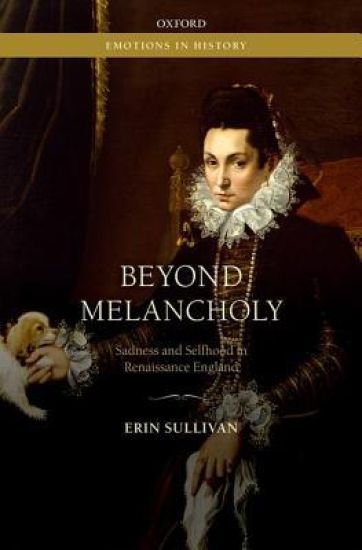
From Shakespeare's Hamlet to Burton's Anatomy to Hilliard's miniatures, melancholy has long been associated with the emotional life of Renaissance England. But what other forms of sadness existed alongside, or even beyond, melancholy, and what kinds of selfhood did they help create? Beyond Melancholy explores the vital distinctions Renaissance writers made between grief, godly sorrow, despair, and melancholy, and the unique interactions these emotions were thought to produce in the mind, body, and soul. While most medical and philosophical writings emphasized the physiological and moral dangers of the 'dis-ease' of sadness, warning that in its most extreme form it could damage the body and even cause death, new Protestant teachings about the nature of devotion and salvation suggested that sadness could in fact be a positive, even transformative, experience, helping to humble believers' souls and bring them closer to God. The result of such dramatically conflicting paradigms was a widespread ambiguity about the value of sadness and a need to clarify its significance through active and wilful interpretation - something this book calls 'emotive improvisation'. Drawing on a wide range of Renaissance medical, philosophical, religious, and literary texts - including, but not limited to, moral treatises on the passions, medical text books, mortality records, doctors' case notes, sermons, theological tracts, devotional and elegiac poetry, letters, life-writings, ballads, and stage-plays - Beyond Melancholy explores the emotional codes surrounding the experience of sadness and the way writers responded to and reinterpreted them. In doing so it demonstrates the value of working across source materials too often divided along disciplinary lines, and the special importance of literary texts to the study of the emotional past.
The Poetics of Commemoration

The Poetics of Commemoration

Erin Michelle Goeres

Oxford University Press
2015
sidottu
The Poetics of Commemoration is a study of commemorative skaldic verse from the Viking Age. It investigates how skaldic poets responded to the deaths of kings and the ways in which poetic commemoration functioned within the social and political communities of the early medieval court. Beginning with the early genealogical poem Ynglingatal, the book explores how the commemoration of a king's ancestors could be used to consolidate his political position and to provide a shared history for the community. It then examines the presentation of dead kings in the poems Eiríksmál and Hákonarmál, showing how poets could re-cast their kings as characters of myth and legend in the afterlife. This is followed by an analysis of verse in which poets use their commemoration of one king to reinforce their relationship with his successor; it is shown that poetry could both help and hinder the integration of the poet into the retinue of a new king. Focusing then on the memorial poems composed for Kings Óláfr Tryggvason and Óláfr Haraldsson, as well as for the Jarls of the Orkney Islands, the book considers the tension between public and private expressions of grief. It explores the strategies used by poets to negotiate the tumultuous period that followed the death of a king, and to work through their own emotional responses to that loss. The book demonstrates that skaldic poets engaged with the deaths of rulers in a wide variety of ways, and that poetic commemoration was a particularly effective means not only of constructing a collective memory of the dead man, but also of consolidating the new social identity of the community he left behind.
What's Wrong with Stereotyping?

What's Wrong with Stereotyping?

Erin Beeghly

Oxford University Press
2025
sidottu
What's Wrong with Stereotyping? offers a refreshing and accessibly written philosophical take on the ethics of stereotyping. Stereotyping is woven into every aspect of human experience: conversation, psychology, algorithmic systems, and culture. It relates to generalization and induction, core aspects of rationality. But when and why it is morally wrong to stereotype? This book tackles this deep and enduring puzzle. To solve it, Erin Beeghly delves into the relationship between stereotyping and another phenomenon, discrimination. Not only does stereotyping cause discriminatory treatment, she argues, stereotyping can itself be discriminatory. This insight-that to stereotype is to discriminate-enables a novel philosophical methodology, which builds towards a theory of wrongful stereotyping by analyzing the lived experiences of marginalized groups and existing theories of wrongful discrimination. Core chapters evaluate important ethical wrongs: the failure to treat persons as individuals, disrespect, harm, prejudice, threats to freedoms, and the failure to treat persons as equals. One finds that there is no "essence" of wrongful stereotyping, a single property or set of properties that all problematic cases share in common. Nor are the wrongs of stereotyping reducible to an elegant number, two or three. Instead, wrongful stereotyping is a messy normative kind characterized by clusters of wrong-making properties, including all the ones noted here (and perhaps more). Readers will come away with a radically pluralistic, open-ended theory of wrongful stereotyping that they can use to identify wrongful stereotyping in their own lives and our contemporary world. Filled with thought-provoking examples and models for social change, this book emphasizes the messiness of moral reality and the importance of looking to the past in order to understand the ethical perils of stereotyping.
Doubtful Readers

Doubtful Readers

Erin A. McCarthy

Oxford University Press
2020
sidottu
When poetry was printed, poets and their publishers could no longer take for granted that readers would have the necessary knowledge and skill to read it well. By making poems available to anyone who either had the means to a buy a book or knew someone who did, print publication radically expanded the early modern reading public. These new readers, publishers feared, might not buy or like the books. Worse, their misreadings could put the authors, the publishers, or the readers themselves at risk. Doubtful Readers: Print, Poetry, and the Reading Public in Early Modern England focuses on early modern publishers' efforts to identify and accommodate new readers of verse that had previously been restricted to particular social networks in manuscript. Focusing on the period between the maturing of the market for printed English literature in the 1590s and the emergence of the professional poet following the Restoration, this study shows that poetry was shaped by--and itself shaped--strong print publication traditions. By reading printed editions of poems by William Shakespeare, Aemilia Lanyer, John Donne, and others, this book shows how publishers negotiated genre, gender, social access, reputation, literary knowledge, and the value of English literature itself. It uses literary, historical, bibliographical, and quantitative evidence to show how publishers' strategies changed over time. Ultimately, Doubtful Readers argues that although--or perhaps because--publishers' interpretive and editorial efforts are often elided in studies of early modern poetry, their interventions have had an enduring impact on our canons, texts, and literary histories.
The Curious Eye

The Curious Eye

Erin Webster

Oxford University Press
2020
sidottu
The Curious Eye explores early modern debates over two related questions: what are the limits of human vision, and to what extent can these limits be overcome by technological enhancement? In our everyday lives, we rely on optical technology to provide us with information about visually remote spaces even as we question the efficacy and ethics of such pursuits. But the debates surrounding the subject of technologically mediated vision have their roots in a much older literary tradition in which the ability to see beyond the limits of natural human vision is associated with philosophical and spiritual insight as well as social and political control. The Curious Eye provides insight into the subject of optically-mediated vision by returning to the literature of the seventeenth century, the historical moment in which human visual capacity in the West was first extended through the application of optical technologies to the eye. Bringing imaginative literary works by Francis Bacon, John Milton, Margaret Cavendish, and Aphra Behn together with optical and philosophical treatises by Johannes Kepler, René Descartes, Robert Hooke, Robert Boyle, and Isaac Newton, the volume explores the social and intellectual impact of the new optical technologies of the seventeenth century on its literature. At the same time, it demonstrates that social, political, and literary concerns are not peripheral to the optical science of the period but, rather, an integral part of it, the legacy of which we continue to experience.
Transforming International Institutions

Transforming International Institutions

Erin R. Graham

Oxford University Press
2023
sidottu
Transforming International Institutions illuminates how a slow, quiet, subterranean process can produce big, radical change in international institutions and organizations. Drawing on historical institutionalism and interpretive tools of international law, Graham provides a novel theory of uncoordinated change over time. It highlights how early participants in a process who do not foresee the transformative potential of their acts, but nonetheless enable subsequent actors to push change in new directions to profound effect. Graham deploys this to explain how changes in UN funding rules in the 1940s and 1960s—perceived as small and made to solve immediate political disagreements—ultimately sidelined multilateral governance at the United Nations in the twenty-first century. The perception of funding rules as marginal to fundamental principles of governance, and the friendly orientation of change-initiators toward the UN, enabled this quiet transformation. Challenging the UN's reputation for rigidity and its status as a bastion of egalitarian multilateralism, Transforming International Institutions demonstrates that the UN system is susceptible to subtle change processes and that its egalitarian multilateralism governs only a fraction of the UN's operational work.
Transforming International Institutions

Transforming International Institutions

Erin R. Graham

Oxford University Press
2023
nidottu
Transforming International Institutions illuminates how a slow, quiet, subterranean process can produce big, radical change in international institutions and organizations. Drawing on historical institutionalism and interpretive tools of international law, Graham provides a novel theory of uncoordinated change over time. It highlights how early participants in a process who do not foresee the transformative potential of their acts, but nonetheless enable subsequent actors to push change in new directions to profound effect. Graham deploys this to explain how changes in UN funding rules in the 1940s and 1960s—perceived as small and made to solve immediate political disagreements—ultimately sidelined multilateral governance at the United Nations in the twenty-first century. The perception of funding rules as marginal to fundamental principles of governance, and the friendly orientation of change-initiators toward the UN, enabled this quiet transformation. Challenging the UN's reputation for rigidity and its status as a bastion of egalitarian multilateralism, Transforming International Institutions demonstrates that the UN system is susceptible to subtle change processes and that its egalitarian multilateralism governs only a fraction of the UN's operational work.
Federalism and the Tug of War Within

Federalism and the Tug of War Within

Erin Ryan

Oxford University Press Inc
2012
sidottu
Federalism and the Tug of War Within explores how constitutional interpreters reconcile the competing values that undergird American federalism, with real consequences for governance that requires local and national collaboration. Drawing examples from Hurricane Katrina, climate governance, health reform, and other problems implicating local and national authority, author Erin Ryan demonstrates how the Supreme Court's federalism jurisprudence can inhibit effective interjurisdictional governance by failing to navigate the tensions within federalism itself. The Constitution's dual sovereignty directive fosters an ideal set of good governance values-including the checks and balances between opposing centers of power that protect individuals, governmental accountability that enhances democratic participation, local autonomy that enables interjurisdictional innovation, and the synergy that federalism enables between local and national regulatory capacity for coping with problems neither level could resolve alone. In adjudicating questions of federalism, faithfulness to these values should be the touchstone. But they are suspended in a web of tension, such that privileging one may encroach upon another in different contexts. This inherent "tug of war" is responsible for the epic instability in the Court's federalism jurisprudence, but it is poorly understood. Providing new conceptual vocabulary for wrestling with old dilemmas, Ryan traces federalism's tug of war through history and into the present, proposing a series of innovations to bring judicial, legislative, and executive efforts to manage it into more fully theorized focus. The book outlines a model of Balanced Federalism that mediates federalism tensions on three separate planes: (1) fostering balance among the competing federalism values, (2) leveraging the functional capacities of the three branches of government in interpreting federalism, and (3) maximizing the wisdom of both state and federal actors in so doing. Along the way, the analysis provides clearer justification for the ways in which the tug of war is already mediated through various forms of balancing, compromise, and negotiation. The new framework better harmonizes the values that-though in tension-have made the American system of government so effective and enduring.
Prove It On Me

Prove It On Me

Erin Chapman

Oxford University Press Inc
2012
sidottu
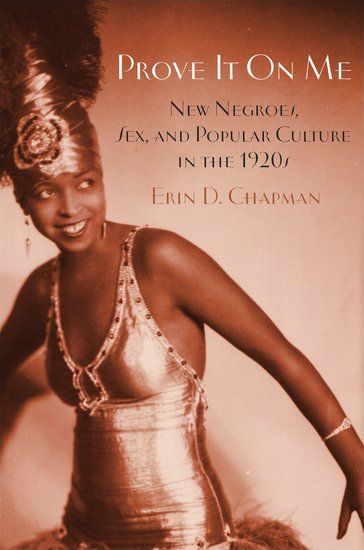
In the wake of the Great Migration of thousands of African Americans from the scattered hamlets and farms of the rural South to the nation's burgeoning cities, a New Negro ethos of modernist cultural expression and potent self-determination arose to challenge white supremacy and create opportunities for racial advancement. In Prove It On Me, Erin D. Chapman explores the gender and sexual politics of this modern racial ethos and reveals the constraining and exploitative underside of the New Negro era's vaunted liberation and opportunities. Chapman's cultural history documents the effects on black women of the intersection of primitivism, New Negro patriarchal aspirations, and the early twentieth-century consumer culture. As U.S. society invested in the New Negroes, turning their expressions and race politics into entertaining commodities in a sexualized, primitivist popular culture, the New Negroes invested in the idea of black womanhood as a pillar of stability against the unsettling forces of myriad social and racial transformations. And both groups used black women's bodies and identities to "prove " their own modern notions and new identities. Chapman's analysis brings together advertisements selling the blueswoman to black and white consumers in a "sex-race marketplace, " the didactic preachments of New Negro reformers advocating a conservative gender politics of "race motherhood, " and the words of the New Negro women authors and migrants who boldly or implicitly challenged these dehumanizing discourses. Prove It On Me investigates the uses made of black women's bodies in 1920s popular culture and racial politics and black women's opportunities to assert their own modern, racial identities.
Prove It On Me

Prove It On Me

Erin Chapman

Oxford University Press Inc
2012
nidottu
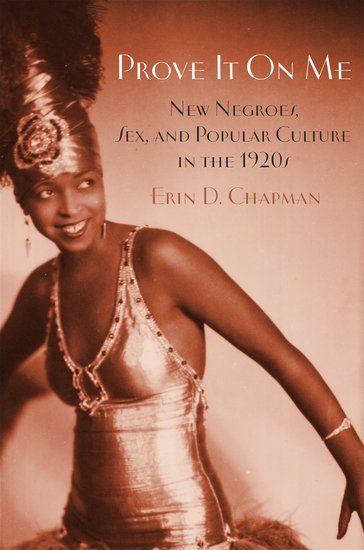
In the wake of the Great Migration of thousands of African Americans from the scattered hamlets and farms of the rural South to the nation's burgeoning cities, a New Negro ethos of modernist cultural expression and potent self-determination arose to challenge white supremacy and create opportunities for racial advancement. In Prove It On Me, Erin D. Chapman explores the gender and sexual politics of this modern racial ethos and reveals the constraining and exploitative underside of the New Negro era's vaunted liberation and opportunities. Chapman's cultural history documents the effects on black women of the intersection of primitivism, New Negro patriarchal aspirations, and the early twentieth-century consumer culture. As U.S. society invested in the New Negroes, turning their expressions and race politics into entertaining commodities in a sexualized, primitivist popular culture, the New Negroes invested in the idea of black womanhood as a pillar of stability against the unsettling forces of myriad social and racial transformations. And both groups used black women's bodies and identities to "prove" their own modern notions and new identities. Chapman's analysis brings together advertisements selling the blueswoman to black and white consumers in a "sex-race marketplace," the didactic preachments of New Negro reformers advocating a conservative gender politics of "race motherhood," and the words of the New Negro women authors and migrants who boldly or implicitly challenged these dehumanizing discourses. Prove It On Me investigates the uses made of black women's bodies in 1920s popular culture and racial politics and black women's opportunities to assert their own modern, racial identities.
A Woman Doing Life: Notes from a Prison for Women

A Woman Doing Life: Notes from a Prison for Women

Erin George

Oxford University Press
2014
nidottu
In A Woman Doing Life, author and inmate Erin George draws a vivid and uniquely raw portrait of female life in prison. By detailing her own experiences and sharing poignant stories from other female inmates, George gives insight into prison relationships, death and sickness, reactions from friends and family, and even "cooking" in prison.
Spiral Jetta

Spiral Jetta

Erin Hogan

University of Chicago Press
2008
sidottu
Erin Hogan hit the road in her Volkswagen Jetta and headed west from Chicago in search of the monuments of American land art: a salty coil of rocks, four hundred stainless steel poles, a gash in a mesa, four concrete tubes, and military sheds filled with cubes. Her journey took her through the states of Utah, Nevada, New Mexico, Arizona, and Texas. It also took her through the states of anxiety, drunkenness, disorientation, and heat exhaustion. "Spiral Jetta" is a chronicle of this journey. A lapsed art historian and devoted urbanite, Hogan initially sought firsthand experience of the monumental earthworks of the 1970s and '80s - Robert Smithson's "Spiral Jetty", Nancy Holt's "Sun Tunnels", Walter De Maria's "Lightning Field", James Turrell's "Roden Crater", Michael Heizer's "Double Negative", and the contemporary art mecca of Marfa, Texas. Armed with spotty directions, no compass, and less-than-desert-appropriate clothing, she found most of what she was looking for and then some.
Spiral Jetta

Spiral Jetta

Erin Hogan

University of Chicago Press
2009
nidottu
Erin Hogan hit the road in her Volkswagen Jetta and headed west from Chicago in search of the monuments of American land art: a salty coil of rocks, four hundred stainless steel poles, a gash in a mesa, four concrete tubes, and military sheds filled with cubes. Her journey took her through the states of Utah, Nevada, New Mexico, Arizona, and Texas. It also took her through the states of anxiety, drunkenness, disorientation, and heat exhaustion. "Spiral Jetta" is a chronicle of this journey. A lapsed art historian and devoted urbanite, Hogan initially sought firsthand experience of the monumental earthworks of the 1970s and '80s - Robert Smithson's "Spiral Jetty", Nancy Holt's "Sun Tunnels", Walter De Maria's "Lightning Field", James Turrell's "Roden Crater", Michael Heizer's "Double Negative", and the contemporary art mecca of Marfa, Texas. Armed with spotty directions, no compass, and less-than-desert-appropriate clothing, she found most of what she was looking for and then some.
The I in Team

The I in Team

Erin C. Tarver

University of Chicago Press
2017
sidottu
There is one sound that will always be loudest in sports. It isn't the squeak of sneakers or the crunch of helmets; it isn't the grunts or even the stadium music. It's the deafening roar of sports fans. For those few among us on the outside, sports fandom with its war paint and pennants, its pricey cable TV packages and esoteric stats reeled off like code looks highly irrational, entertainment gone overboard. But as Erin C. Tarver demonstrates in this book, sports fandom become extraordinarily important to our psyche, a matter of the very essence of who we are. Why in the world, Tarver asks, would anyone care about how well a total stranger can throw a ball, or hit one with a bat, or toss one through a hoop? Because such activities and the massive public events that surround them form some of the most meaningful ritual identity practices we have today. They are a primary way we as individuals and a collective decide both who we are who we are not. And as such, they are also one of the key ways that various social structures such as race and gender hierarchies are sustained, lending a dark side to the joys of being a sports fan. Drawing on everything from philosophy to sociology to sports history, she offers a profound exploration of the significance of sports in contemporary life, showing us just how high the stakes of the game are.
The I in Team

The I in Team

Erin C. Tarver

University of Chicago Press
2017
nidottu
There is one sound that will always be loudest in sports. It isn't the squeak of sneakers or the crunch of helmets; it isn't the grunts or even the stadium music. It's the deafening roar of sports fans. For those few among us on the outside, sports fandom with its war paint and pennants, its pricey cable TV packages and esoteric stats reeled off like code looks highly irrational, entertainment gone overboard. But as Erin C. Tarver demonstrates in this book, sports fandom become extraordinarily important to our psyche, a matter of the very essence of who we are. Why in the world, Tarver asks, would anyone care about how well a total stranger can throw a ball, or hit one with a bat, or toss one through a hoop? Because such activities and the massive public events that surround them form some of the most meaningful ritual identity practices we have today. They are a primary way we as individuals and a collective decide both who we are who we are not. And as such, they are also one of the key ways that various social structures such as race and gender hierarchies are sustained, lending a dark side to the joys of being a sports fan. Drawing on everything from philosophy to sociology to sports history, she offers a profound exploration of the significance of sports in contemporary life, showing us just how high the stakes of the game are.
The Chicago Guide for Freelance Editors

The Chicago Guide for Freelance Editors

Erin Brenner

THE UNIVERSITY OF CHICAGO PRESS
2024
sidottu
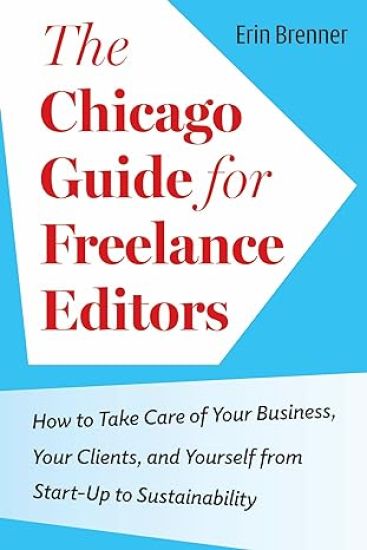
The definitive guide to starting and running a freelance editing business. You’ve been thinking about shifting into the world of freelance editing, but you don’t know where to start. In a time when editors are seeking greater flexibility in their work arrangements and schedules, freelancing is an increasingly common career option. But deciding to go it alone means balancing the risks with the rewards. From the publisher of The Chicago Manual of Style comes The Chicago Guide for Freelance Editors, the definitive guide to running your business and finding greater control and freedom in your work life. In this book, Erin Brenner—an industry leader and expert on the business of editorial freelancing—gathers everything you need to know into a single resource. Brenner has run her own successful editing business for over two decades and has helped hundreds of editors launch or improve their businesses through her teaching, blog writing, and coaching.The Chicago Guide for Freelance Editors will walk you through the entire process of conceiving, launching, and working in a freelance editing business, from deciding on services and rates to choosing the best business structure to thinking through branding and marketing strategies and beyond. This book is ideal for beginning freelancers looking to get set up and land their first clients, but it’s equally valuable to those who have already been freelancing, with detailed coverage of such issues as handling difficult clients and continuing professional development. You’ll find a collection of advice from other successful freelance editors in this guide, as well as an extensive list of resources and tools. In the final and perhaps most important chapter, Brenner teaches you how to care for the key component of the business: yourself.
The Chicago Guide for Freelance Editors

The Chicago Guide for Freelance Editors

Erin Brenner

THE UNIVERSITY OF CHICAGO PRESS
2024
nidottu
The definitive guide to starting and running a freelance editing business. You’ve been thinking about shifting into the world of freelance editing, but you don’t know where to start. In a time when editors are seeking greater flexibility in their work arrangements and schedules, freelancing is an increasingly common career option. But deciding to go it alone means balancing the risks with the rewards. From the publisher of The Chicago Manual of Style comes The Chicago Guide for Freelance Editors, the definitive guide to running your business and finding greater control and freedom in your work life. In this book, Erin Brenner—an industry leader and expert on the business of editorial freelancing—gathers everything you need to know into a single resource. Brenner has run her own successful editing business for over two decades and has helped hundreds of editors launch or improve their businesses through her teaching, blog writing, and coaching.The Chicago Guide for Freelance Editors will walk you through the entire process of conceiving, launching, and working in a freelance editing business, from deciding on services and rates to choosing the best business structure to thinking through branding and marketing strategies and beyond. This book is ideal for beginning freelancers looking to get set up and land their first clients, but it’s equally valuable to those who have already been freelancing, with detailed coverage of such issues as handling difficult clients and continuing professional development. You’ll find a collection of advice from other successful freelance editors in this guide, as well as an extensive list of resources and tools. In the final and perhaps most important chapter, Brenner teaches you how to care for the key component of the business: yourself.