Kirjojen hintavertailu. Mukana 11 342 296 kirjaa ja 12 kauppaa.

Kirjahaku

Etsi kirjoja tekijän nimen, kirjan nimen tai ISBN:n perusteella.

1000 tulosta hakusanalla FREEDOM DIVIDEND

Freedom in the Workplace?

Freedom in the Workplace?

Gertrude Ezorsky

CORNELL UNIVERSITY PRESS
2010
muu
Are workers in the United States free? Gertrude Ezorsky traces the severe limits placed on their freedom by illegal coercion against organizing unions and by low wage offers-barely enough to feed their families-that workers are pressured to accept...
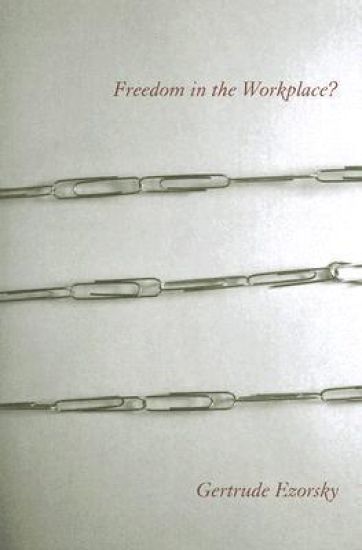
Freedom in the Workplace?

Freedom in the Workplace?

Gertrude Ezorsky

Cornell University Press
2007
pokkari
Are workers in the United States free? Gertrude Ezorsky traces the severe limits placed on their freedom by illegal coercion against organizing unions and by low wage offers—barely enough to feed their families—that workers are pressured to accept. Older, sick workers are forced to stay in exhausting jobs to be eligible for pensions. Ezorsky shows that the notions of freedom held by most contemporary social scientists and philosophers are far too limited to account for the reality of the workplace, where a lack of freedom abounds. Students preparing to enter the workplace will be informed of that reality by reading this valuable book. In addition to her philosophical investigations Ezorsky provides valuable information on the specifics of labor relations, including employment at will; the NLRA and NLRB; OSHA; outsourcing; and the distinctions among closed, union, and agency shops. Readers interested in moral philosophy, applied ethics, and labor relations will find Ezorsky's arguments clear, forceful, and compelling.
Freedom's Web

Freedom's Web

Robert A. Rhoads

Johns Hopkins University Press
2000
pokkari
From the Mills College strike of 1990 to the Chicano Studies movement at UCLA, from African-American student unrest at Rutgers University in 1995 to student protest in California against the passage of propositions 187 and 209, issues of cultural diversity have rocked college campuses for much of this decade. Indeed, Robert Rhoads locates the key to understanding renewed student activism in the 1990s within the struggle over multiculturalism. In Freedom's Web: Student Activism in an Age of Cultural Diversity, he focuses on how students have utilized what many scholars describe, both affectionately and pejoratively, as "identity politics" to advance various concerns tied to diversity issues. While the 1970s and much of the 1980s were relatively quiet decades in comparison to the 1960s, the divestment movement of the mid-1980s served as a catalyst for multicultural reform of the American college campus. Thus, in the 1990s, students once again began to turn to campus demonstration as a means to advance social change. Through illustrative case studies, Rhoads reveals the significant connections between contemporary student activism and the efforts of a previous generation of student activists to advance participatory democracy and civil rights. The author refutes claims such as those made by Arthur Schlesinger and Dinesh D'Souza that the politics of identity and the celebration of cultural diversity have contributed to the balkanization of the academy. Instead, Rhoads builds a convincing argument that identity politics is a response to cultural hegemony reinforced through longstanding monocultural norms of the academy. Balkanization, he concludes, is more the byproduct of traditional academic structures that promote exclusion over inclusion, authoritarianism over democracy, and xenophobia over a concern for others.
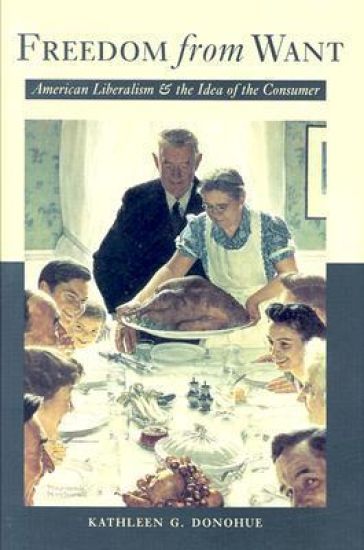
Freedom from Want

Freedom from Want

Kathleen G. Donohue

Johns Hopkins University Press
2004
sidottu
In 1941, Franklin Delano Roosevelt identified "four essential human freedoms." Three of these-freedom from fear, freedom of speech, and freedom of religion-had long been understood as defining principles of liberalism. Roosevelt's fourth freedom-freedom from want-was not. Indeed, classic liberals had argued that the only way to guarantee this freedom would be through an illiberal redistribution of wealth. In Freedom from Want, Kathleen G. Donohue describes how, between the 1880s and the 1940s, American intellectuals transformed classical liberalism into its modern American counterpart by emphasizing consumers over producers and consumption over production. Donohue first examines this conceptual shift through the writings of a wide range of late-nineteenth- and early-twentieth-century social critics-among them William Graham Sumner, Charlotte Perkins Gilman, Richard T. Ely, Edward Bellamy, and Thorstein Veblen-who rethought not only the negative connotations of consumerism but also the connection between one's right to consume and one's role in the production process. She then turns to the politicization of these ideas beginning with the establishment of a more consumer-oriented liberalism by Walter Lippmann and Walter Weyl and ending in the New Deal era, when this debate evolved from intellectual discourse into public policy with the creation of such bodies as the National Recovery Administration and the Agricultural Adjustment Administration. Deftly combining intellectual, cultural, and political history, Freedom from Want sheds new light on the ways in which Americans reconceptualized the place of the consumer in society and the implications of these shifting attitudes for the philosophy ofliberalism and the role of government in safeguarding the material welfare of the people.
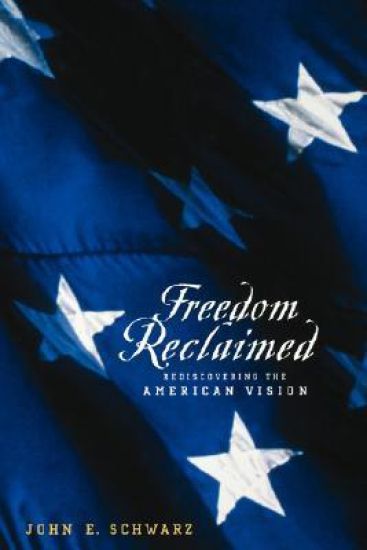
Freedom Reclaimed

Freedom Reclaimed

John E. Schwarz

Johns Hopkins University Press
2005
sidottu
Has the nation's infatuation with the free market warped the true meaning of American freedom by its emphasis on the self-serving individual in a "looking out for Number One" world? Freedom is America's most treasured value. In Freedom Reclaimed, John E. Schwarz examines the profound implications of the difference between the vision of American freedom that the Founders enshrined in the Declaration of Independence and the free-market idea of freedom that is ascendant today. Schwarz shows how the three-decade shift toward free-market freedom has brought economic hardship to the majority of Americans and suffering to the political life of the nation. As the nation moves further away from its impelling original commitment, most Americans now have only limited access to the freedom the Founders envisioned. Schwarz sets forth a program that can help America return to its ennobling vision and resume its historic journey. In policy discussions on employment, education, social issues, and health care, Schwarz recasts our understanding of what freedom means and involves. In so doing, he transforms the way we see our world and revitalizes our ability to change it for the better.
Freedom from Want

Freedom from Want

Kathleen G. Donohue

Johns Hopkins University Press
2006
pokkari
In 1941, Franklin Delano Roosevelt identified "four essential human freedoms." Three of these-freedom from fear, freedom of speech, and freedom of religion-had long been understood as defining principles of liberalism. Roosevelt's fourth freedom-freedom from want-was not. Indeed, classic liberals had argued that the only way to guarantee this freedom would be through an illiberal redistribution of wealth. In Freedom from Want, Kathleen G. Donohue describes how, between the 1880s and the 1940s, American intellectuals transformed classical liberalism into its modern American counterpart by emphasizing consumers over producers and consumption over production. Donohue first examines this conceptual shift through the writings of a wide range of late-nineteenth- and early-twentieth-century social critics-among them William Graham Sumner, Charlotte Perkins Gilman, Richard T. Ely, Edward Bellamy, and Thorstein Veblen-who rethought not only the negative connotations of consumerism but also the connection between one's right to consume and one's role in the production process. She then turns to the politicization of these ideas beginning with the establishment of a more consumer-oriented liberalism by Walter Lippmann and Walter Weyl and ending in the New Deal era, when this debate evolved from intellectual discourse into public policy with the creation of such bodies as the National Recovery Administration and the Agricultural Adjustment Administration. Deftly combining intellectual, cultural, and political history, Freedom from Want sheds new light on the ways in which Americans reconceptualized the place of the consumer in society and the implications of these shifting attitudes for the philosophy ofliberalism and the role of government in safeguarding the material welfare of the people.
Freedom Reclaimed

Freedom Reclaimed

John E. Schwarz

Johns Hopkins University Press
2007
pokkari
Has the nation's infatuation with the free market warped the true meaning of American freedom by its emphasis on the self-serving individual in a "looking out for Number One" world? Freedom is America's most treasured value. In Freedom Reclaimed, John E. Schwarz examines the profound implications of the difference between the vision of American freedom that the Founders enshrined in the Declaration of Independence and the free-market idea of freedom that is ascendant today. Schwarz shows how the three-decade shift toward free-market freedom has brought economic hardship to the majority of Americans and suffering to the political life of the nation. As the nation moves further away from its impelling original commitment, most Americans now have only limited access to the freedom the Founders envisioned. Schwarz sets forth a program that can help America return to its ennobling vision and resume its historic journey. In policy discussions on employment, education, social issues, and health care, Schwarz recasts our understanding of what freedom means and involves. In so doing, he transforms the way we see our world and revitalizes our ability to change it for the better.
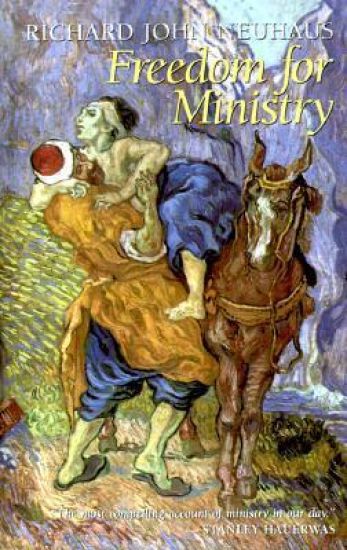
Freedom for Ministry

Freedom for Ministry

Richard John Neuhaus

Ethics Public Policy Center Inc.,U.S.
1992
pokkari
Taking a look at today's Church and religious situation, Neuhaus argues that there is a necessary awkwardness about Christian ministry because we are ambassadors of a "disputed sovereignty". Neuhaus also discusses the minister as leader of worship and the art, discipline, and "absurd responsibility" of being a preacher.
Freedom, Truth, and Human Dignity

Freedom, Truth, and Human Dignity

William B Eerdmans Publishing Co
2015
nidottu
Pope Paul VI characterised the Second Vatican Council's Declaration on Religious Freedom - Dignitatis Humanae - as one of the greatest documents of Vatican II. It is also perhaps the most intensely debated document of the Council; both the drafting of the Declaration of Religious Freedom and its reception within the Church have been marked by deep disagreements about what this teaching means for the Church.In this book David Schindler and Nicholas Healy promote a deeper understanding of this important document. In addition to presenting a new translation of the approved text of the Declaration, Freedom Truth and Human Dignity makes available for the first time in English the five drafts of the document that were presented to the Council bishops leading up to the final version. The book also includes an original interpretative essay on Dignitatis Humanae by Schindler and an essay on the genesis and redaction history of the text by Healy.
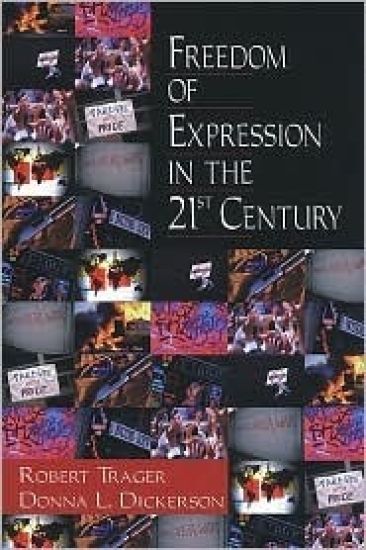
Freedom of Expression in the 21st Century

Freedom of Expression in the 21st Century

Robert E. Trager; Donna L. Dickerson

SAGE Publications Inc
1999
nidottu
An ideal supplement for any course with the goal to make free speech issues meaningful and relevant to young media professionals today. Features of the text: INTERACTIVE - it helps instructors engage students in meaningful discussions about current free speech issues. It presents situations, often taken from court cases, followed by questions that challenge students to clarify and justify their own beliefs about freedom of expression.INTERNATIONAL - communicates how and why countries and governments, other than the United States, deal with free speech issues in different ways.NEUTRAL- not a flag-waving catechism for the "American way". Asks difficult questions as to whether the freedoms many U. S. citizens take for granted are the best approach to some issues. It develops critical thinking skills.
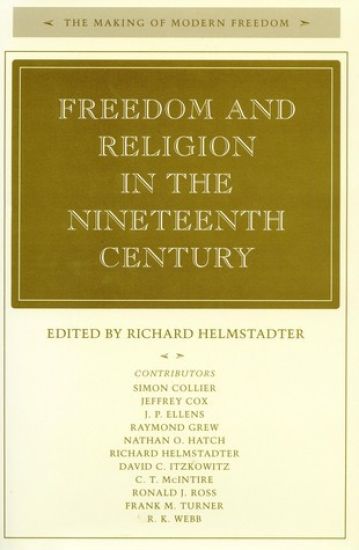
Freedom and Religion in the Nineteenth Century
The subject of religious liberty in the nineteenth century has been defined by a liberal narrative that has prevailed since Mill and Macaulay to Trevelyan and Commager, to name only a few philosophers and historians who wrote in English. Underlying this narrative is a noble dream—liberty for every person, guaranteed by democratic states that promote social progress though not interfering with those broadly defined areas of life, including religion, that are properly the preserve of free individuals. At the end of the twentieth century, however, it becomes clear that religious liberty requires a more comprehensive, subtle, and complex definition than the liberal tradition affords, one that confronts such questions as gender, ethnicity, and the distinction between individual and corporate liberty. None of the authors in this volume finds the familiar liberal narrative an adequate interpretive context for understanding his particular subject. Some address the liberal tradition directly and propose modified versions; others approach it implicitly. All revise it, and all revise in ways that echo across the chapters. The topics covered are religious liberty in early America (Nathan O. Hatch), science and religious freedom (Frank M. Turner), the conflicting ideas of religious freedom in early Victorian England (J. P. Ellens), the arguments over theological innovation in the England of the 1860's (R. K. Webb), European Jews and the limits of religious freedom (David C. Itzkowitz), restrictions and controls on the practice of religion in Bismarck's Germany (Ronald J. Ross), the Catholic Church in nineteenth-century Europe (Raymond Grew), religious liberty in France, 1787-1908 (C. T. McIntyre), clericalism and anticlericalism in Chile, 1820-1920 (Simon Collier), and religion and imperialism in nineteenth-century Britain (Jeffrey Cox).
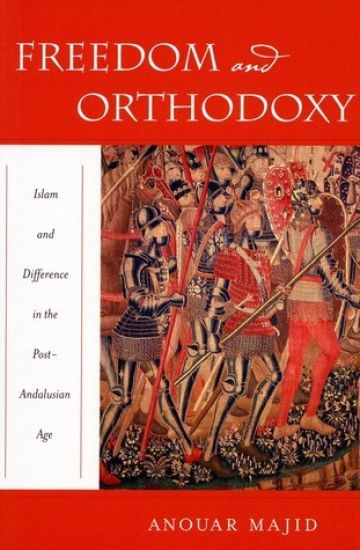
Freedom and Orthodoxy

Freedom and Orthodoxy

Anouar Majid

Stanford University Press
2003
sidottu
This book argues that the "clash of civilizations" that is supposed to be a feature of the post-Cold War environment is not necessarily caused by the dogma of world religions or cultural incompatibilities but by the inflexible and hegemonic universalisms that have characterized world history since 1492—a cultural outlook that Majid terms post-Andalusianism. The all-encompassing worldviews of Euro-American ideologies have resulted in the retreat of Islam and other non-European traditions into dangerous orthodoxies and a growing climate of suspicion, fear, and terror. Freedom and Orthodoxy offers an alternative to perennial discord, suggesting that the world needs a philosophy of the "provincial," one that reattaches individuals and societies to their heritages and memories but connects them to the rest of the world in solid, non-alienating, meaningful ways. For this to happen, Majid contends, globalization must be reimagined as a network of human solidarities and rigorous conversations across the world's multiple cultures, not as a mechanical process of economic expansionism.
Freedom and Orthodoxy

Freedom and Orthodoxy

Anouar Majid

Stanford University Press
2003
pokkari
This book argues that the "clash of civilizations" that is supposed to be a feature of the post-Cold War environment is not necessarily caused by the dogma of world religions or cultural incompatibilities but by the inflexible and hegemonic universalisms that have characterized world history since 1492—a cultural outlook that Majid terms post-Andalusianism. The all-encompassing worldviews of Euro-American ideologies have resulted in the retreat of Islam and other non-European traditions into dangerous orthodoxies and a growing climate of suspicion, fear, and terror. Freedom and Orthodoxy offers an alternative to perennial discord, suggesting that the world needs a philosophy of the "provincial," one that reattaches individuals and societies to their heritages and memories but connects them to the rest of the world in solid, non-alienating, meaningful ways. For this to happen, Majid contends, globalization must be reimagined as a network of human solidarities and rigorous conversations across the world's multiple cultures, not as a mechanical process of economic expansionism.
Freedom from Work

Freedom from Work

Daniel Fridman

Stanford University Press
2016
sidottu
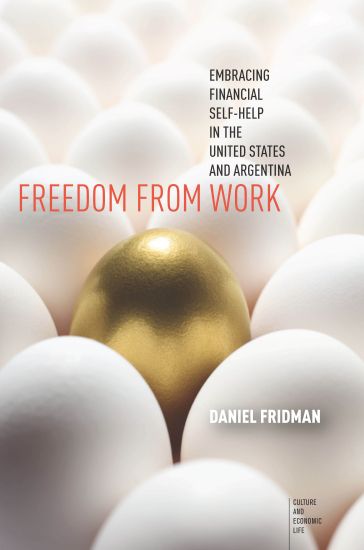
In this era where dollar value signals moral worth, Daniel Fridman paints a vivid portrait of Americans and Argentinians seeking to transform themselves into people worthy of millions. Following groups who practice the advice from financial success bestsellers, Fridman illustrates how the neoliberal emphasis on responsibility, individualism, and entrepreneurship binds people together with the ropes of aspiration. Freedom from Work delves into a world of financial self-help in which books, seminars, and board games reject "get rich quick" formulas and instead suggest to participants that there is something fundamentally wrong with who they are, and that they must struggle to correct it. Fridman analyzes three groups who exercise principles from Rich Dad, Poor Dad by playing the board game Cashflow and investing in cash-generating assets with the goal of leaving the rat race of employment. Fridman shows that the global economic transformations of the last few decades have been accompanied by popular resources that transform the people trying to survive—and even thrive.
Freedom's Racial Frontier

Freedom's Racial Frontier

Quintard Taylor

University of Oklahoma Press
2018
nidottu
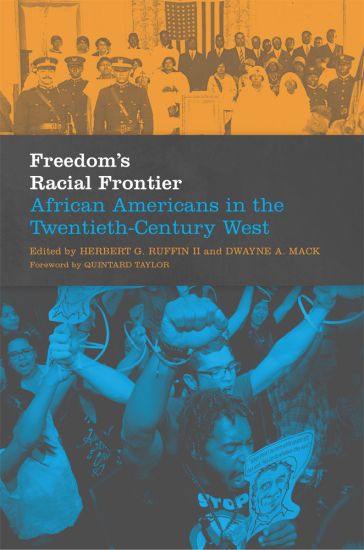
Between 1940 and 2010, the black population of the American West grew from 710,400 to 7 million. With that explosive growth has come a burgeoning interest in the history of the African American West - an interest reflected in the remarkable range and depth of the works collected in Freedom's Racial Frontier. Editors Herbert G. Ruffin II and Dwayne A. Mack have gathered established and emerging scholars in the field to create an anthology that links past, current, and future generations of African American West scholarship. The volume's sixteen chapters address the African American experience within the framework of the West as a multicultural frontier. The result is a fresh perspective on western-U.S. history, centered on the significance of African American life, culture, and social justice in almost every trans-Mississippi state. Examining and interpreting the twentieth century while mindful of events and developments since 2000, the contributors focus on community formation, cultural diversity, civil rights and black empowerment, and artistic creativity and identity. Reflecting the dynamic evolution of new approaches and new sites of knowledge in the field of western history, the authors consider its interconnections with fields such as cultural studies, literature, and sociology. Some essays deal with familiar places, while others look at understudied sites such as Albuquerque, Oahu, and Las Vegas, Nevada. By examining black suburbanization, the Information Age, and gentrification in the urban West, several authors conceive of a Third Great Migration of African Americans to and within the West. The West revealed in Freedom's Racial Frontier is a place where black Americans have fought - and continue to fight - to make their idea of freedom live up to their expectations of equality; a place where freedom is still a frontier for most persons of African heritage.
Freedom's Racial Frontier

Freedom's Racial Frontier

Quintard Taylor

University of Oklahoma Press
2018
sidottu
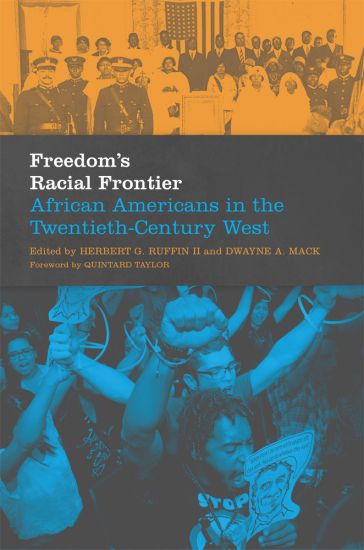
Between 1940 and 2010, the black population of the American West grew from 710,400 to 7 million. With that explosive growth has come a burgeoning interest in the history of the African American West - an interest reflected in the remarkable range and depth of the works collected in Freedom's Racial Frontier. Editors Herbert G. Ruffin II and Dwayne A. Mack have gathered established and emerging scholars in the field to create an anthology that links past, current, and future generations of African American West scholarship. The volume's sixteen chapters address the African American experience within the framework of the West as a multicultural frontier. The result is a fresh perspective on western-U.S. history, centered on the significance of African American life, culture, and social justice in almost every trans-Mississippi state. Examining and interpreting the twentieth century while mindful of events and developments since 2000, the contributors focus on community formation, cultural diversity, civil rights and black empowerment, and artistic creativity and identity. Reflecting the dynamic evolution of new approaches and new sites of knowledge in the field of western history, the authors consider its interconnections with fields such as cultural studies, literature, and sociology. Some essays deal with familiar places, while others look at understudied sites such as Albuquerque, Oahu, and Las Vegas, Nevada. By examining black suburbanization, the Information Age, and gentrification in the urban West, several authors conceive of a Third Great Migration of African Americans to and within the West. The West revealed in Freedom's Racial Frontier is a place where black Americans have fought - and continue to fight - to make their idea of freedom live up to their expectations of equality; a place where freedom is still a frontier for most persons of African heritage.