Kirjojen hintavertailu. Mukana 11 699 587 kirjaa ja 12 kauppaa.

Kirjahaku

Etsi kirjoja tekijän nimen, kirjan nimen tai ISBN:n perusteella.

1000 tulosta hakusanalla Felix Jan Altmann

Félix Y Calcita / Felix and Calcita
La nueva serie de c mic infantil de Artur Laperla, creador de Superpatata. pico Una trol se ha colado en la habitaci n de F lix Y puaaaj Huele como a queso podrido Se llama Calcita, ha llegado a trav s del ba l de los juguetes y come piedras, s , s , piedras F lix descubrir que su casa conecta con el mundo de los troles, viajar hasta all con Calcita y descubrir que llevan a os peleados con los gnomos. Conseguir F lix que troles y gnomos vuelvan a ser amigos? Y lograr volver a tiempo a casa para la cena? Acci n, aventuras, mundos incre bles y personajes fant sticos en la primera aventura de F lix y Calcita, la nueva serie de c mics de Artur Laperla, creador de Superpatata. ENGLISH DESCRIPTION "The new comic series for children from Artur Laperla, creator of Superpotato. Epic A troll has made his home in Felix's bedroom And yuuuck It smells like moldy cheese It's named Calcita and he's come here through the toy box and he eats rocks, yes, yes, rocks Felix will discover that his house is connected to the troll world, and he'll travel there with Calcita and discover that they've spent years fighting the gnomes. Will Felix be able to get the trolls and gnomes to be friends again? And will he get back to his house in time for dinner? Action, adventure, incredible worlds, and fantastical characters in the first adventure of Felix and Calcita, the new comic series for children from Artur Laperla, creator of Superpotato."
Arabia Felix From The Time Of The Queen Of Sheba

Arabia Felix From The Time Of The Queen Of Sheba

Breton Jean-Francois

UNIVERSITY OF NOTRE DAME PRESS
2000
sidottu
Sheba, or Saba, is a region of high mountains and vast deserts situated in the southwest of the Arabian peninsula, in what is known today as Yemen. The mysteries and riches of Sheba and its people enticed the likes of Alexander the Great, the Emperor Augustus, and the kings of Ethiopia and Byzantium. From the 8th century to the 1st century BC, the kingdom of Sheba dominated other realms in Southern Arabia, imposing its language, institutions and artistic forms throughout the region. This book provides a detailed synthesis of this remote civilization, the uniqueness of the region's geography and climate, and the major events that shaped its history. It offers valuable insights into the Sabeans' daily life, their customs and religion, their relations with neighbouring civilizations, and their modes of commerce.
Arabia Felix from the Time of the Queen of Sheba

Arabia Felix from the Time of the Queen of Sheba

Jean-Francois Breton

University of Notre Dame Press
2000
nidottu
Sheba, or Saba, is a region of high mountains and vast deserts situated in the southwest of the Arabian peninsula, in what is known today as Yemen. The mysteries and riches of Sheba and its people enticed the likes of Alexander the Great, the Emperor Augustus, and the kings of Ethiopia and Byzantium. From the 8th century to the 1st century BC, the kingdom of Sheba dominated other realms in Southern Arabia, imposing its language, institutions and artistic forms throughout the region. This book provides a detailed synthesis of this remote civilization, the uniqueness of the region's geography and climate, and the major events that shaped its history. It offers valuable insights into the Sabeans' daily life, their customs and religion, their relations with neighbouring civilizations, and their modes of commerce.
Baetica Felix

Baetica Felix

Evan W. Haley

University of Texas Press
2003
pokkari
Baetica, the present-day region of Andalusia in southern Spain, was the wealthiest province of the Roman Empire. Its society was dynamic and marked by upward social and economic mobility, as the imperial peace allowed the emergence of a substantial middle social and economic stratum. Indeed, so mutually beneficial was the imposition of Roman rule on the local population of Baetica that it demands a new understanding of the relationship between Imperial Rome and its provinces. Baetica Felix builds a new model of Roman-provincial relations through a socio-economic history of the province from Julius Caesar to the end of the second century A.D. Describing and analyzing the impact of Roman rule on a core province, Evan Haley addresses two broad questions: what effect did Roman rule have on patterns of settlement and production in Baetica, and how did it contribute to wealth generation and social mobility? His findings conclusively demonstrate that meeting the multiple demands of the Roman state created a substantial freeborn and ex-slave "middle stratum" of the population that outnumbered both the super-rich elite and the destitute poor.
Magnus Felix Ennodius

Magnus Felix Ennodius

Stefanie A.H. Kennell

The University of Michigan Press
2000
sidottu
Magnus Felix Ennodius (474-521), deacon of Milan and bishop of Pavia in the turbulent years after the fall of the Roman Empire in the West, was a prolific writer of letters, poetry, speeches, and pamphlets on the controversies that beset the church in his day. In the Middle Ages, he was read as a model of style and source of canon law. More recently, however, Ennodius' writings have been denigrated as the vapid product of a frivolous mind more concerned with form than content. Magnus Felix Ennodius: A Gentleman of the Church sets the record straight by restoring Ennodius to his social and literary context. Ennodius stands revealed as a man on the cusp of the ancient and medieval worlds, his thought still shaped according to classical norms, but his writings informed with a sensibility that prefigures that of the Christian Middle Ages. As the only book-length study of Ennodius, here the author explores all aspects of Ennodius' life and literary production to augment the collective understanding of him on two major fronts, rhetoric and meaning, so that he can take his place as an important author and historical figure. Deeply insightful, and refreshingly original, the author breaks new ground in studying this period of history, so often overshadowed by the classical and middle ages that immediately precede and succeed it.S. A. H. Kennell is Adjunct Professor of Classics, Memorial University of Newfoundland.
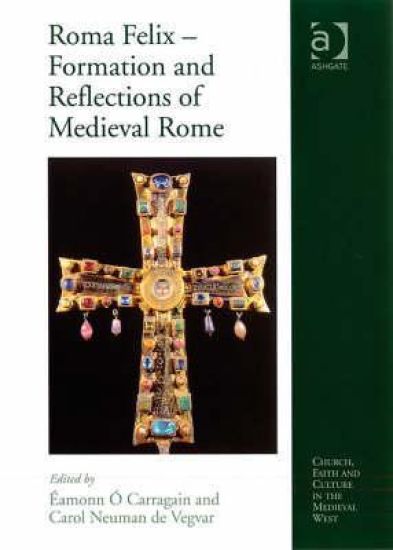
Roma Felix – Formation and Reflections of Medieval Rome
After the Roman empire fell, medieval Europe continued to be fascinated by Rome itself, the 'chief of cities'. Once the hub of empire, in the early medieval period Rome became an important centre for western Christianity, first of all as the place where Peter, Paul and many other important early Christian saints were martyred: their deaths for the Christian faith gave the city the appellation 'Roma Felix', 'Happy Rome'. But in Rome the history of the faith, embodied in the shrines of the martyrs, coexisted with the living centre of the western Latin church. Because Peter had been recognised by Christ as chief among the apostles and was understood to have been the first bishop of Rome, his successors were acknowledged as patriarchs of the West and Rome became the focal point around which the western Latin church came to be organised. This book explores ways in which Rome itself was preserved, envisioned, and transformed by its residents, and also by the many pilgrims who flocked to the shrines of the martyrs. It considers how northern European cultures (in particular, the Irish and English) imagined and imitated the city as they understood it. The fourteen articles presented here range from the fourth to the twelfth century and span the fields of history, art history, urban topography, liturgical studies and numismatics. They provide an introduction to current thinking about the ways in which medieval people responded to the material remains of Rome's classical and early Christian past, and to the associations of centrality, spirituality, and authority which the city of Rome embodied for the earlier Middle Ages. Acknowledgements for grants in aid of publication are due to the Publication Fund of the College of Arts, Humanities, Celtic Studies and Social Sciences at University College Cork; to the Publication Fund of the National University of Ireland, Dublin; and to the Office of the Provost, Ohio Wesleyan University.
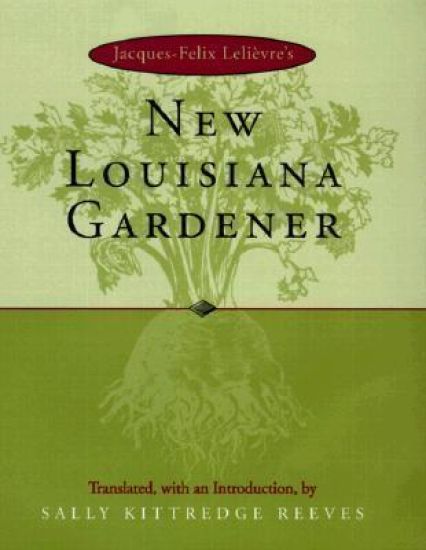
Jacques-Felix Lelièvre's New Louisiana Gardener
Originally published in 1838, Nouveau Jardinier de la Louisiane, by Jacques-Felix Lelièvre, was the first of only two books on Louisiana gardening to be written in the nineteenth century. The book drew upon the confident spirit of eighteenth-century Enlightenment France, forming a bridge from the writings of French horticulturalists to an American audience. Optimistic, ambitious, and progressive, the guide urged gardeners to manage nature by acclimating new species and constantly improving native ones through the application of innovative scientific techniques. Now available in English for the first time as New Louisiana Gardener, this charming period piece and path breaking work can be enjoyed once again by gardening enthusiasts and historians alike.An introduction by Sally Kittredge Reeves gives historical context to the translation that follows, detailing the author's reasons for coming to America and his struggles to make a new life, his employment at and eventual ownership of a bookstore in New Orleans, and his reasons for compiling Nouveau Jardinier and publishing it in Francophile New Orleans.Written over 150 years ago, New Louisiana Gardener offers today's gardener a refreshing connection with other gardening enthusiasts across time. Here, in this delightful historical gem, modern cultivators can escape their fertilizers and tillers and rediscover for a moment the joy of facing Mother Nature with little more than a well-educated pruning knife and a hoe.