Kirjojen hintavertailu. Mukana 12 190 388 kirjaa ja 12 kauppaa.

Kirjahaku

Etsi kirjoja tekijän nimen, kirjan nimen tai ISBN:n perusteella.

1000 tulosta hakusanalla Frederick C. Beiser

Participants in the Battle of the Little Big Horn

Participants in the Battle of the Little Big Horn

Frederic C. Wagner

McFarland Co Inc
2016
pokkari
The Battle of the Little Big Horn was the decisive engagement of the Great Sioux War of 1876-1877. In its second edition this biographical dictionary of all known participants--the 7th Cavalry, civilians and Indians--provides a brief description of the battle, as well as information on the various tribes, their customs and methods of fighting. Seven appendices cover the units soldiers were assigned to, uniforms and equipment of the cavalry, controversial listings of scouts and the number of Indians in the encampments, the location of camps on the way to the Big Horn and more. Updated biographies are provided for many European soldiers, along with an additional 5,060 names of Indians who were or could have been in the battle.
Marcus Reno in the Valley of the Little Big Horn

Marcus Reno in the Valley of the Little Big Horn

Frederic C. Wagner

McFarland Co Inc
2021
pokkari
Major Marcus Reno's actions at the Battle of Little Big Horn have been both criticized and lauded, often without in-depth analysis. This book takes a fresh look the battle and events leading up to it, offering answers to unanswered questions. The author examines the meanings of "orders" given in Custer's command and how they were treated, the tactics and fighting in the valley, Reno's alcoholism, and his last stand on the hilltop named for him.
The Great Sioux Campaign of 1876, Day-by-Day

The Great Sioux Campaign of 1876, Day-by-Day

Frederic C. Wagner

MCFARLAND CO INC
2021
pokkari
Drawing on more than 22 years' research, this book presents an exhaustive chronology of the Great Sioux Campaign in three parts: the U.S. Seventh Cavalry's communications, decisions and movements October 15, 1875-June 21, 1876, are traced day-by-day; the three-day prelude to the Battle of Little Bighorn hour-by-hour; and the battle itself minute-by-minute. The separate actions of the several military commands and the Indians involved are narrated in coherent sequence. Archival intelligence summaries offer the reader fresh perspective on the events leading to the decisive Indian victory known as Custer's Last Stand.
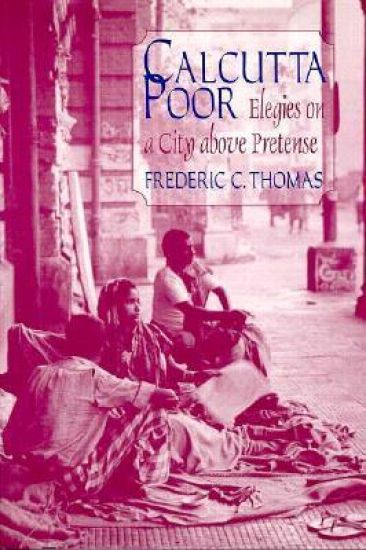
Calcutta Poor

Calcutta Poor

Frederic C. Thomas

M.E. Sharpe
1996
sidottu
Calcutta is notorious for its pavement dwellers, street children, and scavengers that have become a portrait of the worst sort of human degradation. In this illuminating critique, Thomas investigates the standard solutions - improved housing, increased job creation, and intervention of social services agencies - only to come to the conclusion that such initiatives have little effect on the inherent nature of the problem of poverty. Based on historical and anthropological findings, and the author's visits to the slums of Calcutta, what becomes clear is that even in the midst of great poverty, there is a nobility of character, a vitality of ethnic and cultural ties, and an energy that bring out inventiveness and ingenuity in the lives of the poor. If Calcutta's poverty is not to be an intractable problem, these internal forces must be awakened to generate solutions. Illustrated with stunning photographs, Thomas's reflections provide new insight into an age-old problem.
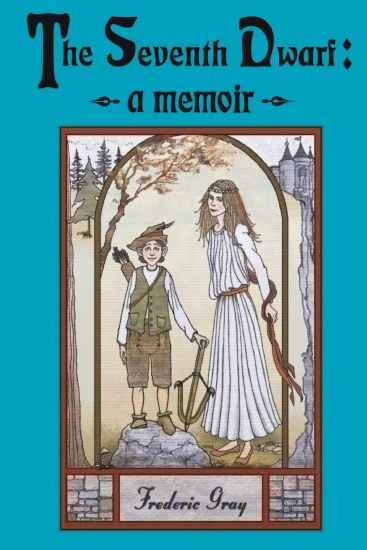
The Seventh Dwarf - a Memoir: The true story of Snow White by one who was there.

The Seventh Dwarf - a Memoir: The true story of Snow White by one who was there.

Frederic C. Gray

Createspace Independent Publishing Platform
2018
nidottu
A colony of dwarfs fleeing persecution by Norwegian Vikings settled a valley in the foothills of the Bavarian Alps. Eventually they were joined by locals who shared their valley. Unjustly blamed for a fire, the majority were captured and disappeared, Only seven remained, who fled up the mountain to make a new home near their mines. This is their story, told by Bjorn. the youngest dwarf. The cast is familiar: the Prince, Snow White, the Huntsman, and the evil Queen, but they have been fleshed out as real people with problems and challenges. There are many new characters: Solomon, the Queen's scientist from Nubia; Rollo the minstrel who inadvertently became the man in the mirror; Max the Queen's mute bodyguard; and a host of other dwarfs. The story is familiar as well, but is not a fairy tale. Everything in the story is possible and plausible, historically and technically accurate. Follow Bjorn as he rises from the runt of the group to the leader, the Prince and Snow who face their fears and uncertainties to find themselves and each other. And learn about life in Medieval Germany.
Escape From Extinction, An Eco-Genetic Novel

Escape From Extinction, An Eco-Genetic Novel

Frederic C Rich

Vector Books LLC
2020
sidottu
As Escape from Extinction opens, the last Neanderthal dies in a cave on the Iberian Peninsula. 30,000 years later, the naturalist Muir O'Brien, hunting deep in the Oregon wilderness, spots a fern believed to be extinct since the end of the last ice age. His discovery leads to a life-changing encounter with the visionary and narcissistic Leo Bonelli, founder of the world's most successful biotech company. Despite misgivings, Muir and his daughter, Lilith, are drawn into Leo's world. When the truth about Leo's strange son, Ned, is revealed by a politically ambitious preacher, the world must grapple with the mystery of Neanderthal extinction and the true basis for human hegemony over the planet. Ned and Lilith, and all who love them, confront a tsunami of ignorance, fear, hatred, and violence. Escape from Extinction is not science fiction. Scientists wielding new tools for editing DNA now have the power to change the blueprint for humanity, hack evolution, and even create entirely new forms of life. In Michael Crichton's Jurassic Park, the intersection of avarice and scientific hubris gave us man-eating velociraptors. Here, the "monster" is an empathetic and charming teenager, who many nevertheless believe presents the same threat to humanity as Crichton's dinosaurs. Escape from Extinction features Rich's distinctive mix of graceful writing, deep intelligence, and narratives that engage his readers, both emotionally and intellectually, with topical issues.
To the Mouths of the Ganges

To the Mouths of the Ganges

Frederic C Thomas

Eastbridge Books
2003
pokkari
West Bengal and Bangladesh -- nowhere else on earth is so much poverty concentrated and nature so demanding. To the Mouths of the Ganges deals with the ecology and culture of the lower Ganges delta, home to 150 million people whose land is traversed by thousands of miles of rivers and canals; where rivers change course and devour whole villages overnight; where floods submerge millions of acres of cropland at a time; where cyclones create mayhem on a grand scale; and where the human impact of global warming is so visible.Frederic Thomas describes how crop irrigation and flood control have degraded the natural environment; how commercial shrimp production has destroyed wetlands and livelihoods; how landless peasants settle on shifting islands of sediment only to be washed away in hours; how swelling populations have pushed ever deeper into the mangrove forests to face man-eating tigers, crocodiles, and venomous snakes; how peasants contend with landlords whose callousness is truly unbelievable.Despite this, the overall picture is not entirely bleak. Bengalis are extraordinarily resilient and ingenious in adapting to the environment. They love their land and its broad rivers, its culture and its age-old traditions. Hindus and Muslims live side-by-side, sharing shrines and respecting each other's beliefs and customs, although religious offenses can unleash violent fanaticism and atrocities.The author cites historical materials and updates the vivid accounts of early travelers while his observations reveal the practical futility of many of man's efforts to manage river systems and wetlands. Traveling the region by bus, boat, and rickshaw, Dr. Thomas' impressions and anecdotes add an immediacy and a human dimension to a fascinating part of the world that is rarely seen by Western tourists.
To the Mouths of the Ganges

To the Mouths of the Ganges

Frederic C Thomas

Eastbridge Books
2003
sidottu
West Bengal and Bangladesh -- nowhere else on earth is so much poverty concentrated and nature so demanding. To the Mouths of the Ganges deals with the ecology and culture of the lower Ganges delta, home to 150 million people whose land is traversed by thousands of miles of rivers and canals; where rivers change course and devour whole villages overnight; where floods submerge millions of acres of cropland at a time; where cyclones create mayhem on a grand scale; and where the human impact of global warming is so visible.Frederic Thomas describes how crop irrigation and flood control have degraded the natural environment; how commercial shrimp production has destroyed wetlands and livelihoods; how landless peasants settle on shifting islands of sediment only to be washed away in hours; how swelling populations have pushed ever deeper into the mangrove forests to face man-eating tigers, crocodiles, and venomous snakes; how peasants contend with landlords whose callousness is truly unbelievable.Despite this, the overall picture is not entirely bleak. Bengalis are extraordinarily resilient and ingenious in adapting to the environment. They love their land and its broad rivers, its culture and its age-old traditions. Hindus and Muslims live side-by-side, sharing shrines and respecting each other's beliefs and customs, although religious offenses can unleash violent fanaticism and atrocities.The author cites historical materials and updates the vivid accounts of early travelers while his observations reveal the practical futility of many of man's efforts to manage river systems and wetlands. Traveling the region by bus, boat, and rickshaw, Dr. Thomas' impressions and anecdotes add an immediacy and a human dimension to a fascinating part of the world that is rarely seen by Western tourists.
The Ormesby Psalter

The Ormesby Psalter

Frederica C.E. Law-Turner

Bodleian Library
2017
nidottu
The Ormesby Psalter is perhaps the most magnificent yet enigmatic of the great Gothic psalters produced in East Anglia in the first half of the fourteenth century. Its pages boast a wealth of decoration picked out in rich colours and burnished gold, and its margins are inhabited by a vibrant crew of beasts, birds and insects. Fantastic imagery proliferates: musicians, mermaids, lovers and warriors are juxtaposed with scenes from everyday life, from chivalric legend, and from folk-tales, fables and riddles. The psalter takes its name from Robert of Ormesby, subprior at Norwich Cathedral Priory in the 1330s. He was not the first owner, however, and it has long been acknowledged that the writing, decoration and binding of the book took place in a series of distinct phases from the late thirteenth to the mid-fourteenth century. The final result was the work of four or five scribes and up to seven illuminators and its pages show a panorama of stylistic development. Unravelling its complexities has sometimes been thought to hold the key to understanding the ‘East Anglian School’, a group of large, luxury manuscripts connected with Norwich Cathedral and Norfolk churches and patrons. This book casts an entirely new light on its history, not only clarifying and dating the successive phases of production, but associating the main work on the manuscript with the patronage of John de Warenne, Earl of Surrey, one of the greatest magnates of the time. It is extensively illustrated with full-page colour reproductions of the manuscript’s main decorated folios, as well as many smaller initials and numerous comparative illustrations.
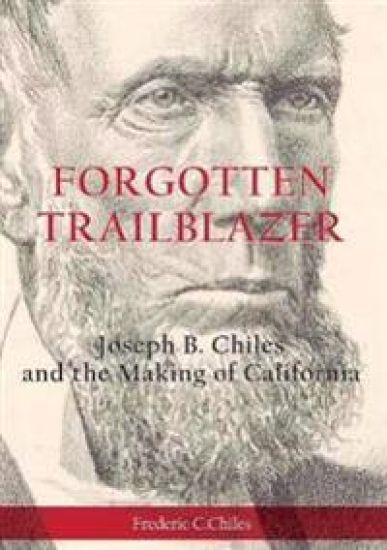
Forgotten Trailblazer

Forgotten Trailblazer

Frederic C Chiles

Book Printing UK
2018
pokkari
Joseph B. Chiles, called by one historian, 'the Adam of a generation of pioneers' is the man that everyone knows and yet nobody knows.In virtually every major work on the period of western migration, Chiles is mentioned. He was a friend of Broken Hand Fitzpatrick, Joe Walker, Kit Carson, John C. Fremont, Mariano Vallejo, John Bidwell, and most of the founding fathers of California. And yet there is no definitive work on the life and times of the man who crossed the continent seven times between 1841 and 1854, a period that encompassed the beginnings of transcontinental travel and the expansion of the United States to the Pacific Coast. Forgotten Trailblazer aims to fill this gap in our knowledge of the great migration experience that created modern California.