Kirjojen hintavertailu. Mukana 12 016 292 kirjaa ja 12 kauppaa.

Kirjahaku

Etsi kirjoja tekijän nimen, kirjan nimen tai ISBN:n perusteella.

1000 tulosta hakusanalla Friedrich Neumann

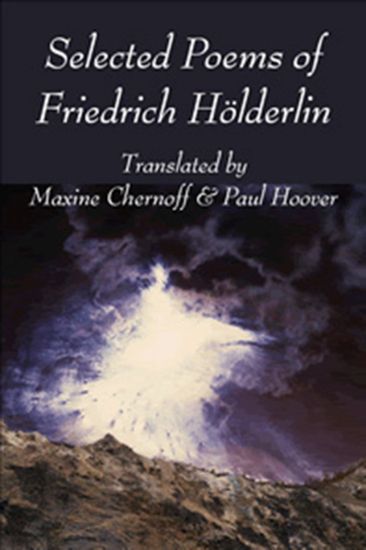
Selected Poems of Friedrich Hölderlin

Selected Poems of Friedrich Hölderlin

Friedrich Hölderlin

Omnidawn Publishing
2019
nidottu
Further solidifying Hölderlin’s place in history, this thorough collection of poetry ranges from the odes of his developmental period to the majestic hymns and strangely prophetic modern compositions created in his later years. Considered one of the founders of European romanticism, Hölderlin had a mere 10 years to develop his distinctive style before falling prey to a debilitating mental illness, whose resultant works are the heartbreakingly sweet and melancholy pieces of the Späteste Gedichte (Last Poems). Each poem is presented in both its original German and a new English translation, while an illuminating introduction explores Hölderlin’s significance in the realm of literature as well as the tumultuous world in which he lived.
Karl Marx and Friedrich Engels

Karl Marx and Friedrich Engels

Friedrich Engels; Karl Marx

Kersplebedeb
2016
pokkari
Originally compiled and edited by the Communist Working Circle (CWC) in 1972, this is a republished collection of excerpts from the corpus of Marx and Engels. These texts show the evolution of Marx and Engels's ideas about the nascent labor aristocracy, and the enervating effects of colonialism and chauvinism on the British labour movement, with a focus on the British Empire of their time.This edition of On Colonies includes a substantial introduction by Marxist economist Zak Cope and former CWC member Torkil Lauesen, centering these concepts in theory and history. Cope and Lauesen show how Marx and Engels's initial belief that capitalism would expand seamlessly around the globe in the same way as it did in Europe was proven wrong by events, as instead worldwide imperialism spread capitalism as a polarizing process, not only between the bourgeoisie and the working class, but also as a division between an imperialist center and an exploited periphery. This fundamental contradiction gave capitalism completely new conditions of growth and accounts for its tragic longevity.Both foundational and indispensable, On Colonies provides a useful introduction to "Third Worldist" analysis of global capitalism, tracing its roots back to Marxism's earliest works.
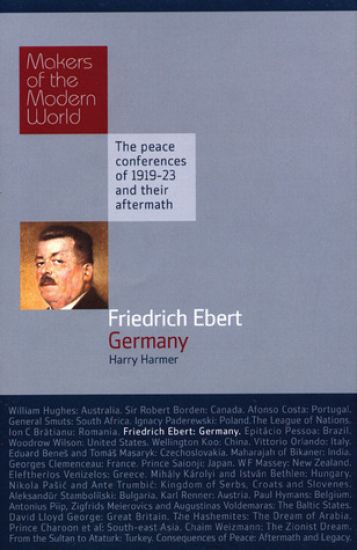
Friedrich Ebert: Germany

Friedrich Ebert: Germany

Harry Harmer

Haus Publishing
2008
sidottu
This title is about Friedrich Ebert (1871-1925). Ebert was influential in securing SPD support for the war in 1914. On the eve of war he travelled to Switzerland to arrange the movement of SPD funds if the party was outlawed. As the leader of organized labour, Ebert had close relations with government and military authorities throughout the war. Two of his sons were killed during the war, something he used to emphasise his patriotism. On 9 November, 1918, Ebert became Imperial Chancellor as revolution broke out in Berlin. He opposed the radical left, declaring, 'Without democracy there is no freedom. Violence, no matter who is using it, is always reactionary', but he compromised Weimar democracy by his dependence on the army command and his use of the para-military Freikorps against the left.Ebert headed a joint SPD-USPD government until elections were held to a National Constituent Assembly in January 1919. Ebert became president of the new Weimar Republic (Germany's first democratically elected head of state) and retained office in a turbulent period in German politics. Ebert reluctantly accepted the need for Germany to sign the Treaty of Versailles, at one point saying he might be prepared to resume the war. It was left to Johannes Bell (depicted by Sir William Orpen from behind) and Hermann Muller (shown leaning over him) to sign on behalf of Germany. There were arguments among the Allies over how Germany should be treated, as France, Britain and the United States prioritised different objectives.In May 1919, the terms of the Treaty - on reparations, war guilt clause, loss of territories in Europe and colonies, limitations on armed forces - were presented to German representatives, precipitating opposition in government and the Armed Forces, and heated discussion in Cabinet. He continued as President until 1925, forced to confront the issues that arose from the Treaty and its political and economic consequences. After his death came the unravelling of the Treaty and the book examines how much of a part it played in creating the circumstances of the Second World War.
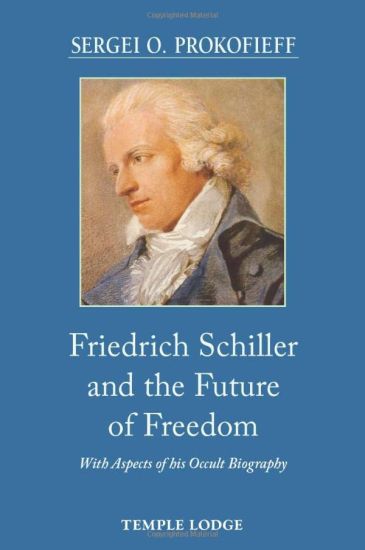
Friedrich Schiller and the Future of Freedom

Friedrich Schiller and the Future of Freedom

Sergei O. Prokofieff

TEMPLE LODGE PUBLISHING
2023
nidottu
‘The primary task of this book is to build a bridge to a deeper understanding of Schiller himself who, along with Goethe and Novalis, was one of the great spiritual forerunners and trailblazers of anthroposophy.’ – Sergei O. Prokofieff --- Planned as the second volume in a trilogy on Novalis, Schiller and Goethe, Friedrich Schiller and the Future of Freedom is much more than a conventional biography. Prokofieff shines new light on Schiller’s character and destiny, helping to establish his position as a crucial antecedent to Rudolf Steiner in the spiritual history of humanity. He also defines Schiller’s task in the context of the achievements of Goethe and Novalis at the end of the eighteenth century, an extraordinary period that saw a seminal transformation in the philosophical and artistic landscape. --- Following the recent publication of The Riddle of Dmitri – which explores Schiller’s unfinished drama Demetrius – Prokofieff returns here to the theme in the framework of Schiller’s life and extensive body of work. In timely fashion, he conveys Schiller’s mediating role between Central and Eastern Europe, indicating how he came ‘near to the soul of the Russian people through an idealism imbued with his entirely self-created moral power and his fiery enthusiasm for everything in the world that is true, beautiful and good’.
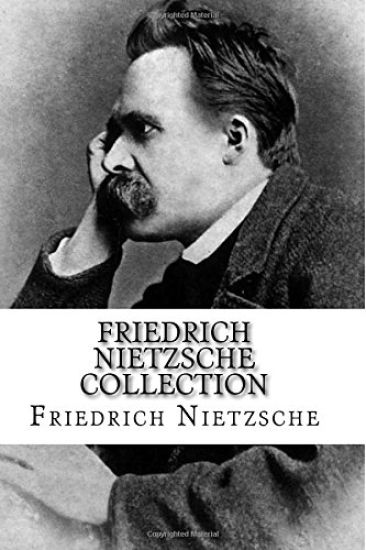
Homer and Classical Philology: Friedrich Nietzsche

Homer and Classical Philology: Friedrich Nietzsche

Friedrich Wilhelm Nietzsche

Createspace Independent Publishing Platform
2017
nidottu
Homer and Classical PhilologyFriedrich NietzscheInaugural Address delivered at Bale University, 28th of May 1869.At the present day no clear and consistent opinion seems to be held regarding Classical Philology. We are conscious of this in the circles of the learned just as much as among the followers of that science itself. The cause of this lies in its many-sided character, in the lack of an abstract unity, and in the inorganic aggregation of heterogeneous scientific activities which are connected with one another only by the name "Philology." It must be freely admitted that philology is to some extent borrowed from several other sciences, and is mixed together like a magic potion from the most outlandish liquors, ores, and bones.
Early Greek Philosophy & Other Essays: Friedrich Nietzsche

Early Greek Philosophy & Other Essays: Friedrich Nietzsche

Friedrich Wilhelm Nietzsche

Createspace Independent Publishing Platform
2017
nidottu
Early Greek Philosophy & Other EssaysBy Friedrich NietzscheTranslated By Maximilian A. MuggeThe essays contained in this volume treat of various subjects. With the exception of perhaps one we must consider all these papers as fragments. Written during the early Seventies, and intended mostly as prefaces, they are extremely interesting, since traces of Nietzsche's later tenets--like Slave and Master morality, the Superman--can be found everywhere. But they are also very valuable on account of the young philosopher's daring and able handling of difficult and abstruse subjects. "Truth and Falsity," and "The Greek Woman" are probably the two essays which will prove most attractive to the average reader.
We Philologists: Friedrich Nietzsche

We Philologists: Friedrich Nietzsche

Friedrich Wilhelm Nietzsche

Createspace Independent Publishing Platform
2017
nidottu
We PhilologistsFriedrich NietzscheTranslated by J. M. KennedyThe subject of education was one to which Nietzsche, especially during his residence in Basel, paid considerable attention, and his insight into it was very much deeper than that of, say, Herbert Spencer or even Johann Friedrich Herbart, the latter of whom has in late years exercised considerable influence in scholastic circles. Nietzsche clearly saw that the "philologists" (using the word chiefly in reference to the teachers of the classics in German colleges and universities) were absolutely unfitted for their high task, since they were one and all incapable of entering into the spirit of antiquity. Although at the first reading, therefore, this book may seem to be rather fragmentary, there are two main lines of thought running through it: an incisive criticism of German professors, and a number of constructive ideas as to what classical culture really should be.
Friedrich Arnold Brockhaus

Friedrich Arnold Brockhaus

Heinrich Eduard Brockhaus

Culturea
2022
pokkari
Die Familie, welcher Friedrich Arnold Brockhaus entstammt, geh rt Westfalen an, wo sie sich durch zwei Jahrhunderte verfolgen l t; sie ist dort noch jetzt in mehrern Zweigen vertreten, w hrend er selbst und die von ihm gegr ndete Firma sich in Leipzig niedergelassen haben. Die Vorfahren von Friedrich Arnold Brockhaus waren fast s mmtlich geistlichen Standes, und unter ihnen befindet sich eine Reihe verdienter evangelischer Pastoren; auch viele Glieder der in ihrem Vaterlande gebliebenen Zweige der Familie haben sich diesem Berufe wieder gewidmet. Der Erste des Namens Brockhaus, von dessen Leben etwas bekannt ist, war Adolf Heinrich Brockhaus, Pastor zu St.-Thom in Soest, geboren in Altena (einer kleinen Stadt im westf lischen Sauerlande, nahe bei L denscheid), 1699 ordinirt und 25 Jahre lang, bis 1724, in seinem Amte wirkend. Im Kirchenbuche wird gesagt, da er ein sehr t chtiger, flei iger, ehrsamer, von Allen geliebter Pastor war und an seiner Beerdigung die ganze Gemeinde theilnahm. Er war verheirathet mit Margarethe Katharine Sybel, einer alten Predigerfamilie in Soest angeh rend, mit welcher die Familie Brockhaus noch mehrfach in Verwandtschaftsverh ltnisse trat.
Friedrich v. Schiller´s biographie

Friedrich v. Schiller´s biographie

Heinrich Döring

Culturea
2022
pokkari
Friedrich Schiller, mit seinen vollst ndigen Vornamen Johann Christoph Friedrich, sp ter in den Adelstand erhoben, erblickte zu Marbach den 11. November 1759 das Licht der Welt, unter Verh ltnissen, die der Entwicklung vorhandener F higkeiten und Geistesanlagen nicht besonders g nstig, f r die Gesundheit des Leibes und der Seele aber von g nstigem Einflu waren. Seinen Vater, Johann Caspar, geboren am 27. Oktober 1723 zu Bitterfeld, gestorben am 7. Sept. 1796 auf dem Herzogl. W rtembergischen Lustschlosse Solitude bei Stuttgart, schildern bereinstimmende Berichte als einen Biedermann von unbescholtenem Wandel und strenger Redlichkeit, weniger ausgezeichnet durch eine vielseitige Bildung, als durch eine gro e Gewandtheit im praktischen Leben. Als Wundarzt hatte er 1745 ein Bairisches Husarenregiment nach den Niederlanden begleitet, und war nach dem Aachner Frieden (1748) wieder nach W rtemberg zur ckgekehrt, wo er als F hndrich und Adjutant bei dem Regiment Prinz Louis angestellt, einigen Feldz gen des siebenj hrigen Krieges beiwohnte. Durch M igkeit blieb er verschont von den ansteckenden Seuchen, die in B hmen das Regiment, bei dem er stand, hart heimsuchten. Neben der sorgsamen Pflege der Kranken vertrat der rastlos th tige Mann die Stelle eines Feldpredigers durch Vorlesen von Gebeten und durch Leitung des Gesanges. Sp ter stand er bei einem andern Regiment in Hessen und Th ringen. In Ludwigsburg, wo er nach dem Hubertsburger Frieden im Quartier lag, gr ndete er, mit vorherrschendem Interesse an der Oekonomie, eine Baumschule, nach den Prinzipien, die er in sp tern Jahren (1795) in einem von ihm herausgegebenen Werke: "die Baumzucht im Gro en," bekannt machte. Der Herzog Carl von W rtemberg fand sich dadurch eranla t, ihm mit dem Charakter eines Hauptmanns, die Aufsicht ber die Anpflanzungen und Gartenanlagen auf einem seiner Lustschl sser, der Solitude bei Stuttgart, zu bertragen, wo er, von seinem F rsten geachtet und geliebt von seinen Untergebenen, in ras
Friedrich Von Schiller's

Friedrich Von Schiller's

Heinrich Döring

Culturea
2022
pokkari
Nur seiner guten Natur und der sorgsamen Pflege seiner Mutter hatte es Schiller zu verdanken, da er bei seiner zarten K rperconstitution nicht den krampfhaften Zuf llen unterlag, die ihn bei den gew hnlichen Kinderkrankheiten hart heimsuchten. Seine Geistesanlagen entwickelten sich fr h in einer regen Wi begierde, die seine Eltern mit den mannichfachsten Fragen best rmte. Die Bibel war seit seinem f nften Jahre seine Lieblingslect re, und mit gespannter Aufmerksamkeit horchte er, wenn der Vater, wie es seine Gewohnheit war, das Morgen- und Abendgebet im Familienkreise laut sprach. Bis zu Thr nen ward er ger hrt, als einst auf einem Spaziergange seine Mutter ihm das Osterfeiertags-Evangelium erkl rte und ihm erz hlte, wie Jesus mit zweien seiner J nger nach Emmaus gewandert sei. Mit der Liebe f r alles Gro e und Sch ne verband er Gehorsam gegen seine Eltern und Vertr glichkeit mit seinen Geschwistern und Gespielen. Zwei Jahre lter als er, war seine Schwester Elisabeth Christophine Friedericke, sp terhin mit dem Bibliothekar Reinwald in Meiningen verheirathet. Eine zweite Schwester, Dorothea Luise ward nach ihm 1767 geboren und nachher die Gattin des Stadtpfarrers Frankh zu M ckm hl im W rtembergischen. Eine dritte Schwester, Nanette mit Namen, starb bereits in ihrem achtzehnten Lebensjahre.
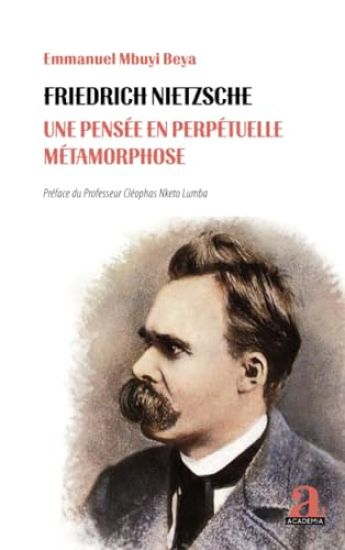
Guía de lectura Más allá del bien y del mal de Friedrich Nietzsche (análisis literario de referencia y resumen completo)
La colecci n Conocer una obra os ofrece la posibilidad de saberlo todo sobre M s all del bien y del mal de Friedrich Nietzsche, gracias a una gu a de lectura tan completa como detallada. Su escritura, clara y accesible, fue confiada a un especialista acad mico. Esta gu a de lectura responde a unos est ndares de calidad definidos por un equipo de profesores. Este libro contiene la biograf a de Friedrich Nietzsche, la presentaci n de la obra, el resumen detallado (cap tulo por cap tulo), los motivos de su xito, los temas principales y el an lisis de la corriente filos fica del autor.
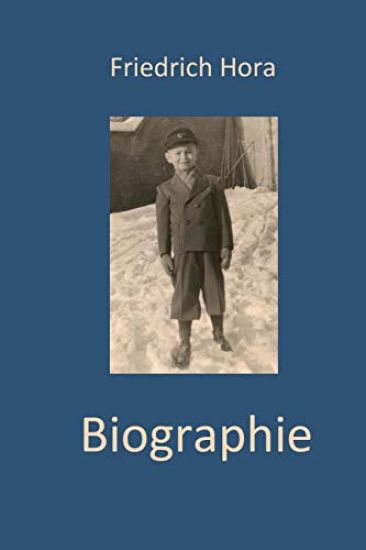
Biographie Friedrich Hora - Teil 1
Autobiographie von Friedrich (Fritz) Hora. Das Buch (Teil 1) umfasst die Jahre 1935 bis 1961. Es geht um Familiengeschichte, Kindheit in Kl sterle im Sudetenland, Vertreibung 1945, Neuanfang und Jugend in Reichenbach i.V., Gymnasium, Studium in Potsdam an der P dagogischen Hochschule sowie die fr hen Jahre als Lehrer in Falkensee bei Berlin. Es ist ein Blick zur ck auf das eigene Leben mit den Augen eines linken Historikers und inklusive der j ngsten Erfahrungen aus dem neuen wiedervereinigten Deutschland.
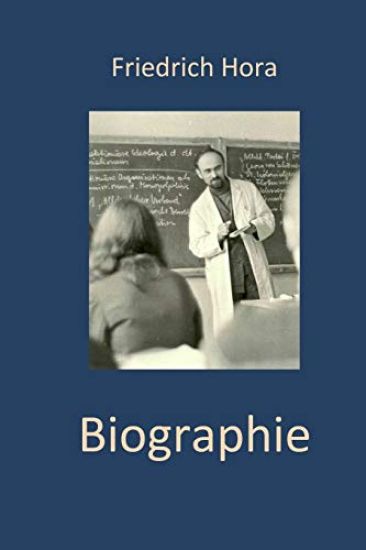
Biographie Friedrich Hora - Teil 2: Eine politische Biographie
2. Teil der Autobiographie von Friedrich (Fritz) Hora. Das Buch (Teil 2) umfasst die Jahre 1961 bis ca. Ende der 90er Jahre. Es geht um die ersten Jahre als Lehrer in Falkensee bei Berlin, sp ter um die T tigkeit an der P dagogischen Hochschule Potsdam. Das Buch erlaubt einen pers nlichen Einblick in das Bildungswesen der DDR, die Ausbildung von Lehrern des Faches Geschichte. Es setzt sich kritisch mit den Fehlern und Schw chen der DDR und insbesondere des DDR-Bildungssystems auseinander. Eigenes pers nliches Erleben beim aktiven Mitgestalten einer neuen besseren Gesellschaft und das Scheitern derselben werden einer sehr kritischen und pers nlichen Aufarbeitung unterzogen.