
Kirjahaku
Etsi kirjoja tekijän nimen, kirjan nimen tai ISBN:n perusteella.
1000 tulosta hakusanalla Graham

The Poems of James Grahame, John Logan and William Falconer
James Grahame; John Logan; William Falconer
Kessinger Pub
2007
pokkari

The wind in the willows. Kenneth Grahame (Children's Classics)
Kenneth Grahame
Createspace Independent Publishing Platform
2016
nidottu
Kenneth Grahame 8 March 1859 - 6 July 1932) was a British writer, most famous for The Wind in the Willows (1908), one of the classics of children's literature. He also wrote The Reluctant Dragon; both books were later adapted into Disney films Kenneth Grahame was born on 8 March (1859) in Edinburgh, Scotland. When he was a little more than a year old, his father, an advocate, received an appointment as sheriff-substitute in Argyllshire at Inveraray on Loch Fyne. Kenneth loved the sea and was happy there, but when he was 5, his mother died from complications of childbirth, and his father, who had a drinking problem, gave over care of Kenneth, his brother Willie, his sister Helen and the new baby Roland to Granny Ingles, the children's grandmother, in Cookham Dean in the village of Cookham in Berkshire. There the children lived in a spacious, if dilapidated, home, "The Mount", on spacious grounds in idyllic surroundings, and were introduced to the riverside and boating by their uncle, David Ingles, curate at Cookham Dean church. This delightful ambiance, particularly Quarry Wood and the River Thames, is believed, by Peter Green, his biographer, to have inspired the setting for The Wind in the Willows. He was an outstanding pupil at St Edward's School in Oxford. During his early years at St. Edwards, a sports regimen had not been established and the boys had freedom to explore the old city with its quaint shops, historic buildings, and cobblestone streets, St Giles' Fair, the idyllic upper reaches of the River Thames, and the nearby countryside.
The Golden Age (1895), by Kenneth Grahame A NOVEL (original version): Kenneth Grahame ( 8 March 1859 - 6 July 1932) was a British writer
Kenneth Grahame
Createspace Independent Publishing Platform
2016
nidottu
Dream Days (1898), by Kenneth Grahame (children's classics)
Kenneth Grahame
Createspace Independent Publishing Platform
2016
nidottu
Dream Days is a collection of children's fiction and reminiscences of childhood written by Kenneth Grahame. A sequel to Grahame's 1895 collection The Golden Age (some of its selections feature the same family of five children), Dream Days was first published in 1898 under the imprint John Lane: The Bodley Head. (The first six selections in the book had been previously published in periodicals of the day-in The Yellow Book, the New Review, and in Scribner's Magazine in the United States.)The book is best known for its inclusion of Grahame's classic story The Reluctant Dragon. Like its precursor volume, Dream Days received strong approval from the literary critics of the day. In the decades since, the book has perhaps suffered a reputation as a thinner and weaker sequel to The Golden Age-except for its single hit story. In one modern estimation, both books "paint a convincingly unsentimental picture of childhood, with the adults in these sketches totally out of touch with the real concerns of the young people around them, including their griefs and rages." As with The Golden Age, the first edition of Dream Days was un-illustrated; again like the prior volume, a subsequent edition of Dream Days was published with illustrations by Maxfield Parrish. The publisher's first intention was to print color plates; however, John Lane was not satisfied with the color reproductions of Parrish's pictures. Lane instead chose a new photogravure reproduction process that produced black-and-white results superior to the halftone images in the 1899 edition of The Golden Age. The Parrish-illustrated edition of Dream Days was issued by The Bodley Head in London and New York in 1902; it contained ten full-page illustrations (one for each of the eight selections plus frontispiece and title page), and six tailpieces. The quality of the images in Dream Days inspired Lane to issue a matching edition of The Golden Age, with improved photogravure plates, in 1904. Kenneth Grahame ( 8 March 1859 - 6 July 1932) was a British writer, most famous for The Wind in the Willows (1908), one of the classics of children's literature. He also wrote The Reluctant Dragon; both books were later adapted into Disney films.Kenneth Grahame was born on 8 March (1859) in Edinburgh, Scotland. When he was a little more than a year old, his father, an advocate, received an appointment as sheriff-substitute in Argyllshire at Inveraray on Loch Fyne. Kenneth loved the sea and was happy there, but when he was 5, his mother died from complications of childbirth, and his father, who had a drinking problem, gave over care of Kenneth, his brother Willie, his sister Helen and the new baby Roland to Granny Ingles, the children's grandmother, in Cookham Dean in the village of Cookham in Berkshire. There the children lived in a spacious, if dilapidated, home, "The Mount", on spacious grounds in idyllic surroundings, and were introduced to the riverside and boating by their uncle, David Ingles, curate at Cookham Dean church. This delightful ambiance, particularly Quarry Wood and the River Thames, is believed, by Peter Green, his biographer, to have inspired the setting for The Wind in the Willows. He was an outstanding pupil at St Edward's School in Oxford. During his early years at St. Edwards, a sports regimen had not been established and the boys had freedom to explore the old city with its quaint shops, historic buildings, and cobblestone streets, St Giles' Fair, the idyllic upper reaches of the River Thames, and the nearby countryside.Grahame died in Pangbourne, Berkshire, in 1932. He is buried in Holywell Cemetery, Oxford. Grahame's cousin Anthony Hope, also a successful author, wrote his epitaph, which reads: "To the beautiful memory of Kenneth Grahame, husband of Elspeth and father of Alastair, who passed the river on the 6th of July, 1932, leaving childhood and literature through him the more blest for all time"
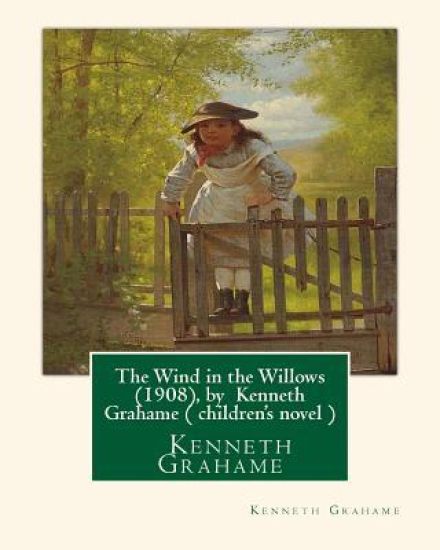
The Wind in the Willows (1908), by Kenneth Grahame ( Children's Novel )
Kenneth Grahame
Createspace Independent Publishing Platform
2016
nidottu

The Wind in the Willows Kenneth Grahame
Kenneth Grahame
Createspace Independent Publishing Platform
2016
nidottu
The Wind in the Willows is a children's novel by Kenneth Grahame, first published in 1908. Alternately slow moving and fast paced, it focuses on four anthropomorphised animals in a pastoral version of Edwardian England. The novel is notable for its mixture of mysticism, adventure, morality and camaraderie, and celebrated for its evocation of the nature of the Thames Valley.
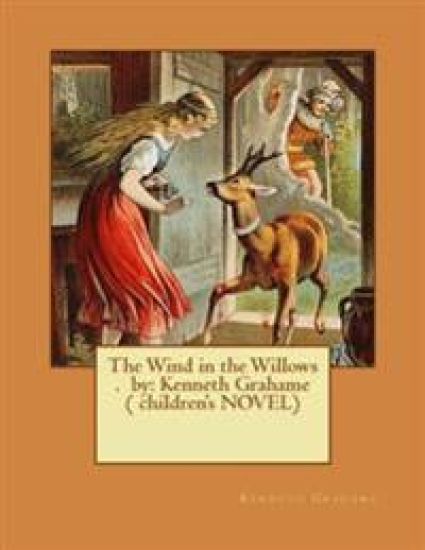
The Wind in the Willows . by: Kenneth Grahame ( children's NOVEL)
Kenneth Grahame
Createspace Independent Publishing Platform
2017
nidottu
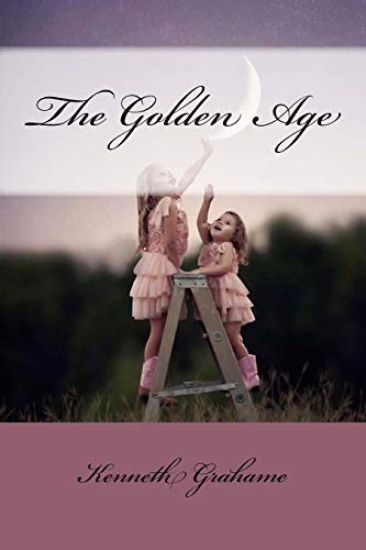
The Golden Age Kenneth Grahame
Kenneth Grahame
Createspace Independent Publishing Platform
2017
nidottu
Grahame's reminiscences are notable for their conception "of a world where children are locked in perpetual warfare with the adult 'Olympians' who have wholly forgotten how it feels to be young"--a theme later explored by J. M. Barrie and other authors.
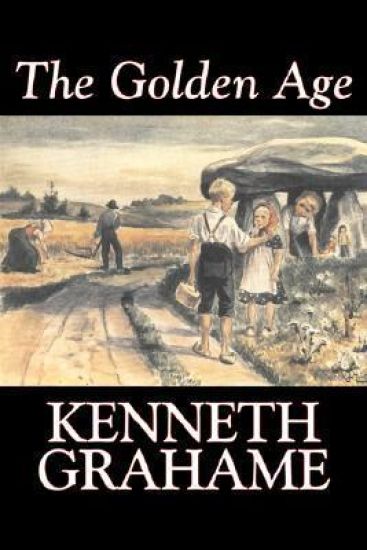
The Golden Age by Kenneth Grahame, Fiction, Fairy Tales & Folklore, Animals - Dragons, Unicorns & Mythical
Kenneth Grahame
Aegypan
2007
pokkari
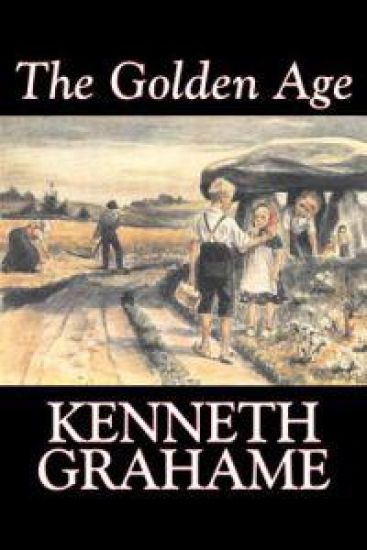
The Golden Age by Kenneth Grahame, Fiction, Fairy Tales & Folklore, Animals - Dragons, Unicorns & Mythical
Kenneth Grahame
Aegypan
2007
sidottu

Pagan Papers (1894). By: Kenneth Grahame: (World's classic's)
Kenneth Grahame
Createspace Independent Publishing Platform
2018
nidottu
Kenneth Grahame ( 8 March 1859 - 6 July 1932) was a Scottish writer, most famous for The Wind in the Willows (1908), one of the classics of children's literature. He also wrote The Reluctant Dragon. Both books were later adapted for stage and film, of which A.A. Milne's Toad of Toad Hall was the first. The Disney films, The Adventures of Ichabod and Mr. Toad and The Reluctant Dragon, have become the best known adaptations. Early life: Kenneth Grahame was born on 8 March 1859 in Edinburgh, Scotland. When he was a little more than a year old, his father, an advocate, received an appointment as sheriff-substitute in Argyllshire at Inveraray on Loch Fyne. Kenneth loved the sea and was happy there, but when he was five, his mother died of puerperal fever, 1] and his father, who had a drinking problem, gave over care of Kenneth, his brother Willie, his sister Helen and the new baby Roland to Granny Ingles, the children's grandmother, in Cookham Dean in the village of Cookham in Berkshire. There the children lived in a spacious, if dilapidated, home, The Mount, on spacious grounds in idyllic surroundings, and were introduced to the riverside and boating by their uncle, David Ingles, curate at Cookham Dean church. This ambiance, particularly Quarry Wood and the River Thames, is believed, by Peter Green, his biographer, to have inspired the setting for The Wind in the Willows. He was an outstanding pupil at St Edward's School in Oxford. During his early years at St Edwards, a sports regimen had not been established and the boys had freedom to explore the old city with its quaint shops, historic buildings, and cobblestone streets, St Giles' Fair, the upper reaches of the Thames, and the nearby countryside. Death: Grahame died in Pangbourne, Berkshire, in 1932. He is buried in Holywell Cemetery, Oxford. Grahame's cousin Anthony Hope, also a successful author, wrote his epitaph, which reads: "To the beautiful memory of Kenneth Grahame, husband of Elspeth and father of Alastair, who passed the river on the 6th of July, 1932, leaving childhood and literature through him the more blest for all time.
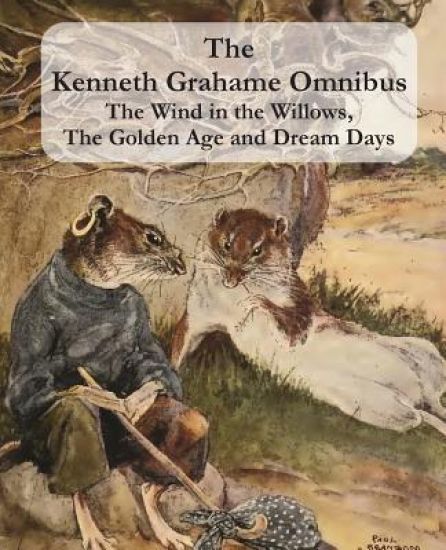
Kenneth Grahame captured the imagination of the English speaking world with his books in the early 1900s. Later "The Wind in the Willows" and "The Reluctant Dragon" were made into Disney movies. This collection contains "The Wind in the Willows", "The Golden Age" and "Dream Days" (including "The Reluctant Dragon"). "If there is a man or woman living who cannot read this book with delight, to him or her we offer our pity and compassion." (The National Observer, of "Dream Days".)