Kirjojen hintavertailu. Mukana 12 016 292 kirjaa ja 12 kauppaa.

Kirjahaku

Etsi kirjoja tekijän nimen, kirjan nimen tai ISBN:n perusteella.

1000 tulosta hakusanalla Gregory

The Young Lady's Pocket Library; Dr. Gregory's, Father's Legacy to His Daughters; Lady Pennington's Unfortunate Mother's Advice to Her Daughters; Marchioness de Lambert's Advice of a Mother to Her Daughter
The 18th century was a wealth of knowledge, exploration and rapidly growing technology and expanding record-keeping made possible by advances in the printing press. In its determination to preserve the century of revolution, Gale initiated a revolution of its own: digitization of epic proportions to preserve these invaluable works in the largest archive of its kind. Now for the first time these high-quality digital copies of original 18th century manuscripts are available in print, making them highly accessible to libraries, undergraduate students, and independent scholars.The Age of Enlightenment profoundly enriched religious and philosophical understanding and continues to influence present-day thinking. Works collected here include masterpieces by David Hume, Immanuel Kant, and Jean-Jacques Rousseau, as well as religious sermons and moral debates on the issues of the day, such as the slave trade. The Age of Reason saw conflict between Protestantism and Catholicism transformed into one between faith and logic -- a debate that continues in the twenty-first century.++++The below data was compiled from various identification fields in the bibliographic record of this title. This data is provided as an additional tool in helping to insure edition identification: ++++British LibraryT118940With a half-title. Each part has a separate titlepage. The register is continuous throughout.Dublin: printed by Graisberry and Campbell, for John Archer, 1790. 4], vii, 3],185, 10],188-311, 1]p.; 12
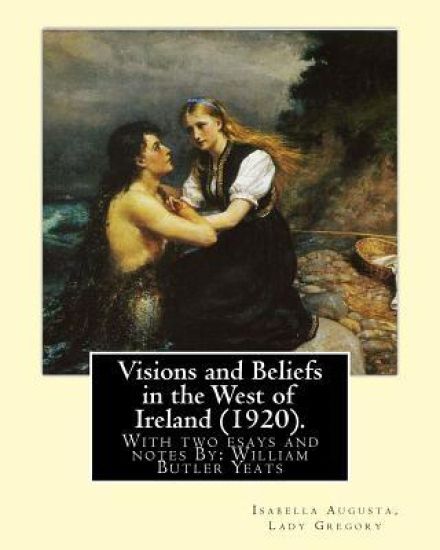
Visions and Beliefs in the West of Ireland (1920). By: Lady Gregory, and By: W. B. Yeats: With two esays and notes By: William Butler Yeats ( 13 June
This material collected over a period of more than twenty years proved to be a valuable source not only for Gregory's own plays but also for Yeats' work. A classic, it presents many aspects of the supernatural seers, healers, charms, banshees, forths, the evil eye and contains a treasure trove of Irish folk-beliefs from the late nineteenth and early twentieth centuries.. Isabella Augusta, Lady Gregory ( 15 March 1852 - 22 May 1932) was an Irish dramatist, folklorist and theatre manager. With William Butler Yeats and Edward Martyn, she co-founded the Irish Literary Theatre and the Abbey Theatre, and wrote numerous short works for both companies. Lady Gregory produced a number of books of retellings of stories taken from Irish mythology. Born into a class that identified closely with British rule, her conversion to cultural nationalism, as evidenced by her writings, was emblematic of many of the political struggles to occur in Ireland during her lifetime. Lady Gregory is mainly remembered for her work behind the Irish Literary Revival. Her home at Coole Park, County Galway, served as an important meeting place for leading Revival figures, and her early work as a member of the board of the Abbey was at least as important for the theatre's development as her creative writings. Lady Gregory's motto was taken from Aristotle: "To think like a wise man, but to express oneself like the common people." Early life and marriage: Gregory was born at Roxborough, County Galway, the youngest daughter of the Anglo-Irish gentry family Persse. Her mother, Frances Barry, was related to Viscount Guillamore, and her family home, Roxborough, was a 6,000-acre (24 km ) estate located between Gort and Loughrea, the main house of which was later burnt down during the Irish Civil War. She was educated at home, and her future career was strongly influenced by the family nurse (i.e. nanny), Mary Sheridan, a Catholic and a native Irish speaker, who introduced the young Augusta to the history and legends of the local area. She married Sir William Henry Gregory, a widower with an estate at Coole Park, near Gort, on 4 March 1880 in St Matthias' Church, Dublin. Sir William, who was 35 years her elder, had just retired from his position as Governor of Ceylon (now Sri Lanka), having previously served several terms as Member of Parliament for County Galway. He was a well-educated man with many literary and artistic interests, and the house at Coole Park housed a large library and extensive art collection, both of which Lady Gregory was eager to explore. He also had a house in London, where the couple spent a considerable amount of time, holding weekly salons frequented by many leading literary and artistic figures of the day, including Robert Browning, Lord Tennyson, John Everett Millais and Henry James. Their only child, Robert Gregory, was born in 1881. He was killed during the First World War, while serving as a pilot, an event which inspired Yeats's poems "An Irish Airman Foresees His Death," "In Memory of Major Robert Gregory," and "Shepherd and Goatherd.". William Butler Yeats ( 13 June 1865 - 28 January 1939) was an Irish poet and one of the foremost figures of 20th-century literature. A pillar of both the Irish and British literary establishments, he helped to found the Abbey Theatre, and in his later years served as an Irish Senator for two terms. Yeats was a driving force behind the Irish Literary Revival along with Lady Gregory, Edward Martyn and others....
Verse upon whores, vegetables and other oddities: INTRODUCTION by Polonius Milton Thackeray Gregory
The poetical works of Mr Deane are well-known to me. They have provided me with many happy hours. Though I am happy to have Mr Deane's works gathered here, apart from his Monastic Adventures of Polonius which is available in a separate volume, in a single volume where I can renew the pleasure of reading many of his familiar works, I could wish that were more of them that I did not know. For that reason, I envy the reader who is about to discover this new author, to come to know his wit, his wisdom, his humanity and his bardic talent. Mr Deane's poems on vegetable provide a most unexpected vein, ornamented cleverly with metre and rhyme, together with dietary information combined with historical perspectives and botanical insights. Many will be surprised by the witty humour that Mr Deane inimitably applies. He brings vegetables to life and imbues them with character that few, even those who regard themselves as enthusiasts for all aspects of nature, would have attributed to life forms they had regarded as essentially passive. It would be wrong of me to dismiss those who dismiss Mr Deane's insights as smutty when he delves into the world of prostitution, both among immigrants in Sydney's suburbs and in the seedier bars and dives of the sois of Thailand, especially Bangkok. Yet I would suggest that such critics are applying a particularly narrow focus that prevents them from gleaning wisdom and understanding about a world that affords moments of joyful interaction and economic opportunity to a large industry that embraces a large portion of humanity. Let it not be forgotten that both john and chippy interact commercially in the pursuit of happiness, not for the purpose of oppression or exploitation. For that reason, the oldest profession has prospered throughout history at all echelons of society, a fact that Mr Deane explores in his historical verse on a number of notorious, but fondly remembered, courtesans and harlots. On the other hand, his verse upon venereal disease shows Mr Deane is no stranger to the dangers of promiscuous intercourse, that he is a hero who has risked madness and even death to enjoy the pleasures of fleshpots. I salute the courage of Mr Deane. Mr Deane's genius is not limited to vegetables and prostitutes as is readily evidenced by a perusal of the amusing titles in the Table of Contents of this present volume. His poem upon admiration of the brick is proof of the originality of his genius. He has even seen the remarkable in a piece of chalk, and sung the virtues of detergent. He has provided a modern perspective of many classical myths and legends without intruding the restrictions of contemporary political correctness upon them. In fact, Mr Deane's greatness derives largely from his refusal to adapt to transient value systems where pseudo-moralists seek to impose their shifting, inconsistent standards to the works, beliefs and values of others. Even if this refusal were the only reason Mr Deane should be read and admired, his fame should be immortal. But there are so many other reasons for him to live in our hearts forever.
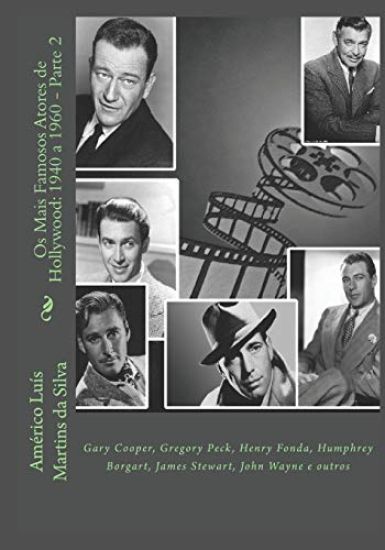
Os Mais Famosos Atores de Hollywood: 1940 a 1960 - Parte 2: Gary Cooper, Gregory Peck, Henry Fonda, Humphrey Borgart, James Stewart, John Wayne e outr
A numera o das artes costume j antigo para designar determinadas manifesta es art sticas. Atualmente, encontra-se em vigor numera o das artes mais consensual, apenas indicativa, onde cada uma das artes caracterizada pelos elementos b sicos que formatam a sua linguagem. Tal numera o classificada da seguinte forma: 1a arte: m sica (som); 2a arte: artes c nicas, ou seja, teatro/dan a/coreografia (movimento); 3a arte: pintura (cor); 4a arte: arquitetura (espa o); 5a arte: escultura (volume); 6a arte: literatura (palavra); 7a arte: cinema (integra os elementos das artes anteriores, principalmente a 8a e no cinema de anima o a 9a); .8a arte: fotografia (imagem); 9a arte: quadrinhos (cor, palavra, imagem); 10a arte: v deo games (alguns jogos integram elementos de todas as artes anteriores somado 11a, por m, no m nimo, ela integra as 1a, 3a, 4a, 6a, 9a artes somadas 11a desde a terceira gera o, considerada portanto, a forma de arte definitiva); 11a arte: arte digital (integra artes gr ficas computadorizadas 2D, 3D e programa o).No entanto, como frequentemente se afirma, o "cinema uma arte s ntese, uma arte total, que concilia todas as outras artes". Tudo na s tima arte extremamente grandioso O filme que usou maior n mero de figurantes em toda a hist ria do cinema foi Gandhi, 1982, de Richard Attenborough: mais de 300.000].Isto Hollywood No entanto, muito se tem para contar a respeito da vida dos atores famosos. De maneira que a proposta da s rie "Atores Famosos de Hollywood", informando ao p blico leitor os principais fatos da vida dos autores mais famosos da s tima arte, inicia-se por este livro, o primeiro volume da s rie intitulada "Famosos Atores de Hollywood".
Os Mais Famosos Atores de Hollywood: 1940 a 1960 - Parte 2: Gary Cooper, Gregory Peck, Henry Fonda, Humphrey Borgart, James Stewart, John Wayne e outr
A numera o das artes costume j antigo para designar determinadas manifesta es art sticas. Atualmente, encontra-se em vigor numera o das artes mais consensual, apenas indicativa, onde cada uma das artes caracterizada pelos elementos b sicos que formatam a sua linguagem. Tal numera o classificada da seguinte forma: 1a arte: m sica (som); 2a arte: artes c nicas, ou seja, teatro/dan a/coreografia (movimento); 3a arte: pintura (cor); 4a arte: arquitetura (espa o); 5a arte: escultura (volume); 6a arte: literatura (palavra); 7a arte: cinema (integra os elementos das artes anteriores, principalmente a 8a e no cinema de anima o a 9a); .8a arte: fotografia (imagem); 9a arte: quadrinhos (cor, palavra, imagem); 10a arte: v deo games (alguns jogos integram elementos de todas as artes anteriores somado 11a, por m, no m nimo, ela integra as 1a, 3a, 4a, 6a, 9a artes somadas 11a desde a terceira gera o, considerada portanto, a forma de arte definitiva); 11a arte: arte digital (integra artes gr ficas computadorizadas 2D, 3D e programa o).No entanto, como frequentemente se afirma, o "cinema uma arte s ntese, uma arte total, que concilia todas as outras artes". Tudo na s tima arte extremamente grandioso O filme que usou maior n mero de figurantes em toda a hist ria do cinema foi Gandhi, 1982, de Richard Attenborough: mais de 300.000].Isto Hollywood No entanto, muito se tem para contar a respeito da vida dos atores famosos. De maneira que a proposta da s rie "Atores Famosos de Hollywood", informando ao p blico leitor os principais fatos da vida dos autores mais famosos da s tima arte, inicia-se por este livro, o primeiro volume da s rie intitulada "Famosos Atores de Hollywood".
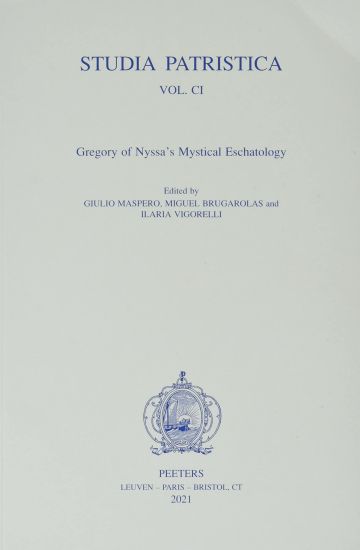
Studia Patristica. Vol. CI - Gregory of Nyssa's Mystical Eschatology
Studies on Gregory of Nyssa are flourishing. In this highly valuable bibliography, two areas stand out: mysticism and eschatology. The former has also been at the centre of a lively controversy, concerning the possibility that Gregory could be described as the actual initiator of mysticism. Eschatology, on its part, has received particular attention, especially in the areas of epektasis and apokatastasis. But these dimensions are connected, as shown by Gregory’s Commentary on the Song of Songs, a mystical text par excellence, which offers numerous eschatological insights, which this volume tries to present. The issue is all the more interesting in that Gregory’s eschatology is marked by a hermeneutical tension which is reflected in a dichotomy present in the studies devoted to it. Clearly, Gregory has been inspired by the apokatastasis of Origen, but for him, as for the Alexandrian, is it possible to speak of a universal salvation? If the human being is simply a soul which has to be restored to its initial state, what is the value of its history? And the body? And freedom? These questions seem to be linked to the tension between the “circular” dimension of apokatastasis and the “linear” dynamic of epektasis. This is approached through the lens of Christology and ontology, two areas which, in the context of Nyssa studies as a whole, are among the least studied. Therefore, the chapters of the book are aimed at covering the themes in such a way as to reveal the profound relationships between the two foci of theological reflection on the mystery of Christ: on the one hand, the Christological focus proper, on the other, the ontology which emerges from Christological and Trinitarian considerations. Thus, we shall be able to identify the influences and relations, intrinsic and systematic, between the thought about being, the protology and the eschatology, of classical origin, and the thought about Christ in which the divine and the human are united in and through history. This volume, therefore, is arranged in three main parts. The first, most fundamental, approximates to the question of the point of view of eschatology itself, seeking to indicate the importance of mysticism in its development. The second part of the volume is devoted precisely to Gregory’s Commentary on the Song of Songs, where the eschatological dimension is clearly highlighted. The third and last part of the volume is devoted to the apokatastasis. Here the different, even contrasting positions, are presented, providing, simultaneously, some tools which could assist a deeper penetration into the tensions of eschatology through the mystical perspective which is characteristic of the Commentary on the Song of Songs. In particular, the Christological and ontological elements linked to epektasis seem to promise a greater immersion into Gregory’s eschatology and appreciation of its theological significance, not despite its tensions but precisely by means of them.
The Heart of the Matter: Five ESL Leaders and the Impact They've Had: Featuring Krashen, O'Neill, Vanpatten, Gregory, and Hopkins
There is an argument to be made that the five individuals featured in this collection personify the very essence of what it means to be a language teacher in the 21st century because of the profound effects their words and actions have had on so many teachers and so many careers in the field of ESL. All of the essays in this book were originally published on web pages in the ESL MiniConference Online newsletter. Steve Krashen, the late Robert O'Neill, and Bill VanPatten debated the nature of the language learning or language acquisition process in a series of exchanges that was instigated by O'Neill, who suggested to ESL MiniConference founding editor Robb Scott that he invite Krashen to respond to statements in which O'Neill challenged the validity of the "natural approach" that Tracy Terrell and Krashen had developed and Krashen had spent a lifetime popularizing. The bait was taken and the resulting exchanges were revealing, to say the least. At one point, Bill VanPatten served as a tag-teammate for Krashen and wrote a truly eloquent defense of unconscious acquisition with a powerful flying metaphor, accentuating significant updates to the Krashen/Terrell model, only to encounter yet further resistance from O'Neill, who drove home his points with obvious feisty pleasure. That memorable debate is just as relevant and thought-provoking today as it was in 2002. Joining Krashen, O'Neill, and VanPatten in the pantheon of ESL/EFL and second language teaching legends are O. Dean Gregory and David B. Hopkins, whose careers in teacher training are feted in two spectacular festschrifts with heart-felt essays from their students and colleagues. Gregory passed away in the year 2000 after a lifetime devoted to ESL program development and university teaching; Hopkins has spent more than five decades doing program development and teacher training overseas, and is still going strong. A close reading of the "Great Debate" and these two festschrifts -- previously only available online -- will give the reader entry into the philosophical and pedagogical concerns that are at the core of this exciting field of second language learning and teaching.