Kirjojen hintavertailu. Mukana 11 717 486 kirjaa ja 12 kauppaa.

Kirjahaku

Etsi kirjoja tekijän nimen, kirjan nimen tai ISBN:n perusteella.

1000 tulosta hakusanalla Helene Ibata

The Day I Wasn't There

The Day I Wasn't There

Helene Cixous

Northwestern University Press
2006
nidottu
In this memoir-novel, a narrator who resembles Helene Cixous obsessively recounts an incident - the premature death of her first-born child, a Down syndrome baby left in the care of the clinic in Algeria where her midwife mother works. She uses this event to probe her family history and her relationship with her mother, a refugee from Nazi Germany; her dead father, after whom the baby is named; and her medical-student brother, who takes on some of the duties of a father figure. Cixous's elusive writing bears all the trademarks of her poetic, provocative style, vivid with word play, intense feeling and a stream-of-consciousness that moves freely over time and place. The narrator's mother claims not to remember what happened, and the brother tries to fill in some gaps in the story. By the end of the book we understand the significance of the title: one day Cixous's mother returned to the clinic to find the baby on the brink of death. Rather than attempt to save him she chose to end his suffering. By closing the door to the imaginary clinic at the end, the narrator at last resolves the feelings of guilt and realizes that each human being has a fate they must endure. Informed by psychoanalytical theory, and always brutally honest, ""The Day I Wasn't There"" is above all an intimate study of a woman's inner landscape.
Lili Is Crying

Lili Is Crying

Hélène Bessette

NEW DIRECTIONS PUBLISHING CORPORATION
2025
nidottu
Lili is Crying, H l ne Bessette's debut novel, explores the fraughtness and depth of the troubling relationship between Lili and her mother Charlotte. With a near-mythic quality, Bessette's stripped-back prose evokes at once the pain of thwarted love--of desire run cold--and the promise of renewal. Lauded by critics on its initial publication in 1953 for its boundary-pushing style, Lili is Crying transformed Bessette into a cult author in France. Moving and maddening in turns, the characters are so trapped in their own cruelty and sorrows, but in its spareness it feels true: "Show me a woman who has actually chosen something." Championed by Raymond Queneau, then an editor at Gallimard, Bessette's novels were hailed for their experimentation, unusual economy of expression, rarity, strange humor, and their sheer vivacity.
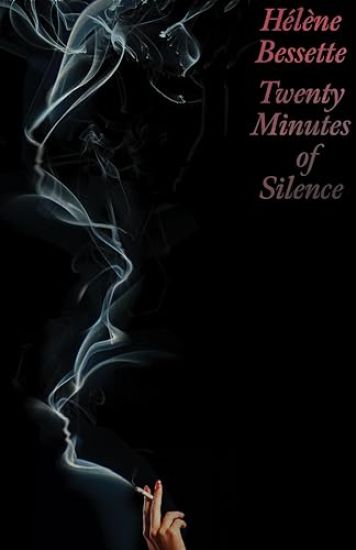
Twenty Minutes of Silence

Twenty Minutes of Silence

Hélène Bessette

NEW DIRECTIONS PUBLISHING CORPORATION
2026
nidottu
In an opulent villa near the English channel lives a well-to-do family. A man--a husband, father, and employer--has been shot dead. The bullet is from his own gun, which he got from the Germans during the war. In this family, the father has a safe, a monkey wrench, a wife, and a maid named Rose. The son has a swing, a croquet set, a rain coat, and a car. They all read detective novels to fall asleep (the father), to stay awake (the son), to distract herself from an empty marriage (the mother). Packed with brutal revelations, the novel centers on the twenty minutes of silence it takes for the family to alert the doctor (who lives next door) of the father's death. Everything in this high-octane drama is subject to change, including the setting and the characters, who are truer to life than might at first appear. But who if anyone is the true criminal and who is the victim? In this marvelous and sui generis novel, written in Bessette's signature taut and stripped-back prose, the detective novel is turned inside out and wholly on its head.
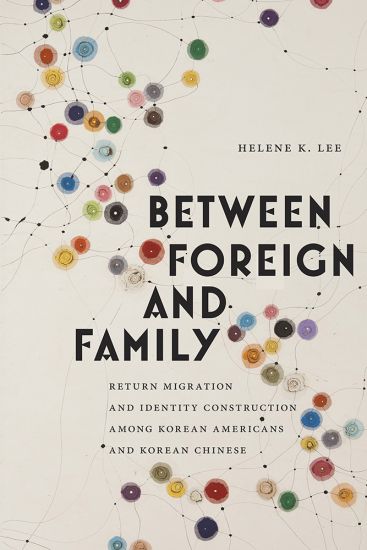
Between Foreign and Family

Between Foreign and Family

Helene K. Lee

Rutgers University Press
2018
nidottu
Winner of the 2019 ASA Book Award - Asia/Asian-American SectionBetween Foreign and Family explores the impact of inconsistent rules of ethnic inclusion and exclusion on the economic and social lives of Korean Americans and Korean Chinese living in Seoul. These actors are part of a growing number of return migrants, members of an ethnic diaspora who migrate “back” to the ancestral homeland from which their families emigrated. Drawing on ethnographic observations and interview data, Helene K. Lee highlights the “logics of transnationalism” that shape the relationships between these return migrants and their employers, co-workers, friends, family, and the South Korean state. While Koreanness marks these return migrants as outsiders who never truly feel at home in the United States and China, it simultaneously traps them into a liminal space in which they are neither fully family, nor fully foreign in South Korea. Return migration reveals how ethnic identity construction is not an indisputable and universal fact defined by blood and ancestry, but a contested and uneven process informed by the interplay of ethnicity, nationality, citizenship, gender, and history.
Between Foreign and Family

Between Foreign and Family

Helene K. Lee

Rutgers University Press
2018
sidottu
Winner of the 2019 ASA Book Award - Asia/Asian-American SectionBetween Foreign and Family explores the impact of inconsistent rules of ethnic inclusion and exclusion on the economic and social lives of Korean Americans and Korean Chinese living in Seoul. These actors are part of a growing number of return migrants, members of an ethnic diaspora who migrate “back” to the ancestral homeland from which their families emigrated. Drawing on ethnographic observations and interview data, Helene K. Lee highlights the “logics of transnationalism” that shape the relationships between these return migrants and their employers, co-workers, friends, family, and the South Korean state. While Koreanness marks these return migrants as outsiders who never truly feel at home in the United States and China, it simultaneously traps them into a liminal space in which they are neither fully family, nor fully foreign in South Korea. Return migration reveals how ethnic identity construction is not an indisputable and universal fact defined by blood and ancestry, but a contested and uneven process informed by the interplay of ethnicity, nationality, citizenship, gender, and history.
Prophetic Activism

Prophetic Activism

Helene Slessarev-Jamir

New York University Press
2011
sidottu
While the links between conservative Christians and politics have been drawn strongly in recent years, coming to embody what many think of as religious activism, the profoundly religious nature of community organizing and other more left-leaning justice work has been largely overlooked. Prophetic Activism is the first broad comparative examination of progressive religious activism in the United States. Set up as a counter-narrative to religious conservatism, the book offers readers a deeper understanding of the richness and diversity of contemporary religious activism. Helene Slessarev-Jamir offers five case studies of major progressive religious justice movements that have their roots in liberative interpretations of Scripture: congregational community organizing; worker justice; immigrant rights work; peace-making and reconciliation; and global anti-poverty and debt relief. Drawing on intensive interviews with activists at all levels of this work—from pastors and congregational leaders to local organizers and the executive directors of the national networks—she uncovers the ways in which they construct an ethical framework for their work. In addition to looking at predominantly Christian organizations, the book also highlights the growth of progressive activism among Jews, Muslims, and Buddhists who are engaged in reinterpreting their religious texts to support new forms of activism. Religion and Social Transformation series
Prophetic Activism

Prophetic Activism

Helene Slessarev-Jamir

New York University Press
2011
pokkari
While the links between conservative Christians and politics have been drawn strongly in recent years, coming to embody what many think of as religious activism, the profoundly religious nature of community organizing and other more left-leaning justice work has been largely overlooked. Prophetic Activism is the first broad comparative examination of progressive religious activism in the United States. Set up as a counter-narrative to religious conservatism, the book offers readers a deeper understanding of the richness and diversity of contemporary religious activism. Helene Slessarev-Jamir offers five case studies of major progressive religious justice movements that have their roots in liberative interpretations of Scripture: congregational community organizing; worker justice; immigrant rights work; peace-making and reconciliation; and global anti-poverty and debt relief. Drawing on intensive interviews with activists at all levels of this work—from pastors and congregational leaders to local organizers and the executive directors of the national networks—she uncovers the ways in which they construct an ethical framework for their work. In addition to looking at predominantly Christian organizations, the book also highlights the growth of progressive activism among Jews, Muslims, and Buddhists who are engaged in reinterpreting their religious texts to support new forms of activism. Religion and Social Transformation series
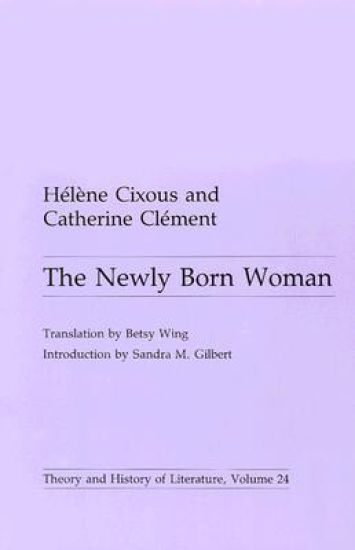
Newly Born Woman

Newly Born Woman

Helene Cixous

University of Minnesota Press
1986
nidottu
Published in France as La jeune née in 1975, and found here in its first English translation, The Newly Born Woman is a landmark text of the modern feminist movement. In it, Hélène Cixous and Catherine Clément put forward the concept of écriture feminine, exploring the ways women’s sexuality and unconscious shape their imaginary, their language, and their writing. Through their readings of historical, literary, and psychoanalytic accounts, Cixous and Clément explore what is hidden and repressed in culture, revealing the unconscious of history.
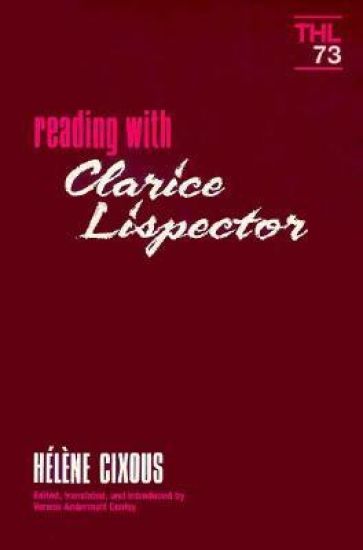
Reading With Clarice Lispector

Reading With Clarice Lispector

Helene Cixous

University of Minnesota Press
1990
nidottu
The texts that comprise this volume were selected from Helene Cixous's seminars on the work of Clarice Lispector. They reflect Cixous's own meditations on problems of reading and writing, and on related themes such as exchange and the gift, love and passion, as well as trace the influence of Lispector's work on her own development. Reading the Brazilian writer from the vantage point of modern theory, Cixous aims to draw her into the mainstream of current debates which question the concept of the so-called rational "Cartesian" individual and which note the increasing power of the social and applied sciences that seek to establish control over the individual. The book includes extracts of Clarice Lispector's prose writing, such as "The Apple in the Dark - The Temptations of Understanding" and "The Hour of the Star:How Does One Desire Wealth or Poverty?".
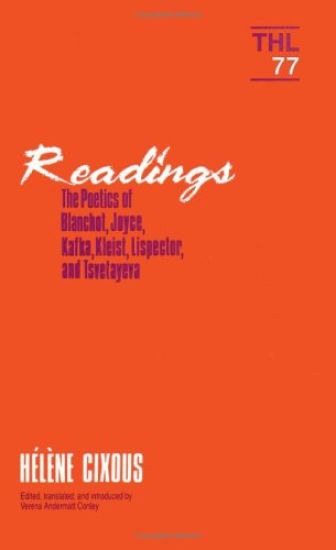
Readings

Readings

Helene Cixous

University of Minnesota Press
1991
nidottu
Readings: The Poetics of Blanchot, Joyce, Kafka, Kleist, Lispector, and Tsvetayeva offers striking and novel textual studies of major literary figures and emergent authors. Selected from Cixous’s seminars taught between 1980 and 1986 at the Universite de Paris VII (Saint-Denis) and at the College International de Philosophie, the texts chronicle the French intellectual scene with its shifting tastes over the decade following May 1986.In their simple and accessible language, the texts can be read as inspiration for Cixous’s fictional and critical practices. They not only introduce readers to emergent texts from Brazil and Russia, such as Clarice Lispector’s “Foreign Legion” and Marina Tsvetayeva’s “Mother and Music,” but also give new, incisive insights into Joyce’s Portrait of the Artist and Kafka’s “Before the Law.” Drawing from philosophy and psychoanalysis, Readings: The Poetics of Blanchot, Joyce, Kafka, Kleist, Lispector, and Tsvetayeva can be read side-by-side with Reading with Clarice Lispector, as an ongoing meditation on ethics and poetics.Also from MinnesotaReading with Clarice LispectorHelene CixousEdited, translated, and introduced by Verena Andermatt ConleyFor Cixous, Lispector’s work represents one of the finest examples of ecriture feminine in that she practices, in writing, what Cixous is searching for in her theoretical practice: the giving, spending, and inscribing of pleasure; an apprenticeship in the lessons of life.Theory and History of Literature, volume 73
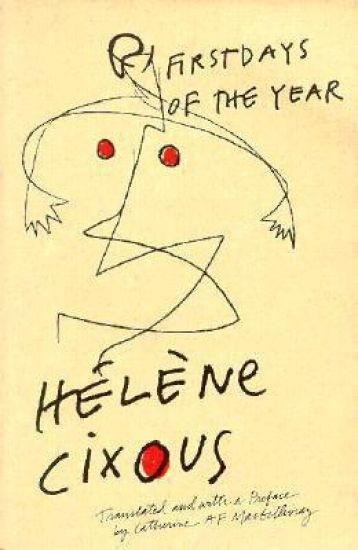
First Days Of The Year

First Days Of The Year

Helene Cixous

University of Minnesota Press
1998
nidottu
A searching meditation on "authorship" by an eminent theorist.An inner journey across space and time linking the "author" to other poets, this lyrical essay-poem continues Helene Cixous's exhilarating rewriting of notions of boundary, self, other, and author. The renowned source of the notion of ecriture feminine, Cixous here interrogates the status of the author, connecting distant instances of herself with other writers who traverse genders, generations, and national boundaries. In doing so, she pursues the rhythms of a mind thinking, tentatively following each thought from its enigmatic inception through all its twists and turns into the next thought's mysterious beginnings. Here, then, is the "flux full of silent words flowing from one community to the other, from one life to the other, the strange legend, inaudible except to the heart of one or the other, the narrative weaving itself on high". By turns thrilling and chimerical, hypnotic and startling, this first-person meditation -- or, in Freud's term for a dream-text, theorie-fiction -- does not aspire to reflect reality so much as transform the ways in which we perceive it, creating new terms for subjectivity and the "real". Above all, First Days of the Year (published originally in French as Jours de l'an) is a celebration of beginnings and future possibilities, based on necessity and hope, constantly mediating writing and living, life and death. Like all of Cixous's profoundly original works, it seductively leads the reader into a new way of thinking by disrupting fixed ideas of psychic identity, subjectivity, and language.
The Swedish Table

The Swedish Table

Helene Henderson

University of Minnesota Press
2013
nidottu
“Although I never physically fit in . . . being the sole tall, awkward African American among a sea of beautiful blonde, blue-eyed Swedes, it was my home. When I tasted the first potato of the summer, just dug out of the ground, or when I picked the first ripe cloudberry and popped it in my mouth, or when I took in the scent of seawater and we grilled salmon just off the boat, it didn’t matter what I looked like-I was Swedish. I was home, and I did belong.”Drawing on her fondest childhood memories, Helene Henderson offers welcome insight into the treasures of Swedish cooking. From the potato, a Swedish staple, to dessert, the star of Swedish cuisine, The Swedish Table contains more than 125 recipes, including Yellow Pea Soup with Bacon (Ärtsoppa), Lentil Salad with Radishes (Linssallad), Aquavit and Dill Marinated Salmon (Gravlax), Swedish Meatballs with Gravy (KÖttbullar), and the country’s traditional pastry, Bulla.Encompassing both traditional Swedish dishes and modern, updated recipes, Henderson combines the ingredients and scents from the past with the produce and flavor of today. The Swedish Table includes an extensive guide to Swedish traditions and celebrations, the foods that accompany them, and a color gallery of photographs. With this complete collection of elegant yet easy-to-follow recipes, Henderson takes us on an enticing tour through the magic of the forest, the lakes, and the farms of the Swedish countryside.
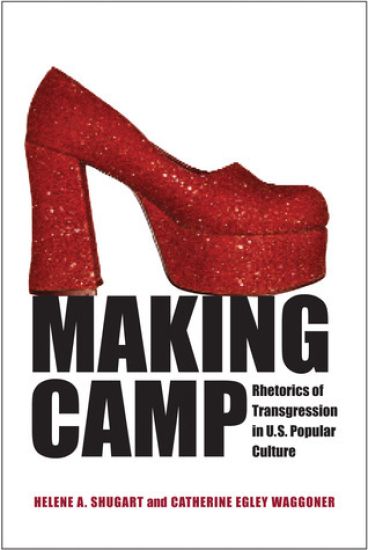
Making Camp

Making Camp

Helene A. Shugart; Catherine Egley Waggoner

The University of Alabama Press
2010
nidottu
"Making Camp "examines the rhetoric and conventions of OC campOCO in contemporary popular culture and the ways it both subverts and is co-opted by mainstream ideology and discourse, especially as it pertains to issues of gender and sexuality. a Camp has long been aligned with gay male culture and performance. Helene Shugart and Catherine Waggoner contend that camp in the popular mediaOCowhether visual, dramatic, or musicalOCois equally pervasive. While aesthetic and performative in nature, the authors argue that campOCofemale camp in particularOCois also highly political and that conventions of femininity and female sexuality are negotiated, if not always resisted, in female camp performances.a a The authors draw on a wide range of references and figures representative of camp, both historical and contemporary, in presenting the evolution of female camp and its negotiation of gender, political, and identity issues. Antecedents such as Joan Crawford, Wonder Woman, Marilyn Monroe, and Pam Grier are discussed as archetypes for contemporary popular culture figuresOCoMacy Gray, Gwen Stefani, and the characters of Xena from "Xena: Warrior Princess" and Karen Walker from "Will & Grace. " a Shugart and Waggoner find that these and other female camp performances are liminal, occupying a space between conformity and resistance. The result is a study that demonstrates the prevalence of camp as a historical and evolving phenomenon in popular culture, its role as a site for the rupture of conventional notions of gender and sexuality, and how camp is configured in mainstream culture and in ways that resist its being reduced to merely a style."
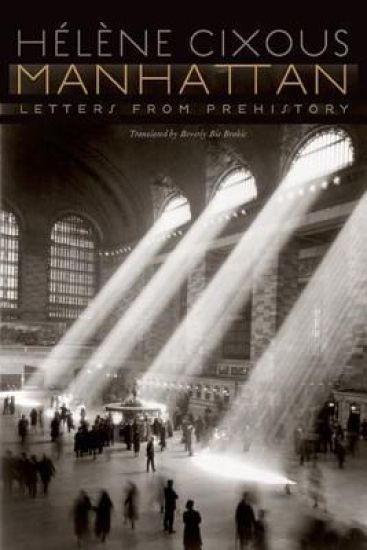
Manhattan

Manhattan

Hélène Cixous

Fordham University Press
2007
sidottu
Manhattan is the tale of a young French scholar who travels to the United States in 1965 on a Fulbright Fellowship to consult the manuscripts of beloved authors. In Yale University’s Beinecke Library, tantalized by the conversational and epistolary brilliance of a fellow researcher, she is lured into a picaresque and tragic adventure. Meanwhile, back in France, her children and no-nonsense mother await her return. A young European intellectual’s first contact with America and the city of New York are the background of this story. The experience of Manhattan haunts this labyrinth of a book as, over a period of thirty-five years, its narrator visits and revisits Central Park and a half-buried squirrel, the Statue of Liberty and a never again to be found hotel in the vicinity of Morningside Heights: a journey into memory in which everything is never the same. Traveling from library to library, France to the United States, Shakespeare to Kafka to Joyce, Manhattan deploys with gusto all the techniques for which Cixous’s fiction and essays are known: rapid juxtapositions of time and place, narrative and description, analysis and philosophical reflection. It investigates subjects Cixous has spent her life probing: reading, writing, and the “omnipotence-other” seductions of literature; a family’s flight from Nazi Germany and postcolonial Algeria; childhood, motherhood, and, not least, the strange experience of falling in love with, as Jacques Derrida writes, “a counterfeit genius.”
Manhattan

Manhattan

Hélène Cixous

Fordham University Press
2007
pokkari
Manhattan is the tale of a young French scholar who travels to the United States in 1965 on a Fulbright Fellowship to consult the manuscripts of beloved authors. In Yale University's Beinecke Library, tantalized by the conversational and epistolary brilliance of a fellow researcher, she is lured into a picaresque and tragic adventure. Meanwhile, back in France, her children and no-nonsense mother await her return. A young European intellectual's first contact with America and the city of New York are the background of this story. The experience of Manhattan haunts this labyrinth of a book as, over a period of thirty-five years, its narrator visits and revisits Central Park and a half-buried squirrel, the Statue of Liberty and a never again to be found hotel in the vicinity of Morningside Heights: a journey into memory in which everything is never the same. Traveling from library to library, France to the United States, Shakespeare to Kafka to Joyce, Manhattan deploys with gusto all the techniques for which Cixous's fiction and essays are known: rapid juxtapositions of time and place, narrative and description, analysis and philosophical reflection. It investigates subjects Cixous has spent her life probing: reading, writing, and the "omnipotence-other" seductions of literature; a family's flight from Nazi Germany and postcolonial Algeria; childhood, motherhood, and, not least, the strange experience of falling in love with, as Jacques Derrida writes, "a counterfeit genius."
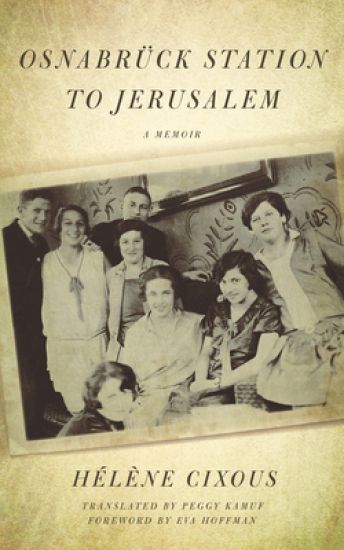
Osnabrück Station to Jerusalem

Osnabrück Station to Jerusalem

Hélène Cixous; Eva Hoffman

FORDHAM UNIVERSITY PRESS
2020
sidottu
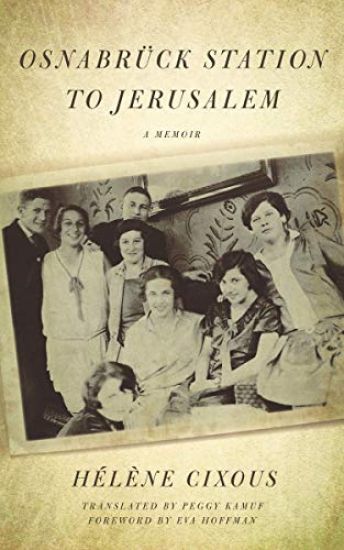
An inventive literary account of Cixous's remarkable journey to her mother's birthplace Winner, French Voices Award for Excellence in Publication and Translation For about eighty years, the Jonas family of Osnabrück were part of a small but vibrant Jewish community in this mid-size city of Lower Saxony. After the war, Osnabrück counted not a single Jew. Most had been deported and murdered in the camps, others emigrated if they could and if they managed to overcome their own inertia. It is this inertia and failure to escape that Hélène Cixous seeks to account for in Osnabrück Station to Jerusalem. Vicious anti-Semitism hounded all of Osnabrück's Jews long before the Nazis' rise to power in 1933. So why did people wait to leave when the threat was so patent, so in-their-face? Drawn from the stories told to Cixous by her mother, Ève, and grandmother, Rosalie (Rosi), this literary work reimagines fragments of Ève's and Rosi's stories, including the death of Ève's uncle, Onkel André. Piecing together the story of Andreas Jonas from what she was told and from what she envisages, Cixous recounts the tragedy of the one she calls the King Lear of Osnabrück, who followed his daughter to Jerusalem only to be sent away by her and to return to Osnabrück in time to be deported to a death camp. Cixous wanders the streets of the city she had heard about all her life in her mother's and grandmother's stories, digs into its archives, meets city officials, all the while wondering if she should have come. These hesitations and reflections in the present, often voiced in dialogues staged with her own son or daughter, are woven with scenes from her childhood in Algeria and the half-remembered, half-invented stories of the Jonas family, making Osnabrück Station to Jerusalem one of the author's most intensely engaging books. This work received the French Voices Award for excellence in publication and translation. French Voices is a program created and funded by the French Embassy in the United States and FACE (French American Cultural Exchange).
Osnabrück Station to Jerusalem

Osnabrück Station to Jerusalem

Hélène Cixous; Eva Hoffman

FORDHAM UNIVERSITY PRESS
2022
pokkari
An inventive literary account of Cixous's remarkable journey to her mother's birthplace Winner, French Voices Award for Excellence in Publication and Translation For about eighty years, the Jonas family of Osnabrück were part of a small but vibrant Jewish community in this mid-size city of Lower Saxony. After the war, Osnabrück counted not a single Jew. Most had been deported and murdered in the camps, others emigrated if they could and if they managed to overcome their own inertia. It is this inertia and failure to escape that Hélène Cixous seeks to account for in Osnabrück Station to Jerusalem. Vicious anti-Semitism hounded all of Osnabrück's Jews long before the Nazis' rise to power in 1933. So why did people wait to leave when the threat was so patent, so in-their-face? Drawn from the stories told to Cixous by her mother, Ève, and grandmother, Rosalie (Rosi), this literary work reimagines fragments of Ève's and Rosi's stories, including the death of Ève's uncle, Onkel André. Piecing together the story of Andreas Jonas from what she was told and from what she envisages, Cixous recounts the tragedy of the one she calls the King Lear of Osnabrück, who followed his daughter to Jerusalem only to be sent away by her and to return to Osnabrück in time to be deported to a death camp. Cixous wanders the streets of the city she had heard about all her life in her mother's and grandmother's stories, digs into its archives, meets city officials, all the while wondering if she should have come. These hesitations and reflections in the present, often voiced in dialogues staged with her own son or daughter, are woven with scenes from her childhood in Algeria and the half-remembered, half-invented stories of the Jonas family, making Osnabrück Station to Jerusalem one of the author's most intensely engaging books. This work received the French Voices Award for excellence in publication and translation. French Voices is a program created and funded by the French Embassy in the United States and FACE (French American Cultural Exchange).
Masquerade and Social Justice in Contemporary Latin American Fiction

Masquerade and Social Justice in Contemporary Latin American Fiction

Helene Carol Weldt-Basson

University of New Mexico Press
2017
sidottu
Contemporary Latin American fiction establishes a unique connection between masquerade, frequently motivated by stigma or trauma, and social justice. Using an interdisciplinary approach that combines philosophy, history, psychology, literature, and social justice theory, this study delineates the synergistic connection between these two themes. Weldt-Basson examines fourteen novels by twelve different Latin American authors: Mario Vargas Llosa, Sergio Galindo, Augusto Roa Bastos, Fernando del Paso, Mayra Santos-Febres, Isabel Allende, Carmen Boullosa, Antonio Benítez-Rojo, Marcela Serrano, Sara Sefchovich, Luisa Valenzuela, and Ariel Dorfman. She elucidates the varieties of social justice operating in the plots of contemporary Latin American novels: distributive, postmodern/feminist, postcolonial, transitional, and historical justices. The author further examines how masquerade and disguise aid in articulating the theme of social justice, why this is important, and how it relates to Latin American history and the historical novel.
The Chilean Dictatorship Novel

The Chilean Dictatorship Novel

Helene Carol Weldt-Basson

UNIVERSITY OF NEW MEXICO PRESS
2024
sidottu
Though the civil-rights abuses by the Pinochet dictatorship in Chile (1973-1990) were later recognized by reparations and truth commissions, the difficult emotions suffered by the victims and their families were often pushed into the background or out of the national conversation entirely. In response, novelists began writing memory of feelings experienced during the dictatorship into their books. In The Chilean Dictatorship Novel, Weldt-Basson examines fifteen novels and one testimony written on the topic of dictatorship to illustrate how these Chilean narratives center on affect and emotions. Each chapter focuses on a different emotion: feelings of loss because of father abandonment and spatial injustice caused by the neoliberal urbanization of Santiago; despair articulated through tragic romances and affective landscapes; left-wing nostalgia and melancholia communicated through allegory; feelings of abjection caused by torture and betrayal; and the creation of affect through violent events, aggressive child play, and sexual torture. Through a close look at the work of José Donoso, Ariel Dorfman, Diamela Eltit, Carlos Franz, and Nona Fernández, among others, Weldt-Basson effectively argues that by inspiring emotion and creating empathy within readers, the authors of these books instill a drive in the readers for ongoing social-justice advocacy, thereby transforming the process of reading into a platform for future action. Weldt-Basson's landmark study will serve as a basis for the future study of Latin American literature for decades to come.