Two drifters, off to see the world / There's such a lot of world to seeWe're after the same rainbow's end, waiting, round the bend / My Huckleberry Friend, Moon River, and meFollow a girl (accompanied by her teddy bear--"two drifters") as she dreams about the wide and wonderful world. Cozy scenes of pajamas and bedtime make this a perfect story to share at the end of the night. Godwin Books
*Includes pictures of Henry, Anne, Elizabeth and important people, places, and events in their lives. *Analyzes their legacies and discusses popular legends about them. *Includes a Bibliography for further reading. Over 450 years after his reign, Henry VIII is still the most famous and recognizable King of England, but it's for all the wrong reasons. Though well regarded by contemporaries as a learned king and "one of the most charismatic rulers to sit on the English throne", he is best remembered today for his gluttony and multiple marriages, particularly the gruesome way in which he was widowed on more than one occasion. Naturally, that was the focus of the popular Showtime drama series centered around his life, The Tudors. Henry VIII will probably continue to be best known for beheading some of his wives, most notably Anne Boleyn, so it is somewhat fitting that his most decisive act came as a result of a marital mishap. Sharply at odds with the Catholic Church over his attempt to dissolve his marriage with Catherine of Aragon, Henry VIII ultimately broke with the Church and established the Church of England, which forever both the religious history of England and the social hierarchy of the nation and its empire. Of Henry's wives, none is more famous than his second, Anne Boleyn, who even today remains both famous and infamous for her personal and political life nearly 400 years after her death. Anne was a vixen and ultimately a victim, but she was also an astute politician, foolish lover and wise woman who could never decide whether to listen to her heart or her head. She was also both an adulteress and religious reformer, and these two qualities would come together to change the face of English Christianity forever. Anne came into the court with a better idea of what she was getting herself into than any other of Henry's queens, but even she could not see foresee how fickle fate would cost her both her love and her life. Like Catherine of Aragon before her, she would be unable to hold on to her wandering husband. However, she would, ironically, be the last of his queens that he'd ever cheat on. Early female mortality and his own failing health would keep him faithful to the women who would follow her as queen, in a way that the teachings of the Church and common decency never would. When Queen Elizabeth II came to the throne in 1652, many commentators heralded the beginning of her reign as the second Elizabethan age. The first one, of course, concerned the reign of Henry VIII's second surviving daughter and middle surviving child, Queen Elizabeth I, one of England's most famous and influential rulers. It was an age when the arts, commerce and trade flourished. It was the epoch of gallantry and great, enduring literature. It was also an age of wars and military conflicts in which men were the primary drivers and women often were pawns. Elizabeth was the last Tudor sovereign, the daughter of the cruel and magnificent King Henry VIII and a granddaughter of the Tudor House's founder, the shrewd Henry VII. Elizabeth, hailed as "Good Queen Bess," "Gloriana" and "The Virgin Queen" to this day in the public firmament, would improve upon Henry VIII's successes and mitigate his failures, and despite her own failings would turn out to "have the heart and stomach of a king, and a king of England too". Indeed, that was the phrase she would utter in describing herself while exhorting her troops to fight for England against the Spanish Armada. Establishing the Elizabethan Age chronicles the lives and legacies of Henry VIII, Anne Boleyn and Elizabeth I, but it also humanizes them and discusses common legends about them. Along with pictures of important people, places, and events in her life, you will learn about Henry, Anne and Elizabeth like you never have before.
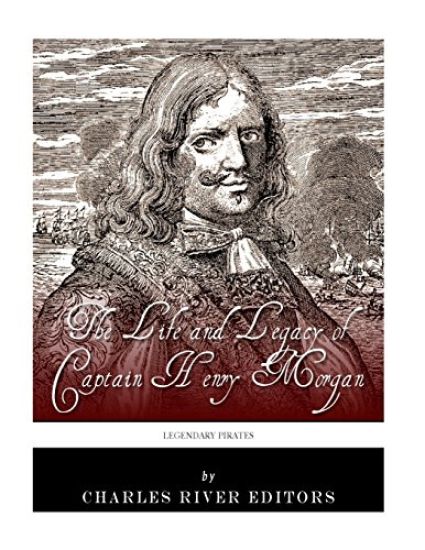
*Includes historic illustrations depicting Morgan and important events in his life. *Includes excerpts from an account of Morgan's piracy written by his ship's surgeon. *Analyzes Morgan's legacy and current efforts to find some of his sunken pirate ships. *Includes a Bibliography for further reading. The people who have lived outside the boundaries of normal societies and refused to play by the rules have long fascinated the world, and nowhere is this more evident than the continuing interest in the pirates of centuries past. As the subjects of books, movies, and even theme park rides, people continue to let their imaginations go when it comes to pirates, with buried treasure, parrots, and walking the plank all ingrained in pop culture's perception of them. Charles River Editors' Legendary Pirates series covers the lives, piracy, legends, myths, and legacies of history's most famous pirates. Although Captain Morgan has become somewhat synonymous with spiced rum in the 21st century, Henry Morgan has been one of the best known pirates and privateers for centuries, long before an alcohol was named after him. The swashbuckling captain, who fought nearly as hard as he drank, has long been a favorite among authors looking to write exciting novels about pirates, beginning with Captain Blood, written by Rafael Savtinin during the late 1800s. John Steinbeck wrote about him in Cup of Gold in 1929, and Berton Braley composed a poem about him, aptly titled This is the ballad of Henry Morgan, a few years later. James Michner devoted a chapter to Morgan in his 1989 hit Caribbean, and he inspired Michael Crichton's character in Pirate Latitudes, Charles Hunter. Of course, few young people reach adulthood without drinking too much Captain Morgan spiced rum at least once in their lives, and most people are instantly familiar with a "Captain and Coke", but Morgan's name is all over the Western hemisphere too. Those who have partied and vacationed in the Caribbean Islands are also familiar with Morgan, and many have stayed at the Hotel Henry Morgan in Honduras or at the Port Morgan resort in Haiti. Some of the wealthiest may have stayed at Captain Morgan's Retreat and Vacation Club in Belize. Even gamers have met Morgan in Sid Meier's Pirates and the Age of Pirates 2. In addition to being one of the most famous pirates, there is more of a historical record about Morgan than most, in no small part due to the fact that Morgan had certain advantages many subsequent pirates did not enjoy. Morgan was a Welshman born into aristocracy, subsequently served in the Royal Navy, and viewed piracy as more of a way to serve his country than it was to line his own pockets (though he did plenty of that too.) As a result, Morgan acted with the approval and support of the Crown, which was only too happy to have Morgan and others sail to the Americas and steal from archenemies like Spain. Morgan would go on to have a daring and lucrative career, engaging in adventurous attacks that were legendary in their own time for their success. Legendary Pirates: The Life and Legacy of Captain Henry Morgan looks at the life and legacy of the famous pirate, attempting to separate fact from fiction. Along with pictures depicting Captain Morgan and important people, places, and events in his life, you will learn about the captain like you never have before, in no time at all.
*Includes pictures of King Henry VIII, Queen Elizabeth I, and important people and events in their lives. Although the last Tudor ruler died over 400 years ago, it still remains England's most famous royal line, and it produced the most famous king and queen in history, both of whom continue to fascinate people around the world today. Over 450 years after his reign, Henry VIII is still the most famous and recognizable King of England, but it's for all the wrong reasons. Though well regarded by contemporaries as a learned king and "one of the most charismatic rulers to sit on the English throne", he is best remembered today for his gluttony and multiple marriages, particularly the gruesome way in which he was widowed on more than one occasion. Naturally, that was the focus of the popular Show Time drama series centered around his life, The Tudors. Henry VIII will probably continue to be best known for beheading some of his wives, most notably Anne Boleyn, so it is somewhat fitting that his most decisive act came as a result of a marital mishap. Sharply at odds with the Catholic Church over his attempt to dissolve his marriage with Catherine of Aragon, Henry VIII ultimately broke with the Church and established the Church of England, which forever both the religious history of England and the social hierarchy of the nation and its empire. When Queen Elizabeth II came to the throne in 1952, many commentators heralded the beginning of her reign as the second Elizabethan age. The first one, of course, concerned the reign of Henry VIII's second surviving daughter and middle surviving child, Queen Elizabeth I, one of England's most famous and influential rulers. It was an age when the arts, commerce and trade flourished. It was the epoch of gallantry and great, enduring literature. It was also an age of wars and military conflicts in which men were the primary drivers and women often were pawns. Elizabeth I changed the rules of the game and indeed she herself was changed by the game. She was a female monarch of England, a kingdom that had unceremoniously broken with the Catholic Church, and the Vatican and the rest of Christendom was baying for her blood. She had had commercial and militaristic enemies galore. In the end, she helped change the entire structure of female leadership. Elizabeth was the last Tudor sovereign, the daughter of the cruel and magnificent King Henry VIII and a granddaughter of the Tudor House's founder, the shrewd Henry VII. Elizabeth, hailed as "Good Queen Bess," "Gloriana" and "The Virgin Queen" to this day in the public firmament, would improve upon Henry VIII's successes and mitigate his failures, and despite her own failings would turn out to "have the heart and stomach of a king, and a king of England too". Indeed, that was the phrase she would utter in describing herself while exhorting her troops to fight for England against the Spanish Armada. The Tudors chronicles the reigns of England's most famous king and queen, but it also humanizes the man who fashioned himself both an athlete and scholar and the woman who ruled one of the world's most powerful kingdoms in an age dominated by men. Along with pictures of important people, places, and events in their lives, you will learn about Henry VIII and Elizabeth I like you never have before, in no time at all.
Across the Shaman's River is the story of one of Alaska's last Native American strongholds, a Tlingit community closed off for a century until a fateful encounter between a shaman, a preacher, and John Muir. Tucked in the corner of Southeast Alaska, the Tlingits had successfully warded off the Anglo influences that had swept into other corners of the territory. This tribe was viewed by European and American outsiders as the last wild tribe and a frustrating impediment to access. Missionaries and prospectors alike had widely failed to bring the Tlingit into their power. Yet, when John Muir arrived in 1879, accompanied by a fiery preacher, it only took a speech about "brotherhood" and some encouragement from the revered local shaman Skandoo'o to finally transform these "hostile heathens." Using Muir's original journal entries, as well as historic writings of explorers juxtaposed with insights from contemporary tribal descendants, Across the Shaman's River reveals how Muir's famous canoe journey changed the course of history and had profound consequences on the region's Native Americans.
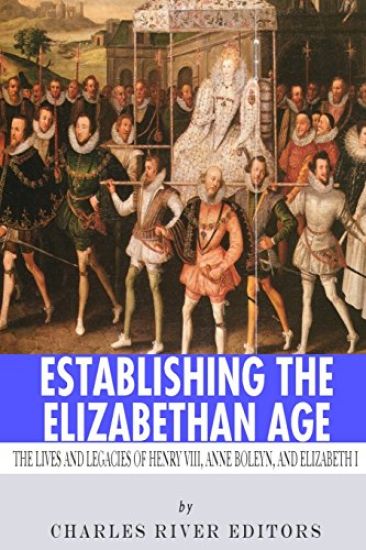
*Includes pictures of Henry, Anne, Elizabeth and important people, places, and events in their lives. *Analyzes their legacies and discusses popular legends about them. *Includes a Bibliography for further reading. Over 450 years after his reign, Henry VIII is still the most famous and recognizable King of England, but it's for all the wrong reasons. Though well regarded by contemporaries as a learned king and "one of the most charismatic rulers to sit on the English throne", he is best remembered today for his gluttony and multiple marriages, particularly the gruesome way in which he was widowed on more than one occasion. Naturally, that was the focus of the popular Showtime drama series centered around his life, The Tudors. Henry VIII will probably continue to be best known for beheading some of his wives, most notably Anne Boleyn, so it is somewhat fitting that his most decisive act came as a result of a marital mishap. Sharply at odds with the Catholic Church over his attempt to dissolve his marriage with Catherine of Aragon, Henry VIII ultimately broke with the Church and established the Church of England, which forever both the religious history of England and the social hierarchy of the nation and its empire. Of Henry's wives, none is more famous than his second, Anne Boleyn, who even today remains both famous and infamous for her personal and political life nearly 400 years after her death. Anne was a vixen and ultimately a victim, but she was also an astute politician, foolish lover and wise woman who could never decide whether to listen to her heart or her head. She was also both an adulteress and religious reformer, and these two qualities would come together to change the face of English Christianity forever. Anne came into the court with a better idea of what she was getting herself into than any other of Henry's queens, but even she could not see foresee how fickle fate would cost her both her love and her life. Like Catherine of Aragon before her, she would be unable to hold on to her wandering husband. However, she would, ironically, be the last of his queens that he'd ever cheat on. Early female mortality and his own failing health would keep him faithful to the women who would follow her as queen, in a way that the teachings of the Church and common decency never would. When Queen Elizabeth II came to the throne in 1652, many commentators heralded the beginning of her reign as the second Elizabethan age. The first one, of course, concerned the reign of Henry VIII's second surviving daughter and middle surviving child, Queen Elizabeth I, one of England's most famous and influential rulers. It was an age when the arts, commerce and trade flourished. It was the epoch of gallantry and great, enduring literature. It was also an age of wars and military conflicts in which men were the primary drivers and women often were pawns. Elizabeth was the last Tudor sovereign, the daughter of the cruel and magnificent King Henry VIII and a granddaughter of the Tudor House's founder, the shrewd Henry VII. Elizabeth, hailed as "Good Queen Bess," "Gloriana" and "The Virgin Queen" to this day in the public firmament, would improve upon Henry VIII's successes and mitigate his failures, and despite her own failings would turn out to "have the heart and stomach of a king, and a king of England too". Indeed, that was the phrase she would utter in describing herself while exhorting her troops to fight for England against the Spanish Armada. Establishing the Elizabethan Age chronicles the lives and legacies of Henry VIII, Anne Boleyn and Elizabeth I, but it also humanizes them and discusses common legends about them. Along with pictures of important people, places, and events in her life, you will learn about Henry, Anne and Elizabeth like you never have before.
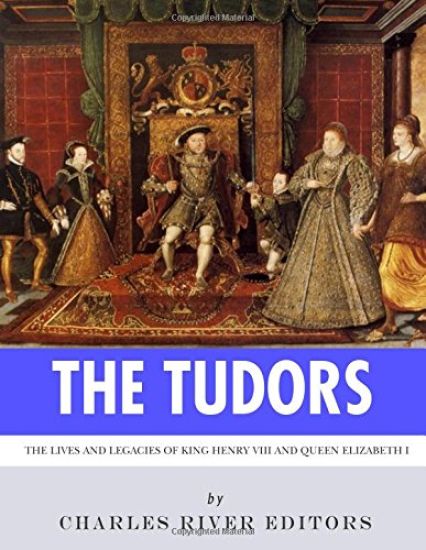
*Includes pictures of King Henry VIII, Queen Elizabeth I, and important people and events in their lives. Although the last Tudor ruler died over 400 years ago, it still remains England's most famous royal line, and it produced the most famous king and queen in history, both of whom continue to fascinate people around the world today. Over 450 years after his reign, Henry VIII is still the most famous and recognizable King of England, but it's for all the wrong reasons. Though well regarded by contemporaries as a learned king and "one of the most charismatic rulers to sit on the English throne", he is best remembered today for his gluttony and multiple marriages, particularly the gruesome way in which he was widowed on more than one occasion. Naturally, that was the focus of the popular Show Time drama series centered around his life, The Tudors. Henry VIII will probably continue to be best known for beheading some of his wives, most notably Anne Boleyn, so it is somewhat fitting that his most decisive act came as a result of a marital mishap. Sharply at odds with the Catholic Church over his attempt to dissolve his marriage with Catherine of Aragon, Henry VIII ultimately broke with the Church and established the Church of England, which forever both the religious history of England and the social hierarchy of the nation and its empire. When Queen Elizabeth II came to the throne in 1952, many commentators heralded the beginning of her reign as the second Elizabethan age. The first one, of course, concerned the reign of Henry VIII's second surviving daughter and middle surviving child, Queen Elizabeth I, one of England's most famous and influential rulers. It was an age when the arts, commerce and trade flourished. It was the epoch of gallantry and great, enduring literature. It was also an age of wars and military conflicts in which men were the primary drivers and women often were pawns. Elizabeth I changed the rules of the game and indeed she herself was changed by the game. She was a female monarch of England, a kingdom that had unceremoniously broken with the Catholic Church, and the Vatican and the rest of Christendom was baying for her blood. She had had commercial and militaristic enemies galore. In the end, she helped change the entire structure of female leadership. Elizabeth was the last Tudor sovereign, the daughter of the cruel and magnificent King Henry VIII and a granddaughter of the Tudor House's founder, the shrewd Henry VII. Elizabeth, hailed as "Good Queen Bess," "Gloriana" and "The Virgin Queen" to this day in the public firmament, would improve upon Henry VIII's successes and mitigate his failures, and despite her own failings would turn out to "have the heart and stomach of a king, and a king of England too". Indeed, that was the phrase she would utter in describing herself while exhorting her troops to fight for England against the Spanish Armada. The Tudors chronicles the reigns of England's most famous king and queen, but it also humanizes the man who fashioned himself both an athlete and scholar and the woman who ruled one of the world's most powerful kingdoms in an age dominated by men. Along with pictures of important people, places, and events in their lives, you will learn about Henry VIII and Elizabeth I like you never have before, in no time at all.
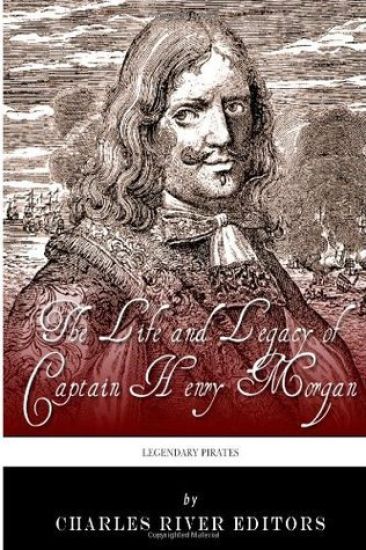
*Includes historic illustrations depicting Morgan and important events in his life. *Includes excerpts from an account of Morgan's piracy written by his ship's surgeon. *Analyzes Morgan's legacy and current efforts to find some of his sunken pirate ships. *Includes a Bibliography for further reading. The people who have lived outside the boundaries of normal societies and refused to play by the rules have long fascinated the world, and nowhere is this more evident than the continuing interest in the pirates of centuries past. As the subjects of books, movies, and even theme park rides, people continue to let their imaginations go when it comes to pirates, with buried treasure, parrots, and walking the plank all ingrained in pop culture's perception of them. Charles River Editors' Legendary Pirates series covers the lives, piracy, legends, myths, and legacies of history's most famous pirates. Although Captain Morgan has become somewhat synonymous with spiced rum in the 21st century, Henry Morgan has been one of the best known pirates and privateers for centuries, long before an alcohol was named after him. The swashbuckling captain, who fought nearly as hard as he drank, has long been a favorite among authors looking to write exciting novels about pirates, beginning with Captain Blood, written by Rafael Savtinin during the late 1800s. John Steinbeck wrote about him in Cup of Gold in 1929, and Berton Braley composed a poem about him, aptly titled This is the ballad of Henry Morgan, a few years later. James Michner devoted a chapter to Morgan in his 1989 hit Caribbean, and he inspired Michael Crichton's character in Pirate Latitudes, Charles Hunter. Of course, few young people reach adulthood without drinking too much Captain Morgan spiced rum at least once in their lives, and most people are instantly familiar with a "Captain and Coke", but Morgan's name is all over the Western hemisphere too. Those who have partied and vacationed in the Caribbean Islands are also familiar with Morgan, and many have stayed at the Hotel Henry Morgan in Honduras or at the Port Morgan resort in Haiti. Some of the wealthiest may have stayed at Captain Morgan's Retreat and Vacation Club in Belize. Even gamers have met Morgan in Sid Meier's Pirates and the Age of Pirates 2. In addition to being one of the most famous pirates, there is more of a historical record about Morgan than most, in no small part due to the fact that Morgan had certain advantages many subsequent pirates did not enjoy. Morgan was a Welshman born into aristocracy, subsequently served in the Royal Navy, and viewed piracy as more of a way to serve his country than it was to line his own pockets (though he did plenty of that too.) As a result, Morgan acted with the approval and support of the Crown, which was only too happy to have Morgan and others sail to the Americas and steal from archenemies like Spain. Morgan would go on to have a daring and lucrative career, engaging in adventurous attacks that were legendary in their own time for their success. Legendary Pirates: The Life and Legacy of Captain Henry Morgan looks at the life and legacy of the famous pirate, attempting to separate fact from fiction. Along with pictures depicting Captain Morgan and important people, places, and events in his life, you will learn about the captain like you never have before, in no time at all.