Kirjojen hintavertailu. Mukana 12 242 609 kirjaa ja 12 kauppaa.

Kirjahaku

Etsi kirjoja tekijän nimen, kirjan nimen tai ISBN:n perusteella.

1000 tulosta hakusanalla Hudson Lin

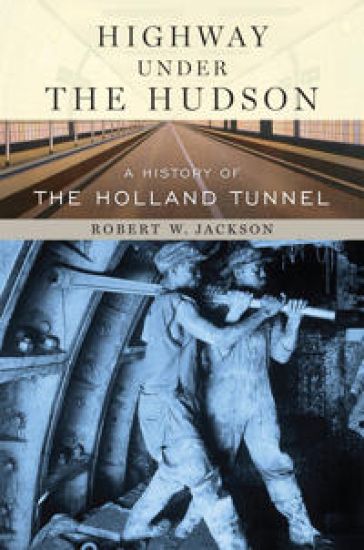
Highway Under the Hudson

Highway Under the Hudson

Robert W. Jackson

New York University Press
2011
sidottu
Choice's Outstanding Academic Title list for 2013 "There is no comparable book on this tunnel. Highly recommended."—Choice Reviews Every year, more than thirty-three million vehicles traverse the Holland Tunnel, making their way to and from Jersey City and Lower Manhattan. From tourists to commuters, many cross the tunnel's 1.6-mile corridor on a daily basis, and yet few know much about this amazing feat of early 20th-century engineering. How was it built, by whom, and at what cost? These and many other questions are answered in Highway Under the Hudson: A History of the Holland Tunnel, Robert W. Jackson's fascinating story about this seminal structure in the history of urban transportation. Jackson explains the economic forces which led to the need for the tunnel, and details the extraordinary political and social politicking that took place on both sides of the Hudson River to finally enable its construction. He also introduces us to important figures in the tunnel's history, such as New Jersey Governor Walter E. Edge, who, more than anyone else, made the dream of a tunnel a reality and George Washington Goethals (builder of the Panama Canal and namesake of the Goethals Bridge), the first chief engineer of the project. Fully illustrated with more than 50 beautiful archival photographs and drawings, Jackson's story of the Holland Tunnel is one of great human drama, with heroes and villains, that illustrates how great things are accomplished, and at what price. Highway Under the Hudson featured in the New York Times Listen to Robert Jackson talk about the book on WAMC Radio
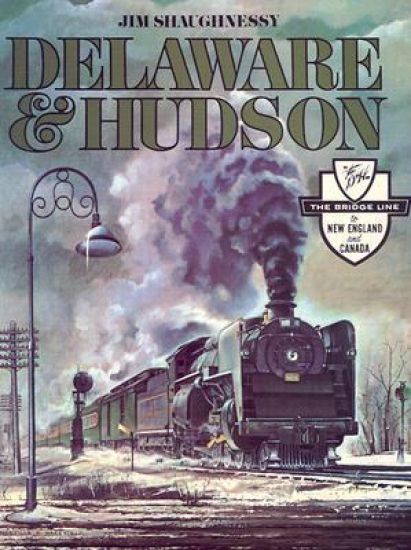
Delaware and Hudson

Delaware and Hudson

Jim Shaughnessy

Syracuse University Press
1997
nidottu
Here, in a pictorial history, Jim Shaughnessy turns an eloquent photographer's eye to the Delaware & Hudson, the line that began in 1823 as a canal system to transport Pennsylvania coal to New York State. The D&H extended from Montreal to the coal fields of northeastern Pennsylvania. It was active for 170 years, when the route was sold in 1993 to the Canadian Pacific Railway Corporation. The line made early railroad fame by importing from England the famous Stourbridge Lion, the first steam locomotive in America. This occurred during a great expansion into gravity, an interesting phase which took advantage of the mountainous terrain.The nineteenth century saw a period of economic growth and amalgamation, which was shaped by extremely able and ambitiou company presidents. Eventually the D&H advertised itself as "the Bridge Line to New England and Canada." Mountainous terrain around the coal mines challenged the line with heavy grades, so it was natural for one of its presidents, L. F. Loree, to be fascinated with experimental traction power. The many Loree locomotives, leaders in progressive design, are pictured and described herein.Because a good railroad history is always an economic history of a region, this book will surely pleasehistorian, too. Delaware & Hudson is a definitive work, encompassing the mining of the region and detailingthe steamboat operations on Lakes George and Champlain. Syracuse University Press is pleased to reissue thisexemplary study of a railroad. Delaware & Hudson has—and will—continue to raise the standards for allfuture railroad books.
Power on the Hudson

Power on the Hudson

Robert Lifset

University of Pittsburgh Press
2014
nidottu
The beauty of the Hudson River Valley was a legendary subject for artists during the nineteenth century. They portrayed its bucolic settings and humans in harmony with nature as the physical manifestation of God’s work on earth. More than a hundred years later, those sentiments would be tested as never before. In the fall of 1962, Consolidated Edison of New York, the nation’s largest utility company, announced plans for the construction of a pumped-storage hydroelectric power plant at Storm King Mountain on the Hudson River, forty miles north of New York City. Over the next eighteen years, their struggle against environmentalists would culminate in the abandonment of the project.Robert D. Lifset offers an original case history of this monumental event in environmental history, when a small group of concerned local residents initiated a landmark case of ecology versus energy production. He follows the progress of this struggle, as Con Ed won approvals and permits early on, but later lost ground to environmentalists who were able to raise questions about the potential damage to the habitat of Hudson River striped bass.Lifset uses the struggle over Storm King to examine how environmentalism changed during the 1960s and 1970s. He also views the financial challenges and increasingly frequent blackouts faced by Con Ed, along with the pressure to produce ever-larger quantities of energy.As Lifset demonstrates, the environmental cause was greatly empowered by the fact that through this struggle, for the first time, environmentalists were able to gain access to the federal courts. The environmental cause was also greatly advanced by adopting scientific evidence of ecological change, combined with mounting public awareness of the environmental consequences of energy production and consumption. These became major factors supporting the case against Con Ed, spawning a range of new local, regional, and national environmental organizations and bequeathing to the Hudson River Valley a vigilant and intense environmental awareness. A new balance of power emerged, and energy companies would now be held to higher standards that protected the environment.
Life Along the Hudson

Life Along the Hudson

Allan Keller

Fordham University Press
1997
sidottu
"This volume is a set of kaleidoscopic impressions of life along the Hudson, from its earliest days to the present," writes Allan Keller in his Preface. Keller's impressions encompass the scope of history, art, and literature, to tell the story of the majestic Hudson River and the life along its banks. The book provides a picture of life along the river at every step of the way, including facts and fables, legends and living realities. It is the story of sloops and steamers, shad fishing and ice cutting, the splendor of the Palisades and the stately homes of the well-born. From Revolutionary battles to the Hudson River School of painting, life along the river through the ages comes to life in Keller's kaleidoscopic view of one of our great national treasures.
Life Along the Hudson

Life Along the Hudson

Allan Keller

Fordham University Press
1997
pokkari
"This volume is a set of kaleidoscopic impressions of life along the Hudson, from its earliest days to the present," writes Allan Keller in his Preface. Keller's impressions encompass the scope of history, art, and literature, to tell the story of the majestic Hudson River and the life along its banks. The book provides a picture of life along the river at every step of the way, including facts and fables, legends and living realities. It is the story of sloops and steamers, shad fishing and ice cutting, the splendor of the Palisades and the stately homes of the well-born. From Revolutionary battles to the Hudson River School of painting, life along the river through the ages comes to life in Keller's kaleidoscopic view of one of our great national treasures.
Railroad Ferries of the Hudson and Stories of a Deck Hand

Railroad Ferries of the Hudson and Stories of a Deck Hand

Raymond J. Baxter; Arthur G. Adams

Fordham University Press
1999
pokkari
Railroad Ferries of the Hudson and the Stories of a Deckhand is a complete business, economic, technical, and social history of the ferryboats that were once operated across the Hudson River to Manhattan from New Jersey and that were owned and operated by various railroad companies in conjunction with their commuter and long-distance passenger trains. The work also covers the Staten Island Ferry (formerly operated by the B&O Railroad) and New York Waterway's present-day revival of services connecting with New Jersey Transit commuter-train services.
Rails Under the Mighty Hudson

Rails Under the Mighty Hudson

Brian J. Cudahy

Fordham University Press
2002
sidottu
Rails Under the Mighty Hudson tells a story that begins in the final years of the nineteenth century and reaches fulfillment in the first decade of the twentieth: namely, the building of rail tunnels under the Hudson River linking New Jersey and New York. These tunnels remain in service today-although one is temporarily out of service since its Manhattan terminal was under the World Trade Center-and are the only rail crossings of the Hudson in the metropolitan area. Two of the tunnels were built by the Hudson and Manhattan Railroad, a company headed by William Gibbs McAdoo, a man who later served as U.S. Secretary of the Treasury and even mounted a campaign for the Democratic presidential nomination at one point. McAdoo's H&M remains in service today as the PATH System of the Port Authority of New York and New Jersey. The other tunnel was opened in 1910 by the Pennsylvania Railroad, led to the magnificent Penn Station on Eighth Avenue and 33rd Street, and remains in daily service today for both Amtrak and New Jersey Transit. The author has updated this new edition with additional photographs, a concluding chapter on recent developments, and a Preface that recounts the last trains of September to the World Trade Center Terminal.
Rails Under the Mighty Hudson

Rails Under the Mighty Hudson

Brian J. Cudahy

Fordham University Press
2002
pokkari
Rails Under the Mighty Hudson tells a story that begins in the final years of the nineteenth century and reaches fulfillment in the first decade of the twentieth: namely, the building of rail tunnels under the Hudson River linking New Jersey and New York. These tunnels remain in service today-although one is temporarily out of service since its Manhattan terminal was under the World Trade Center-and are the only rail crossings of the Hudson in the metropolitan area. Two of the tunnels were built by the Hudson and Manhattan Railroad, a company headed by William Gibbs McAdoo, a man who later served as U.S. Secretary of the Treasury and even mounted a campaign for the Democratic presidential nomination at one point. McAdoo's H&M remains in service today as the PATH System of the Port Authority of New York and New Jersey. The other tunnel was opened in 1910 by the Pennsylvania Railroad, led to the magnificent Penn Station on Eighth Avenue and 33rd Street, and remains in daily service today for both Amtrak and New Jersey Transit. The author has updated this new edition with additional photographs, a concluding chapter on recent developments, and a Preface that recounts the last trains of September to the World Trade Center Terminal.
Left Bank of the Hudson

Left Bank of the Hudson

David J. Goodwin

FORDHAM UNIVERSITY PRESS
2017
sidottu
In the late 1980s, a handful of artists priced out of Manhattan and desperately needing affordable studio space discovered 111 1st Street, a former P. Lorillard Tobacco Company warehouse. Over the next two decades, an eclectic collection of painters, sculptors, musicians, photographers, filmmakers, and writers dreamt and toiled within the building's labyrinthine halls. The local arts scene flourished, igniting hope that Jersey City would emerge as the next grassroots center of the art world. However, a rising real estate market coupled with a provincial political establishment threatened the community at 111 1st Street. The artists found themselves entangled in a long, complicated, and vicious fight for their place in the building and for the physical survival of 111 1st Street itself, a site that held so much potential, so much promise for Jersey City. Left Bank of the Hudson offers a window into the demographic, political, and socio-economic changes experienced by Jersey City during the last thirty years. Documenting the narrative of 111 1st Street as an act of cultural preservation, author David J. Goodwin's well-researched and significant contribution addresses the question of the role of artists in economically improving cities. As a Jersey City resident, Goodwin applies his knowledge of the city's rich history of political malfeasance and corruption, including how auspicious plans for a waterfront arts enclave were repeatedly bungled by a provincial-minded city administration. In writing this story, Goodwin interviewed thirteen artists and residents, two businesses, three government officials, and five non-profits, civic organizations, and community activists. The book chronologically explores the history and business of the P. Lorillard Tobacco Company, its evolution into a bustling arts community, the battle to preserve the warehouse as a historic structure, and the lessons to be drawn from the loss and ultimate demolition of the building in 2007, as well as the present state of the neighborhood. Setting the facts straight for future generations, Left Bank of the Hudson provides an illustrative lesson to government officials, scholars, students, activists, and everyday citizens attempting to navigate the "rediscovery" of American cities.
Left Bank of the Hudson

Left Bank of the Hudson

David J. Goodwin

Fordham University Press
2017
pokkari
In the late 1980s, a handful of artists priced out of Manhattan and desperately needing affordable studio space discovered 111 1st Street, a former P. Lorillard Tobacco Company warehouse. Over the next two decades, an eclectic collection of painters, sculptors, musicians, photographers, filmmakers, and writers dreamt and toiled within the building's labyrinthine halls. The local arts scene flourished, igniting hope that Jersey City would emerge as the next grassroots center of the art world. However, a rising real estate market coupled with a provincial political establishment threatened the community at 111 1st Street. The artists found themselves entangled in a long, complicated, and vicious fight for their place in the building and for the physical survival of 111 1st Street itself, a site that held so much potential, so much promise for Jersey City. Left Bank of the Hudson offers a window into the demographic, political, and socio-economic changes experienced by Jersey City during the last thirty years. Documenting the narrative of 111 1st Street as an act of cultural preservation, author David J. Goodwin's well-researched and significant contribution addresses the question of the role of artists in economically improving cities. As a Jersey City resident, Goodwin applies his knowledge of the city's rich history of political malfeasance and corruption, including how auspicious plans for a waterfront arts enclave were repeatedly bungled by a provincial-minded city administration. In writing this story, Goodwin interviewed thirteen artists and residents, two businesses, three government officials, and five non-profits, civic organizations, and community activists. The book chronologically explores the history and business of the P. Lorillard Tobacco Company, its evolution into a bustling arts community, the battle to preserve the warehouse as a historic structure, and the lessons to be drawn from the loss and ultimate demolition of the building in 2007, as well as the present state of the neighborhood. Setting the facts straight for future generations, Left Bank of the Hudson provides an illustrative lesson to government officials, scholars, students, activists, and everyday citizens attempting to navigate the "rediscovery" of American cities.
Life Along The Hudson

Life Along The Hudson

Pieter Estersohn

Rizzoli International Publications
2018
sidottu
This scenic stretch of estates along the Hudson offers some of the finest examples of American architecture and landscape design. The edition's thirty-five featured homes were designed in a range of styles by notable architects Stanford White, A. J. Davis, Calvert Vaux, Warren and Wetmore, and more. All pair exquisite interiors with expansive lush lawns and riverfront views. Formerly country homes for eighteenth-century landed gentry and nineteenth-century industrialists--Astors, Chanlers, Chapmans, Delanos, Roosevelts--they include Dutch colonial cottages and grand Gothic Revival, Federal, Georgian, and Beaux-Arts residences. Constructed on land owned by the influential Livingston family, who settled in the area in the late seventeenth century, many have been restored to their former splendour by the original owners' descendants as well as recent leaders of New York City industry and the arts, including Richard Jenrette and Brice Marden.
Backroad Bicycling in the Hudson Valley and Catskills

Backroad Bicycling in the Hudson Valley and Catskills

Peter Kick; Dori O'Connell

Countryman Press Inc.
2006
nidottu
Renowned for sprawling rural townships, quaint agricultural villages, and tucked-away mountain hamlets, the Hudson Valley and Catskills regions are idyllic destinations for cycling. From the dramatic Hudson Highlands, through the little towns along the river that Henry Hudson called a great "Arm of the Sea," this guide will introduce you to the both the Hudson's gentler, scenic river routes as well as the hilly back roads of the Catskill, Shawangunk, and Taconic mountain ranges. Intriguing facts about the historical, cultural, and natural gems you'll find along each ride, detailed mile-by-mile directions, and clear maps guide you along you dozens of never-before described bike routes, many of which pass through recently-designated National Heritage Areas.
Eating the Hudson Valley

Eating the Hudson Valley

Evelyn Kanter

Countryman Press Inc.
2006
nidottu
The Hudson Valley has an abundance of top chefs, many of them graduates of the region's world-famous Culinary Institute of America, whose menus showcase fresh ingredients from local farms, wineries, and orchards. Eating the Hudson Valley guides readers to the best fine, casual, and kid-friendly restaurants, wineries, orchards, farm stands, and epicurean festivals, revealing stories about the people behind them, plus the historic sites, mansions, museums, riverfront parks, and family activities along the way.
Walking The Hudson

Walking The Hudson

Cy A Adler

Countryman Press Inc.
2012
nidottu
Cy Adler authored the first complete guide to walking from the southern tip of Manhattan at Battery Park all the way up to Bear Mountain near West Point. With all the new changes to the West Side of Manhattan since that guide was published, Walking the Hudson, the new and fully revised guide to this fabulous route, will be much appreciated by walkers, history buffs, and anyone who wants to experience this great area up close and under their own power. The route is nicely broken into segments of 2–9 miles each so one can walk as little or as much of the route as desired at a time. The average walker can finish the entire route in two to four days.
From the Hudson to the Yalu

From the Hudson to the Yalu

Harry J. Maihafer

Texas A M University Press
1993
sidottu
They entered West Point shortly before the end of World War II. Four years later the class of USMA '49 graduated amid peacetime military cutbacks and national complacency. A year later these young officers were plunged into a cruel and unexpected war and were forced to compensate, by valor and leadership, for the nation's unpreparedness. Some called it a U.N. Police Action, but to the 2nd lieutenants fighting as platoon leaders, forward observers, and jet pilots, it was war to the fullest. Men of '49 served along the Naktong Perimeter, landed at Inchon, flew combat missions against Chinese MiG's, and fought the war of maneuver, and of stalemate, from Pusan to the Yalu. They fought well - some to their death. These are their individual stories, based on the '49ers' own firsthand accounts, of what it was like to enter combat, as one said "green as grass, " and suddenly face life-and-death responsibility for American troops entrusted to their care. It is the story of men such as Sam Coursen, awarded the Medal of Honor for rescuing a wounded comrade at the cost of his own life; of Ranger hero Ralph Puckett, fighting off the initial Chinese onslaught; of D. D. Overton, becoming an ace as he scores his fifth aerial victory; or of Herb Marshburn, dying heroically as he leads men trying to escape a Chinese trap. The author, who went to Korea as an armored officer but wound up leading an infantry platoon, uses his own story as a narrative framework for this chronicle of the Korean War years. He brings the big picture to life by means of vivid stories of that "forgotten war, " told by men who knew it face-to-face at the junior officer level.
Cycling the Hudson and Champlain Valleys

Cycling the Hudson and Champlain Valleys

STATE UNIVERSITY OF NEW YORK PRESS
2022
pokkari
An essential resource for dedicated cyclists planning a trip through the state or casual riders seeking new stretches of trail to enjoy with family and friends. Great for those traveling by foot, boat, or car as well.A guide to 400 miles of adventure and history along the north-south leg of the Empire State Trail. This guidebook is an essential resource for bicycle tourists planning a trip through the state or casual riders seeking new stretches of trail to enjoy with family and friends. Those traveling by foot or by car will also find helpful information. Over 40 full-color maps direct users to the amenities and unique attractions available along the Hudson River Valley Greenway and the Empire State Trail.Readers will find:? Up-to-date trail routing and surface conditions? Comprehensive listings of attractions, historic sites, visitor centers, and public transportation options? Easily accessible lodging, bike shops, parking, and other services? Tips on cycling conditions, travel, and trip preparation