

Kirjahaku
Etsi kirjoja tekijän nimen, kirjan nimen tai ISBN:n perusteella.
1000 tulosta hakusanalla Janel Rodriguez
A proposal for discovering our longitude. By Jane Squire. = Proposition pour la decouverte de notre longitude. ...
Jane Squire
Hutson Street Press
2025
sidottu
The 18th century was a wealth of knowledge, exploration and rapidly growing technology and expanding record-keeping made possible by advances in the printing press. In its determination to preserve the century of revolution, Gale initiated a revolution of its own: digitization of epic proportions to preserve these invaluable works in the largest archive of its kind. Now for the first time these high-quality digital copies of original 18th century manuscripts are available in print, making them highly accessible to libraries, undergraduate students, and independent scholars. Western literary study flows out of eighteenth-century works by Alexander Pope, Daniel Defoe, Henry Fielding, Frances Burney, Denis Diderot, Johann Gottfried Herder, Johann Wolfgang von Goethe, and others. Experience the birth of the modern novel, or compare the development of language using dictionaries and grammar discourses. ++++ The below data was compiled from various identification fields in the bibliographic record of this title. This data is provided as an additional tool in helping to insure edition identification: ++++ British Library T101767 Half-title: 'Gloria in excelsis Deo, et in terra pax hominibus bon ] voluntatis'. Parallel texts in English and French. No text is missing between pp. 64 and 3. Large paper issue. London: printed for the author, and sold by P. Vaillant, and F. Needham, 1742. 4],17, 1],64,3-115, 5]p., plate: ill.; 4 This work has been selected by scholars as being culturally important, and is part of the knowledge base of civilization as we know it. This work was reproduced from the original artifact, and remains as true to the original work as possible. Therefore, you will see the original copyright references, library stamps (as most of these works have been housed in our most important libraries around the world), and other notations in the work. This work is in the public domain in the United States of America, and possibly other nations. Within the United States, you may freely copy and distribute this work, as no entity (individual or corporate) has a copyright on the body of the work. As a reproduction of a historical artifact, this work may contain missing or blurred pages, poor pictures, errant marks, etc. Scholars believe, and we concur, that this work is important enough to be preserved, reproduced, and made generally available to the public. We appreciate your support of the preservation process, and thank you for being an important part of keeping this knowledge alive and relevant.
A proposal for discovering our longitude. By Jane Squire. = Proposition pour la decouverte de notre longitude. ...
Jane Squire
Hutson Street Press
2025
nidottu
The 18th century was a wealth of knowledge, exploration and rapidly growing technology and expanding record-keeping made possible by advances in the printing press. In its determination to preserve the century of revolution, Gale initiated a revolution of its own: digitization of epic proportions to preserve these invaluable works in the largest archive of its kind. Now for the first time these high-quality digital copies of original 18th century manuscripts are available in print, making them highly accessible to libraries, undergraduate students, and independent scholars. Western literary study flows out of eighteenth-century works by Alexander Pope, Daniel Defoe, Henry Fielding, Frances Burney, Denis Diderot, Johann Gottfried Herder, Johann Wolfgang von Goethe, and others. Experience the birth of the modern novel, or compare the development of language using dictionaries and grammar discourses. ++++ The below data was compiled from various identification fields in the bibliographic record of this title. This data is provided as an additional tool in helping to insure edition identification: ++++ British Library T101767 Half-title: 'Gloria in excelsis Deo, et in terra pax hominibus bon ] voluntatis'. Parallel texts in English and French. No text is missing between pp. 64 and 3. Large paper issue. London: printed for the author, and sold by P. Vaillant, and F. Needham, 1742. 4],17, 1],64,3-115, 5]p., plate: ill.; 4 This work has been selected by scholars as being culturally important, and is part of the knowledge base of civilization as we know it. This work was reproduced from the original artifact, and remains as true to the original work as possible. Therefore, you will see the original copyright references, library stamps (as most of these works have been housed in our most important libraries around the world), and other notations in the work. This work is in the public domain in the United States of America, and possibly other nations. Within the United States, you may freely copy and distribute this work, as no entity (individual or corporate) has a copyright on the body of the work. As a reproduction of a historical artifact, this work may contain missing or blurred pages, poor pictures, errant marks, etc. Scholars believe, and we concur, that this work is important enough to be preserved, reproduced, and made generally available to the public. We appreciate your support of the preservation process, and thank you for being an important part of keeping this knowledge alive and relevant.


Jane Austen; Her Homes & Her Friends. Illus. by Ellen G. Hill, and Reproductions in Photogravure, Etc
Hutson Street Press
2025
pokkari
Jane Austen and Critical Theory
Taylor Francis Ltd
2021
sidottu
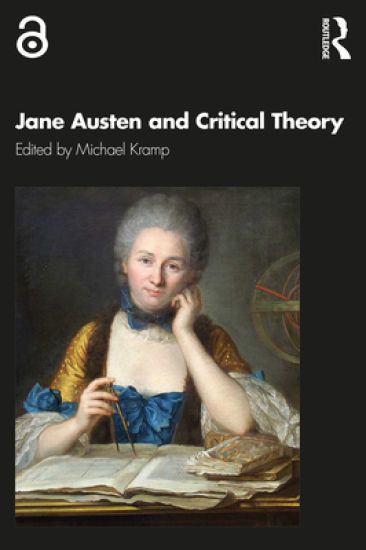
Jane Austen and Critical Theory is a collection of new essays that addresses the absence of critical theory in Austen studies—an absence that has limited the reach of Austen criticism. The collection brings together innovative scholars who ask new and challenging questions about the efficacy of Austen’s work. This volume confronts mythical understandings of Austen as "Dear Aunt Jane," the early twentieth-century legacy of Austen as a cultural salve, and the persistent habit of reading her works for advice or instruction. The authors pursue a diversity of methods, encourage us to build new kinds of relationships to Austen and her writings, and demonstrate how these relationships might generate new ideas and possibilities—ideas and possibilities that promise to expand the ways in which we deploy Austen. The book specifically reminds us of the vital importance of Austen and her fiction for central concerns of the humanities, including the place of the individual within civil society, the potential for new identities and communities, the urgency to address racial and sexual oppression, and the need to imagine more just futures.Chapter 4 of this book is freely available as a downloadable Open Access PDF at http://www.taylorfrancis.com under a Creative Commons Attribution-Non Commercial-No Derivatives (CC-BY-NC-ND) 4.0 license.
Jane Austen and Critical Theory
Taylor Francis Ltd
2021
nidottu
Jane Austen and Critical Theory is a collection of new essays that addresses the absence of critical theory in Austen studies—an absence that has limited the reach of Austen criticism. The collection brings together innovative scholars who ask new and challenging questions about the efficacy of Austen’s work. This volume confronts mythical understandings of Austen as "Dear Aunt Jane," the early twentieth-century legacy of Austen as a cultural salve, and the persistent habit of reading her works for advice or instruction. The authors pursue a diversity of methods, encourage us to build new kinds of relationships to Austen and her writings, and demonstrate how these relationships might generate new ideas and possibilities—ideas and possibilities that promise to expand the ways in which we deploy Austen. The book specifically reminds us of the vital importance of Austen and her fiction for central concerns of the humanities, including the place of the individual within civil society, the potential for new identities and communities, the urgency to address racial and sexual oppression, and the need to imagine more just futures.Chapter 4 of this book is freely available as a downloadable Open Access PDF at http://www.taylorfrancis.com under a Creative Commons Attribution-Non Commercial-No Derivatives (CC-BY-NC-ND) 4.0 license.
Jane Mansbridge
Taylor Francis Ltd
2021
nidottu
Jane Mansbridge’s intellectual career is marked by field-shifting contributions to democratic theory, feminist scholarship, political science methodology, and the empirical study of social movements and direct democracy. Her work has fundamentally challenged existing paradigms in both normative political theory and empirical political science and launched new lines of scholarly inquiry on the most basic questions of the discipline: the sort of equality democracy needs, the goods of political participation, the nature of power, the purposes of deliberation, the forms of political representation, the obstacles to collective action, and the inescapable need for coercion.The editor has focused on work in three key areas:Participation and powerMansbridge’s early work on participatory democracy generated a key insight that has informed all of her subsequent work: the kind of equality we need to legitimate decisions under circumstances of common interests (equal respect) differs from the kind of equality we need when interests conflict (equal power).Deliberation and representationIn the chapters in this section, Mansbridge adds nuance to democratic theory by disaggregating different modes of political representation and explicating the ways in which each can contribute to the deliberative, aggregative and expressive functions of democratic institutions.Legitimate coercionMansbridge exemplifies a collaborative spirit through the practice of deliberative co-authorship, through which she and colleagues construct a taxonomy of procedures that can legitimize enforceable collective decisions.Essential reading for anyone interested in liberal conceptions of equality, participation, representation, deliberation, power and coercion.
Jane Austen and Altruism identifies a compelling theme, namely, the view that Jane Austen propounds a rigorous, boundary-sensitive model of altruism that counters the human propensity to selfishness and promotes the culture of cooperation. In her days, altruism was commonly known as "benevolence", "charity," or "philanthropy", and these concepts overlap with Auguste Comte’s later definition of altruism as "otherism". This volume argues that Austen’s thinking co-opts the evolutionary idea that altruism is seldom truly pure, egoism cannot be eradicated, and boundless group altruism is not sustainable. However, given that she comes from a naval and clergy family, she witnesses the power of wartime patriotism, the Evangelical revival, the Regency culture of politeness, and the sentimental novels. In her novels, she locates human relationships along an altruism continuum that ranges from enlightened selfishness to pathological altruism. Unconditional love is hard to find, but empathy, kin altruism, reciprocal exchange, and group altruism are key to the formation of self-identity, family, community and the nation state.
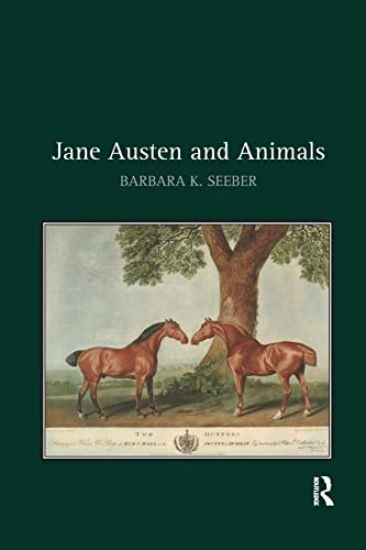
The first full-length study of animals in Jane Austen, Barbara K. Seeber’s book situates the author’s work within the serious debates about human-animal relations that began in the eighteenth century and continued into Austen’s lifetime. Seeber shows that Austen’s writings consistently align the objectification of nature with that of women and that Austen associates the hunting, shooting, racing, and consuming of animals with the domination of women. Austen’s complicated depictions of the use and abuse of nature also challenge postcolonial readings that interpret, for example, Fanny Price’s rejoicing in nature as a celebration of England’s imperial power. In Austen, hunting and the owning of animals are markers of station and a prerogative of power over others, while her representation of the hierarchy of food, where meat occupies top position, is identified with a human-nature dualism that objectifies not only nature, but also the women who are expected to serve food to men. In placing Austen’s texts in the context of animal-rights arguments that arose in the late eighteenth and early nineteenth centuries, Seeber expands our understanding of Austen’s participation in significant societal concerns and makes an important contribution to animal, gender, food, and empire studies in the nineteenth century.
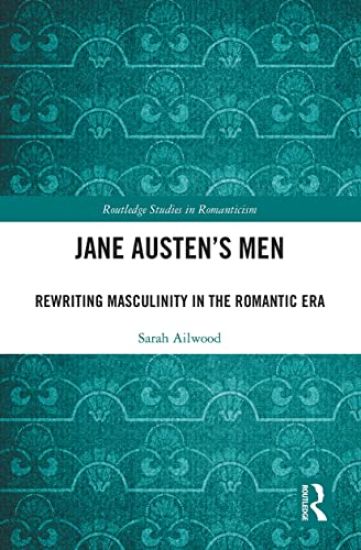
This book illuminates Jane Austen’s exploration of masculinity through the courtship romance genre in the socially, politically and culturally turbulent Romantic era. Austen scrutinises, satirises, censures and ultimately rewrites dominant modes of masculinity through the courtship romance plot between her heroines and male protagonists. This book reveals that Austen pioneers and celebrates a new vision of masculinity that could complement the Romantic desire for agency, individualism and selfhood embodied in her heroines. Rewriting desirable masculinity as an internalised, psychologically complex and authentic gender identity – a model of manhood that drives the ongoing appeal and cultural power of her men in the twenty-first century – Austen explores both the challenges and the opportunities for male selfhood, romantic love and feminine agency.Jane Austen’s Men is among the first full-length works to explore Austen's male protagonists as textual constructions of masculinity. Sarah Ailwood reveals the depth of Austen's engagement with her predecessors and contemporaries, including Mary Wollstonecraft, Jane West and Jane Porter, on critical questions of masculinity and its relationship to femininity and narrative form. This book illuminates in new ways Jane Austen’s ambitions for the novel, and the political power of the courtship romance genre in the Romantic era.