Kirjojen hintavertailu. Mukana 11 717 486 kirjaa ja 12 kauppaa.

Kirjahaku

Etsi kirjoja tekijän nimen, kirjan nimen tai ISBN:n perusteella.

745 tulosta hakusanalla Jitendra Behari

Oral Manifestations of Systemic Diseases

Oral Manifestations of Systemic Diseases

Siddhi Modi; S Gokkulakrishnan; Jitendra Kumar Diwakar

Lap Lambert Academic Publishing
2026
pokkari
The oral cavity often reflects underlying systemic diseases and may present early signs of serious medical conditions. This book provides a comprehensive overview of the oral manifestations associated with a wide range of systemic disorders, including hematological, autoimmune, endocrine, metabolic, gastrointestinal, infectious, and dermatological diseases. Emphasis is placed on the clinical significance of oral lesions as early diagnostic indicators and markers of disease progression. By highlighting the interrelationship between oral and systemic health, this work underscores the essential role of dental professionals in early detection and multidisciplinary patient care. This book serves as a valuable reference for postgraduate students, clinicians, and healthcare professionals seeking to enhance diagnostic accuracy and holistic treatment planning.
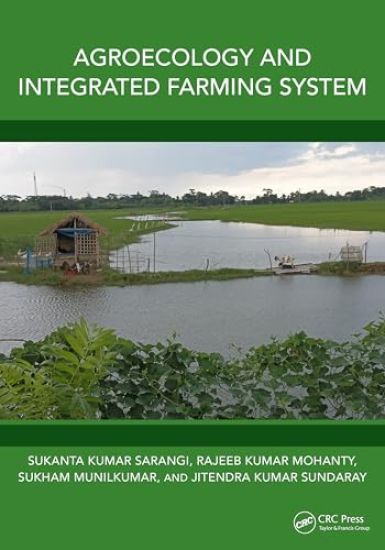
Agroecology and Integrated Farming System

Agroecology and Integrated Farming System

Sukanta Kumar Sarangi; Rajeeb Kumar Mohanty; Sukham Munilkumar; Jitendra Kumar Sundaray

TAYLOR FRANCIS LTD
2025
sidottu
In most developing countries, agriculture has grown from merely an art to a science, but it does not yet maximize its business potential. In these countries, subsistence farming dominates, and farmers face the increasing impact of climate change and natural disasters. An integrated farming system (IFS) model yields minimum risk and maximum environmental benefit. The latest cutting-edge technologies applicable to each component of IFS and the science behind an agro-ecological approach are discussed at length in this book, which takes a holistic approach towards sustainable agricultural production technologies that result in maximum profit for the farming community. Also, it considers practices that care for natural resource bases and leave behind minimal environmental footprints. To keep prepared for climate change and natural disasters, appropriate contingency measures to tackle these unwanted situations are detailed.The book offers comprehensive coverage of the most essential topics, including:Modern technologies, new concepts and innovations such as 3D farming, Integrated System of Rice Intensification (ISRI), hydroponics, rooftop farming and water budgeting.The use of IT for supporting IFS and environmental aspects related to greenhouse gas (GHG) emission.Information on organic farming covering all its aspects, present situation, market-related issues and future options. In-situ input generation procedures that are integral to recycling and their effective reuse.Region-specific IFS models based on soil, climate and farmers' requirements for different agroclimatic situations.IFS management aspects including water harvesting, conservation, increased productivity and drainageLatest information on the socio-economic factors, impacts, government orientations, policy framework towards agriculture and environmental aspects, and the future road map to make IFS a success.This book will serve as a handy reference for academics, researchers, students, progressive farmers and policymakers aiming to make agriculture more resilient, sustainable and eco-friendly.
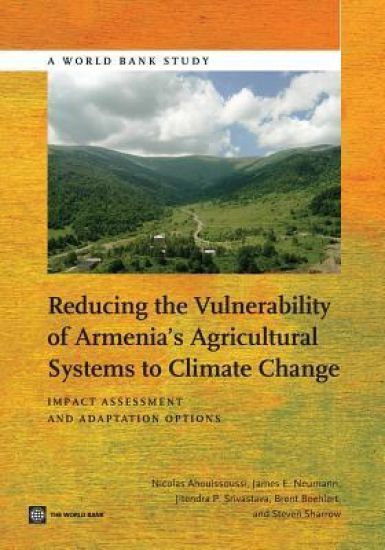
Reducing the Vulnerability of Armenia's Agricultural Systems to Climate Change

Reducing the Vulnerability of Armenia's Agricultural Systems to Climate Change

Nicolas Ahouissoussi; James E. Neumann; Srivastava Jitendra; Brent Boehlert; Steven Sharrow

World Bank Publications
2014
nidottu
Agriculture is one of the most climate-sensitive of all economic sectors. Armenia is one of the many countries where the majority of the rural population depends on agriculture - directly or indirectly - for their livelihood. Further, changes in climate and their impacts on agricultural systems and rural economies are already evident throughout Europe and Central Asia. The risks associated with climate change therefore pose an immediate and fundamental problem in the country.Adaptation measures now in use in Armenia, largely piecemeal efforts, will be insufficient to prevent impacts on agricultural production over the coming decades. As a result, there is growing interest at country and development partner levels to have a better understanding of the exposure, sensitivities, and impacts of climate change at the farm level, and to develop and prioritise adaptation measures to mitigate the adverse consequences. Beginning in 2009, the World Bank embarked on a programme for selected Eastern Europe and Central Asian (ECA) client countries to enhance their ability to mainstream climate change adaptation into agricultural policies, programmes, and investments.This multi-stage effort has included activities to raise awareness of the threat, analyse potential impacts and adaptation responses, and build capacity among client country stakeholders and ECA Bank staff with respect to climate change and the agricultural sector. This study, Reducing the Vulnerability of Armenia's Agricultural Systems to Climate Change, is the culmination of efforts by the Armenian institutions and researchers, the World Bank, and a team of international experts to jointly undertake an analytical study to address potential impacts climate change may have on Armenia's agricultural sector, but, more importantly, to develop a list of prioritised measures to adapt to those impacts.Specifically, this study provides a menu of options for climate change adaptation in the agricultural and water resources sectors, along with specific recommended actions that are tailored to distinct agricultural regions within Armenia. These recommendations reflect the results of three inter-related activities, conducted jointly by the expert team and local partners: 1) quantitative economic modeling of baseline conditions and the effects of certain adaptation options; 2) qualitative analysis conducted by the expert team of agronomists, crop modellers, and water resource experts; and 3) input from a series of participatory workshops for farmers in each of the agricultural regions.
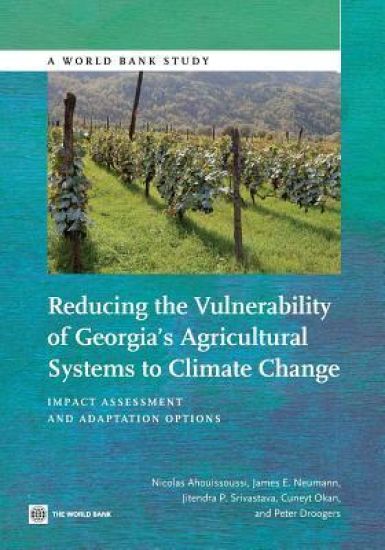
Reducing the Vulnerability of Georgia's Agricultural Systems to Climate Change

Reducing the Vulnerability of Georgia's Agricultural Systems to Climate Change

Nicolas Ahouissoussi; James E. Neumann; Srivastava Jitendra; Cüneyt Okan; Peter Droogers

World Bank Publications
2014
nidottu
Agriculture is one of the most climate-sensitive of all economic sectors. Georgia is one of the many countries where the majority of the rural population depends on agriculture - directly or indirectly - for their livelihood. Further, changes in climate and their impacts on agricultural systems and rural economies are already evident throughout Europe and Central Asia. The risks associated with climate change therefore pose an immediate and fundamental problem in the country.Adaptation measures now in use in Georgia, largely piecemeal efforts, will be insufficient to prevent impacts on agricultural production over the coming decades. As a result, there is growing interest at country and development partner levels to have a better understanding of the exposure, sensitivities, and impacts of climate change at the farm level, and to develop and prioritise adaptation measures to mitigate the adverse consequences. Beginning in 2009, the World Bank embarked on a programme for selected Eastern Europe and Central Asian (ECA) client countries to enhance their ability to mainstream climate change adaptation into agricultural policies, programmes, and investments. This multi-stage effort has included activities to raise awareness of the threat, analyse potential impacts and adaptation responses, and build capacity among client country stakeholders and ECA Bank staff with respect to climate change and the agricultural sector.This study, Reducing the Vulnerability of Georgia's Agricultural Systems to Climate Change, is the culmination of efforts by the Georgian institutions and researchers, the World Bank, and a team of international experts jointly undertake an analytical study to address potential impacts climate change may have on Georgia's agricultural sector, but, more importantly, to develop a list of prioritised measures to adapt to those impacts.Specifically, this study provides a menu of options for climate change adaptation in the agricultural and water resources sectors, along with specific recommended actions that are tailored to distinct agricultural regions within Georgia. These recommendations reflect the results of three inter-related activities, conducted jointly by the expert team and local partners: 1) quantitative economic modelling of baseline conditions and the effects of certain adaptation options; 2) qualitative analysis conducted by the expert team of agronomists, crop modelers, and water resource experts; and 3) input from a series of participatory workshops for farmers in each of the agricultural regions.Reducing the Vulnerability of Georgia's Agricultural Systems to Climate Change is part of the World Bank Studies series. These papers are published to communicate the results of the Bank's ongoing research and to stimulate public discussion. The study is one of three produced under the World Bank programme 'Reducing Vulnerability to Climate Change in European and Central Asian Agricultural Systems'. The other countries included in this series are Armenia and Azerbaijan.
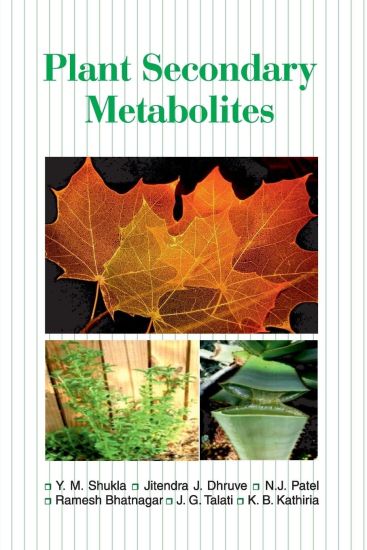
Plant Secondary Metabolities

Plant Secondary Metabolities

Y. M. Shukla; Jitendra J. Dhruve; N.J. Patel; Ramesh Bhatnagar; J. G. Talati; K. B. Kathiria

New India Publishing Agency
2009
nidottu
The book titled Plant Secondary Metabolites is structured into 11 chapters, each with broader headings that encompass an introduction, history, biosynthesis, essential oils/terpenes/terpenoids, alkaloids, glycosides, gums & mucilages oleoresins, plant amines, techniques, and biotechnological approaches.To make the information more accessible and useful for undergraduate and postgraduate students in agriculture, ayurveda, pharmacy, naturopathy, and home sciences, the book includes 45 tables, 60 figures, chemical equations, and color photographs. The aim of the book is to provide a comprehensive and concise source of information for students, researchers, and faculty members in related fields. The book is intended to serve as a valuable resource for individuals seeking to enrich their knowledge of plant secondary metabolites.
Plant Secondary Metabolities

Plant Secondary Metabolities

Y. M. Shukla; Jitendra J. Dhruve; N.J. Patel; Ramesh Bhatnagar; J. G. Talati; K. B. Kathiria

New India Publishing Agency
2009
sidottu
The book Plant Secondary Metabolites is comprised of 11 chapters that cover a range of topics, including an introduction, history, biosynthesis, essential oils, alkaloids, glycosides, and more. The book is designed to provide undergraduate and postgraduate students in agriculture, Ayurveda, pharmacy, naturopathy, and home sciences with a comprehensive understanding of plant secondary metabolites. The book contains 45 tables, 60 figures, chemical equations, and color photographs to aid in the learning process. The goal of the book is to provide a one-stop resource for students, researchers, and faculty members in related fields to access the best available information on plant secondary metabolites.
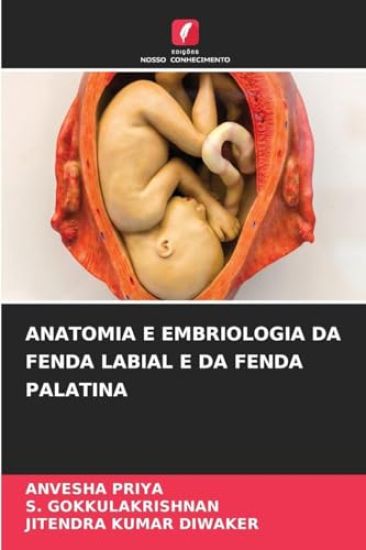
Anatomia E Embriologia Da Fenda Labial E Da Fenda Palatina

Anatomia E Embriologia Da Fenda Labial E Da Fenda Palatina

Anvesha Priya; S. Gokkulakrishnan; Jitendra Kumar Diwaker

Edicoes Nosso Conhecimento
2025
nidottu
As fendas labiais e palatinas (FLP) est o entre as anomalias craniofaciais cong nitas mais comuns, resultando da falha de fus o entre os processos faciais embrion rios durante o desenvolvimento. Estas anomalias afectam significativamente a est tica facial, a fala, a alimenta o e o bem-estar psicossocial, necessitando de uma abordagem de tratamento multidisciplinar. Tamb m explora a gama de tipos de fendas, desde fendas labiais unilaterais e bilaterais a fendas palatinas complexas, e rev os m ltiplos sistemas de classifica o utilizados globalmente para orientar o diagn stico e o planeamento do tratamento. Com a crescente consciencializa o do impacto social e funcional das FLP, este documento defende um diagn stico atempado e uma gest o baseada em provas, fundamentada numa compreens o profunda do desenvolvimento embriol gico.
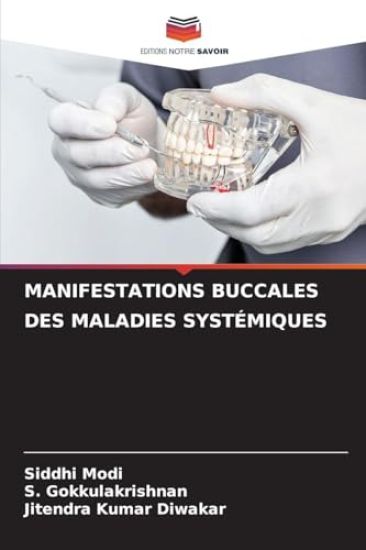
Manifestations Buccales Des Maladies Systémiques

Manifestations Buccales Des Maladies Systémiques

Siddhi Modi; Siddhi Modi; S. Gokkulakrishnan; S Gokkulakrishnan; Jitendra Kumar Diwakar; Jitendra Kumar Diwakar

Editions Notre Savoir
2026
nidottu
La cavit buccale refl te souvent des maladies syst miques sous-jacentes et peut pr senter des signes pr coces de conditions m dicales graves. Ce livre propose une vue d'ensemble compl te des manifestations buccales associ es un large ventail de troubles syst miques, notamment les maladies h matologiques, auto-immunes, endocriniennes, m taboliques, gastro-intestinales, infectieuses et dermatologiques. L'accent est mis sur la signification clinique des l sions buccales en tant qu'indicateurs diagnostiques pr coces et marqueurs de la progression de la maladie. En soulignant l'interrelation entre la sant buccale et syst mique, ce travail souligne le r le essentiel des professionnels de la m decine dentaire dans la d tection pr coce et les soins multidisciplinaires aux patients. Ce livre constitue une r f rence pr cieuse pour les tudiants de troisi me cycle, les cliniciens et les professionnels de la sant cherchant am liorer la pr cision du diagnostic et la planification holistique du traitement.
Conceptual Design and Shape Optimization of a Pintle Nozzle

Conceptual Design and Shape Optimization of a Pintle Nozzle

Jithendra Sai Raja Chada; Phani Bhaskar Anusuri; B S V Ramarao

Scholars' Press
2020
pokkari
The nozzle is usually applied to accelerate and expand or compress the fluid. It is generally used to control the rate of flow, velocity, and pressure. The shape of the nozzle also plays a vital role in the process. Simply a nozzle is a tool that extracts the entering fluid which may be a gas or a liquid and rises its velocity. A nozzle can be a channel or canal or tube or pipe that helps in modifying the speed of the stream of fluid. We have convergent and divergent or both convergent-divergent types of nozzles. Ans also the varying cross-sections of the area of the nozzles affect the speed of the fluid. That means when the area of the nozzle is reduced the rate of nozzle fluid raises and in the same way as the area of the nozzle is raised or increased then the rate of nozzle fluid is reduced. The paper concentrate on the study of flow in nozzles. And the application of the nozzles for different shapes of pintle to increase the performance of propulsion.
Study of Flow in Different Elbow Draft Tubes by Using CFD

Study of Flow in Different Elbow Draft Tubes by Using CFD

Jithendra Sai Raja Chada; Sri Ram Deepak Akella; B S V Ramarao

SCHOLARS' PRESS
2021
pokkari
The elbow pipe is a common and essential component in terms of the transmission of fluid, be it a working fluid or a non - working fluid. The purpose of the presented work is to conceptualize an optimal design of an elbow pipe with suitable modifications, to contribute to higher rates of velocities. The base elbow pipe geometry is modified with draft tube of different shapes namely square, ellipse and circular. The modified geometries are simulated, evaluated, and compared to the base pipe geometry in terms of the velocity and pressure lineation using the SOLIDWORKS software. The results depicted ideal values for model M3 with a draft tube of ellipse shape at an inlet mass flow rate of 1.8Kg/s. The results when compared to the linear regression analysis generated, were found to be in an appreciable correlation with each other.
Study on a Concentric Tube Heat Exchanger with Helical Baffle

Study on a Concentric Tube Heat Exchanger with Helical Baffle

Jithendra Sai Raja Chada; Dharmalingam R

SCHOLARS' PRESS
2021
pokkari
Heat exchangers are the most common equipment used to transfer heat from high-temperature fluid to low-temperature fluid without direct contact. The present study considers the analytical approach on a concentric tube heat exchanger with the helical baffle. The objective of the study is to reduce the size with effect to increase the effectiveness of the heat exchanger. A heat exchanger with 100mm external diameter and 560mm length contains a helical baffle with 20 - degrees inclination. The designed heat exchanger is analyzed by varying the mass flow rate of hot water from 0.25Kg/s to 2Kg/s at an interval of 0.25kg/s at three different temperatures i.e. 363.16K, 368.16K, 373.16K. A nanofluid is applied to cool the hot water without any loss. The mass flow rate of cold fluid is 2Kg/s at 30 degrees Celsius. The results have displayed that the heat exchanger exhibited appreciable effectiveness at a flow rate of 0.25Kg/s for hot water at 373.16K temperature. Thereby suggesting it as the optimum model of the heat exchanger.