Kirjojen hintavertailu. Mukana 12 595 353 kirjaa ja 12 kauppaa.

Kirjahaku

Etsi kirjoja tekijän nimen, kirjan nimen tai ISBN:n perusteella.

1000 tulosta hakusanalla John Carson

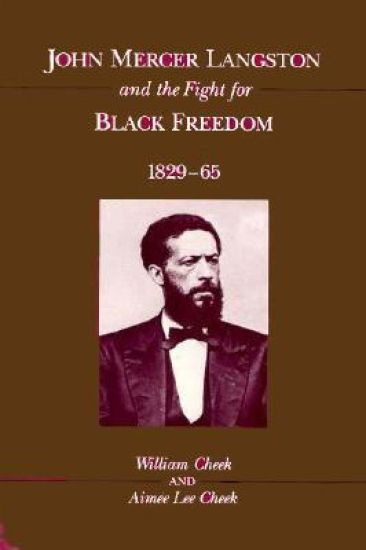
John Mercer Langston and the Fight for Black Freedom, 1829-65

John Mercer Langston and the Fight for Black Freedom, 1829-65

William Cheek; Aimee Lee Cheek

University of Illinois Press
1996
nidottu
A biography of the pioneering Black leader Privileged beyond other members of his race, yet sharing their disadvantages, the young John Mercer Langston stood in an uncertain position in the years before the Civil War. His confrontation with a critical personal question was tempered by a crucial national reality: from what sources could he derive his model of manhood and human dignity? This book explores John Mercer Langston's decisions to work out his destiny through the resources and fortunes of the northern black community. Although Langston, who died in 1897, was a black Politician, orator, lawyer, intellectual, diplomat, and congressman, he has never before been accorded fullscale biographical treatment. Born free on a Virginia plantation, Langston graduated from Oberlin College in 1849, gained admission to the Ohio bar, and by the age of twenty-five, became the first black American to hold elective office. Still in the years of his political apprenticeship, he promoted black civil rights, helped shape the nascent Republican party, aided in the Oberlin-Wellington Rescue and John Brown's raid, and recruited black soldier for the Union cause. In 1864 he became the first president of the National Equal Rights League. From an extensive search of primary sources, the authors construct a richly textured picture of the beginnings of Langston's career as a national black leader. More than a biography, the work also incorporates social and political history. Embedded firmly in a study of northern black community life and activism, it reveals the degree to which Langston and his cohorts set the terms of the fight for freedom and citizenship.
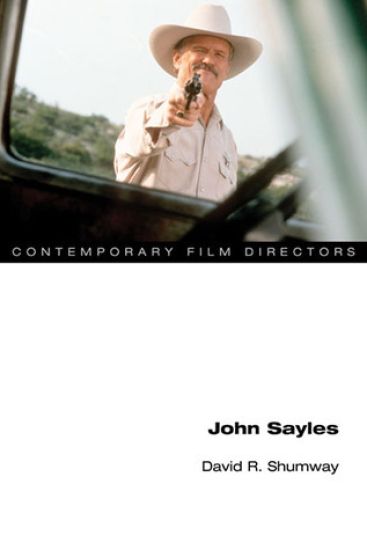
John Sayles

John Sayles

David R. Shumway

University of Illinois Press
2012
nidottu
John Sayles is the very paradigm of the contemporary independent filmmaker. By raising much of the funding for his films himself, Sayles functions more independently than most directors, and he has used his freedom to write and produce films with a distinctive personal style and often clearly expressed political positions. From The Return of the Secaucus Seven to Sunshine State, his films have consistently expressed progressive political positions on issues including race, gender, sexuality, class, and disability. In this study, David R. Shumway examines the defining characteristic of Sayles's cinema: its realism. Positing the filmmaker as a critical realist, Shumway explores Sayles's attention to narrative in critically acclaimed and popular films such as Matewan, Eight Men Out, Passion Fish, and Lone Star. The study also details the conditions under which Sayles's films have been produced, distributed, and exhibited, affecting the way in which these films have been understood and appreciated. In the process, Shumway presents Sayles as a teacher who tells historically accurate stories that invite audiences to consider the human world they all inhabit.
John Brunner

John Brunner

Jad Smith

University of Illinois Press
2013
nidottu
Under his own name and numerous pseudonyms, John Brunner (1934–1995) was one of the most prolific and influential science fiction authors of the late twentieth century. During his exemplary career, the British author wrote with a stamina matched by only a few other great science fiction writers and with a literary quality of even fewer, importing modernist techniques into his novels and stories and probing every major theme of his generation: robotics, racism, drugs, space exploration, technological warfare, and ecology. In this first intensive review of Brunner's life and works, Jad Smith carefully demonstrates how Brunner's much-neglected early fiction laid the foundation for his classic Stand on Zanzibar and other major works such as The Jagged Orbit, The Sheep Look Up, and The Shockwave Rider. Making extensive use of Brunner's letters, columns, speeches, and interviews published in fanzines, Smith approaches Brunner in the context of markets and trends that affected many writers of the time, including Brunner's uneasy association with the "New Wave" of science fiction in the 1960s and '70s. This landmark study shows how Brunner's attempts to cross-fertilize the American pulp tradition with British scientific romance complicated the distinctions between genre and mainstream fiction and between hard and soft science fiction and helped carve out space for emerging modes such as cyberpunk, slipstream, and biopunk.
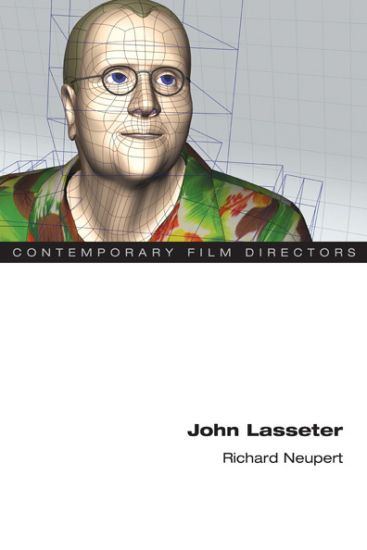
John Lasseter

John Lasseter

Richard Neupert

University of Illinois Press
2016
nidottu
Celebrated as Pixar's "Chief Creative Officer," John Lasseter is a revolutionary figure in animation history and one of today's most important filmmakers. Lasseter films from Luxo Jr. to Toy Story and Cars 2 highlighted his gift for creating emotionally engaging characters. At the same time, they helped launch computer animation as a viable commercial medium and serve as blueprints for the genre's still-expanding commercial and artistic development. Richard Neupert explores Lasseter's signature aesthetic and storytelling strategies and details how he became the architect of Pixar's studio style. Neupert contends that Lasseter's accomplishments emerged from a unique blend of technical skill and artistic vision, as well as a passion for working with collaborators. In addition, Neupert traces the director's career arc from the time Lasseter joined Pixar in 1984. As Neupert shows, Lasseter's ability to keep a foot in both animation and CGI allowed him to thrive in an unconventional corporate culture that valued creative interaction between colleagues. The ideas that emerged built an animation studio that updated and refined classical Hollywood storytelling practices--and changed commercial animation forever.
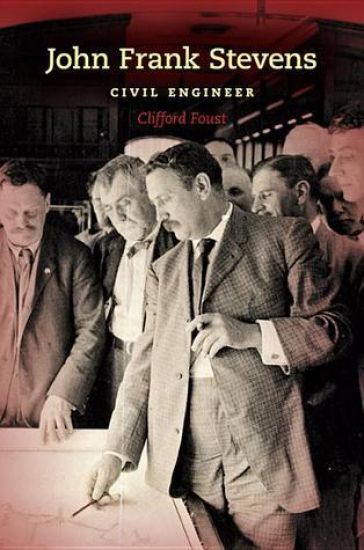
John Frank Stevens

John Frank Stevens

Clifford Foust

Indiana University Press
2013
sidottu
One of America's foremost civil engineers of the past 150 years, John Frank Stevens was a railway reconnaissance and location engineer whose reputation was made on the Canadian Pacific and Great Northern lines. Self-taught and driven by a bulldog tenacity of purpose, he was hired by Theodore Roosevelt as chief engineer of the Panama Canal, creating a technical achievement far ahead of its time. Stevens also served for more than five years as the head of the US Advisory Commission of Railway Experts to Russia and as a consultant who contributed to many engineering feats, including the control of the Mississippi River after the disastrous floods of 1927 and construction of the Boulder (Hoover) Dam. Drawing on Stevens's surviving personal papers and materials from projects with which he was associated, Clifford Foust offers an illuminating look into the life of an accomplished civil engineer.
The Variorum Edition of the Poetry of John Donne, Volume 3
Based on an exhaustive study of the manuscripts and printed editions in which these poems have appeared, the fifth volume in the series of The Variorum Edition of the Poetry of John Donne presents newly edited critical texts of the five canonical satires and "Metempsychosis" and details the genealogical history of each accompanied by a thorough prose discussion. The analysis contained in the volume shows that Donne revised each of the poems and explains how readings from the competing versions were intermingled in the early editions and transmitted to subsequent generations. The volume also presents a comprehensive organized digest of the critical-scholarly commentary on these poems from Donne's time through 2001.
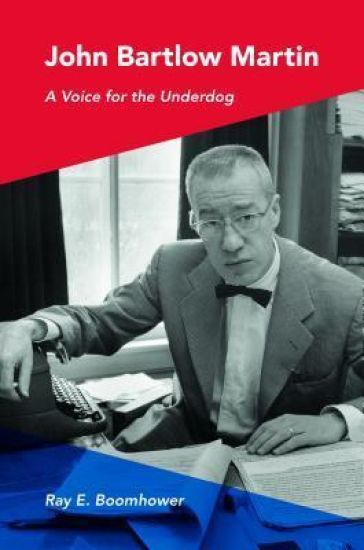
John Bartlow Martin

John Bartlow Martin

Ray E. Boomhower

Indiana University Press
2015
sidottu
During the 1940s and 1950s, one name, John Bartlow Martin, dominated the pages of the "big slicks," the Saturday Evening Post, LIFE, Harper's, Look, and Collier's. A former reporter for the Indianapolis Times, Martin was one of a handful of freelance writers able to survive solely on this writing. Over a career that spanned nearly fifty years, his peers lauded him as "the best living reporter," the "ablest crime reporter in America," and "one of America's premier seekers of fact." His deep and abiding concern for the working class, perhaps a result of his upbringing, set him apart from other reporters. Martin was a key speechwriter and adviser to the presidential campaigns of many prominent Democrats from 1950 into the 1970s, including those of Adlai Stevenson, John F. Kennedy, Lyndon B. Johnson, Robert F. Kennedy, Hubert Humphrey, and George McGovern. He served as U.S. ambassador to the Dominican Republic during the Kennedy administration and earned a small measure of fame when FCC Chairman Newton Minow introduced his description of television as "a vast wasteland" into the nation's vocabulary.
John W. Barriger III

John W. Barriger III

H. Roger Grant

Indiana University Press
2018
sidottu
In John W. Barriger III: Railroad Legend, historian H. Roger Grant details the fascinating life and impact of a transportation tycoon and "doctor of sick railroads." After graduating from the Massachusetts Institute of Technology, John W. Barriger III (1899–1976) started his career on the Pennsylvania Railroad as a rodman, shop hand, and then assistant yardmaster. His enthusiasm, tenacity, and lifelong passion for the industry propelled him professionally, culminating in leadership roles at Monon Railroad, Pittsburgh and Lake Erie Railroad, Missouri-Kansas-Texas Railroad and the Boston and Maine Railroad. His legendary capability to save railroad corporations in peril earned him the nickname "doctor of sick railroads," and his impact was also felt far from the train tracks, as he successfully guided New Deal relief efforts for the Railroad Division of the Reconstruction Finance Corporation during the Depression and served in the Office of Defense Transportation during World War II. Featuring numerous personal photographs and interviews, John W. Barriger III is an intimate account of a railroad magnate and his role in transforming the transportation industry.
The Variorum Edition of the Poetry of John Donne, Volume 4.1
This book presents a comprehensive digest of general and topical commentary on John Donne's Songs and Sonets from the early 17th century through 1999. Arranged chronologically within sections, the material in the present volume is organized under the following chapter headings: General Commentary; Autobiography and Persona; Critical Reception; Dating, Publication History, and Manuscript Tradition; Donne's Originality: Praise and Blame; Dramatic Elements; T. S. Eliot; Imagery; Language and Rhetoric; Love and Sexual Imagery; Mannerism and Baroque; Medievalism; Paradox; Petrarchism; Platonism; Psychological Analysis; Religion; Science and the New Learning; Versification; Wit and Metaphysical Conceit; Women. This book was begun under the direction of Albert C. Labriola, who served as the Volume Commentary Editor until his death in March 2009. Completed by his students and colleagues with the Variorum project, the volume is dedicated to Professor Labriola's memory.
The Variorum Edition of the Poetry of John Donne, Volume 5
Volume 5 of The Variorum Edition of the Poetry of John Donne (Verse Letters) provides the most authoritative texts of the poems that Donne wrote in this genre. It includes complete textual introductions and apparatuses for each of the 42 poems in the volume. In addition, the volume contains comprehensive summaries, along with notes and glosses, of everything written on these poems from Donne's time through 2013.
The Variorum Edition of the Poetry of John Donne, Volume 7.1
Praise for previous volumes:"This variorum edition will be the basis of all future Donne scholarship." —ChroniqueThis is the 4th volume of The Variorum Edition of the Poetry of John Donne to appear. This volume presents a newly edited critical text of the Holy Sonnets and a comprehensive digest of the critical-scholarly commentary on them from Donne's time through 1995. The editors identify and print both an earlier and a revised authorial sequence of sonnets, as well as presenting the scribal collection—which contains unique authorial versions of several of the sonnets—inscribed by Donne's friend Rowland Woodward in the Westmoreland manuscript.
The Variorum Edition of the Poetry of John Donne

The Variorum Edition of the Poetry of John Donne

John Donne

Indiana University Press
2021
sidottu
Based on an exhaustive study of the manuscripts and printed editions in which these poems have appeared, the eighth in the series of The Variorum Edition of the Poetry of John Donne presents newly edited critical texts of thirteen Divine Poems and details the genealogical history of each poem, accompanied by a thorough prose discussion. Arranged chronologically within sections, the material is organized under the following headings: Dates and Circumstances; General Commentary; Genre; Language, Versification, and Style; the Poet/Persona; and Themes. The volume also offers a comprehensive digest of general and topical commentary on the Divine Poems from Donne's time through 2012.
The Variorum Edition of the Poetry of John Donne, Volume 4.3
This tenth, and final, volume in the series of The Variorum Edition of the Poetry of John Donne presents newly edited critical texts of 32 love lyrics. Based on an exhaustive study of the manuscripts and printed editions in which these poems have appeared, Volume 4.3 details the genealogical history of each poem, accompanied by a thorough prose discussion. The volume also presents a comprehensive digest of the commentary on these Songs and Sonets from Donne's time through 1999. Arranged chronologically within sections, the material for each poem is organized under various headings that complement the volume's companions, Volume 4.1 and Volume 4.2.
The Variorum Edition of the Poetry of John Donne, Volume 4.2
This volume, the ninth in the series of The Variorum Edition of the Poetry of John Donne, presents newly edited critical texts of 25 love lyrics. Based on an exhaustive study of the manuscripts and printed editions in which these poems have appeared, Volume 4.2 details the genealogical history of each poem, accompanied by a thorough prose discussion, as well as a General Textual Introduction of the Songs and Sonets collectively. The volume also presents a comprehensive digest of the commentary on these Songs and Sonets from Donne's time through 1999. Arranged chronologically within sections, the material for each poem is organized under various headings that complement the volume's companions, Volume 4.1 and Volume 4.3.
John Dewey's Pragmatic Technology

John Dewey's Pragmatic Technology

Larry A. Hickman

Indiana University Press
1990
pokkari
" . . . a comprehensive canvass of Dewey's logic, metaphysics, aesthetics, philosophy of history, and social thought." —Choice " . . . a major addition to the recent accumulation of in-depth studies of Dewey." —Journal of Speculative Philosophy "Larry Hickman has done an exemplary job in demonstrating the relevance of John Dewey's philosophy to modern-day discussions of technology." —Ethics
John Ford Made Westerns

John Ford Made Westerns

Indiana University Press
2001
pokkari
Fresh perspectives on some of the most influential films of John Ford. The Western is arguably the most popular and enduring form in cinematic history, and the acknowledged master of that genre was John Ford. His Westerns, including The Searchers, Stagecoach, and The Man Who Shot Liberty Valance, have had an enormous influence on contemporary U.S. films, from Star Wars to Taxi Driver. In John Ford Made Westerns, nine major essays by prominent scholars of Hollywood film situate the sound-era Westerns of John Ford within contemporary critical contexts and regard them from fresh perspectives. These range from examining Ford's relation to other art forms (most notably literature, painting, and music) to exploring the development of the director's reputation as a director of Westerns. While giving attention to film style and structure, the volume also treats the ways in which these much-loved films engage with notions of masculinity and gender roles, capitalism and community, as well as racial, sexual, and national identity. Contributors include Charles Ramirez Berg, Matthew Bernstein, Edward Buscombe, Joan Dagle, Barry Keith Grant, Kathryn Kalinak, Peter Lehman, Charles J. Maland, Gaylyn Studlar, and Robin Wood. Contents Part I Introduction, Gaylyn Studlar & Matthew Bernstein "'Shall We Gather at the River?': The Late Films of John Ford," Robin Wood "Sacred Duties, Poetic Passions: John Ford and Issue of Femininity in the Western," Gaylyn Studlar "The Margin as Center: The Multicultural Dynamics of John Ford's Westerns," Charles Ramirez Berg "Linear Patterns and Ethnic Encounters in the Ford Western," Joan Dagle "How the West Wasn't Won: the Repression of Capitalism in John Ford's Westerns," Peter Lehman "Painting the Legend: Frederic Remington and the Western," Edward Buscombe "'The Sound of Many Voices': Music in John Ford's Westerns," Kathryn Kalinak "John Ford and James Fenimore Cooper: Two Rode Together," Barry Keith Grant "From Aesthete to Pappy: The Evolution of John Ford's Public Reputation," Charles J. Maland Part II—Dossier Emanuel Eisenberg, "John Ford: Fighting Irish," New Theater, April 1936 Frank S. Nugent, "Hollywood's Favorite Rebel," Saturday Evening Post, July 23, 1949 John Ford, "John Wayne—My Pal," Hollywood, no. 237 (March 17, 1951), translated from the Italian by Gloria Monti Bill Libby, "The Old Wrangler Rides Again," Cosmopolitan, March 1964 "About John Ford," Action 8.8 (Nov.-Dec. 1973)
John Dewey and Moral Imagination

John Dewey and Moral Imagination

Steven Fesmire

Indiana University Press
2003
pokkari
While examining the important role of imagination in making moral judgments, John Dewey and Moral Imagination focuses new attention on the relationship between American pragmatism and ethics. Steven Fesmire takes up threads of Dewey's thought that have been largely unexplored and elaborates pragmatism's distinctive contribution to understandings of moral experience, inquiry, and judgment. Building on two Deweyan notions—that moral character, belief, and reasoning are part of a social and historical context and that moral deliberation is an imaginative, dramatic rehearsal of possibilities—Fesmire shows that moral imagination can be conceived as a process of aesthetic perception and artistic creativity. Fesmire's original readings of Dewey shed new light on the imaginative process, human emotional make-up and expression, and the nature of moral judgment. This original book presents a robust and distinctly pragmatic approach to ethics, politics, moral education, and moral conduct.
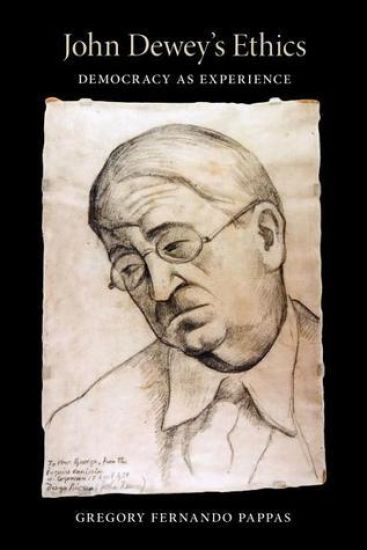
John Dewey's Ethics

John Dewey's Ethics

Gregory Pappas

Indiana University Press
2008
pokkari
John Dewey, widely known as "America's philosopher," provided important insights into education and political philosophy, but surprisingly never set down a complete moral or ethical philosophy. Gregory Fernando Pappas presents the first systematic and comprehensive treatment of Dewey's ethics. By providing a pluralistic account of moral life that is both unified and coherent, Pappas considers ethics to be key to an understanding of Dewey's other philosophical insights, especially his views on democracy. Pappas unfolds Dewey's ethical vision by looking carefully at the virtues and values of ideal character and community. Showing that Dewey's ethics are compatible with the rest of his philosophy, Pappas corrects the reputation of American pragmatism as a philosophy committed to skepticism and relativism. Readers will find a robust and boldly detailed view of Dewey's ethics in this groundbreaking book.
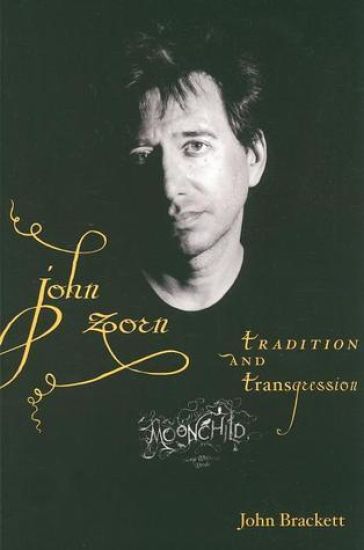
John Zorn

John Zorn

John Brackett

Indiana University Press
2008
pokkari
John Zorn is one of the most prolific and active American composers/performers working today. He has been a fixture of New York's "Downtown Scene" since the mid-70s as a tireless proponent of avant-garde and experimental music. Despite the acclaim and respect he has achieved in America and abroad, very little attention has been paid to Zorn by musicologists or music theorists. Author John Brackett suggests that the reason for the relative paucity of writing on Zorn's music and musical thought has to do with the difficulties and challenges they present both for listeners and scholars. Zorn's musical language—an amalgam of seemingly incongruous techniques, sounds, styles, and genres—creates complex and sometimes confusing listening experiences that are difficult to categorize in terms of overarching thematic or narrative design. Brackett offers a number of perspectives for understanding Zorn's music and musical practices, while challenging certain assumptions that limit the ways in which contemporary music is typically addressed.
The Variorum Edition of the Poetry of John Donne, Volume 6
"The appearance of the first volume . . . is an occasion for celebration. Among the most ambitious and valuable collaborative scholarly enterprises at the end of the twentieth century . . . " —Claude J. Summers, Early Modern Literary Studies " . . . especially valuable for its wide-ranging and reliable summaries of textual and critical commentary on these works . . . This variorum edition will be the basis of all future Donne scholarship." —Bibliotèque d'Humanisme et Renaissance " . . . the most important collaborative project in 17th-century studies in recent history . . . " —Seventeenth-Century News A major editorial and interpretive undertaking, this edition includes a newly edited critical text based on exhaustive study of all known manuscripts and significant printed editions of Donne's poetry and a complete digest of critical and scholarly commentary on the poetry from Donne's time to the present.