Kirjojen hintavertailu. Mukana 11 717 486 kirjaa ja 12 kauppaa.

Kirjahaku

Etsi kirjoja tekijän nimen, kirjan nimen tai ISBN:n perusteella.

1000 tulosta hakusanalla Jon B. Fish

Playing at the World, 2E, Volume 2

Playing at the World, 2E, Volume 2

Jon Peterson

MIT PRESS LTD
2025
nidottu
The second volume of two in a new, updated edition of the 2012 book Playing at the World, which charts the vast and complex history of role-playing games. This new edition of Playing at the World is the second of two volumes that update the 720-page original tome of the same name from 2012. This second volume is The Three Pillars of Role-Playing Games, a deep dive into the history of the setting, system, and characters of D&D--the three pillars indicated by the volume's title. (The first volume of the new edition is The Invention of Dungeons & Dragons, which explores the publication and reception of that iconic game.) In this second volume, Jon Peterson covers the medieval fantasy setting--the first pillar--and addresses why the first role-playing game evolved around fantasy and medieval settings as opposed to some other historical setting. In the second pillar, the author explores how the rules of wargames, from their roots in chess variants from eighteenth-century Germany, developed into those of role-playing games. Finally, the third pillar focuses on character, perhaps the most elusive of the three pillars, and investigates how precedents governed the introduction of characters to games more so than the original D&D rule books. Filled with unparalleled archival research (from obscure fanzines to letters, drafts, and other ephemera), this new edition of Playing at the World is the ultimate geek's guide to the original RPG. As such, it is an indispensable resource for academics and game fans exploring the origins of the hobby.
Darwinism and the Divine in America

Darwinism and the Divine in America

Jon H. Roberts

University of Notre Dame Press
2001
nidottu
Originally published in 1988, Jon Roberts's book provided the first comprehensive analytical overview of public dialogue among nineteenth-century American Protestant intellectuals who struggled with the theory of organic evolution. Before the publication of Darwin's Origin of Species in 1859, most American Protestant intellectuals valued science, especially natural history, for supplying data that appeared to be invaluable for defending many major tenets of the Christian worldview. Arguments over the scientific merits of Darwin's theory gave way to discussions of its theological implications. Roberts's book reconstructs the course of that conversation from 1875 to 1900.
Darwinism and the Divine in America

Darwinism and the Divine in America

Jon H. Roberts

University of Notre Dame Press
2001
sidottu
Originally published in 1988, Jon Roberts's book provided the first comprehensive analytical overview of public dialogue among nineteenth-century American Protestant intellectuals who struggled with the theory of organic evolution. Before the publication of Darwin's Origin of Species in 1859, most American Protestant intellectuals valued science, especially natural history, for supplying data that appeared to be invaluable for defending many major tenets of the Christian worldview. Arguments over the scientific merits of Darwin's theory gave way to discussions of its theological implications. Roberts's book reconstructs the course of that conversation from 1875 to 1900.
Intervention and Underdevelopment

Intervention and Underdevelopment

Jon Kofas

Pennsylvania State University Press
1989
pokkari
. . . this ground-breaking study by Jon Kofas . . . provides an insightful analysis of the American aid program that determined the political and economic configuration of postwar Greece. Kofa's analysis, however, is equally significant for United States history because it was on Greek soil that American counterinsurgency, pacification, and containment tactics were evolved, tested, and later applied elsewhere in the Third World. Those who seek meaningful reappraisal rather than beguiling rationalization might well begin with this study, solidly grounded on all available sources. It presents a revisionist perspective regarding both the economic and the political development of Greece under American tutelage. The declared objective of the economic aid was to avoid restructuring of the Greek economy, and to preserve Greece as an exporter of raw materials and an importer of manufactured goods. Kofas asserts that an alternative program similar to that of the northern Balkan countries was feasible, and that failure to undertake such a program is vulnerable of today's Greek economy. Likewise in the political realm, Kofas rejects the Washington dogma that Greece has to be in either the Soviet or the American camp, and therefore must be in the latter. Kofas proposes as a "plausible alternative" a social-demographic regime that, in addition to socioeconomic reforms at home, could have pursued abroad a pro-Greek rather than a pro-Soviet or pro-American course. The victory of the American-supported forces in Greece obscured this alternative vision for decades. Yet it was persistently propounded, in the face of discouraging odds, by a variety of centrist and leftist leaders. With the coming to office of Andreas Papandreou, this vision has become official policy in Athens. Furthermore, assorted versions of this alternative strategy are cropping up globally, which is the underlying reason why the Third World today is out of control. And also why superpower doctrines and projects not recognizing this indisputable and irreversible fact are experiencing difficulties as embarrassing as they are predictable. Hence the broad significance of this thoughtful and thought provoking study. —From the Foreword by L. S. Stavrianos
The Illusion of Civil Society

The Illusion of Civil Society

Jon Shefner

Pennsylvania State University Press
2008
sidottu
Much has been written about how civil society challenges authoritarian governments and helps lead the way to democratization. These studies show that neoliberal economic policies have harmed many sectors of society, weakening the state and undermining clientelistic relationships that previously provided material benefits to middle- and low-income citizens, who are then motivated to organize coalitions to work for greater social justice and equality. Recognizing this important role played by civil society organizations, Jon Shefner goes further and analyzes the variegated nature of the interests represented in these coalitions, arguing that the differences among civil society actors are at least as important as their similarities in explaining how they function and what success, or lack thereof, they have experienced. Through an ethnographic examination extending over a decade, Shefner tells the story of how a poor community on the urban fringe of Guadalajara mobilized through an organization called the Unión de Colonos Independientes (UCI) to work for economic improvement with the support of Jesuits inspired by liberation theology. Yet Mexico’s successful formal democratic transition, won with the elections in 2000, was followed by the dissolution of the coalition. Neither political access for the urban poor, nor their material well-being, has increased with democratization. The unity and even the concept of civil society has thus turned out to be an illusion.
The Illusion of Civil Society

The Illusion of Civil Society

Jon Shefner

Pennsylvania State University Press
2012
pokkari
Much has been written about how civil society challenges authoritarian governments and helps lead the way to democratization. These studies show that neoliberal economic policies have harmed many sectors of society, weakening the state and undermining clientelistic relationships that previously provided material benefits to middle- and low-income citizens, who are then motivated to organize coalitions to work for greater social justice and equality. Recognizing this important role played by civil society organizations, Jon Shefner goes further and analyzes the variegated nature of the interests represented in these coalitions, arguing that the differences among civil society actors are at least as important as their similarities in explaining how they function and what success, or lack thereof, they have experienced. Through an ethnographic examination extending over a decade, Shefner tells the story of how a poor community on the urban fringe of Guadalajara mobilized through an organization called the Unión de Colonos Independientes (UCI) to work for economic improvement with the support of Jesuits inspired by liberation theology. Yet Mexico’s successful formal democratic transition, won with the elections in 2000, was followed by the dissolution of the coalition. Neither political access for the urban poor, nor their material well-being, has increased with democratization. The unity and even the concept of civil society has thus turned out to be an illusion.
Global Financial Systems

Global Financial Systems

Jon Danielsson

Pearson Education Limited
2013
pokkari
Global Financial Systems is an innovative, interdisciplinary text that explores the â??whyâ?? behind global financial stability. Danielsson draws on economic theory, finance, mathematical modelling, risk theory, and policy to posit a coherent and current analysis of the global financial system.
Genetics of Human Mentality

Genetics of Human Mentality

Jon Karlsson

Praeger Publishers Inc
1991
sidottu
According to Jon Karlsson, the influence of genetic factors on human mentality has been neglected for many years in the study of intelligence. He contends that the evidence for biological influences on human intelligence is too compelling to be ignored any longer. Karlsson believes that such influences can be positive, and that ways can be found to measure their importance.Serious efforts are necessary to extend the scope of basic conceptions concerning the structure of the brain and to explore the mysteries of the physiological mechanisms that govern the human mind. The research reported in this volume suggests some approaches that might prove useful. Karlsson believes that an effective approach to the genetics of mentality can be built around studies of serious brain abnormalities. Beginning with the idea that psychosis probably has a genetic bond to creativity, he argues that parallel possibilities exist in relation to other frequently occurring disorders. The product of many years of research, this work is certain to be a source of both controversy and of new ideas for the study of human intellectual development.
The Wages of Sin

The Wages of Sin

Jon H. Huer

Praeger Publishers Inc
1991
sidottu
This is an incisive book about what has gone wrong with the social fabric of American society. Jon Huer postulates two models of society: one that pursues profit and self-interest, and the other that cherishes community values. Huer holds that these two types of ethics cannot coexist in a truly just society. One prominent result of the current dominance of the profit-driven model of behavior is that American society increasingly substitutes reality with illusion, happiness with pleasure, strength with brute force--highlighted by the now-obsessive demands for entertainment and overconsumption, and frequent calls for warlike ventures.The Wages of Sin is a major work of American cultural analysis that gives historical insights and suggests remedies to the current societal malaise. Calling attention to the United States' original purpose and resolve, the author challenges the generally accepted views in the United States. He is critical of American society--but expresses his view hopefully, regretfully, and sympathetically. Huer passionately uncovers the underpinnings of the unhappiness and dissatisfaction rampant in America--while at the same time providing historical and sociological insights and facts. This book will be of great interest to the educated or general reader, scholars, and students in sociology, American studies, political science, philosophy, psychology, and even literary criticism.
New Spirituality, Self, and Belonging

New Spirituality, Self, and Belonging

Jon P. Bloch

Praeger Publishers Inc
1998
sidottu
Through in-depth interviews with 22 New Agers and Neo-Pagans, this study proposes a new model of religious identity from a sociological standpoint. The analysis demonstrates that in spite of their great diversity of beliefs and lack of strong organizational ties, a discernible community of alternative spiritualists does exist.This volume will appeal not only to scholars of the sociology of religion, but also to sociologists interested in community building, social movements, and self-identity.
Confederates against the Confederacy

Confederates against the Confederacy

Jon L. Wakelyn

Praeger Publishers Inc
2002
sidottu
Far from being a monolith with unanimous leadership loyalty to the cause of a separate nation, the Confederacy was in reality deeply divided over how to achieve independence. Many supposedly loyal leaders, civilian as well as elected officials, opposed governmental policies on the national and state levels, and their actions ultimately influenced non-support for military policies. Congressional differences over arming the slaves and bureaucratic squabbles over how to conduct the war disrupted the government and Cabinet of President Jefferson Davis. Rumors of such irreconcilable differences spread throughout the South, contributing to an overall decline in morale and support for the war effort and causing the Confederacy to come apart from within.When asked to make sacrifices, civilian leaders found themselves caught in the dilemma of either aiding the Confederacy or losing money through poor utilization of slave labor. To sustain profits, the business and planter classes often traded with the enemy. Upon consideration of arming the slaves, many members of Congress proclaimed that the war effort was not worth the demise of slavery and preferred instead to take their chances with the Northern government. Cultural leaders, clergy, newspapermen, and men of letters claimed their loyalty to the war effort, but often criticized government policies in public. By asking for financial support and instituting a military draft, the national government infuriated local patriots who wanted to defend their own states more than they desired to defeat the enemy.
The Sword of Damocles

The Sword of Damocles

Jon Kofas

Praeger Publishers Inc
2002
sidottu
Focusing on Chile and Colombia during the 1950s and 1960s, Kofas examines the impact of IMF, World Bank, and U.S. foreign policy on the economies and social and political institutions of Latin America. Far from fostering democracy and social justice, foreign loans and aid were major impediments to these ideals. Symptomatic of systematic underdevelopment, cyclical Third World foreign borrowing and debt crises have been responsible for maintaining the debtor nations integrated into the global market economy, perpetuating their dependency, and maintaining low living standards. Comparing Colombia and Chile, the book examines the complex factors of domestic and international forces that account for structural underdevelopment in the Third World.A study on the historical antecedents of globalism and its impact on the Third World, this book analyzes the interplay between IMF, World Bank, and U.S. foreign policy in shaping the economies of the Third World through loans that are the catalyst to global integration. Through its in-depth look at a complex topic, this book will prove provocative and valuable reading to students of globalization, inter-American relations, international finance, Latin American History, and U.S. diplomatic history.
Under the Eagle's Claw

Under the Eagle's Claw

Jon Kofas

Praeger Publishers Inc
2003
sidottu
The record shows that the United States often acts as if it has license to disregard the sovereign rights of other peoples and nations. Kofas argues the United States has used Greece as a means of satisfying its own interests for the past half-century, and that Greece has suffered mightily at the hands of its protector. The United States has deemed this strategically situated nation too important to its own geopolitical ambitions to allow it to realize the democratic freedoms so often espoused.Because of U.S. pressure, Greeks have been subjected to authoritarian regimes and have carried huge military budgets that have significantly weakened social programs. Kofas shows that Greece's own domestic and international interests were consistently subordinated to America's.
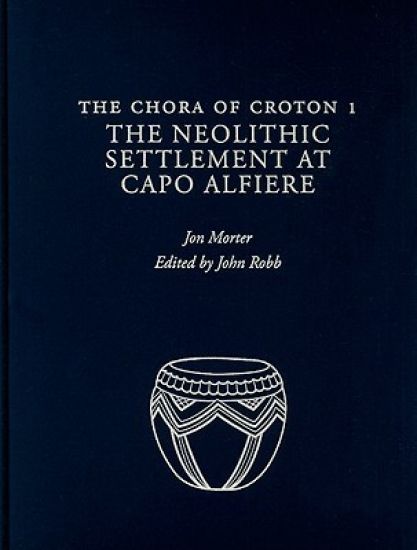
The Chora of Croton 1

The Chora of Croton 1

Jon Morter

University of Texas Press
2010
sidottu
From 1974 to the present, the Institute of Classical Archaeology (ICA) at the University of Texas at Austin has carried out archaeological excavations and surveys in ancient territories (chorae) in southern Italy. This wide-ranging investigation, which covers a large number of sites and a time period ranging from prehistory to the Middle Ages, has unearthed a wealth of new information about ancient rural economies and cultures in the region. These discoveries will be published in two multivolume series (Metaponto and Croton). This volume on the Neolithic settlement at Capo Alfiere is the first in the Croton series.The Chora of Croton 1 reports the excavation results of a remarkable Neolithic site at Capo Alfiere on the Ionian coast. Capo Alfiere is one of a very few early inhabitation sites in this area to have been excavated extensively, with a full team of scientific specialists providing interdisciplinary studies on early farming and animal husbandry. It provides comprehensive documentation of the economy, material culture, and way of life in the central Mediterranean in the sixth and fifth millennia BC. Most notable are the remains of a wattle-and-daub hut enclosed within a massive stone wall. Unique for this area, this well-preserved structure may have been used for special purposes such as ritual, as well as for habitation. The presence of Stentinello wares shows that the range of this pottery type extended further east than previously thought and casts new light on the development of ceramics in the area.
Texas Bobwhites

Texas Bobwhites

Jon A. Larson; Timothy E. Fulbright; Leonard A. Brennan; Fidel Hernández; Fred C. Bryant

University of Texas Press
2010
pokkari
Northern bobwhites are one of the most popular game birds in the United States. In Texas alone, nearly 100,000 hunters take to the field each fall and winter to pursue wild bobwhite quail. Texas is arguably the last remaining state with sufficient habitat to provide quail-hunting opportunities on a grand scale, and Texas ranchers with good bobwhite habitat often generate a greater proportion of their income from fees paid by quail hunters than from livestock production. Managing and expanding bobwhite habitat makes good sense economically, and it benefits the environment as well. The rangelands and woodlands of Texas that produce quail also support scores of other species of wildlife.Texas Bobwhites is a field guide to the seeds commonly eaten by northern bobwhites, as well as a handbook for conserving and improving northern bobwhite habitat. It provides identifying characteristics for the seeds of 91 species of grasses, forbs, woody plants, and succulents. Each seed description includes a close-up and a scale photo of the seed and the plant that produces it, along with a range map. Using this information, hunters can readily identify concentrations of plants that are most likely to attract quail. Landowners and rangeland managers will greatly benefit from the book's state-of-the-art guidance for habitat management and restoration, including improving habitat dominated by invasive and nonnative grasses.
Chinook Resilience

Chinook Resilience

Jon D. Daehnke; Tony A. Johnson

University of Washington Press
2017
sidottu
The Chinook Indian Nation—whose ancestors lived along both shores of the lower Columbia River, as well as north and south along the Pacific coast at the river's mouth—continue to reside near traditional lands. Because of its nonrecognized status, the Chinook Indian Nation often faces challenges in its efforts to claim and control cultural heritage and its own history and to assert a right to place on the Columbia River.Chinook Resilience is a collaborative ethnography of how the Chinook Indian Nation, whose land and heritage are under assault, continues to move forward and remain culturally strong and resilient. Jon Daehnke focuses on Chinook participation in archaeological projects and sites of public history as well as the tribe's role in the revitalization of canoe culture in the Pacific Northwest. This lived and embodied enactment of heritage, one steeped in reciprocity and protocol rather than documentation and preservation of material objects, offers a tribally relevant, forward-looking, and decolonized approach for the cultural resilience and survival of the Chinook Indian Nation, even in the face of federal nonrecognition.A Capell Family Book
Chinook Resilience

Chinook Resilience

Jon D. Daehnke; Tony A. Johnson

University of Washington Press
2017
pokkari
The Chinook Indian Nation—whose ancestors lived along both shores of the lower Columbia River, as well as north and south along the Pacific coast at the river's mouth—continue to reside near traditional lands. Because of its nonrecognized status, the Chinook Indian Nation often faces challenges in its efforts to claim and control cultural heritage and its own history and to assert a right to place on the Columbia River.Chinook Resilience is a collaborative ethnography of how the Chinook Indian Nation, whose land and heritage are under assault, continues to move forward and remain culturally strong and resilient. Jon Daehnke focuses on Chinook participation in archaeological projects and sites of public history as well as the tribe's role in the revitalization of canoe culture in the Pacific Northwest. This lived and embodied enactment of heritage, one steeped in reciprocity and protocol rather than documentation and preservation of material objects, offers a tribally relevant, forward-looking, and decolonized approach for the cultural resilience and survival of the Chinook Indian Nation, even in the face of federal nonrecognition.A Capell Family Book
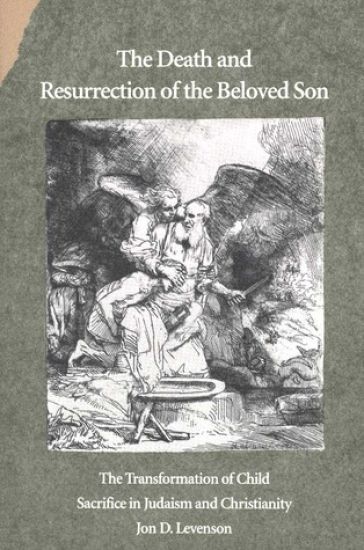
The Death and Resurrection of the Beloved Son

The Death and Resurrection of the Beloved Son

Jon D. Levenson

Yale University Press
1995
pokkari
The near-sacrifice and miraculous restoration of a beloved son is a central but largely overlooked theme in both Judaism and Christianity, celebrated in biblical texts on Isaac, Ishmael, Jacob, Joseph, and Jesus. In this highly original book, Jon D. Levenson explores how this notion of child sacrifice constitutes an overlooked bond between the two religions.Levenson argues that although the practice of child sacrifice was eradicated during the late seventh and sixth centuries B.C.E, the idea of sacrificing the first-born son (or the late-born son whose preferential treatment promotes him to that exalted rank) remained potent in religious literature. Analyzing texts from the ancient Near East, the Hebrew Bible, the New Testament, and rabbinic literature, Levenson shows how tales of the son handed over to death by his loving father in the Hebrew Bible influenced the Church's identification of Jesus as sacrificial victim. According to Levenson, the transformation of the idea of child sacrifice was central to the accounts given by the people Israel and the early Church of their respective origins, and it also underlay the theologies of chosenness embraced, in their differing ways, by the two religions. Furthermore, the longstanding claim of the Church that it supersedes the Jews, says Levenson, both continues and transforms elements of the old narrative pattern in which a late-born son dislodges his first-born brothers. Levenson's book, which offers novel interpretations of several areas crucial to biblical studies, will be essential reading for scholars in the field.