You were told to hustle harder. But what if the real success is in slowing down? From Hustle to Harmony is the definitive guide for high performers who are tired of burnout, overwhelmed by endless to-do lists, and secretly questioning if this is what success is supposed to feel like. In this bold, transformative book, Elena Rahmani dismantles hustle culture and shows how you can still achieve greatness-without sacrificing your sanity, relationships, or health. Blending science, soul, and strategy, you'll learn how to: - Redefine success on your own terms - Escape the burnout trap without losing your drive - Build a sustainable life of mindful productivity - Tap into inner calm while still crushing your goals - Create space for joy, rest, and purpose in a high-performance world This isn't about doing less-it's about doing what matters more. Whether you're an entrepreneur, executive, or recovering overachiever, From Hustle to Harmony will help you build a life that feels as good as it looks.
This work has been selected by scholars as being culturally important, and is part of the knowledge base of civilization as we know it. This work was reproduced from the original artifact, and remains as true to the original work as possible. Therefore, you will see the original copyright references, library stamps (as most of these works have been housed in our most important libraries around the world), and other notations in the work.This work is in the public domain in the United States of America, and possibly other nations. Within the United States, you may freely copy and distribute this work, as no entity (individual or corporate) has a copyright on the body of the work.As a reproduction of a historical artifact, this work may contain missing or blurred pages, poor pictures, errant marks, etc. Scholars believe, and we concur, that this work is important enough to be preserved, reproduced, and made generally available to the public. We appreciate your support of the preservation process, and thank you for being an important part of keeping this knowledge alive and relevant.
Sir Julius Caesar was the servant of Elizabeth I, James I and Charles I, serving as Judge of the High Court of Admiralty, Master of Requests, Chancellor of the Exchequer, Master of the Rolls and Privy Councillor. He also sat in the later Elizabethan parliaments and all but one in James' reign. Throughout his long and active career, Caesar preserved hundreds of volumes of his papers. They are largely in the custody of the British Museum and the text of this edition has been taken from BM Lansdowne MS 125. At the end of the sixteenth century English civilians were pressed to defend themselves and their courts against the judicial monopoly which the common lawyers were asserting. While this has often been regarded as a problem of conflicting legal systems and jurisprudential ideologies, it is apparent from Sir Julius Caesar's work that the questions were far more pragmatic than ideological.
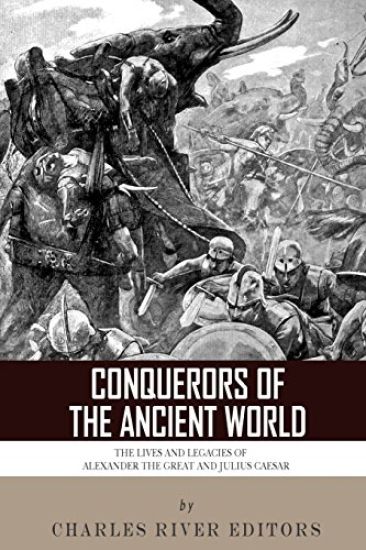
*Includes pictures depicting important people, places, and events in the lives of Alexander and Caesar. *Discusses little known facts about both men and whether some of the legends and myths about them were true. *Includes a bibliography on Alexander the Great for further reading. Over the last 2,000 years, ambitious men have dreamed of forging vast empires and attaining eternal glory in battle, but of all the conquerors who took steps toward such dreams, none were ever as successful as antiquity's two most famous and successful conquerors. For thousands of years, leaders across the globe dreamed of emulating or rivaling the accomplishments of Julius Caesar, but Caesar himself found inspiration in Alexander the Great (356-323 B.C.), the Macedonian King who managed to stretch an empire from Greece to the Himalayas in Asia at just 30 years old. It took less than 15 years for Alexander to conquer much of the known world. Both men died untimely deaths. Alexander died of still unknown causes at the height of his conquests, when he was still in his early 30s. Although his empire was quickly divided, his legacy only grew, and Alexander became the stuff of legends even in his own time. Alexander was responsible for establishing 20 cities in his name across the world, most notably Alexandria in Egypt, and he was directly responsible for spreading Ancient Greek culture as far east as modern day India and other parts of Asia. For the ancient world, Alexander became the emblem of military greatness and accomplishment; it was reported that many of Rome's greatest leaders, including Pompey the Great, Augustus, and Caesar himself all visited Alexander's tomb in Alexandria, a mecca of sorts for antiquity's other leaders. Possibly the most important man of antiquity, and even all of history, was Julius Caesar. Alexander Hamilton, the famous American patriot, once remarked that "the greatest man who ever lived was Julius Caesar". Such a tribute, coming from one of the Founding Fathers of the quintessential modern democracy in reference to a man who destroyed the Roman Republic, is testament to the enduring mark that Caesar left upon the world. The ultimate conqueror, statesman, dictator, visionary, and opportunist, during his time in power Caesar expanded the borders of Rome to almost twice their previous size, revolutionized the infrastructure of the Roman state, and destroyed the Roman Republic for good, leaving a line of emperors in its place. His legacy is so strong that his name has become, in many languages, synonymous with power: the Emperors of Austria and Germany bore the title Kaiser, and the Czars of Russia also owe the etymology of their title to Caesar. His name also crept further eastward out of Europe, even cropping up in Hindi and Urdu, where the term for "Emperor" is Kaisar. Conquerors of the Ancient World provides an entertaining look at the facts, myths, and legends surrounding two of history's most famous men and conquerors, while exploring the lasting legacies they left on the ancient world and today's world. Along with pictures of important people, places, and events, you will learn about Alexander the Great and Julius Caesar like you never have before, in no time at all.
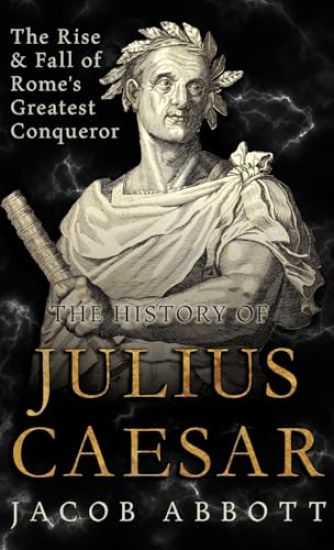
Bringing the story of Julius Caesar to life in vivid detail, this fascinating history offers a compelling account of a Roman leader whose name has become synonymous with power, strategy, and ambition. A definitive and captivating exploration of the life and legacy of one of history's most renowned figures, Julius Caesar. The Rise and Fall of Rome's Greatest Conqueror provides a balanced portrayal of Caesar's rise to power and his eventual fall, exploring the complexities of his character and the reasons behind his enduring legacy. From his humble beginnings in a patrician Roman family to his dramatic rise as a military genius, political leader, and ultimately, the dictator of Rome, Jacob Abbott meticulously details Caesar's life and rule. Exploring his political manoeuvres, his complex relationships with key figures like Pompey and Cleopatra, and his reforms as a ruler determined to reshape Rome. Ideal for history fans, students, and anyone interested in the drama of Ancient Rome, The Rise and Fall of Rome's Greatest Conqueror not only captures the grandeur and achievements of Julius Caesar's life but also offers insight into the personal traits, ambitions, and flaws of the man who changed the course of history.
*Includes pictures*Includes ancient accounts of Britain *Includes online resources and a bibliography for further reading" The Romans] thinking that it might be some help to the allies Britons], whom they were forced to abandon, constructed a strong stone wall from sea to sea, in a straight line between the towns that had been there built for fear of the enemy, where Severus also had formerly built a rampart." - Bede's description of Hadrian's Wall in the Middle AgesThe famous conqueror from the European continent came ashore with thousands of men, ready to set up a new kingdom in England. The Britons had resisted the amphibious invasion from the moment his forces landed, but he was able to push forward. In a large winter battle, the Britons' large army attacked the invaders but was eventually routed, and the conqueror was able to set up a new kingdom.Over 1,100 years before William the Conqueror became the King of England after the Battle of Hastings, Julius Caesar came, saw, and conquered part of "Britannia," setting up a Roman province with a puppet king in 54 BCE. In the new province, the Romans eventually constructed a military outpost overlooking a bridge across the River Thames. The new outpost was named Londinium, and it covered just over two dozen acres. For most of the past 1,000 years, London has been the most dominant city in the world, ruling over so much land that it was said the Sun never set on the British Empire. With the possible exception of Rome, no city has ever been more important or influential than London in human history. Thus, it was only fitting that it was the Romans who established London as a prominent city. Londinium was initially little more than a small military outpost near the northern boundary of the Roman province of Britannia, but its access to the River Thames and the North Sea made it a valuable location for a port. During the middle of the 1st century CE, the Romans conducted another invasion of the British Isles, after which Londinium began to grow rapidly. As the Romans stationed legions there to defend against the Britons, Londinium became a thriving international port, allowing trade with Rome and other cities across the empire. By the 2nd century CE, Londinium was a large Roman city, with tens of thousands of inhabitants using villas, palaces, a forum, temples, and baths. The Roman governor ruled from the city in a basilica that served as the seat of government. What was once a 30 acre outpost now spanned 300 acres and was home to nearly 15,000 people, including Roman soldiers, officials and foreign merchants. The Romans also built heavy defenses for the city, constructing several forts and the massive London Wall, parts of which are still scattered across the city today. Ancient Roman remains continue to dot London's landscape today, reminding everyone that almost a millennium before it became the home of royalty, London was already a center of power. The Romans were master builders, and much of what they built has stood the test of time. Throughout their vast empire they have left grand structures, from the Forum and Pantheon in Rome to the theatres and hippodromes of North Africa and the triumphal gates in Anatolia and France. Wherever they went, the Romans built imposing structures to show their power and ability, and one of their most impressive constructions was built on the northernmost fringe of the empire. Shortly after the emperor Hadrian came to power in the early 2nd century CE, he decided to seal off Scotland from Roman Britain with an ambitious wall stretching from sea to sea. To accomplish this, the wall had to be built from the mouth of the River Tyne - where Newcastle stands today - 80 Roman miles (76 miles or 122 kilometers) west to Bowness-on-Solway. The sheer scale of the job still impresses people today, and Hadrian's Wall has the advantage of being systematically studied and partially restored.
*Includes pictures*Includes ancient accounts of Britain *Includes online resources and a bibliography for further reading" The Romans] thinking that it might be some help to the allies Britons], whom they were forced to abandon, constructed a strong stone wall from sea to sea, in a straight line between the towns that had been there built for fear of the enemy, where Severus also had formerly built a rampart." - Bede's description of Hadrian's Wall in the Middle AgesThe famous conqueror from the European continent came ashore with thousands of men, ready to set up a new kingdom in England. The Britons had resisted the amphibious invasion from the moment his forces landed, but he was able to push forward. In a large winter battle, the Britons' large army attacked the invaders but was eventually routed, and the conqueror was able to set up a new kingdom.Over 1,100 years before William the Conqueror became the King of England after the Battle of Hastings, Julius Caesar came, saw, and conquered part of "Britannia," setting up a Roman province with a puppet king in 54 BCE. In the new province, the Romans eventually constructed a military outpost overlooking a bridge across the River Thames. The new outpost was named Londinium, and it covered just over two dozen acres. For most of the past 1,000 years, London has been the most dominant city in the world, ruling over so much land that it was said the Sun never set on the British Empire. With the possible exception of Rome, no city has ever been more important or influential than London in human history. Thus, it was only fitting that it was the Romans who established London as a prominent city. Londinium was initially little more than a small military outpost near the northern boundary of the Roman province of Britannia, but its access to the River Thames and the North Sea made it a valuable location for a port. During the middle of the 1st century CE, the Romans conducted another invasion of the British Isles, after which Londinium began to grow rapidly. As the Romans stationed legions there to defend against the Britons, Londinium became a thriving international port, allowing trade with Rome and other cities across the empire. By the 2nd century CE, Londinium was a large Roman city, with tens of thousands of inhabitants using villas, palaces, a forum, temples, and baths. The Roman governor ruled from the city in a basilica that served as the seat of government. What was once a 30 acre outpost now spanned 300 acres and was home to nearly 15,000 people, including Roman soldiers, officials and foreign merchants. The Romans also built heavy defenses for the city, constructing several forts and the massive London Wall, parts of which are still scattered across the city today. Ancient Roman remains continue to dot London's landscape today, reminding everyone that almost a millennium before it became the home of royalty, London was already a center of power. The Romans were master builders, and much of what they built has stood the test of time. Throughout their vast empire they have left grand structures, from the Forum and Pantheon in Rome to the theatres and hippodromes of North Africa and the triumphal gates in Anatolia and France. Wherever they went, the Romans built imposing structures to show their power and ability, and one of their most impressive constructions was built on the northernmost fringe of the empire. Shortly after the emperor Hadrian came to power in the early 2nd century CE, he decided to seal off Scotland from Roman Britain with an ambitious wall stretching from sea to sea. To accomplish this, the wall had to be built from the mouth of the River Tyne - where Newcastle stands today - 80 Roman miles (76 miles or 122 kilometers) west to Bowness-on-Solway. The sheer scale of the job still impresses people today, and Hadrian's Wall has the advantage of being systematically studied and partially restored.
*Includes pictures depicting important people, places, and events in the lives of Alexander and Caesar. *Discusses little known facts about both men and whether some of the legends and myths about them were true. *Includes a bibliography on Alexander the Great for further reading. Over the last 2,000 years, ambitious men have dreamed of forging vast empires and attaining eternal glory in battle, but of all the conquerors who took steps toward such dreams, none were ever as successful as antiquity's two most famous and successful conquerors. For thousands of years, leaders across the globe dreamed of emulating or rivaling the accomplishments of Julius Caesar, but Caesar himself found inspiration in Alexander the Great (356-323 B.C.), the Macedonian King who managed to stretch an empire from Greece to the Himalayas in Asia at just 30 years old. It took less than 15 years for Alexander to conquer much of the known world. Both men died untimely deaths. Alexander died of still unknown causes at the height of his conquests, when he was still in his early 30s. Although his empire was quickly divided, his legacy only grew, and Alexander became the stuff of legends even in his own time. Alexander was responsible for establishing 20 cities in his name across the world, most notably Alexandria in Egypt, and he was directly responsible for spreading Ancient Greek culture as far east as modern day India and other parts of Asia. For the ancient world, Alexander became the emblem of military greatness and accomplishment; it was reported that many of Rome's greatest leaders, including Pompey the Great, Augustus, and Caesar himself all visited Alexander's tomb in Alexandria, a mecca of sorts for antiquity's other leaders. Possibly the most important man of antiquity, and even all of history, was Julius Caesar. Alexander Hamilton, the famous American patriot, once remarked that "the greatest man who ever lived was Julius Caesar". Such a tribute, coming from one of the Founding Fathers of the quintessential modern democracy in reference to a man who destroyed the Roman Republic, is testament to the enduring mark that Caesar left upon the world. The ultimate conqueror, statesman, dictator, visionary, and opportunist, during his time in power Caesar expanded the borders of Rome to almost twice their previous size, revolutionized the infrastructure of the Roman state, and destroyed the Roman Republic for good, leaving a line of emperors in its place. His legacy is so strong that his name has become, in many languages, synonymous with power: the Emperors of Austria and Germany bore the title Kaiser, and the Czars of Russia also owe the etymology of their title to Caesar. His name also crept further eastward out of Europe, even cropping up in Hindi and Urdu, where the term for "Emperor" is Kaisar. Conquerors of the Ancient World provides an entertaining look at the facts, myths, and legends surrounding two of history's most famous men and conquerors, while exploring the lasting legacies they left on the ancient world and today's world. Along with pictures of important people, places, and events, you will learn about Alexander the Great and Julius Caesar like you never have before, in no time at all.
Poetik Shakespeare's in den R merdramen Coriolanus, Julius Caesar und Antony and Cleopatra ist ein unver nderter, hochwertiger Nachdruck der Originalausgabe aus dem Jahr 1884. Hansebooks ist Herausgeber von Literatur zu unterschiedlichen Themengebieten wie Forschung und Wissenschaft, Reisen und Expeditionen, Kochen und Ern hrung, Medizin und weiteren Genres. Der Schwerpunkt des Verlages liegt auf dem Erhalt historischer Literatur. Viele Werke historischer Schriftsteller und Wissenschaftler sind heute nur noch als Antiquit ten erh ltlich. Hansebooks verlegt diese B cher neu und tr gt damit zum Erhalt selten gewordener Literatur und historischem Wissen auch f r die Zukunft bei.