Kirjojen hintavertailu. Mukana 12 016 292 kirjaa ja 12 kauppaa.

Kirjahaku

Etsi kirjoja tekijän nimen, kirjan nimen tai ISBN:n perusteella.

1000 tulosta hakusanalla Larry Singer

Being Good in a World of Need

Being Good in a World of Need

Larry S. Temkin

Oxford University Press
2022
sidottu
In a world filled with both enormous wealth and pockets of great devastation, how should the well-off respond to the world's needy? This is the urgent central question of Being Good in a World of Need. Larry S. Temkin, one of the world's foremost ethicists, challenges common assumptions about philanthropy, his own prior beliefs, and the dominant philosophical positions of Peter Singer and Effective Altruism. Filled with keen analysis and insightful discussions of philosophy, current events, development economics, history, literature, and age-old wisdom, this book is a thorough and sobering exploration of the complicated ways that global aid may incentivize disastrous policies, reward corruption, and foster “brain drains” that hinder social and economic development. Using real-world examples and illuminating thought experiments, Temkin discusses ethical imperialism, humanitarian versus developmental aid, how charities ignore or coverup negative impacts, replicability and scaling-up problems, and the views of the renowned economists Angus Deaton and Jeffrey Sachs, all within the context of deeper philosophical issues of fairness, responsibility, and individual versus collective morality. At times both inspiring and profoundly disturbing, he presents the powerful argument that neglecting the needy is morally impermissible, even as he illustrates that the path towards helping others is often fraught with complex ethical and practical perils. Steeped in empathy, morality, pathos, and humanity, this is an engaging and eye-opening text for any reader who shares an intense concern for helping others in need.

Reform and Regret

Reform and Regret

Larry W. Yackle

Oxford University Press Inc
1989
sidottu
This is an engaging descriptive analysis of the campaign to achieve prison reform in Alabama through constitutional litigation in the federal courts. When the deplorable conditions in Alabama's shockingly overcrowded and understaffed prisons were revealed at a trial in 1975, Judge Frank Johnson declared that the prison system as a whole constituted a cruel punishment which was in violation of the eighth amendment. He issued an elaborate decree specifying improvements that were needed to satisfy constitutional standards. By 1988, federal judges had ordered wideranging reforms in the penal systems of thirty-seven states. This book outlines the background against which Judge Johnson acted, the process that produced the decree, and subsequent efforts to enforce his order in the face of bureaucratic inertia, administrative incompetence, and political demagogy.
Islamic Da'wah in the West

Islamic Da'wah in the West

Larry Poston

Oxford University Press Inc
1992
sidottu
Larry Poston explores the reality of da'wah - Islamic evangelism, or the `call' to Islam - as it has been interpreted and practised by Muslims in the West. Beginning with a brief examination of the expansion of Islam during its early centuries, Poston looks at the concept of da'wah as understood by the earliest followers of Muhammad. He shows how this early paradigm has been adapted to the demands of the Western context, and goes on to discuss the institutionalization of the new missionary strategy in North America.
Inequality

Inequality

Larry S. Temkin

Oxford University Press Inc
1993
sidottu
In this book Larry Temkin examines the concepts of equality and inequality, and addresses one particular question in depth: how can we judge between different sorts of inequality? When is one inequality worse than another? Temkin shows that there are many different factors underlying and influencing our egalitarian judgements and that the notion of inequality is surprisingly complex. He looks at inequality as applied to individuals and to groups, and at the standard measures of inequality employed by economists and others, and considers whether inequality matters more in a poor society than a rich one. The arguments of non-egalitarians are also examined. Temkin's book presents a new way of thinking about equality and inequality which challenges the assumptions of philosophers, welfare economists, and others concerned with these notions on a practical as well as a theoretical level.
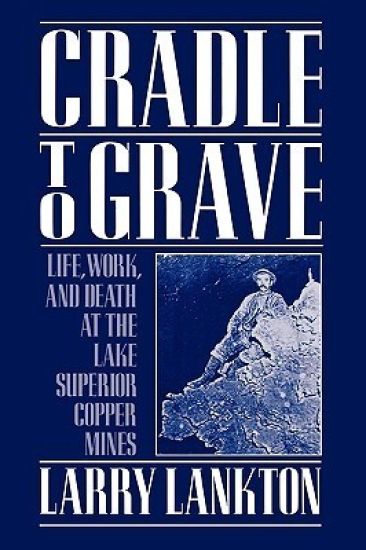
Cradle to Grave

Cradle to Grave

Larry Lankton

Oxford University Press Inc
1993
nidottu
Concentrating on technology, economics, labor, and social history, Cradle to Grave documents the full life cycle of one of America's great mineral ranges from the 1840s to the 1960s. Lankton examines the workers' world underground, but is equally concerned with the mining communities on the surface. For the first fifty years of development, these mining communities remained remarkably harmonious, even while new, large companies obliterated traditional forms of organization and work within the industry. By 1890, however, the Lake Superior copper industry of upper Michigan started facing many challenges, including strong economic competition and a declining profit margin; growing worker dissatisfaction with both living and working conditions; and erosion of the companies' hegemony in a district they once controlled. Lankton traces technological changes within the mines and provides a thorough investigation of mine accidents and safety. He then focuses on social and labor history, dealing especially with the issue of how company paternalism exerted social control over the work force. A social history of technology, Cradle to Grave will appeal to labor, social and business historians.
Guidelines for the Systematic Treatment of the Depressed Patient

Guidelines for the Systematic Treatment of the Depressed Patient

Larry E. Beutler; John Clarkin; Bruce Bongar

Oxford University Press Inc
2000
sidottu
From initial consultation to termination of treatment, psychologists and other mental health practitioners make a series of crucial decisions to determine the progress and therapy of the patient. These decisions have varied implications such as the clinical course of the patient, the efficacy and efficiency of the treatment, and the cost of the sessions. Thus, the decisions made by mental health professionals need to be accurate and consistent, respecting a series of guidelines that will ultimately benefit the patient. This is the first in a series of guidebooks that is designed to do just that by providing practitioners with some structure in the development of treatment programmes. Previous guidelines have been based on consensus panels of experts or on the opinions of membership groups, causing guidelines to be very far off from the findings of empirical research. Here, guidelines are presented in terms of treatment principles rather than in terms of specific treatment models or theories, and they do not favour one theory of psychotherapy over another. Instead, they define strategies and considerations that can be woven into comprehensive treatment programmes. The entire series of guidebooks will cover numerous topics, including anxiety disorders, drug abuse, alcohol abuse, and treatment of serious mental disorders. This volume will cover in detail the nature of depression, issues in treatment research, contemporary treatments, and implications for education and training. It is ideal for postgraduates and professionals in the mental health field and is intended to provide important background on treatment of non-bipolar depressive disorders.
Am I Crazy, Or Is It My Shrink?

Am I Crazy, Or Is It My Shrink?

Larry E. Beutler; Bruce Bongar; Joel N. Shurkin

Oxford University Press Inc
1998
sidottu
With over 400 types of psychotherapy available, ranging from the highly effective to the highly questionable to the downright fraudulent, the task of choosing a therapist can be daunting. Now, Am I Crazy Or Is My Shrink? gives you all the information you need to get the most effective help and to know when your therapy is working--or when it's time for a change. Drawing on years of practical experience and the most up-to-date research, the authors give you expert guidance on all the issues you should consider, whether you're seeking therapy or uncertain about the therapy you're receiving: What questions should I ask my therapist about a recommended treatment? What personal qualities and professional qualifications should I look for in a therapist? What do research studies say about the effectiveness of a particular therapy? How do I recognize when a therapist is not right for me? How can I tell when my therapist's behavior is unethical or unprofessional? What strategies can I use to evaluate my progress? The authors also provide an overview of the main branches of psychotherapy and suggest which approaches are best suited to the most commonly occurring problems, such as depression, anxiety, obsessive-compulsive disorders, eating disorders, relationship and sexual difficulties, and many others. Finally, the authors stress that because therapies don't come with warning labels, and because a therapist will typically apply his or her theory to whoever walks through the door, regardless of their unique symptoms and circumstances, it is essential to choose your therapist wisely, with as much forethought as possible. Am I Crazy Or Is My Shrink? empowers you to make that choice with confidence and to be a knowledgeable participant in your own treatment.
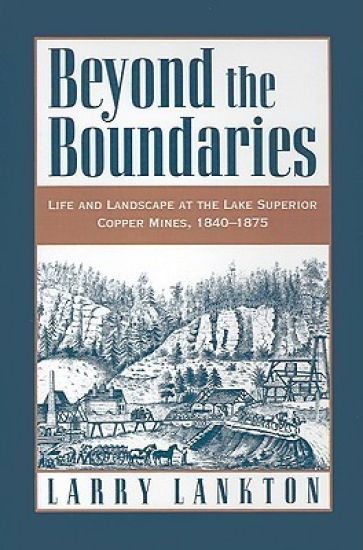
Beyond the Boundaries

Beyond the Boundaries

Larry Lankton

Oxford University Press Inc
1997
sidottu
Beyond the Boundaries is a companion volume in many ways to Lankton's Cradle to Grave (OUP 1991). Both books deal with copper mining in the Keweenaw Peninsula of Upper Michigan. While Cradle to Grave was concerned with the rise and fall of the copper mining industry - its technology, business practices, and human work experience - Beyond the Boundaries covers a more limited time period, 1840-1875, in the same region, and focuses instead on everyday life. It is essentially a book about men, women, and children, and families - not just their workplace but their homes, stores, churches, schools, hospitals and other aspects of community life as well. It is essentially the story of "reluctant pioneers," who attempted to establish a decent measure of comfort, control, and security in what was in many ways a hostile environment.
Inequality

Inequality

Larry S. Temkin

Oxford University Press Inc
1997
nidottu
Larry Temkin examines the concepts of equality and inequality, and addresses one particular question in depth: when is one inequality worse than another? He shows that there are many different factors underlying and influencing our egalitarian judgments and that the notion of inequality is surprisingly complex. He looks at inequality as applied to individuals and to groups, and considers whether inequality matters more in a poor society than a rich one. The arguments of non-egalitarians are also examined. Temkin presents a new way of thinking about equality and inequality which challenges the assumptions of philosophers, welfare economists, and others concerned with these notions on a practical as well as a theoretical level.
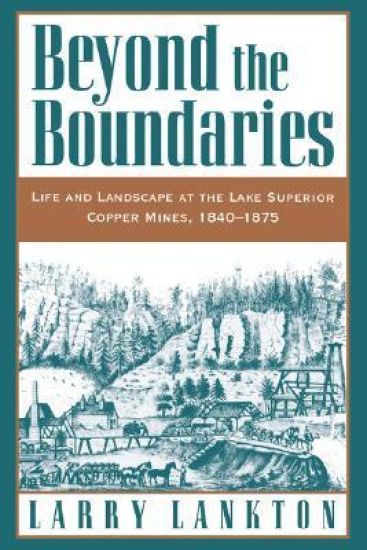
Beyond the Boundaries

Beyond the Boundaries

Larry Lankton

Oxford University Press Inc
1999
nidottu
Spanning the years 1840-1875, Beyond the Boundaries focuses on the settlement of Upper Michigan's Keweenaw Peninsula, telling the story of reluctant pioneers who attempted to establish a decent measure of comfort, control, and security in what was in many ways a hostile environment. Moving beyond the technological history of the period found in his previous book Cradle to the Grave: Life, Work, and Death at the Lake Superior Copper Mines (OUP 1991), Lankton here focuses on the people of this region and how the copper mining affected their daily lives. A truly first-rate social history, Beyond the Boundaries will appeal to historians of the frontier and of Michigan and the Great Lakes region, as well as historians of technology, labor, and everyday life.
Trading and Exchanges

Trading and Exchanges

Larry Harris

Oxford University Press Inc
2002
sidottu
This book is about trading, the people who trade securities and contracts, the marketplaces where they trade, and the rules that govern it. Readers will learn about investors, brokers, dealers, arbitrageurs, retail traders, day traders, rogue traders, and gamblers; exchanges, boards of trade, dealer networks, ECNs (electronic communications networks), crossing markets, and pink sheets. Also covered in this text are single price auctions, open outcry auctions, and brokered markets limit orders, market orders, and stop orders. Finally, the author covers the areas of program trades, block trades, and short trades, price priority, time precedence, public order precedence, and display precedence, insider trading, scalping, and bluffing, and investing, speculating, and gambling.
What Animals Want

What Animals Want

Larry Carbone

Oxford University Press Inc
2004
sidottu
Larry Carbone, a veterinarian who is in charge of the lab animal welfare assurance program at a major research university, presents this scholarly history of animal rights. Biomedical researchers, and the less fanatical among the animal rights activists will find this book reasonable, humane, and novel in its perspective. It brings a novel, sociological perspective to an area that has been addressed largely from a philosophical perspective, or from the entrenched positions of highly committed advocates of a particular position in the debate.
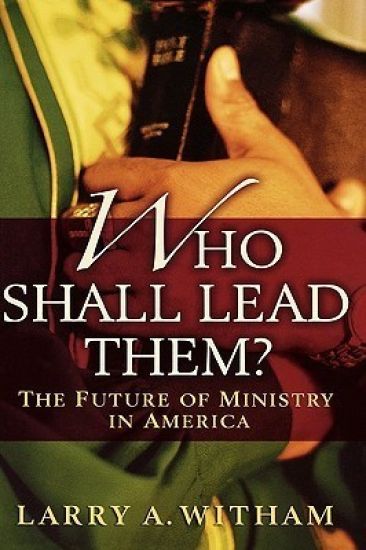
Who Shall Lead Them?

Who Shall Lead Them?

Larry A. Witham

Oxford University Press Inc
2005
sidottu
The clergy today faces mounting challenges in an increasingly secular world, where declining prestige makes it more difficult to attract the best and the brightest young Americans to the ministry. As Christian churches dramatically adapt to modern changes, some are asking whether there is a clergy crisis as well. Whatever the future of the clergy, the fate of millions of churchgoers also will be at stake. In Who Shall Lead Them?, prizewinning journalist Larry Witham takes the pulse of both the Protestant and Catholic ministry in America and provides a mixed diagnosis of the calling's health. Drawing on dozens of interviews with clergy, seminarians and laity, and using newly available survey data including the 2000 Census, Witham reveals the trends in a variety of traditions. While evangelicals are finding innovative paths to ministry, the Catholic priesthood faces a severe shortage. In mainline Protestantism, ministry as a second career has become a prominent feature. Ordination ages in the Episcopal and United Methodist churches average in the 40s today. The quest by female clergy to lead from the pulpit, meanwhile, has hit a "stained glass ceiling" as churches still prefer a man as the principal minister. While deeply motivated by the mystery of their "call" to ministry, America's priests, pastors, and ministers are reassessing their roles in a world of new debates on leadership, morality, and the powers of the mass media. Who Shall Lead Them? offers a valuable snapshot of this contemporary clergy drama. It will be required reading for everyone concerned about the rapidly shifting ground of our churches and the health of religion in America.
Where Darwin Meets the Bible

Where Darwin Meets the Bible

Larry A. Witham

Oxford University Press Inc
2005
nidottu
The conflict between creationists and evolutionists has raged ever since the publication of On the Origin of Species in 1859. And yet, even as generations of Americans have fought and re-fought the same battles, the contours of the debate have in recent years shifted dramatically. Tracking the dizzying rhetorical heights and opportunistic political lows of this controversy, Larry Witham travels to America's churches, schools, universities, museums, and government agencies to present creationists and evolutionists in their own unfiltered voices. We meet leading creationists and proponents of Intelligent Design such as Michael Behe; evolutionists such as Richard Dawkins; and theistic scientists who describe how they reconcile God and Nature. Today, Biblical literalism is tempered by the Intelligent Design movement, which finds evidence of God's presence in nature's patterns. The once-dominant "young earth" school has been replaced by a creationism that conscripts the language of science to advance the creationist cause. Meanwhile, evolutionary scientists hesitate to point out gaps in their theories for fear that such self-scrutiny could serve as fodder for anti-evolution propaganda. In an age marked both by a rising religious tide and daily scientific breakthroughs, Where Darwin Meets the Bible provides the standard account of this lasting conflict.
A Practical Guide to Recovery-Oriented Practice

A Practical Guide to Recovery-Oriented Practice

Larry Davidson; Michael Rowe; Janis Tondora; Maria J. O'Connell; Martha Staeheli Lawless

Oxford University Press Inc
2008
nidottu
This book takes a lofty vision of "recovery" and of "a life in the community" for every adult with a serious mental illness promised by the U.S. President's 2003 New Freedom Commission on Mental Health and shows the reader what is entailed in making this vision a reality. Beginning with the historical context of the recovery movement and its recent emergence on the center stage of mental health policy around the world, the authors then clarify various definitions of mental health recovery and address the most common misconceptiosn of recovery held by skeptical practitioners and wroried families. With this framework in place, the authors suggest fundamental principles for recovery-oreinted care, a set of concrete practice guidelines developed in and for the field, a recovery guide model of practice as an alternative to clinical case management, and tools to self-assess the recovery orientation of practices and practitioners. In doing so, this volume represents the first book to go beyond the rhetoric of recovery to its implementation in everyday practice. Much of this work was developed with the State of Connecticut's Department of Mental Health and Addiction Services, helping the state to win a #1 ranking in the recent NAMI report card on state mental health authorities. Since initial development of these principles, guidelines, and tools in Connecticut, the authors have become increasingly involved in refining and tailoring this approach for other systems of care around the globe as more and more governments, ministry leaders, system managers, practitioners, and people with serious mental illnesses nad their families embrace the need to transform mental health services to promote recovery and community inclusion. If you've wondered what all of the recent to-do has been about with the notion of "recovery" in mental health, this book explains it. In addition, it gives you an insider's view of the challenges and strategies involved in transforming to recovery and a road map to follow on the first few steps down this exciting, promising, and perhaps long overdue path.
The Law Market

The Law Market

Larry E. Ribstein; Erin O'Hara

Oxford University Press Inc
2009
sidottu
When individuals, businesses, or corporations are dissatisfied with an existing law, there are typically two ways it can be fixed: by rewriting the law via political mechanisms or simply physically relocating to a more favorable jurisdiction. Both can be costly and time-consuming. This book explores a new way of looking at law, not as something that can be changed only through cumbersome political and legislative processes or avoided by physical movement, but as something that can be shopped for in a market. To a significant extent this perspective on the law is already a reality. Wherever they may be located, corporations are free to choose in which state to incorporate (often Delaware) and online shoppers from one state or country who buy from a company located in another state or country usually agree to provisions that dictate the law governing the transaction from yet another state or country. Disconnecting the choice of law from the location of activities creates a market for law that allows the involved parties to choose which jurisdiction will apply to their relationship, contract, or dispute. The resulting law markets, Ribstein and O'Hara argue, can work to increase efficiency, create better laws, and ensure that laws in all jurisdictions serve the interests of those they govern.
Clergy Education in America

Clergy Education in America

Larry Abbott Golemon

Oxford University Press Inc
2021
sidottu
Clergy have historically been represented as figures of authority, wielding great influence over our society. During certain periods of American history, members of the clergy were nearly ever-present in public life. But men and women of the clergy are not born that way, they are made. And therefore, the matter of their education is a question of fundamental public importance. In Clergy Education in America, Larry Golemon shows not only how our conception of professionalism in religious life has changed over time, but also how the education of religious leaders have influenced American culture. Tracing the history of clergy education in America from the Early Republic through the first decades of the twentieth century, Golemon tracks how the clergy has become increasingly diversified in terms of race, gender, and class in part because of this engagement with public life. At the same time, he demonstrates that as theological education became increasingly intertwined with academia the clergy's sphere of influence shrank significantly, marking a turn away from public life and a decline in their cultural influence. Clergy Education in America offers a sweeping look at an oft-overlooked but critically important aspect of American public life.
Who Shall Lead Them?

Who Shall Lead Them?

Larry A. Witham

Oxford University Press Inc
2006
nidottu
The clergy today faces mounting challenges in an increasingly secular world, where declining prestige makes it more difficult to attract the best and the brightest young Americans to the ministry. As Christian churches dramatically adapt to modern changes, some are asking whether there is a clergy crisis as well. Whatever the future of the clergy, the fate of millions of churchgoers also will be at stake. In Who Shall Lead Them?, prizewinning journalist Larry Witham takes the pulse of both the Protestant and Catholic ministry in America and provides a mixed diagnosis of the calling's health. Drawing on dozens of interviews with clergy, seminarians and laity, and using newly available survey data including the 2000 Census, Witham reveals the trends in a variety of traditions. While evangelicals are finding innovative paths to ministry, the Catholic priesthood faces a severe shortage. In mainline Protestantism, ministry as a second career has become a prominent feature. Ordination ages in the Episcopal and United Methodist churches average in the 40s today. The quest by female clergy to lead from the pulpit, meanwhile, has hit a "stained glass ceiling" as churches still prefer a man as the principal minister. While deeply motivated by the mystery of their "call" to ministry, America's priests, pastors, and ministers are reassessing their roles in a world of new debates on leadership, morality, and the powers of the mass media. Who Shall Lead Them? offers a valuable snapshot of this contemporary clergy drama. It will be required reading for everyone concerned about the rapidly shifting ground of our churches and the health of religion in America.
God's Forever Family

God's Forever Family

Larry Eskridge

Oxford University Press Inc
2013
sidottu
The Jesus People movement of the late 1960s and 1970s was an important force in the lives of millions of American Baby Boomers. This unique combination of the hippie counterculture and evangelical Christianity first appeared amid 1967's famed "Summer of Love" in San Francisco's Haight-Ashbury district and grew like wildfire in Southern California and in cities like Seattle, Atlanta, and Milwaukee. In 1971 the growing movement found its way into the national spotlight, attracting a great deal of contemporary media and scholarly attention. In the wake of publicity, the movement gained momentum and attracted a huge new following among evangelical church youth who enthusiastically adopted the Jesus People persona as their own. In the process, the movement spread across the country -- particularly into the Great Lakes region -- and coffeehouses, "Jesus Music" singers, and "One Way" bumper stickers soon blanketed the land. Within a few years, however, the movement faded and disappeared and was largely forgotten by everyone but those who had filled its ranks. God's Forever Family is the first major attempt to re-examine the Jesus People phenomenon in over thirty years. It reveals that it was one of the most important American religious movements of the second half of the 20th-century. Not only did the Jesus movement produce such burgeoning new evangelical groups as Calvary Chapel and the Vineyard movement, but the Jesus People paved the way for the huge Contemporary Christian Music industry and the rise of "Praise Music" in the nation's churches. More significantly, perhaps, it revolutionized evangelicals' relationship with youth and popular culture-important factors in the evangelical subculture's emerging engagement with the larger American culture from the late 1970s forward. God's Forever Family makes the case that the Jesus People movement not only helped create a resurgent evangelicalism but -- alongside the hippie counterculture and the student movement -- must be considered one of the major formative powers that shaped American youth in the late 1960s and 1970s.