Kirjojen hintavertailu. Mukana 11 627 220 kirjaa ja 12 kauppaa.

Kirjahaku

Etsi kirjoja tekijän nimen, kirjan nimen tai ISBN:n perusteella.

1000 tulosta hakusanalla Louis Howland

Big Country, Volume Three: Stories of Louis Lamour
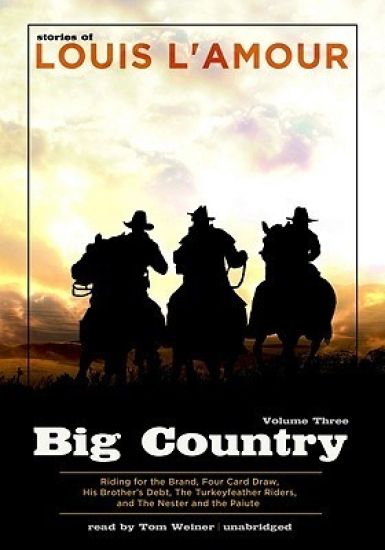
Louis L'Amour said that the West was no place for the frightened or the mean. It was a "big country needing big men and women to live in it." This volume presents five more of L'Amour's fine short stories about the West, restored according to how they first appeared in their initial publication in magazines. "Riding for the Brand" Jed Asbury was stripped naked by Indians and forced to run the gauntlet. He ran it better than they had expected and escaped with only a few minor wounds. Still on the dodge, Jed encounters a covered wagon in which the horses and humans have been killed, the wagon and its contents left to stand. He is able to outfit himself from clothes and guns he finds in the wagon, and in the process he learns what the intentions were of those who had driven the wagon--and the possible reason they were killed. Jed decides to push forward and accomplish precisely what they had intended to do. "Four Card Draw" Allen Ring drew four cards in a poker game with Ben Taylor, and he won a small ranch. The ranch cabin sits on a low ledge of grass backed up against a cliff of red rock, with a spring not more than fifty feet away. The ranch is all he had ever hoped to have. Only it isn't going to be that simple. Ross Bilton, the town marshal, shows up with two deputies and tells Allen that, whether he has a deed or not, no one is allowed to live on the ranch. A killing had taken place there years before and remains unsolved. But that's not enough to persuade Allen to leave. "His Brother's Debt" Rock Casady is considered a coward. When gunman Ben Kerr issued a challenge, Casady fled rather than stick around to fight. He rode on to new range and got himself a job. He did well at it, but everyone noticed that he avoided going to town, and he avoided people. That was before Sue Landon, niece of the ranch's owner, asked Rock to accompany her to town to make some necessary purchases. Though that might mean a confrontation with rustler and hardcase Pete Vorys, Rock agrees. However, minding his own business proves ineffective when Vorys decides that this stranger has to be cut down to size. "The Turkeyfeather Riders" Jim Sandifer swings down from his buckskin and stands for a long minute, staring across the saddle toward the dark bulk of Bearwallow Mountain. For three years he has been riding for the B Bar, and for two of those years he has been ranch foreman. Now he knows that what he is about to do will bring an end to that, an end to his life here, to his chance to win the girl he loves. He stopped a raid by some B Bar men on the Katrischen spread, and now he has to tell the B Bar's owner what he did--and suffer the consequences. "The Nester and the Paiute" The Paiute is the local bad man. But as bad as his rustling and killing has been, Sheriff Todd had never caught him with real evidence and so could only keep his eye on the Paiute, hope to catch him in the act. That was before the nester rode in, looking for the Paiute. Sheriff Todd is out of town, but that doesn't matter to the nester. He's been following the Paiute's tracks all the way here and now wants to know where he lives. That's easily told, but Sheriff Todd isn't going to like it if there's a shoot-out between the nester and the Paiute. What no one knows is that the sheriff has already run into the Paiute, and that the Paiute has finished him. For the Paiute, this has become the end game.
Louis Armstrong

Louis Armstrong

David Stricklin

Rowman Littlefield
2015
nidottu
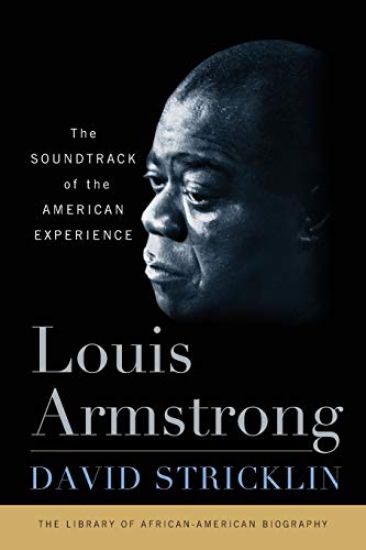
In the twentieth century, African Americans not only helped make popular music the soundtrack of the American experience, they advanced American music as one of the preeminent shapers of the world's popular culture. Vast numbers of black American musicians deserve credit for this remarkable turn of events, but a few stand out as true giants. David Stricklin's superb new biography explores the life of one of them, Louis Armstrong. The life story of this great instrumentalist and bandleader illustrates much of the black entertainer's impact on American culture and illuminates how popular culture often intersects with politics and economics. Armstrong emerged from a precarious background and triumphed over almost impossible odds, becoming a transcendent public figure and an international icon. Mr. Stricklin concentrates on Armstrong's musical talent, something many observers called a thing of genius. But he also pays special attention to Armstrong's identity a black man in America and the ways in which he triumphed over the mistreatment and disrespect dealt countless people like him. The creativity and exuberance he shared with the world came from his unique vantage as an artist and as an African American with a striking and lively spirit of freedom. He might have been able to demonstrate that determination in any line of work, but his story has special urgency because he expressed his creative power through music. With 16 black-and-white photographs.
Louis XIV

Louis XIV

Josephine Wilkinson

AMBERLEY PUBLISHING
2019
sidottu
A major new biography of France's most famous king, the longest-reigning monarch in European history, by acclaimed biographer Josephine Wilkinson.
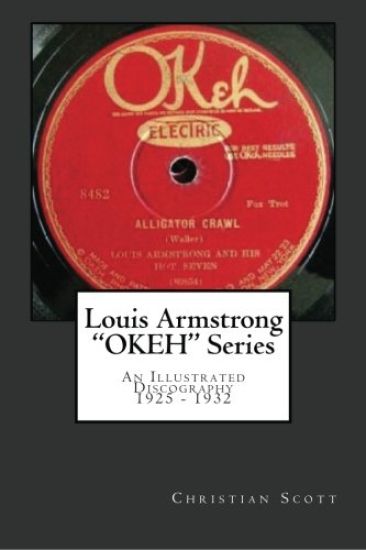
Louis Armstrong Okeh Series an Illustrated Discography 1925-1932

Louis Armstrong Okeh Series an Illustrated Discography 1925-1932

Christian Scott

Createspace Independent Publishing Platform
2011
pokkari
This comprehensive reference book is a Discographical listing which includes all of Louis Armstrong's recordings on the OKEH record label, the 8000 Series and the 41000 Series starting from his first recording with Okeh in 1925 through to his last Okeh recording in 1932. 84 Black and white Label Photos are spread throughout the book.Included you will find references to all 68 Okeh records and 136 songs issued. Personnel accompaniments for each session recording. Song title index, location and date of each recording.
Louis Austin and the Carolina Times

Louis Austin and the Carolina Times

Gershenhorn Jerry

The University of North Carolina Press
2018
sidottu
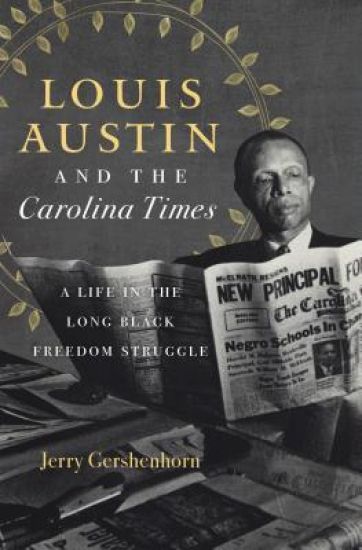
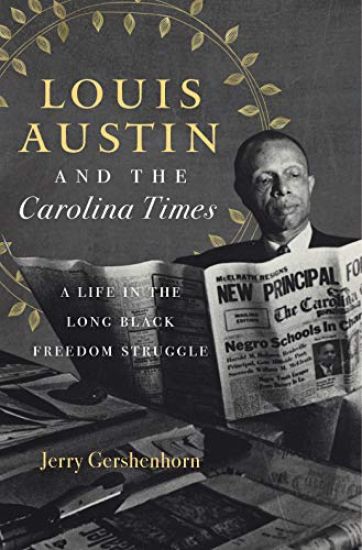
Louis Austin (1898-1971) came of age at the nadir of the Jim Crow era and became a transformative leader of the long black freedom struggle in North Carolina. From 1927 to 1971, he published and edited the Carolina Times, the preeminent black newspaper in the state. He used the power of the press to voice the anger of black Carolinians, and to turn that anger into action in a forty-year crusade for freedom.In this biography, Jerry Gershenhorn chronicles Austin's career as a journalist and activist, highlighting his work during the Great Depression, World War II, and the postwar civil rights movement. Austin helped pioneer radical tactics during the Depression, including anti-segregation lawsuits, boycotts of segregated movie theaters and white-owned stores that refused to hire black workers, and African American voting rights' campaigns based on political participation in the Democratic Party. In examining Austin's life, Gershenhorn is able to tell the story of the long black freedom struggle in North Carolina from a new vantage point, shedding new light on the vitality of black protest and the black press in the twentieth century.
Louis Austin and the Carolina Times

Louis Austin and the Carolina Times

Jerry Gershenhorn

The University of North Carolina Press
2020
nidottu
Louis Austin (1898-1971) came of age at the nadir of the Jim Crow era and became a transformative leader of the long black freedom struggle in North Carolina. From 1927 to 1971, he published and edited the Carolina Times, the preeminent black newspaper in the state. He used the power of the press to voice the anger of black Carolinians, and to turn that anger into action in a forty-year crusade for freedom.In this biography, Jerry Gershenhorn chronicles Austin's career as a journalist and activist, highlighting his work during the Great Depression, World War II, and the postwar civil rights movement. Austin helped pioneer radical tactics during the Depression, including antisegregation lawsuits, boycotts of segregated movie theaters and white-owned stores that refused to hire black workers, and African American voting rights campaigns based on political participation in the Democratic Party. In examining Austin's life, Gershenhorn narrates the story of the long black freedom struggle in North Carolina from a new vantage point, shedding new light on the vitality of black protest and the black press in the twentieth century.