El objetivo principal es dar a conocer de forma concreta la mayor a de los tumores de Sistema Nervioso Central, Perif rico y lesiones metast sicas que comprometan la funci n del sistema nervioso, dando a conocer a su vez un aspecto epidemiol gico m s actual de estos padecimientos en la UE y USA. Esta obra incluye aspectos de la preparaci n de los pacientes pedi tricos desde el punto de vista de la Neuro anestesiolog a pedi trica y los aspectos nutricionales que estos pacientes requieren para recibir tratamiento Neuroquir rgico y m dico oncol gico, lo cual hace a n m s completa a esta obra y ampl a el panorama del abordaje multi disciplinario que se requiere. Se incluye una secci n dedicada al diagn stico por imagen de estos tumores, con la finalidad de aumentar el conocimiento neuro radiol gico del lector. Por ello se incluyeron expertos m dicos de las reas de Neurocirug a y Neurocirug a pedi trica, Neurolog a pedi trica, Anestesiolog a pedi trica y Gen tica m dica entre otros con la finalidad de otorgar una obra m dica completa y de referencia para aquellos m dicos encargados del tratamiento del paciente pedi trico neuro oncol gico e interesados en el tema.
This book examines anti-corruption policies in Latin America. It compares best practices in public procurement and state budgets in order to provide new insights into policy design for governments, civil society organisations and international organisations engaged in the fight against corruption. The book assesses how a paradigm shift toward transparency in global governance has led to major changes in public policies in the region since the late 1990s. Using Uruguay and Chile as case studies, it then demonstrates the causal mechanisms linking transparency institutionalisation to corruption control. The book also offers recommendations for research and practice about the importance of coherent public accountability systems, that combine citizen oversight over government with government responsibility towards non-state actors. It will appeal to scholars and students of public policy, public administration and governance in Latin America, as well as those interested in political corruption.
This book examines anti-corruption policies in Latin America. It compares best practices in public procurement and state budgets in order to provide new insights into policy design for governments, civil society organisations and international organisations engaged in the fight against corruption. The book assesses how a paradigm shift toward transparency in global governance has led to major changes in public policies in the region since the late 1990s. Using Uruguay and Chile as case studies, it then demonstrates the causal mechanisms linking transparency institutionalisation to corruption control. The book also offers recommendations for research and practice about the importance of coherent public accountability systems, that combine citizen oversight over government with government responsibility towards non-state actors. It will appeal to scholars and students of public policy, public administration and governance in Latin America, as well as those interested in political corruption.
Deseas que no decaiga la llama en tu relaci n matrimonial? ste es tu libro Es el regalo perfecto para tu pareja. Existe un libro igual con tus nombres. B scalo como "52 Cosas Que nombre de ella] Desea Que nombre de l] Sepa". Si no est publicado a n, solic talo a la casa editora, que aparece en la contraportada. Podr n disfrutar de este libro en pareja las 52 semanas del a o
Deseas que no decaiga la llama en tu relaci n matrimonial? ste es tu libro Es el regalo perfecto para tu pareja. Existe un libro igual con tus nombres. B scalo como "52 Cosas Que nombre de ella] Desea Que nombre de l] Sepa". Si no est publicado a n, solic talo a la casa editora, que aparece en la contraportada, o en 52cosas.com. Podr n disfrutar de este libro en pareja las 52 semanas del a o
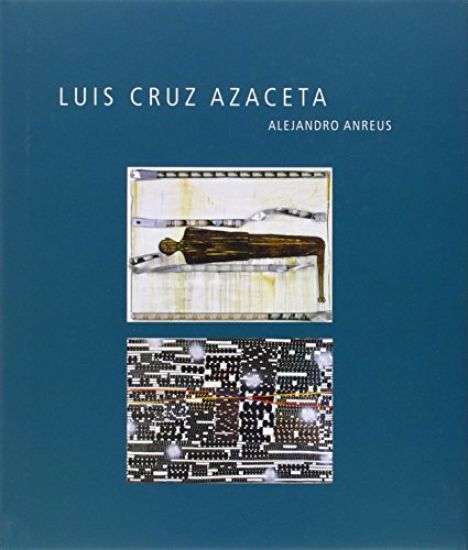
Cuban American artist Luis Cruz Azaceta addresses what author Alejandro Anreus calls the “wounds and screams” of the human condition. Although Cruz Azaceta’s work is extensively exhibited and widely collected, this is the first book on the artist’s life and creations.Anreus traces Cruz Azaceta’s career and explores the themes that are the focus of his singular art. Anreus discusses how the Cuban diaspora, above all, has shaped the artist and how the experience of exile has found expression through starkly forceful self-portraiture in many of his works. Anreus also examines the artist’s ongoing concern with current events. Cruz Azaceta has responded to national crises, such as the AIDS epidemic, the Oklahoma City bombing, and the devastation of New Orleans by Hurricane Katrina, with graphically powerful paintings, mixed-media pieces, and installations.Over the past four decades Cruz Azaceta has experimented with his visual vocabulary, moving from the flat, pop style of his early canvases, through neo-Expressionism, and into the abstraction of more-current work. His commentary on humanity, however, has not changed. His art continues to remind us that there are no easy solutions to the presence of violence and cruelty, exile and dislocation, and solitude and isolation.
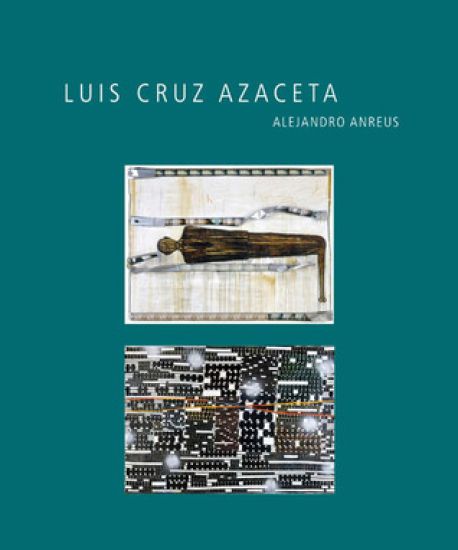
Cuban American artist Luis Cruz Azaceta addresses what author Alejandro Anreus calls the “wounds and screams” of the human condition. Although Cruz Azaceta’s work is extensively exhibited and widely collected, this is the first book on the artist’s life and creations.Anreus traces Cruz Azaceta’s career and explores the themes that are the focus of his singular art. Anreus discusses how the Cuban diaspora, above all, has shaped the artist and how the experience of exile has found expression through starkly forceful self-portraiture in many of his works. Anreus also examines the artist’s ongoing concern with current events. Cruz Azaceta has responded to national crises, such as the AIDS epidemic, the Oklahoma City bombing, and the devastation of New Orleans by Hurricane Katrina, with graphically powerful paintings, mixed-media pieces, and installations.Over the past four decades Cruz Azaceta has experimented with his visual vocabulary, moving from the flat, pop style of his early canvases, through neo-Expressionism, and into the abstraction of more-current work. His commentary on humanity, however, has not changed. His art continues to remind us that there are no easy solutions to the presence of violence and cruelty, exile and dislocation, and solitude and isolation.
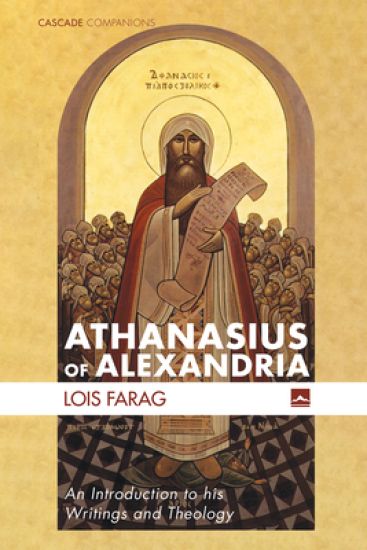
Athanasius of Alexandria, a famous theologian and historical figure, is quoted by many but known by few. His famous dictum, "For he became human that we might be made god (theopoiēthōmen)" is explained within the context of his theology and spirituality. The Introduction familiarizes the reader with Athanasius's writings and the historical context of his theology. The reader will engage with the Athanasian language and thought that shaped the Christian understanding of the Trinity. The reader also takes a journey through Athanasius's understanding of the human person, created in the image of God and living the life of renewal. The Introduction aims to guide the reader to a Christian theologian who had the courage to oppose emperors and bishops, and to endure exiles and other threats because of his unwavering theological convictions.
Athanasius of Alexandria, a famous theologian and historical figure, is quoted by many but known by few. His famous dictum, "For he became human that we might be made god (theopoiēthōmen)" is explained within the context of his theology and spirituality. The Introduction familiarizes the reader with Athanasius's writings and the historical context of his theology. The reader will engage with the Athanasian language and thought that shaped the Christian understanding of the Trinity. The reader also takes a journey through Athanasius's understanding of the human person, created in the image of God and living the life of renewal. The Introduction aims to guide the reader to a Christian theologian who had the courage to oppose emperors and bishops, and to endure exiles and other threats because of his unwavering theological convictions.
This book seeks to fill a double lacuna in Borges scholarship. For one, this scholarship has been largely developed through the lens of literary and cultural studies, and not by political theorists who bring a distinct disciplinary perspective into the reading of literary works. Secondly, mainstream interpreters have overlooked or have not analyzed enough Borges’s political sympathies. This book does not evaluate if these sympathies are truthful to political and historical facts or philosophical theories; rather, she shows in which aspects and around which topics Borges finds inspiration and gives literary form to the political. His texts abound with concepts and events such as liberty, individuality, war, and revolution, and they deal with topics such as the legitimacy of authority, the limits of reason, and the principle of representation, among others. This book also addresses Borges’s democratic sensitivity and his critique of populism and militarism as related to salient national and global historical events that inspired his works. Above all, it calls attention to Borges’s belief in the pre-eminence of individual liberty, his rejection of political oppression, and his warning against civic indifference brought about by an isolated individualism. This book may be of interest to students and professors of politics, philosophy and literature. It may also interest literary critics and readers who want to approach Borges’s works with a political rather than a literary or a cultural lens.
This book seeks to fill a double lacuna in Borges scholarship. For one, this scholarship has been largely developed through the lens of literary and cultural studies, and not by political theorists who bring a distinct disciplinary perspective into the reading of literary works. Secondly, mainstream interpreters have overlooked or have not analyzed enough Borges’s political sympathies. This book does not evaluate if these sympathies are truthful to political and historical facts or philosophical theories; rather, she shows in which aspects and around which topics Borges finds inspiration and gives literary form to the political. His texts abound with concepts and events such as liberty, individuality, war, and revolution, and they deal with topics such as the legitimacy of authority, the limits of reason, and the principle of representation, among others. This book also addresses Borges’s democratic sensitivity and his critique of populism and militarism as related to salient national and global historical events that inspired his works. Above all, it calls attention to Borges’s belief in the pre-eminence of individual liberty, his rejection of political oppression, and his warning against civic indifference brought about by an isolated individualism. This book may be of interest to students and professors of politics, philosophy and literature. It may also interest literary critics and readers who want to approach Borges’s works with a political rather than a literary or a cultural lens.
Quad Rotorcraft Control develops original control methods for the navigation and hovering flight of an autonomous mini-quad-rotor robotic helicopter. These methods use an imaging system and a combination of inertial and altitude sensors to localize and guide the movement of the unmanned aerial vehicle relative to its immediate environment. The history, classification and applications of UAVs are introduced, followed by a description of modelling techniques for quad-rotors and the experimental platform itself. A control strategy for the improvement of attitude stabilization in quad-rotors is then proposed and tested in real-time experiments. The strategy, based on the use low-cost components and with experimentally-established robustness, avoids drift in the UAV’s angular position by the addition of an internal control loop to each electronic speed controller ensuring that, during hovering flight, all four motors turn at almost the same speed. The quad-rotor’s Euler angles being very close to the origin, other sensors like GPS or image-sensing equipment can be incorporated to perform autonomous positioning or trajectory-tracking tasks. Two vision-based strategies, each designed to deal with a specific kind of mission, are introduced and separately tested. The first stabilizes the quad-rotor over a landing pad on the ground; it extracts the 3-dimensional position using homography estimation and derives translational velocity by optical flow calculation. The second combines colour-extraction and line-detection algorithms to control the quad-rotor’s 3-dimensional position and achieves forward velocity regulation during a road-following task. In order to estimate the translational-dynamical characteristics of the quad-rotor (relative position and translational velocity) as they evolve within a building or other unstructured, GPS-deprived environment, imaging, inertial and altitude sensors are combined in a state observer. The textgive the reader a current view of the problems encountered in UAV control, specifically those relating to quad-rotor flying machines and it will interest researchers and graduate students working in that field. The vision-based control strategies presented help the reader to a better understanding of how an imaging system can be used to obtain the information required for performance of the hovering and navigation tasks ubiquitous in rotored UAV operation.
Quad Rotorcraft Control develops original control methods for the navigation and hovering flight of an autonomous mini-quad-rotor robotic helicopter. These methods use an imaging system and a combination of inertial and altitude sensors to localize and guide the movement of the unmanned aerial vehicle relative to its immediate environment. The history, classification and applications of UAVs are introduced, followed by a description of modelling techniques for quad-rotors and the experimental platform itself. A control strategy for the improvement of attitude stabilization in quad-rotors is then proposed and tested in real-time experiments. The strategy, based on the use low-cost components and with experimentally-established robustness, avoids drift in the UAV’s angular position by the addition of an internal control loop to each electronic speed controller ensuring that, during hovering flight, all four motors turn at almost the same speed. The quad-rotor’s Euler angles being very close to the origin, other sensors like GPS or image-sensing equipment can be incorporated to perform autonomous positioning or trajectory-tracking tasks. Two vision-based strategies, each designed to deal with a specific kind of mission, are introduced and separately tested. The first stabilizes the quad-rotor over a landing pad on the ground; it extracts the 3-dimensional position using homography estimation and derives translational velocity by optical flow calculation. The second combines colour-extraction and line-detection algorithms to control the quad-rotor’s 3-dimensional position and achieves forward velocity regulation during a road-following task. In order to estimate the translational-dynamical characteristics of the quad-rotor (relative position and translational velocity) as they evolve within a building or other unstructured, GPS-deprived environment, imaging, inertial and altitude sensors are combined in a state observer. The textgive the reader a current view of the problems encountered in UAV control, specifically those relating to quad-rotor flying machines and it will interest researchers and graduate students working in that field. The vision-based control strategies presented help the reader to a better understanding of how an imaging system can be used to obtain the information required for performance of the hovering and navigation tasks ubiquitous in rotored UAV operation.