In December 2016, the Bulletin of Atomic Scientists moved their iconic "Doomsday Clock" thirty seconds forward to two and a half minutes to midnight, the latest it has been set since 1952, the year of the first United States hydrogen bomb test. But a group of scientists-geologists, engineers, and physicists-has been fighting to turn back the clock. Since the dawn of the Cold War, they have advocated a halt to nuclear testing, their work culminating in the Comprehensive Test Ban Treaty, which still awaits ratification from China, Iran, North Korea-and the United States. The backbone of the treaty is every nation's ability to independently monitor the nuclear activity of the others. The noted seismologist Lynn R. Sykes, one of the central figures in the development of the science and technology used in monitoring, has dedicated his career to halting nuclear testing. In Silencing the Bomb, he tells the inside story behind scientists' quest for disarmament. Called upon time and again to testify before Congress and to inform the public, Sykes and his colleagues were, for much of the Cold War, among the only people on earth able to say with certainty when and where a bomb was tested and how large it was. Methods of measuring earthquakes, researchers realized, could also detect underground nuclear explosions. When politicians on both sides of the Iron Curtain attempted to sidestep disarmament or test ban treaties, Sykes was able to deploy the nascent science of plate tectonics to reveal the truth. Seismologists' discoveries helped bring about treaties limiting nuclear testing, but it was their activism that played a key role in the quest for peace. Full of intrigue, international politics, and hard science used for the global good, Silencing the Bomb is a timely and necessary chronicle of one scientist's efforts to keep the clock from striking midnight.
The theory of plate tectonics transformed earth science. The hypothesis that the earth’s outermost layers consist of mostly rigid plates that move over an inner surface helped describe the growth of new seafloor, confirm continental drift, and explain why earthquakes and volcanoes occur in some places and not others. Lynn R. Sykes played a key role in the birth of plate tectonics, conducting revelatory research on earthquakes. In this book, he gives an invaluable insider’s perspective on the theory’s development and its implications.Sykes combines lucid explanation of how plate tectonics revolutionized geology with unparalleled personal reflections. He entered the field when it was on the cusp of radical discoveries. Studying the distribution and mechanisms of earthquakes, Sykes pioneered the identification of seismic gaps—regions that have not ruptured in great earthquakes for a long time—and methods to estimate the possibility of quake recurrence. He recounts the various phases of his career, including his antinuclear activism, and the stories of colleagues around the world who took part in changing the paradigm. Sykes delves into the controversies over earthquake prediction and their importance, especially in the wake of the giant 2011 Japanese earthquake and the accompanying Fukushima disaster. He highlights geology’s lessons for nuclear safety, explaining why historic earthquake patterns are crucial to understanding the risks to power plants. Plate Tectonics and Great Earthquakes is the story of a scientist witnessing a revolution and playing an essential role in making it.
Lisa thinks she has it all - dream job, besotted boyfriend, loyal friends, even her pub quiz team might win. But she's about to find out that things aren't quite as they seem. Charismatic Judith, devastated when she lost partner, Martin, in the floods, has moved to Manchester to escape the past. Trawling the Internet by day, haunted by her memories at night, she occupies her time stalking the new friends she met at the Sun pub quiz. Lisa is initially beguiled by the glamorous older woman but soon becomes suspicious of Judith's motives. As she pits her wits against Judith's wiles her amateur investigations trigger a murderous chain of events. Who is Judith? And just who is deluded?
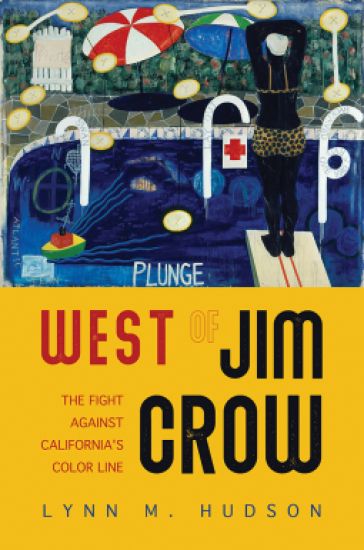
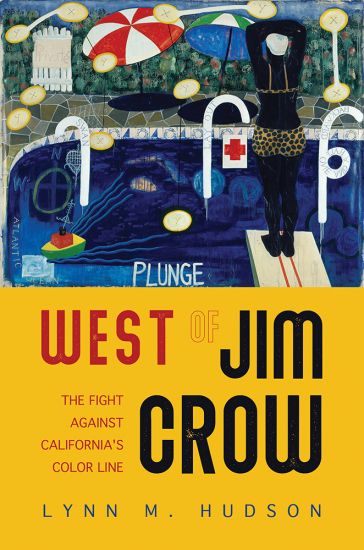
African Americans who moved to California in hopes of finding freedom and full citizenship instead faced all-too-familiar racial segregation. As one transplant put it, "The only difference between Pasadena and Mississippi is the way they are spelled." From the beaches to streetcars to schools, the Golden State—in contrast to its reputation for tolerance—perfected many methods of controlling people of color. Lynn M. Hudson deepens our understanding of the practices that African Americans in the West deployed to dismantle Jim Crow in the quest for civil rights prior to the 1960s. Faced with institutionalized racism, black Californians used both established and improvised tactics to resist and survive the state's color line. Hudson rediscovers forgotten stories like the experimental all-black community of Allensworth, the California Ku Klux Klan's campaign of terror against African Americans, the bitter struggle to integrate public swimming pools in Pasadena and elsewhere, and segregationists' preoccupation with gender and sexuality.
In his nearly forty-year career, Johann Scheibe became Leipzig's most renowned organ builder and one of the late Baroque's masters of the craft. Johann Sebastian Bach and Johann Kuhnau considered Scheibe a valued colleague. Organists and civic leaders shared their high opinion, for Scheibe built or rebuilt every one of the city's organs. Drawing on extensive research and previously untapped archival materials, Lynn Edwards Butler explores Scheibe's professional relationships and the full range of his projects. These assignments included the three-manual organ for St. Paul’s Church, renovations of the organs in the important churches of St. Thomas and St. Nicholas, and the lone surviving example of Scheibe's craft, a small organ in the nearby village of Zschortau. Viewing Scheibe within the context of the era, Butler illuminates the music scene of Bach's time as she follows the life of a gifted craftsman and his essential work on an instrument that anchored religious musical practice and community.
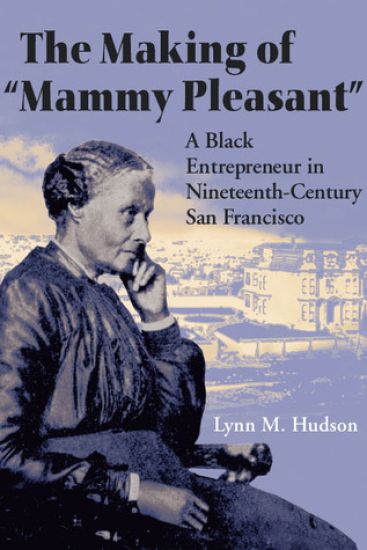
Investigating Mary Ellen Pleasant's convoluted legacy Mary Ellen Pleasant arrived in Gold Rush-era San Francisco a free black woman with abolitionist convictions and a predilection for entrepreneurial success. Behind the convenient and trusted disguise of "Mammy," she transformed domestic labor into enterprise, amassed remarkable real estate, wealth, and power, and gained notoriety for her work in fighting Jim Crow. Pleasant's legacy is steeped in scandals and lore. Was she a voodoo queen who traded in sexual secrets? A madam? A murderer? In The Making of "Mammy Pleasant," Lynn M. Hudson examines the folklore of Pleasant's real and imagined powers. Emphasizing the significance of her life in the context of how it has been interpreted or ignored in the larger trends of American history, Hudson integrates fact and speculation culled from periodicals, court cases, diaries, letters, Pleasant's interviews with the San Francisco press, and various biographical and fictional accounts. Addressing the lack of a historical record of black women's lives, the author argues that the silences and mysteries of Pleasant's past, whether never recorded or intentionally omitted, reveal as much about her life as what has been documented. Through Pleasant's life, Hudson also interrogates the constructions of race, gender, and sexuality during the formative years of California's economy and challenges popular mythology about the liberatory sexual culture of the American West.
African Americans who moved to California in hopes of finding freedom and full citizenship instead faced all-too-familiar racial segregation. As one transplant put it, "The only difference between Pasadena and Mississippi is the way they are spelled." From the beaches to streetcars to schools, the Golden State—in contrast to its reputation for tolerance—perfected many methods of controlling people of color. Lynn M. Hudson deepens our understanding of the practices that African Americans in the West deployed to dismantle Jim Crow in the quest for civil rights prior to the 1960s. Faced with institutionalized racism, black Californians used both established and improvised tactics to resist and survive the state's color line. Hudson rediscovers forgotten stories like the experimental all-black community of Allensworth, the California Ku Klux Klan's campaign of terror against African Americans, the bitter struggle to integrate public swimming pools in Pasadena and elsewhere, and segregationists' preoccupation with gender and sexuality.
An evocative and richly illustrated exploration of modern art about black holes. Inescapable and mysterious, black holes have long captured the imagination of visual artists, even before their existence was first confirmed in 1971. In Conjuring the Void, Lynn Gamwell explores this fascinating intersection of art and science. Starting with a chronological description of key developments in the science of black holes, Gamwell builds a foundation for the reader through visualizations of black holes created by scientists, depicting how a black hole s extreme gravity affects visible objects in its vicinity. From there, the book explores how artists have addressed the challenge of visualizing black holes by developing new methods of working with diverse materials, including a black paint that absorbs 99.96% of visible light. Gamwell looks at how certain themes within the science of black holes nothingness, emptiness, darkness, void, silence are prominent in traditional Eastern thought traditions as well as in modern abstract art. She also considers the work of contemporary artists such as Anish Kapoor, Olafur Eliasson, Takashi Murakami, and Danh V?, and discusses how they have explored these themes and more in their artworks. The book concludes with a look forward, describing dramatic developments in the imagery of black holes and their changing influence on visual culture.
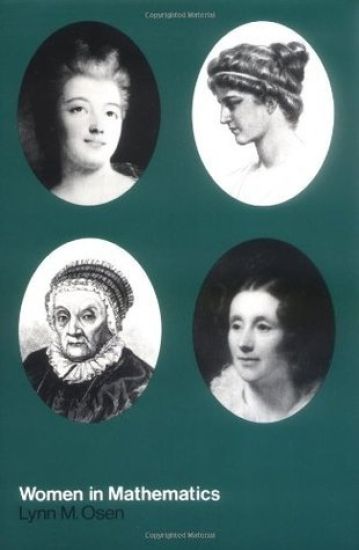
Mathematicians, science historians, and general readers will find this book a lively history; women will find it a reminder of a proud tradition and a challenge to take their rightful place in academic life today.The colorful lives of these women, who often traveled in the most avant-garde circles of their day, are presented in fascinating detail. The obstacles and censures that were also a part of their lives are a sobering reminder of the bias against women still present in this and other fields of academic endeavor. Mathematicians, science historians, and general readers will find this book a lively history; women will find it a reminder of a proud tradition and a challenge to take their rightful place in academic life today.
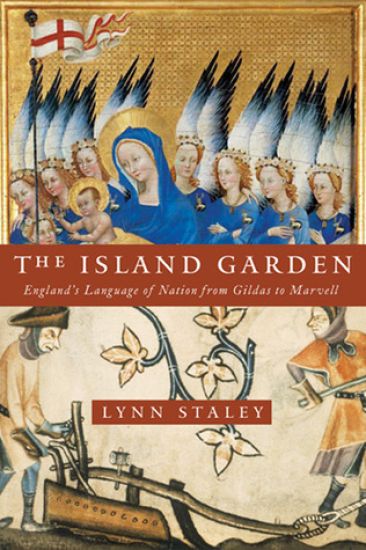
For centuries England's writers used the metaphor of their country as an island garden to engage in a self-conscious debate about national identity. In The Island Garden: England's Language of Nation from Gildas to Marvell, Lynn Staley suggests that the trope of Britain as an island garden catalyzed two crucial historical perspectives and thus analytic modes: as isolated and vulnerable, England stood in a potentially hostile relation to the world outside its encircling sea; as semi-enclosed and permeable, it also accepted recuperative relationships with those who moved across its boundaries. Identifying the concept of enclosure as key to Britain's language of place, Staley traces the shifting meanings of this concept in medieval and early modern histories, treatises, and poems. Beginning with Gildas in the sixth century, Staley maintains that the metaphor of England as the island garden was complicated, first, by Bede in the eighth century and later by historians, polemicists, and antiquarians. It allowed them to debate the nature of England's identity in language whose point might be subversive but that was beyond royal retribution. During the reign of Edward III, William Langland employed the subjects and anxieties linked to the island garden metaphor to create an alternative image of England as a semi-enclosed garden in need of proper cultivation. Staley demonstrates that Langland's translation of the metaphor for nation from a discreet and royal space into a communally productive half-acre was reformulated by writers such as Chaucer, Hoccleve, Tusser, Johnson, and Marvell, as well as others, to explore the tensions in England's social and political institutions. From the early thirteenth to the seventeenth centuries, English treatments of the biblical story of Susanna capture this self-conscious use of metaphoric language and suggest a perspective on law, individual rights, and conscience that is ultimately crucial to England's self-conception and description. Staley identifies in literary discourse a persistent argument for England as a garden that is enclosed yet not isolated, and that is protected by a law whose ideal is a common good that even kings must serve. The Island Garden is a fascinating and focused exploration of the ways in which authors have developed a language of place to construct England's cultural, social, and political identity.
Every day millions of Americans tune in to a newscast on one of their local television stations to learn what is new in their community. In fact, more people watch local news than network news, but surprisingly little is known about the early days of television when stations across the country searched for ways to do news in the new medium. In Broadcasting the Local News, Lynn Boyd Hinds, a former Pittsburgh broadcaster, introduces us to one station—KDKA-TV—which literally invented television news in Pittsburgh.Television came to Pittsburgh in 1949 when WDTV (the forerunner of KDKA-TV) went on the air. Whereas many television stations in the United States began reading news on the air only to comply with FCC requirements, WDTV treated news seriously from day one with its first regular program, a local news show called "Pitt Parade." Today KDKA is still highly regarded among journalists for its news programming. Although television news may seem familiar to us, it was anything but familiar to the men and women of early television. Hinds shows how they borrowed liberally from newspapers, radio, motion picture newsreels, theater, and even magazines to create, by trial and error, suitable ways to present the news. Rather than instantly replacing radio, television news moved slowly from the "rip and read" radio-style format, which simply duplicated what came over the wire services and was in the newspapers, to the conventions of local newscasts we take for granted today—live remotes, lead and feature stories, sports and weather, all brought together by an in-studio anchor. Pittsburghers will recognize many familiar names in Hinds's account—Bill Burns, Paul Long, Florence Sando, Eleanor Schano, and others—veterans of Pittsburgh broadcasting whom Hinds has interviewed for this book. The story they tell is the story of dozens of other stations across the country. In the process, they tell us much about the early history of television in America.
Margery Kempe’s Dissenting Fictions, a contextual and historical study of the Book, focuses on Kempe’s ability to construct a fiction that exploits the conventions of sacred biography and devotional prose as the means of scrutinizing the very foundations of fifteenth-century English society. Thus, though the Book is cast into a communally sanctioned "female" form, Kempe uses the very conventions that tended to define that form to test its outer limits. In producing a text whose apparatus locates it in a communal context, she signals her grasp of the relationship between both gender and genre and genre and public, but her underlying technique works to dissolve the very community she thereby constitutes. In so doing, she creates a work that is open to radically opposed readings. Each of the book’s four chapters considers a key aspect of Kempe’s fiction: her manipulation of the tropes of authorship; her exploitation of the conventions of sacred biography; her use of the language of gender as a means of exploring the issue of spiritual authority; and her handling of such important contemporary issues as vernacular translation and nationalism. The conclusion addresses the issue of community that is radically opposed to contemporary views of the English body politic. In situating Kempe in relation to contemporary texts and to contemporary issues, such as Lollardy, Lynn Staley provides a radically new way of looking at Kempe herself as an author who was fully aware of the types of constrictions she faced as a woman writer. As the study demonstrates, in Kempe we have the first major prose fiction writer of the Middle Ages. Her Book is a tribute to her keen understanding of conventional forms and modes and thus to her ability to reshape traditional materials. It is also a tribute to her understanding of the ways in which she might exploit the conventions and values of a patriarchal society to her own ends. Rather than Margery, the hysteric, Staley insists on Kempe, the controlling author, who, like Chaucer and Langland, creates a fiction that dramatizes the weaknesses of the social and ecclesiastical institutions of her day.
The Shepheardes Calender is the poem that launched Edmund Spenser's career and changed the direction of English poetry. In this reappraisal, Lynn Staley Johnson demonstrates that Spenser himself made a self-conscious effort to create a new literature, a new esthetic for a new era. Drawing upon a wide range of primary sources, she places the poem in its literary, social, political , and cultural context, contributing to our understanding of the relationship between Spenser and his times. She pays particular attention to the emergence of the myth of Elizabeth and of England during the first half of Elizabeth's reign and the ways in which the young Spenser manipulated the concerns and issues of the time, transforming popular culture into literary expression.By its active engagement with both the present and the past, the Calender suggests Spenser's conception of poetry as informed dialogue designed for social work, offering a reinterpretation of the relationship between the poet and his community. Choosing not to be circumscribed by the voices of his significant historical and literary past, the Calender proclaims the poet, not as transmitter or mediator, but as an active and shaping force, capable of remaking the present by offering his age a picture of a new and potentially more glorious reality.Johnson seeks to bridge the gap between the literature of the Middle Ages and the Renaissance by linking Spenser's strategies and themes to those of his medieval forebears, especially Chaucer. Both Edmund Spenser and his enigmatic Calender stand facing two ways, back into the age dubbed "middle" and forward, hailing the new; as it's study demonstrates, only by bringing these views into a single focus can we begin to appreciate the radical and innovative nature of a poem that for many heralds the renaissance of English poetry.
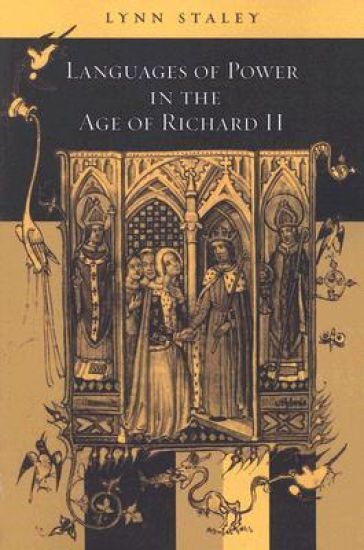
In this book the distinguished medievalist Lynn Staley turns her attention to one of the most dramatic periods in English history, the reign of Richard II, as seen through a range of texts including literary, political, chronicle, and pictorial. Richard II, who ruled from 1377 to 1399, succeeded to the throne as a child after the fifty-year reign of Edward III, and found himself beset throughout his reign by military, political, religious, economic, and social problems that would have tried even the most skilled of statesmen. At the same time, these years saw some of England’s most gifted courtly writers, among them Chaucer and Gower, who were keenly attuned to the political machinations erupting around them. In Languages of Power in the Age of Richard II Staley does not so much “read” literature through history as offer a way of “reading” history through its refractions in literature. In essence, the text both isolates and traces what is an actual search for a language of power during the reign of Richard II and scrutinizes the ways in which Chaucer and other courtly writers participated in these attempts to articulate the concept of princely power. As one who took it upon himself to comment on the various means by which history is made, Chaucer emerges from Staley’s narrative as a poet without peer.