Kirjojen hintavertailu. Mukana 11 528 319 kirjaa ja 12 kauppaa.

Kirjahaku

Etsi kirjoja tekijän nimen, kirjan nimen tai ISBN:n perusteella.

1000 tulosta hakusanalla Maral Atmaca

Moral Man and Immoral Society

Moral Man and Immoral Society

Reinhold Niebuhr

Continuum International Publishing Group Ltd.
2005
nidottu
Reinhold Niebuhr (1892-1971) was one of America's foremost twentieth-century religious thinkers and social critics. As pastor of Bethel Evangelical Church in Detroit, he became deeply interested in social problems. He was Professor of Applied Christianity at Union Theological Seminary, remaining there until his retirement. Ultimately, he abandoned his liberal Protestant hopes for the church's moral rule of society and became a Socialist activist. Moral Man and Immoral Society is Niebuhr's eloquent argument for the church's involvement in social reforms as well as a platform for his beliefs that men are sinners, that society is ruled by self-interest, and that history is characterized by irony, not progress.
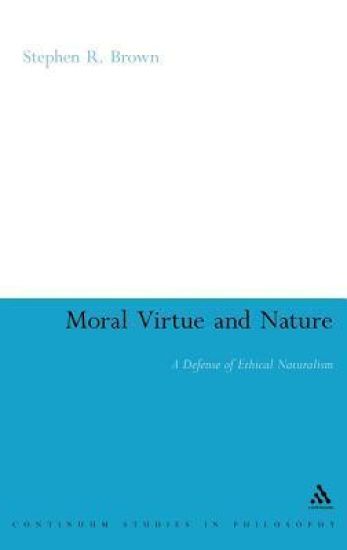
Moral Virtue and Nature

Moral Virtue and Nature

Stephen R. Brown

Continuum International Publishing Group Ltd.
2008
sidottu
What make someone a good human being? Is there an objective answer to this question, an answer that can be given in naturalistic terms? For ages philosophers have attempted to develop some sort of naturalistic ethics. Against ethical naturalism, however, notable philosophers have contended that such projects are impossible, due to the existence of some sort of gap between facts and values. Others have suggested that teleology, upon which many forms of ethical naturalism depend, is an outdated metaphysical concept. This book argues that a good human being is one who has those traits the possession of which enables someone to achieve those ends natural to beings like us. Thus, the answer to the question of what makes a good human being is given in terms both objective and naturalistic. The author shows that neither 'is-ought' gaps, nor objections concerning teleology pose insurmountable problems for naturalistic virtue ethics. This work is a much needed contribution to the ongoing debate about ethical theory and ethical virtue.
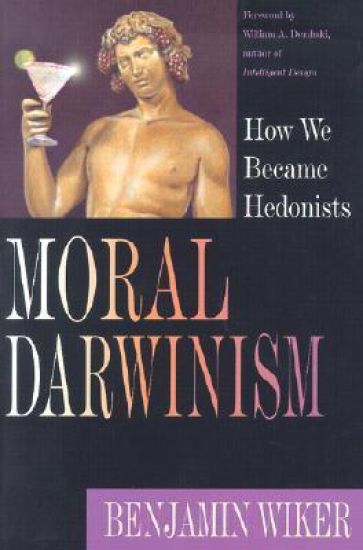
Moral Darwinism

Moral Darwinism

Benjamin Wiker

Inter-Varsity Press
2003
nidottu
Abortion. Euthanasia. Infanticide. Sexual promiscuity. Ideas and actions once unthinkable have become commonplace. We seem to live in a different moral universe than we occupied just a few decades ago. Consent and noncoercion seem to be the last vestiges of a morality long left behind. Christian moral tenets are now easily dismissed and have been replaced with what is curiously presented as a superior, more magnanimous, respectful and even humble morality. How did we end up so far away from where we began? Can the decline be stopped? Ben Wiker, in this provocative and insightful book, traces the amazing story that explains our present cultural situation. Wiker finds the roots of our moral slide reaching all the way back to the ethical theory and atheistic cosmology of the ancient Greek philosopher Epicurus. Christian teaching had been in contention with this worldview long before it reached its pinnacle with the rise and acceptance of Darwinism. But it was Darwinism, Wiker contends, that provided this ancient teaching with the seemingly modern and scientific basis that captured twentieth-century minds. Wiker demonstrates that this ancient atomistic and materialistic philosophy supplies the guiding force behind Darwinism and powerfully propels the hedonistic bent of our society while promoting itself under the guise of pure science. This book is a challenge not only to those who believe Darwinism to be purely scientific fact but to Christian who have at times inconsistently lived out their Christian moral convictions and so have failed to recognize and address the ancient corrosive underpinnings of our present moral and intellectual crisis.
Moral Rights and Political Freedom

Moral Rights and Political Freedom

Tara Smith

Rowman Littlefield
1995
sidottu
Seeking a way out of today's bewildering rush of rights claims, Tara Smith's Moral Rights and Political Freedom offers a systematic account of the nature and foundations of rights. The book carefully elucidates what political freedom is and demonstrates why it should be protected by rights. Smith's thesis is that rights are teleological: respect for freedom is necessary for individuals' flourishing or eudaimonia. Smith illustrates how many alleged rights would actually undermine that objective. Her decisive refutation of the assumption that conflicts between rights are inevitable—demonstrating how such conflicts are theoretically incoherent and practically self-defeating—should go a long way toward resolving many contemporary disputes about rights.
Moral Rights and Political Freedom

Moral Rights and Political Freedom

Tara Smith

Rowman Littlefield
1995
nidottu
Seeking a way out of today's bewildering rush of rights claims, Tara Smith's Moral Rights and Political Freedom offers a systematic account of the nature and foundations of rights. The book carefully elucidates what political freedom is and demonstrates why it should be protected by rights. Smith's thesis is that rights are teleological: respect for freedom is necessary for individuals' flourishing or eudaimonia. Smith illustrates how many alleged rights would actually undermine that objective. Her decisive refutation of the assumption that conflicts between rights are inevitable—demonstrating how such conflicts are theoretically incoherent and practically self-defeating—should go a long way toward resolving many contemporary disputes about rights.
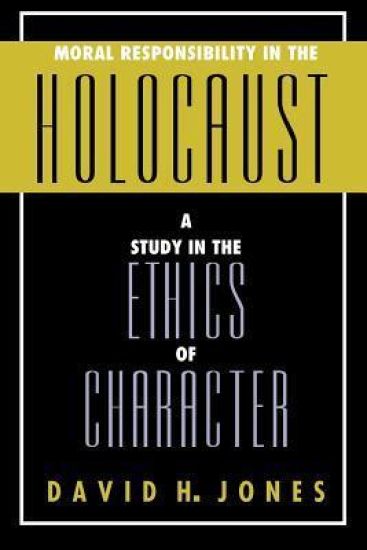
Moral Responsibility in the Holocaust

Moral Responsibility in the Holocaust

David H. Jones

Rowman Littlefield
1999
sidottu
In Moral Responsibility in the Holocaust, David H. Jones goes beyond historical and psychological explanations of the Holocaust to directly address the moral responsibility of individuals involved in it. While defending the view that individuals caught up in large-scale historical events like the Holocaust are still responsible for their choices, he provides the philosophical tools needed to assess the responsibility, both negative and positive, of perpetrators, accomplices, bystanders, victims, helpers, and rescuers.
Moral Responsibility in the Holocaust

Moral Responsibility in the Holocaust

David H. Jones

Rowman Littlefield
1999
nidottu
In Moral Responsibility in the Holocaust, David H. Jones goes beyond historical and psychological explanations of the Holocaust to directly address the moral responsibility of individuals involved in it. While defending the view that individuals caught up in large-scale historical events like the Holocaust are still responsible for their choices, he provides the philosophical tools needed to assess the responsibility, both negative and positive, of perpetrators, accomplices, bystanders, victims, helpers, and rescuers.
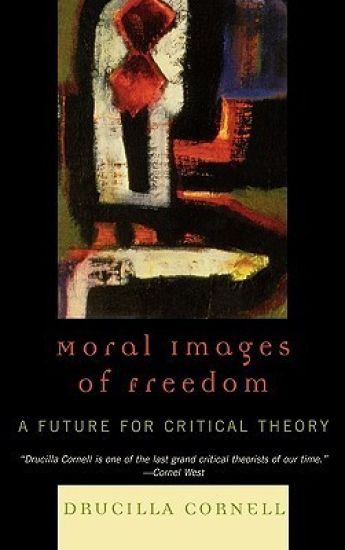
Moral Images of Freedom

Moral Images of Freedom

Drucilla Cornell

Rowman Littlefield
2007
sidottu
Moral Images of Freedom resurrects the Kantian project of affirmative political philosophy and traces its oft-forgotten influences found in thinkers such as Martin Heidegger, Ernst Cassirer, Frantz Fanon, and Walter Benjamin. Drucilla Cornell responds to nihilistic claims about the empty purpose of critical theory in a world so utterly captured by violence in all of its worst forms: economic, social, political, and cultural. Cornell instead draws together a sweeping thread of hope in the varied symbolic forms of freedom persistent throughout the work of a broader range of critical theorists and addresses the burning challenge for such work to respond seriously to the need for a decolonization of critical theory itself and a sustained commitment to the possible future of socialism.
Moral Images of Freedom

Moral Images of Freedom

Drucilla Cornell

Rowman Littlefield
2007
nidottu
Moral Images of Freedom resurrects the Kantian project of affirmative political philosophy and traces its oft-forgotten influences found in thinkers such as Martin Heidegger, Ernst Cassirer, Frantz Fanon, and Walter Benjamin. Drucilla Cornell responds to nihilistic claims about the empty purpose of critical theory in a world so utterly captured by violence in all of its worst forms: economic, social, political, and cultural. Cornell instead draws together a sweeping thread of hope in the varied symbolic forms of freedom persistent throughout the work of a broader range of critical theorists and addresses the burning challenge for such work to respond seriously to the need for a decolonization of critical theory itself and a sustained commitment to the possible future of socialism.
Moral Power

Moral Power

Koen Stroeken

Berghahn Books
2012
pokkari
Neither power nor morality but both. Moral power is what Sukuma farmers in Tanzania in times of crisis attribute to an unknown figure they call their witch. A universal process is involved, as much bodily as social, which obstructs the patient’s recovery. Healers turn the table on the witch through rituals showing that the community and the ancestral spirits side with the victim. In contrast to biomedicine, their magic and divination introduce moral values that assess the state of the system and that remove the obstacles to what is taken as key: self-healing. The implied ‘sensory shifts’ and therapeutic effectiveness have largely eluded the literature on witchcraft. This book shows how to comprehend culture other than through the prism of identity politics. It offers a framework to comprehend the rise of witch killings and human sacrifice, just as ritual initiation disappears.
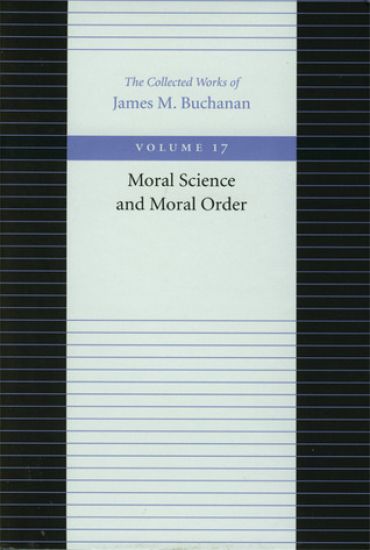
Moral Science & Moral Order

Moral Science & Moral Order

James Buchanan

Liberty Fund Inc
2001
sidottu
This volume presents a representative sampling of James M Buchanan's philosophical views as he deals with fundamental problems of moral science and moral order. As one might expect, Buchanan always goes back to fundamental principles first. From there, his observations and conclusions range far and wide from his own discipline. The thirty essays collected in MORAL SCIENCE AND MORAL ORDER are divided into these categories: methods and models; belief and consequence; moral community and moral order; moral science, equality, and justice; contractarian encounters. In his foreword, Hartmut Kliemt says, "The British and Scottish Moralists of the Enlightenment period would have felt very comfortable with James Buchanan. Like them, Buchanan may be seen as a 'man of letters' who concerns himself with fundamental problems of moral science and moral order. But, also like them, Buchanan is not a secondhand dealer in old ideas. On the contrary, taking as inspiration classical philosopher-economists (in particular, Adam Smith), Buchanan not only proposes new applications of the neoclassical economic paradigm, he also addresses, in innovative ways, fundamental issues of his discipline and beyond." Kliemt's lengthy foreword highlights some of the major philosophical currents with which Buchanan is engaged in the papers collected in this volume. His introduction to these philosophies provides an excellent grounding for economists and all readers who may not be familiar with the philosophical and fundamental issues Buchanan undertakes.
Moral Science & Moral Order

Moral Science & Moral Order

James Buchanan

Liberty Fund Inc
2001
nidottu
This volume presents a representative sampling of James M Buchanan's philosophical views as he deals with fundamental problems of moral science and moral order. As one might expect, Buchanan always goes back to fundamental principles first. From there, his observations and conclusions range far and wide from his own discipline. The thirty essays collected in MORAL SCIENCE AND MORAL ORDER are divided into these categories: methods and models; belief and consequence; moral community and moral order; moral science, equality, and justice; contractarian encounters. In his foreword, Hartmut Kliemt says, "The British and Scottish Moralists of the Enlightenment period would have felt very comfortable with James Buchanan. Like them, Buchanan may be seen as a 'man of letters' who concerns himself with fundamental problems of moral science and moral order. But, also like them, Buchanan is not a secondhand dealer in old ideas. On the contrary, taking as inspiration classical philosopher-economists (in particular, Adam Smith), Buchanan not only proposes new applications of the neoclassical economic paradigm, he also addresses, in innovative ways, fundamental issues of his discipline and beyond." Kliemt's lengthy foreword highlights some of the major philosophical currents with which Buchanan is engaged in the papers collected in this volume. His introduction to these philosophies provides an excellent grounding for economists and all readers who may not be familiar with the philosophical and fundamental issues Buchanan undertakes.
Moral Foundation of Democracy

Moral Foundation of Democracy

John H Hallowell

Liberty Fund Inc
2007
nidottu
Hallowell makes a significant argument in favour of the importance of moral values in the orderly functioning of modern democracies. Hallowell begins with a survey of the role that classical liberalism and faith in man as a reasonable, moral, and spiritual actor played in the emergence of democratic self-government. He sharply criticises positivist thought and moral relativism as direct challenges to the notion that transcendent truths guide individuals in their actions and influence how people participate in a democratic society. Hallowell reminds us that at its core, a well-functioning democracy must be based on a fundamental respect for the dignity of the individual.
Moral Literacy

Moral Literacy

Colin McGinn

Hackett Publishing Co, Inc
1993
nidottu
"A great resource for beginning ethics courses. The book is short and yet it richly embodies the methods of ethical thinking about practical moral problems that are hard for students to learn unless they see them in action. McGinn perspicuously sets out a small set of basic principles and then attacks the problems of our treatment of animals, abortion, sex, censorship, and so on, with a masterful blend of attention to real-life cases and imaginary thought experiments. McGinn hardly claims to have the last word on the complex issues he discusses, and students will find many exciting problems and points to take up." —Owen Flanagan, Duke University
Moral Sprouts and Natural Teleologies

Moral Sprouts and Natural Teleologies

Owen Flanagan

Marquette University Press
2014
sidottu
The 2014 Aquinas Lecture, Moral Sprouts and Natural Teleologies: 21st Century Moral Psychology Meets Classical Chinese Philosophy, was delivered on Sunday, February 23, 2014, by Owen J. Flanagan, James B. Duke Professor of Philosophy at Duke University, USA.Dr. Flanagan received his B.A. in Philosophy from Fordham University, USA in 1970 and his Ph.D. in Philosophy from Boston University, USA in 1978. He taught as Wellesley College, USA from 1977-1993 before moving to Duke University in 1993. He has had Visiting appointments as Distinguished Professor, University of Vienna, Austria the Jack Lynch Visiting Professor, Wake Forest University, USA a Templeton Distinguished Research Fellow, University of Southern California, USA Distinguished Fellow in Psychology & Biology of Morality, Dartmouth College, USA and the John Findlay Distinguished Visiting Professor, Boston University, USA. As a Templeton Distinguished Research Fellow, he gave six lectures on the topic “Human Flourishing in the Age of Mind Science.” In 1998-99, he earned the Romanell Phi Beta Kappa Award, giving three Lectures on “Science and the Human Image.” In addition to his position as Professor of Philosophy at Duke University, he is also Professor of Psychology and Neuroscience, Professor of Neurobiology, a Faculty Associate at the Center for Cognitive Neuroscience, and an Associate in the Graduate Program in Literature.