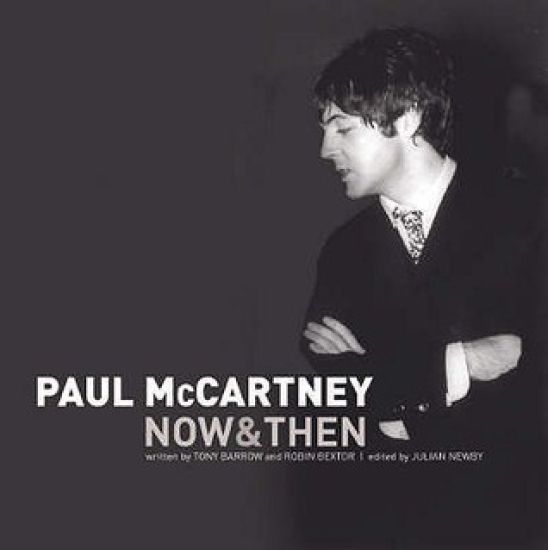
Illustrated throughout with photographs, and with additional insights and recollections from those who have been closest to Paul McCartney throughout his career, this book creates a revealing and personal portrait of the one of the world's greatest living musical icons.
While there are many books on how to learn Visual Basic, few focus on the "bite sized" tips and techniques that maximize a VB professional's productivity in the real, day-to-day, programming world. McCarter's many tips and techniques solve the kinds of dilemmas that professionals could previously master only with many years of experience. If even one of these tips saves the professional an hour of work (and there are hundreds that can do just that), the book will more than justify its cost to the VB professional. The book begins with a chapter for those programmers starting out in Visual Basic. It then gives tips and techniques that cover just about every major topic necessary for intermediate to advanced VB programmers. Among the wide variety of topics covered are: Forms, Disk and Files, advanced Windows API usage, Database Programming and using VB for Internet programming. About the author: David McCarter has been a professional programmer for more than six years. He teaches Visual Basic programming at the University of California, San Diego and since 1993 has run a web site for VB programmers called VB Tips and Tricks (http://www.vbtt.com). McCarter also writes and does technical editing for the Visual Basic Programmers Journal. His first book, VB Tips and Tricks Volume 1, (Mabry) was published in 1997. David also is on the steering committee of the San Diego Visual Basic Group.
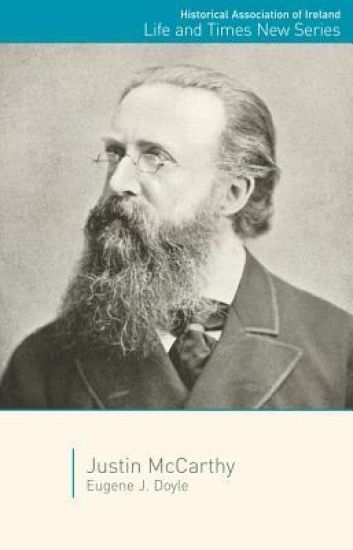
Justin McCarthy (1830-1912) is the forgotten leader of the Irish Home Rule Movement. Overshadowed by Parnell before him and the 1916 leaders shortly after his death, McCarthy's considerable contribution to the national cause has been largely overlooked. Without his conciliatory chairmanship (1890-6), the Irish Party would have subdivided further after the Parnell split; the critical Liberal alliance would have ended; and the House of Commons would not have passed Gladstone's second Home Rule Bill in 1893. Born in Cork but living in London, McCarthy was not a career politician, but rather a respected and financially successful writer, who championed many liberal causes long before becoming actively involved in politics. He was elected a Home Rule Party MP in 1879, and the party's vice-chairman the following year. His subsequent time as chairman, beginning with the 1890 split, spanned a period of intense struggle over the second Home Rule Bill. During these demanding years he sacrificed his health and income for the national cause - 'the religion of my life'. This biography restores its subject to his rightful place in the front rank of Irish leaders - Parnell, McCarthy, Redmond - who led the Irish Party into parliamentary battle in pursuit of Home Rule.
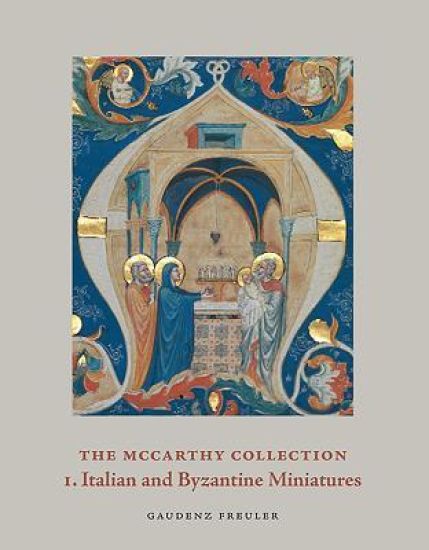
This handsomely produced publication is the first of a two volume set exploring an outstanding collection of leaves and miniatures from medieval manuscripts. Brimming with beautiful illustrations, this welcome contribution to medieval scholarship covers a period from the late 9th to the late 15th centuries and incorporates new discoveries in this still growing field.The turbulent times when Napoleon’s troops were sweeping over Europe under the banner of secularization, seeking to suppress ecclesiastical influence within the sphere of political power, had disastrous consequences especially for ecclesiastical libraries, which were broken up and looted. The Italian religious houses had their cultural treasures destroyed or moved out of context and spread all over the world to satisfy a growing market for medieval art. These fatal years (1796–99) coincide with a major interest in early Italian painting, when French and English connoisseurs joined their Italian colleagues in a systematic study of early Italian art, producing fundamental studies on the subject.Essentially the deplorable practice of breaking up manuscripts and liturgical books was not all that different from the inglorious process of dismembering giant medieval altarpieces, whose single pieces were made available to a growing market and, consequently, dispersed among different collections. Thus, in the present day, one of the major tasks of the art historian is the attempt to reassemble these fragments and present them in virtual reconstructions, reconstituting their original context. By doing this, scholars create the foundation for any further art-historical analysis of a work of art. This task is one of the important objectives in cataloguing the present collection.The miniatures and single leaves in the McCarthy collection, which has been formed in the past two or three decades – between 1990 and today – are manifestly the fruit of the destructive, but at the same time a conservational effort. Even though assembled in relatively recent years, the McCarthy collection stands in line with many similar anthologies of miniature in private or public hands. However, by contrast to other similar collections, the McCarthy collection has not limited its focus just on one school of European illumination, the Italian centres of illumination, but aims to present a vast panorama of this sophisticated art, which, to use Dante’s words, was called ‘illumination’ (‘... quell arte ch’alluminar chiamata è in Parisi’; Purgatorio, XI, 79–80).The present volume is dedicated to the holdings of single leaves and miniatures from medieval Italian manuscripts, which cover a period from the late 9th to the late 15th centuries, and are enriched by a few Byzantine items, appropriately included here and discussed by Georgi Parpulov. The focus on late 13th- and early 14th-century illumination in the collection demonstrates McCarthy’s predilection for the medieval and early Gothic world, which also becomes apparent in his holdings of French and German illumination, to be discussed by Peter Kidd in volume II, to be announced shortly.
This handsome catalogue is the second of a three-volume set exploring the McCarthy collection, arguably the largest and most important private collection of illuminated cuttings, miniatures, and leaves in the world. Volume I (published 2018) presented Italian and Byzantine entries; Volume III (forthcoming 2020) will be devoted to French entries. The present volume is dedicated to the holdings of single leaves and cuttings from Spanish, English, Flemish and Central European manuscripts from the 12th to late 15th centuries. Richly detailed with plentiful illustrations, it is a notable contribution to medieval scholarship.
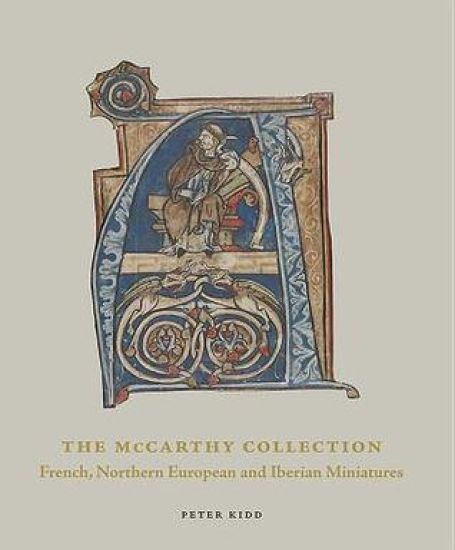
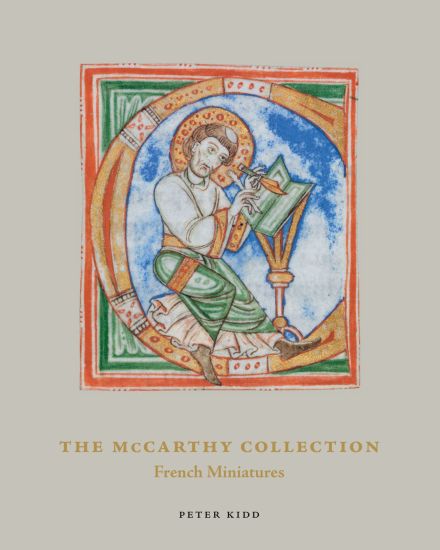
This substantial catalogue is the final of a three-volume set exploring a remarkable collection of leaves and miniatures from medieval manuscripts. Richly detailed with plentiful illustrations, this notable contribution to medieval scholarship describes French material from c. 1100 to the 15th century, with particular strength in the 13th and 14th centuries.The McCarthy collection is arguably the largest and most important private collection of illuminated cuttings, miniatures, and leaves in the world. Following the publication in 2018 of Italian and Byzantine Miniatures and in 2019 Spanish, English, Flemish and Central European Miniatures, the third volume covers illumination from France.Volume I (published 2018) has eighty Italian and eight Byzantine entries; Volume II (published 2019) is the smallest, with sixty-three entries, divided between eight Spanish (and perhaps Portuguese) entries, eleven English ones, ten from the southern Netherlands, and finally thirty-four from across Germany, Austria, Switzerland and Bohemia; the present volume is the largest, with approximately ninety-five French entries. The fact that the French material is the largest group overall is partly a reflection of Robert McCarthy’s early interest in French Gothic art, inspired by youthful visits to Chartres and other Gothic cathedrals.In many cases the recto and verso of each item is reproduced, as the verso often provides vital textual, palaeographical or art historical clues to the date and place of origin, or traces of a later provenance and lists parent volumes, sister leaves and cuttings, some of which are also reproduced.
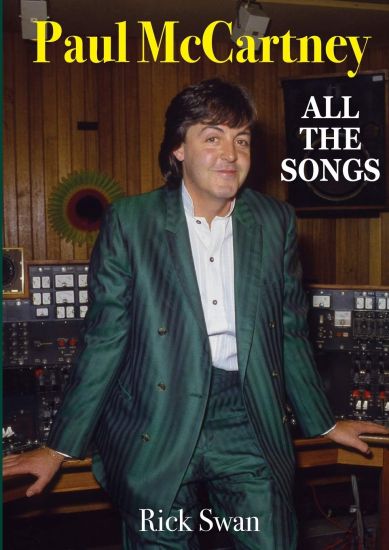
As humanly possible, this book attempts to evaluate every track that Paul McCartney has released on a major label. Thus, the premise of this book: to sift the gems from the chaff and examine what's driven McCartney up and down for fifty years. There are plenty of tracks suitable for casual fans, adolescents, even pre-schoolers. But there are tracks for an older audience too, tracks so good they can supply grown-ups with a rewarding soundtrack for a lifetime. It's these that make for a playlist worth keeping. From 1970 and beyond, the songwriting McCartney seemed to be saddled with a rickety who-cares system that generated iffy results. Gone were ‘Eleanor Rigby’ and ‘Penny Lane’. Instead, came the thought-free ‘Mary Had a Little Lamb’ and ‘Bip Bop’, songs The Beatles wouldn't have considered for a second. Troubles swarmed around him as he searched for his place. The Beatles had theirs - where was his? Was he overly obsessed with perfection? Maybe. Or was it insecurity? His next record couldn't be a forward-thinking experiment, with sales falling wherever they may. It had to - had to - be a chart topper adored all over the world.
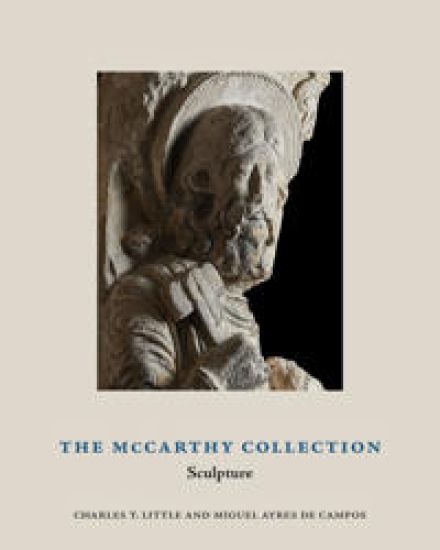
A selection of medieval European sculptures from the McCarthy collection. This substantial catalog explores a remarkable collection of medieval European sculptures. Richly detailed with plentiful illustrations and original research, it is a notable contribution to medieval scholarship. The McCarthy collection comprises more than 150 specimens of medieval European sculpture, produced over nearly six hundred years. A testimony to the comprehensiveness of Robert McCarthy's interest in the art and culture of the Middle Ages, its geographical, chronological, and typological breadth place it among the most important of its kind in private hands. Enriched with outstanding photography by Barney Hindle and Mark French, this book provides detailed stylistic, iconographic, and contextual analyses. This approach, complemented in some cases by petrographic analysis, has allowed the authors to connect much of the material presented in these pages with specific buildings, workshops, or regional schools, contributing to a better understanding of the pieces themselves, their original settings, and their cultural and artistic milieux. This catalog is part of an ambitious project to document the entirety of McCarthy's holdings—which also include notable selections of medieval ivories, stained glass, and East Christian Art.
Facepots focuses on the recent ceramic work of New York–based artist Dan McCarthy (born 1962)--highly animated and emotionally charged objects formed through an immediate, hands-on process. The volume situates McCarthy's ceramics historically and includes a visual essay by the artist himself, featuring images and icons that served as inspiration.
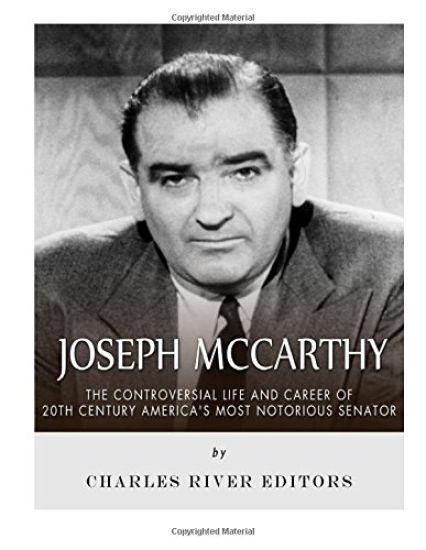
*Includes pictures *Includes McCarthy's quotes about his own life and career *Includes excerpts of the McCarthy-Army hearings *Includes online resources and a bibliography for further reading *Includes a table of contents "Today we are engaged in a final, all-out battle between communistic atheism and Christianity. The modern champions of communism have selected this as the time, and ladies and gentlemen, the chips are down - they are truly down." - Joseph McCarthy "I will not get in the gutter with that guy." - President Dwight D. Eisenhower Shortly after World War II, Congress' House Committee on Un-American Activities began investigating Americans across the country for suspected ties to Communism. The most famous victims of these witch hunts were Hollywood actors, such as Charlie Chaplin, whose "Un-American activity" was being neutral at the beginning of World War II. By the late 1950s, the hysteria had waned, recognized in large measure as an overreaction. Another factor was the disrepute the Red Scare fell into because of the antics of Wisconsin Senator Joseph McCarthy. McCarthy had made waves in 1950 by telling the Republican Women's Club in Wheeling, West Virginia that he had a list of dozens of known Communists working in the State Department. The political theater helped Senator McCarthy become the most prominent anti-Communist crusader in the government, and the Rosenberg case only further emboldened him. McCarthy continued to claim he held evidence suggesting Communist infiltration throughout the government, but anytime he was pressed to produce his evidence, McCarthy would not name names. Instead, he'd accuse those who questioned his evidence of being Communists themselves. McCarthy's rise made it possible for him to continue lobbing accusations against people, but the Senator finally met his match when he went after the Army. As chairman of the Senate Committee on Government Operations, McCarthy summoned decorated World War II veterans and challenged their loyalty, and when he openly suggested World War II hero Brigadier General Ralph W. Zwicker was a Communist during one hearing, the military had enough. In April 1954, the committee hearings were widely televised, and Americans watched Army members demand that McCarthy name names and provide evidence. On June 9, 1954, McCarthy was humiliated by the Army's legal representative, Joseph Nye Welch, who repeatedly demanded that McCarthy produce the list of alleged Communists in the U.S. Army. As McCarthy tried to wiggle out of the challenge, he finally named Fred Fisher, who had been affiliated with the National Lawyers Guild during law school, an organization that FBI Director J. Edgar Hoover attempted to have the Attorney General designate as a Communist front. Enraged, Welch responded, "Until this moment, Senator, I think I have never really gauged your cruelty or your recklessness. Fred Fisher is a young man who went to the Harvard Law School and came into my firm and is starting what looks to be a brilliant career with us...We know he belonged to the Lawyers Guild. Let us not assassinate this lad further, Senator. You've done enough. Have you no sense of decency, sir? At long last, have you left no sense of decency?" Welch received an ovation from the gallery, and McCarthy had been publicly and permanently repudiated. He would be censured by Congress, and he would die just a few years later. Though anti-Communist sentiment in the 1950s is often derisively dismissed as McCarthyism, there was some basis for the era's fears. The Communist Party in the United States was funded by the Soviet Union; its leaders were paid by the Soviets, and several were agents of the Soviet intelligence apparatus. Still, as a small elite group that was able to place individuals in positions of power, they did present a potential threat to the security of the country, and there were several spy rings operating in America at the time.
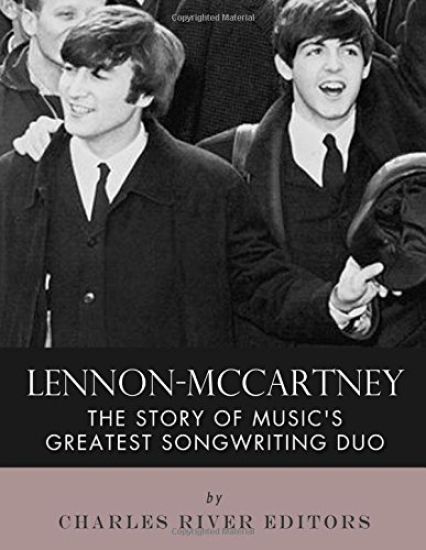
*Includes Suggested Playlists for both Lennon and McCartney. *Includes detailed descriptions of the origins and recording of some of The Beatles' timeless classics, including Tomorrow Never Knows, Strawberry Fields Forever, and A Day in the Life. *Includes descriptions of the Beatles' famous encounters with Bob Dylan and Elvis Presley. *Includes pictures of Lennon, McCartney and important people, places, and events in their lives. *Includes a Bibliography for both Lennon and McCartney for further reading. In 1964, girls all across the United States filled venues, almost literally screamed their heads off, and fainted en masse. Almost from the second they played the first note, The Beatles would be hit with the resounding screams, which made it impossible for them to even hear themselves sing. When they made their American debut on The Ed Sullivan Show in early 1964, they were greeted by young fans who whipped themselves up into such a frenzy that some of them fainted. Beatlemania had struck North America, creating a musical and pop culture phenomenon unlike anything the world had ever seen. At the center of it all was John Lennon and Paul McCartney, the principal songwriting duo who were instrumental in creating the soundtrack of the 1960s, while producing some of the world's most timeless classics. Together with George Harrison and Ringo Starr, Lennon and McCartney propelled The Beatles to unprecedented heights, sparking Beatlemania on two sides of the Atlantic and experimenting with their sound in ways that revolutionized rock and inspired bands across various musical genres. Through it all, Lennon became one of the world's most interesting and outspoken men, a complex figure who survived a turbulent upbringing, addictions to drugs, and unstable relationships, only to be tragically killed just as he was settling into a serene, comfortable life. His loss is as widely felt today as it was in December 1980, as people remain in awe of his music and continue to grapple with the contradictory nature of his life and work, which at any given moment could oscillate from his notoriously acerbic wit to the endless optimism of Imagine. McCartney lacked the controversy of Lennon, the spirituality of Harrison, and the silliness of Starr, but he was unquestionably one of the driving forces behind the Beatles' most productive recording periods, especially on the Beatles' seminal Revolver album. It was also McCartney who tried hardest to keep the Beatles together from 1968-1970, even while his perfectionist attention to detail frequently drove his bandmates crazy. Ultimately, it was McCartney who was the first to publicly announce his departure from the Beatles. Sir Paul may have never topped the highs established by the Beatles, but he has gone on to have the longest and most productive solo career of the four. While that was helped in part by the tragic murder of Lennon in 1980, McCartney has nonetheless remained at the forefront of pop culture since 1970, and the Guinness Book of World Records has recognized him as the most successful recording artist of all time. Indeed, McCartney wrote or co-wrote over 30 #1 hits and has sold over 100 million albums and 100 million singles in his music career. Lennon-McCartney chronicles the lives and legacies of the two rock icons and analyzes their lasting musical legacies, humanizing both the rebellious hellion and the "cute" one. Along with suggested playlists of the two's greatest songs, descriptions of the recording and inspiration behind some of their classics, and pictures, you will learn about history's greatest songwriting duo like you never have before.
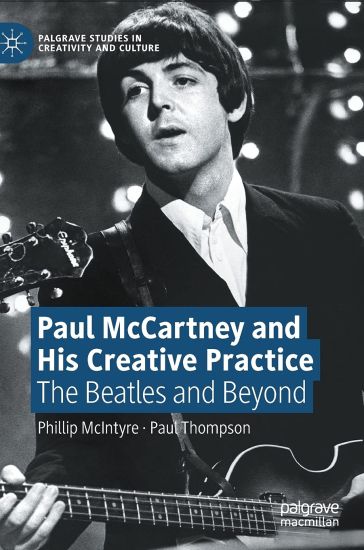
This book provides fresh insight into the creative practice developed by Paul McCartney over his extended career as a songwriter, record producer and performing musician. It frames its examination of McCartney’s work through the lens of the systems model of creativity developed by Mihaly Csikszentmihalyi and combines this with the research work of Pierre Bourdieu. This systems approach is built around the basic structures of idiosyncratic agents, like McCartney himself, and the choices he has made as a creative individual. It also locates his work within social fields and cultural domains, all crucial aspects of the creative system that McCartney continues to be immersed in. Using this tripartite system, the book includes analysis of McCartney’s creative collaborations with musicians, producers, artists and filmmakers and provides a critical analysis of the Romantic myth which forms a central tenet of popular music. This engaging work will have interdisciplinary appeal to students andscholars of the psychology of creativity, popular music, sociology and cultural studies.
This book provides fresh insight into the creative practice developed by Paul McCartney over his extended career as a songwriter, record producer and performing musician. It frames its examination of McCartney’s work through the lens of the systems model of creativity developed by Mihaly Csikszentmihalyi and combines this with the research work of Pierre Bourdieu. This systems approach is built around the basic structures of idiosyncratic agents, like McCartney himself, and the choices he has made as a creative individual. It also locates his work within social fields and cultural domains, all crucial aspects of the creative system that McCartney continues to be immersed in. Using this tripartite system, the book includes analysis of McCartney’s creative collaborations with musicians, producers, artists and filmmakers and provides a critical analysis of the Romantic myth which forms a central tenet of popular music. This engaging work will have interdisciplinary appeal to students andscholars of the psychology of creativity, popular music, sociology and cultural studies.
This richly illustrated publication is a selection of hundreds of still photographs shot during the making of "Rebel Dabble Babble," a collaboration between Paul McCarthy and his son Damon McCarthy. "Rebel Dabble Babble" is a complex installation and video projection work inspired by both Nicholas Ray's 1955 classic Hollywood film "Rebel without a Cause" and the rumors that swirled around the off-set relationships between its director and his stars James Dean, Nathalie Wood and Sal Mineo. This densely layered opus confronts definitions of power and role-play, and expands beyond references to the 1955 movie to offer a meditation on the archetypes and Oedipal tensions that define family dynamics. In the film, McCarthy and his actors (including Hollywood star James Franco) play hybrids both of Ray's cinematic characters and the actors who played them. With this mind-bending series of doubles, binaries and inversions, "Rebel Dabble Babble" presents perversions of interchangeable roles and fetish relationships.
This study contends that American writer Cormac McCarthy not only is philosophical, or a “writer of ideas,” but rather that he has a philosophy. Devoting one main chapter to each facet of McCarthy’s thought – his metaphysics, epistemology, and ethics, respectively – the study engages in focused readings of all of McCarthy’s major works. Along the way, the study brings McCarthy’s ideas into conversation with a host of philosophers who range from Plato to Alain Badiou, with figures such as William James, Martin Heidegger, Hannah Arendt, and Slavoj Žižek featured prominently. Situated at the crossroads of literary studies, literary theory, cultural studies, continental philosophy, and theology, the appeal of Cormac McCarthy’s Philosophy is widespread and deeply interdisciplinary.
This study contends that American writer Cormac McCarthy not only is philosophical, or a “writer of ideas,” but rather that he has a philosophy. Devoting one main chapter to each facet of McCarthy’s thought – his metaphysics, epistemology, and ethics, respectively – the study engages in focused readings of all of McCarthy’s major works. Along the way, the study brings McCarthy’s ideas into conversation with a host of philosophers who range from Plato to Alain Badiou, with figures such as William James, Martin Heidegger, Hannah Arendt, and Slavoj Žižek featured prominently. Situated at the crossroads of literary studies, literary theory, cultural studies, continental philosophy, and theology, the appeal of Cormac McCarthy’s Philosophy is widespread and deeply interdisciplinary.