

Kirjahaku
Etsi kirjoja tekijän nimen, kirjan nimen tai ISBN:n perusteella.
1000 tulosta hakusanalla Michelle Perry

Marriage is the sweetest revenge

Ruthless Rivals: Bound By Vows
Michelle Smart; Caitlin Crews; Millie Adams
HARPERCOLLINS PUBLISHERS
2026
nidottu

The “disappearance” and torture of many people during the worst days of the authoritarian regimes that ruled many Latin American countries in the 1970s have been well documented and widely condemned as abuses of human rights. Less well known is what has become of the movements for human rights once democratic governments were restored in these countries. In this book, Michelle Bonner reveals how the defense of human rights continues today, taking Argentina as her primary example (with comparison to Chile in the final chapter).Bonner shows that the role of women—viewed as protectors of the family—is key to understanding how human rights movements have evolved. Moreover, the continuity of the “historical frames” used to legitimate their activity is an essential element in the success of their efforts, even while the claimed abuse has changed from the political repression undertaken by the dictators’ minions to the economic hardships created by market inequities resulting from neoliberal policies.Based on extensive field research and providing a long historical view extending from colonial times to the present, this study compares the activities of the ten most prominent human rights organizations in Argentina and assesses the responses of both state and society.
The “disappearance” and torture of many people during the worst days of the authoritarian regimes that ruled many Latin American countries in the 1970s have been well documented and widely condemned as abuses of human rights. Less well known is what has become of the movements for human rights once democratic governments were restored in these countries. In this book, Michelle Bonner reveals how the defense of human rights continues today, taking Argentina as her primary example (with comparison to Chile in the final chapter).Bonner shows that the role of women—viewed as protectors of the family—is key to understanding how human rights movements have evolved. Moreover, the continuity of the “historical frames” used to legitimate their activity is an essential element in the success of their efforts, even while the claimed abuse has changed from the political repression undertaken by the dictators’ minions to the economic hardships created by market inequities resulting from neoliberal policies.Based on extensive field research and providing a long historical view extending from colonial times to the present, this study compares the activities of the ten most prominent human rights organizations in Argentina and assesses the responses of both state and society.

Latin America’s flirtation with neoliberal economic restructuring in the 1980s and 1990s (the so-called Washington Consensus strategy) had the effect of increasing income inequality throughout the region. The aim of this economic policy was in part to create the conditions for stable democracy by ensuring efficient economic use of resources, both human and capital, but the widening gap between rich and poor threatened to undermine political stability. At the heart of the dilemma faced by these new democracies is the question of accountability: Are all citizens equally capable of holding the government accountable if it does not represent their interests? In this book, Michelle Taylor-Robinson investigates both the formal institutions of democracy (such as electoral rules and the design of the legislative and executive branches) and informal institutions (such as the nomination procedures of political parties and patron-client relationships) to see what incentives legislators have to pay attention to the needs of poor people and thereby adequately represent their interests.

Latin America’s flirtation with neoliberal economic restructuring in the 1980s and 1990s (the so-called Washington Consensus strategy) had the effect of increasing income inequality throughout the region. The aim of this economic policy was in part to create the conditions for stable democracy by ensuring efficient economic use of resources, both human and capital, but the widening gap between rich and poor threatened to undermine political stability. At the heart of the dilemma faced by these new democracies is the question of accountability: Are all citizens equally capable of holding the government accountable if it does not represent their interests? In this book, Michelle Taylor-Robinson investigates both the formal institutions of democracy (such as electoral rules and the design of the legislative and executive branches) and informal institutions (such as the nomination procedures of political parties and patron-client relationships) to see what incentives legislators have to pay attention to the needs of poor people and thereby adequately represent their interests.

The Bible is filled with so many incredible women, and it's time we were introduced to them! Meet Deborah, the only female judge of Israel; Anna, the Prophetess, who prophesied about Jesus in the Temple; Priscilla, heavily involved in growing the early church; and Tabitha, known by the disciples for her good deeds. This is only a few of the extraordinary women you can find in the Bible, so let's go and meet them all and learn how to be as amazing as them!

While best known for her winsome and accessible documentaries on art, the late Sister Wendy Beckett is an immensely significant figure in her own right. From early childhood, Wendy knew an unusually luminous relationship with God and she was gifted with the ability to communicate her profound spiritual insights with clarity and cogency. The Spiritual Landscape of Sister Wendy explores the breadth and depth of her vision by selecting and reflecting on passages from both her published and unpublished works. The carefully curated selections are drawn from the wide range of sources in which we hear Wendy’s voice – including her books, articles, correspondence, documentaries, interviews and previously unpublished material. Following a substantial biographical introduction, the book explores themes such as the transcendent God of joy and intimacy revealed by Jesus, what it means to live in a world in which the foundation of all being is Love, and the role of prayer, the Church and art in the journey to becoming fully human.
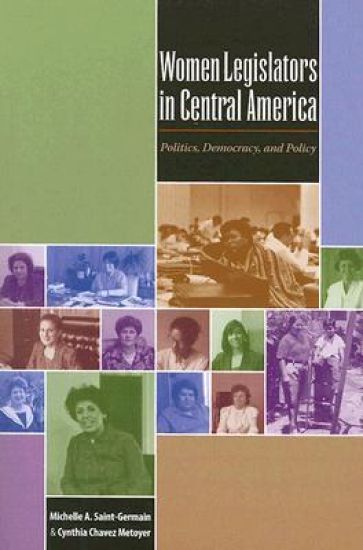
Women Legislators in Central America
Michelle A. Saint-Germain; Cynthia Chavez Metoyer
University of Texas Press
2008
pokkari
During the years between 1980 and 1999, in the midst of war and economic crisis, a record number of women were elected to national legislatures in Central American republics. Can quantitative increases in the presence of elected women in Central America produce qualitative political changes? In this detailed study, Michelle A. Saint-Germain and Cynthia Chavez Metoyer explore the reasons for this unprecedented political rise of women, and what effect it has had on the region. Focusing on Costa Rica, El Salvador, Guatemala, Honduras, and Nicaragua, the authors analyze national and regional indicators to evaluate various hypotheses concerning the reasons for women's electoral success in the region, as well as to make comparisons with findings from other world regions. They find that the election of more women depends on three things: the presence of a crisis, a pool of politically experienced women, and a culture of gender consciousness. They also compare the characteristics of Central American women legislators to women in other national legislatures around the world. The authors document how elected women have used their policy-making power to begin to change the lives of all Central Americans, women and men alike. In more than seventy-five in-depth, personal interviews, these women legislators reflect on their lives, political careers, and gender identities in their own words, providing deep insights into recent events in this region.
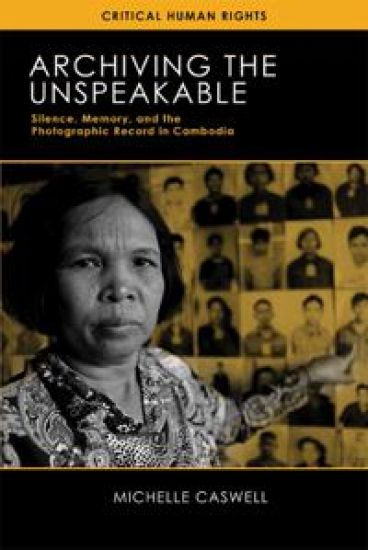
Roughly 1.7 million people died in Cambodia from untreated disease, starvation, and execution during the Khmer Rouge reign of less than four years in the late 1970s. The regime’s brutality has come to be symbolized by the multitude of black-and-white mug shots of prisoners taken at the notorious Tuol Sleng prison, where thousands of “enemies of the state” were tortured before being sent to the Killing Fields. In Archiving the Unspeakable, Michelle Caswell traces the social life of these photographic records through the lens of archival studies and elucidates how, paradoxically, they have become agents of silence and witnessing, human rights and injustice as they are deployed at various moments in time and space. From their creation as Khmer Rouge administrative records to their transformation beginning in 1979 into museum displays, archival collections, and databases, the mug shots are key components in an ongoing drama of unimaginable human suffering.

Charting a journey through schoolyards and laundromats, suburban gardens and rice paddies, yoga studios and rural highways, Michelle Brittan Rosado crafts poems that blend elegy and praise. In settings from California to Malaysian Borneo, and the wide Pacific between them, she explores themes of coming-of-age, mixed-race identity, diaspora, and cultural inheritance. With empathy for the generations past, she questions how we might navigate our history to find a way through it, still holding on to the ones we love. Like an ocean wave, these poems recede and return, with gratitude for the quotidian and for beauty found even in fragments.bring me backto the in-betweenwhere my breathhas always lived,without containment,like two legs pointingtoward the ocean, or these armsreaching into sky—excerpt from ""Ode to the Double 'L'"" Michelle Brittan Rosado. All rights reserved.

"An interactive and empowering book."—BET.com"Plain talk. Strong medicine. A long-overdue prescription to cure what ails our community. A must-read for every African American." —Tavis Smiley According to the federal Office of Minority Health, African Americans "are affected by serious diseases and health conditions at far greater rates than other Americans." In fact, African Americans suffer an estimated 85,000 excess deaths every year from diseases we know how to prevent: heart disease, stroke, cancer, high blood pressure, and diabetes. In this important and accessible book, Dr. Michelle Gourdine provides African Americans with the knowledge and guidance they need to take charge of their well-being.Reclaiming Our Health: A Guide to African American Wellness begins with an overview of the primary health concerns facing African Americans and explains who is at greatest risk of illness. Expanding on her career and life experiences as an African American physician, Dr. Gourdine presents key insights into the ways African American culture shapes health choices—how beliefs, traditions, and values can influence eating choices, exercise habits, and even the decision to seek medical attention. She translates extensive research into practical information and presents readers with concrete steps for achieving a healthier lifestyle, as well as strategies for navigating the health-care system.This interactive guide with illustrations is a vital resource for every African American on how to live a healthier and more empowered life, and an indispensable handbook for health-care providers, policy makers, and others working to close the health gap among people of color. Says Gourdine, "I wrote this book to empower our community to solve our own health problems and to save our own lives."
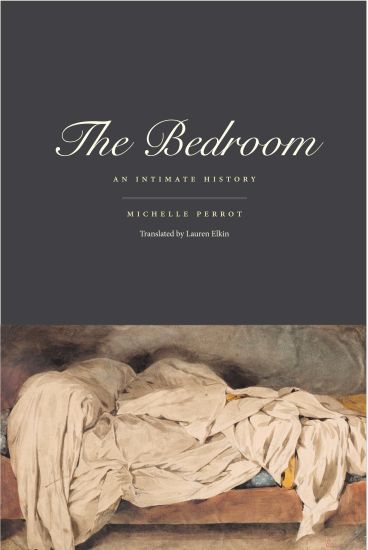
An erudite and highly enjoyable exploration of the most intriguing of personal spaces, from Greek and Roman antiquity through today The winner of France’s prestigious Prix Femina Essai (2009), this imaginative and captivating book explores the many dimensions of the room in which we spend so much of our lives—the bedroom. Eminent cultural historian Michelle Perrot traces the evolution of the bedroom from the time of the ancient Greeks and Romans to today, examining its myriad forms and functions, from royal king’s chamber to child’s sleeping quarters to lovers’ trysting place to monk’s cell. The history of women, so eager for a room of their own, and that of prisons, where the principal cause of suffering is the lack of privacy, is interwoven with a reflection on secrecy, walls, the night and its mysteries. Drawing from a wide range of sources, including architectural and design treatises, private journals, novels, memoirs, and correspondences, Perrot’s engaging book follows the many roads that lead to the bedroom—birth, sex, illness, death—in its endeavor to expose the most intimate, nocturnal side of human history.

The first survey of more than fifty years of drawing by a legendary sculptor and draftswoman Lee Bontecou (b. 1931) established a significant reputation in the 1960s with pioneering sculptures and reliefs made of raw and expressionistic materials. Her art is simultaneously organic and mechanical, and infused with biological, geological, and technological motifs. These same qualities also animate a less-known but compelling body of work: her drawings. Ranging from her early soot on paper works created using powder from a welding torch to recent drawings in pencil and colored pencil that evoke cosmoses and microcosmic worlds, this stunning book is the first retrospective survey of Bontecou’s consistently innovative drawings. More than sixty full-color plates, populated by imagery ranging from black voids to mechanomorphs to hybrid descendants of teeth, plants, and fish, are complemented by original essays from leading scholars who explore themes such as the drawings’ historical contexts, Bontecou’s use of the iconography of the void, and the eco-apocalyptic themes of an artist who came of age in the roiling political atmosphere of the 1960s. Distributed for The Menil CollectionExhibition Schedule:The Menil Collection, Houston (01/31/14–05/11/14)Princeton University Art Museum (06/28/14–09/21/14)

This stunning book examines the collection of works by self-taught artists assembled by Stephanie and John Smither over the last thirty-odd years. A team of prominent curators, writers, critics, and art historians focuses on key works by twelve artists, including the boisterous assemblages of Thornton Dial; brightly colored visual interpretations of the Bible by Sister Gertrude Morgan; Oscar Hadwiger’s detailed wood models of fantastical architecture; and Carlo Zinelli’s narrative tableaus of stylized figures and animals. Also featured are works by the ceramicist Georgia Blizzard; drawings by Hiroyuki Doi, Solange Knopf, Martín Ramírez, and Dominico Zindato; paintings by Jon Serl and Johnnie Swearingen; and carved wood sculptures by Charlie Willeto. Distributed for The Menil CollectionExhibition Schedule:The Menil Collection (06/10/16–10/16/16)

A multidisciplinary exploration of our human inclination to herd and why our instinct to copy others can be dangerous in today’s interlinked world Rioting teenagers, tumbling stock markets, and the spread of religious terrorism appear to have little in common, but all are driven by the same basic instincts: the tendency to herd, follow, and imitate others. In today’s interconnected world, group choices all too often seem maladaptive. With unprecedented speed, information flashes across the globe and drives rapid shifts in group opinion. Adverse results can include speculative economic bubbles, irrational denigration of scientists and other experts, seismic political reversals, and more. Drawing on insights from across the social, behavioral, and natural sciences, Michelle Baddeley explores contexts in which behavior is driven by the herd. She analyzes the rational vs. nonrational and cognitive vs. emotional forces involved, and she investigates why herding only sometimes works out well. With new perspectives on followers, leaders, and the pros and cons of herd behavior, Baddeley shines vivid light on human behavior in the context of our ever-more-connected world.
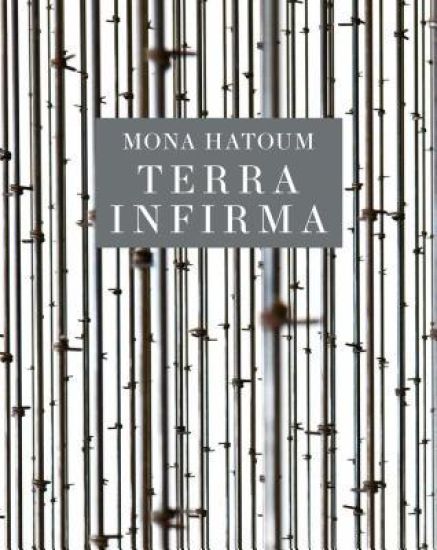
A fresh and engaging look at the groundbreaking work of contemporary artist Mona Hatoum The work of London-based artist Mona Hatoum (b. 1952) addresses the growing unease of an ever-expanding world that is as technologically networked as it is fractured by war and exile. Best known for sculptures that transform domestic objects such as kitchen utensils or cribs into things strange and threatening, Hatoum conducts multilayered investigations of the body, politics, and gender that express a powerful and pervasive sense of precariousness. Her works are never simple and often elicit conflicting emotions, such as fascination and fear, desire and revulsion. This copiously illustrated presentation of Hatoum’s oeuvre offers critical and art historical essays by Michelle White and Anna C. Chave and imaginative texts by Rebecca Solnit and Adania Shibli, which contextualize the artist’s work and its relationship to Surrealism, Minimalism, feminism, and politics. With extensive discussions on a selection of significant sculptures and installations, some of which are previously unpublished, Mona Hatoum: Terra Infirma provides an insightful look at one of the most exciting and influential artists working today.Distributed for The Menil CollectionExhibition Schedule:The Menil Collection, Houston (10/13/17–02/25/18)Pulitzer Arts Foundation, St. Louis (04/06/18–08/11/18)

Describing drawing as her “primary activity,” for over thirty years Roni Horn (b. 1955) has created innovative and experimental works on paper marked by both conceptual and technical complexity. This carefully curated survey of the artist’s drawings from the early 1980s through 2016 explores works revolving around the mutability of identity and the fragility of place, time, and language; it also delves into Horn’s unique approach to mark-making and her process of cutting up and reassembling words and images. With sumptuous illustrations, this catalogue features an insightful look at and selected details of Horn’s large-scale—sometimes over ten feet tall—works on paper; the artist’s series of cadmium red drawings; and her cut-and-pasted word drawings that combine well-known literary texts by Gertrude Stein and William Shakespeare with colloquial expressions. Distributed for The Menil CollectionExhibition Schedule:The Menil Collection, Houston (02/15/19–09/01/19)
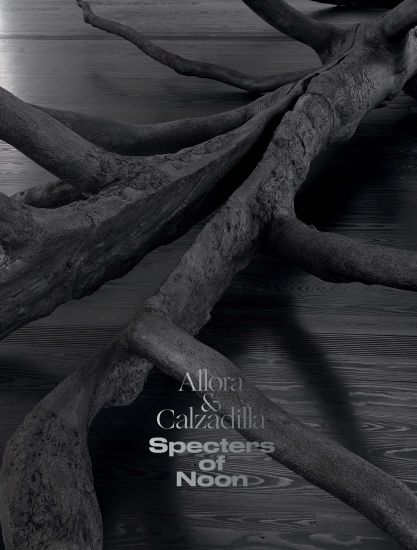
A beautiful presentation of a new suite of works made for the Menil Collection by Allora & Calzadilla The Puerto Rico–based collaborative duo Allora & Calzadilla created Specters of Noon as a group of seven large-scale works specifically for the Menil Collection. The ensemble is orchestrated around the idea of solar noon, a notion derived from Surrealist texts by Caillois, Césaire, and others that probe the transcultural mythology of noon—a time when shadows vanish and delirious visions momentarily reign. The works include light projections, guano, ship engines, live vocal performance, and coal. Using the Menil’s Surrealist holdings as a point of departure, Specters of Noon is infused throughout with a Caribbean perspective that addresses the instability of environmental and colonial politics; one work is a power transformer damaged in Hurricane Maria that is half-sheathed in bronze. Filled with stunning installation photography and insightful texts both commissioned and reprinted, this volume captures the spirit of Jennifer Allora (b. 1974) and Guillermo Calzadilla’s (b. 1971) deeply researched and multifaceted work.Distributed for the Menil CollectionExhibition Schedule:Menil Collection, Houston (September 26, 2020–June 20, 2021)