Kirjahaku
Etsi kirjoja tekijän nimen, kirjan nimen tai ISBN:n perusteella.
1000 tulosta hakusanalla Moses Stuart

A Narrative of the Adventures and Escape of Moses Roper, from American Slavery
Moses Roper
Antigonos Verlag
2025
nidottu

Moses Mendelssohn's philosophische und religiöse Grundsätze, mit Hinblick auf Lessing
Meyer Kayserling
Antigonos Verlag
2025
pokkari
Moses Mendelssohn's philosophische und religiöse Grundsätze, mit Hinblick auf Lessing
Meyer Kayserling
Antigonos Verlag
2025
sidottu

A Narrative of the Adventures and Escape of Moses Roper, from American Slavery.
Moses Roper
Gale, Sabin Americana
2012
pokkari
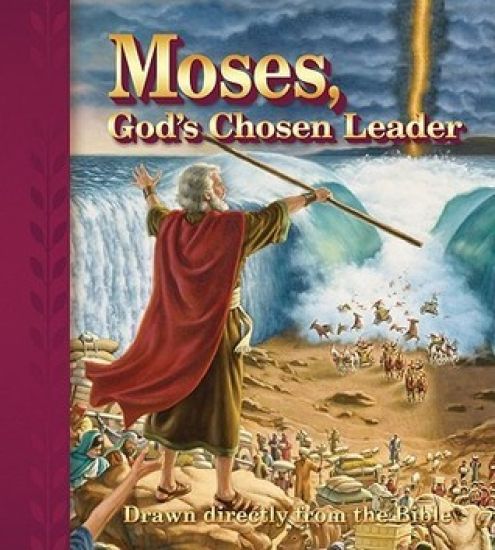
Moses, God's Chosen Leader
Concordia Publishing House Ltd
2011
pokkari
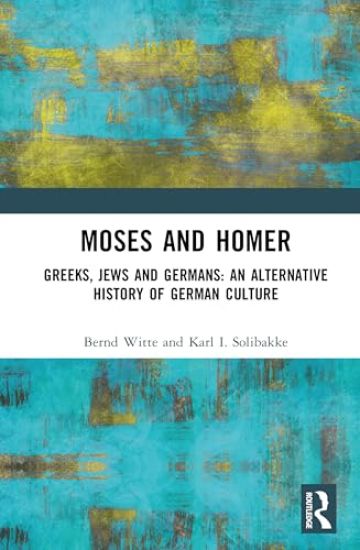
Moses and Homer explores the eradication of the Jewish tradition from German intellectual history between 1770 and 1800 and analyzes the numerous ruptures triggered by the exclusion of the representatives of Judaism from the German-speaking literary world. The closing decades of the eighteenth century were distinguished by a burgeoning admiration for Ancient Greece in Germany, while at the same time Judaism which had begun to open itself to European Enlightenment was vehemently opposed in literary and intellectual circles. Goethe’s and Schiller’s aggressive anti-Judaism was levied against the Biblical legacy of God’s revelation at Sinai and his legendary mediator Moses. Prompted by Johann Joachim Winckelmann’s paean to Homeric culture, German Classics unfolded a new legitimizing discourse in which polytheism served to position the 'productive individual' and 'growing nature' as preeminent categories in modernity. The rationale was to replace monotheism with a religion of nature, a shift that had far-reaching consequences well into the twentieth century. In their distinctive ways, Moses Mendelssohn and Heinrich Heine countered by attempting to salvage the vision of a German-Jewish dialog. Additionally, a broad range of cultural reflexion is examined, including relevant contributions by Hölderlin, Herder, Hegel, Buber, Baeck, Freud, Benn, Kantorowicz, Auerbach und Heidegger. The volume traces the ideological battle waged against monotheism, nurtured by an early rejection of Jewish intellectualism and a steadfast focus on classicism, and its impact on the militant antisemitism of the nineteenth and twentieth centuries. These intellectual developments culminated in the racial politics of the Nazi terror regime. Ultimately, the Shoah effaced the Jewish monotheistic tradition from the cultural memory of contemporary Germans. This book is of interest to scholars of Antique Classicism, German and Jewish intellectual history, and European antisemitism.

Moses: The Miracle Worker: A Devotional Commentary on Exodus
Brian Simmons; Candice Simmons
Broadstreet Publishing
2026
nidottu
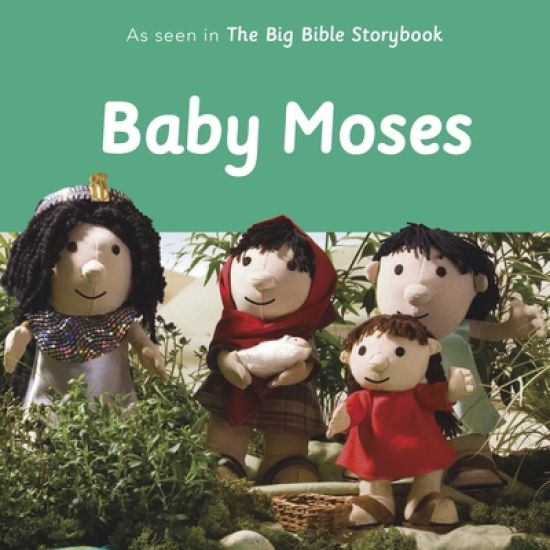
A delightful retelling of the story of Baby Moses, especially for under 5s. It features full-colour photographic spreads of the characters from the award-winning Big Bible Storybook. This board book is perfectly sized for small hands, with short text for a parent or carer to read to the child.
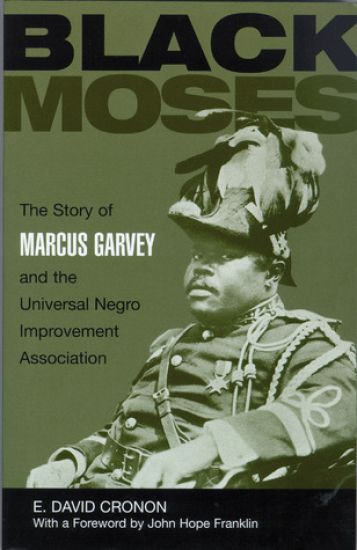
Portrays the life and times of the controversial Jamaican who, in the 1920s, became the organizational leader and spiritual symbol of Black nationalism and power in America
Robert Moses and the Modern City
WW Norton Co
2007
sidottu
“We are rebuilding New York, not dispersing and abandoning it”: Robert Moses saw himself on a rescue mission to save the city from obsolescence, decentralization, and decline. His vast building program aimed to modernize urban infrastructure, expand the public realm with extensive recreational facilities, remove blight, and make the city more livable for the middle class. This book offers a fresh look at the physical transformation of New York during Moses’s nearly forty-year reign over city building from 1934 to 1968. It is hard to imagine that anyone will ever have the same impact on New York as did Robert Moses. In his various roles in city and state government, he reshaped the fabric of the city, and his legacy continues to touch the lives of all New Yorkers. Revered for most of his life, he is now one of the most controversial figures in the city’s history. Robert Moses and the Modern City is the first major publication devoted to him since Robert Caro’s damning 1974 biography, The Power Broker: Robert Moses and the Fall of New York. In these pages eight short essays by leading scholars of urban history provide a revised perspective; stunning new photographs offer the first visual record of Moses’s far-reaching building program as it stands today; and a comprehensive catalog of his works is illustrated with a wealth of archival records: photographs of buildings, neighborhoods, and landscapes, of parks, pools, and playgrounds, of demolished neighborhoods and replacement housing and urban renewal projects, of bridges and highways; renderings of rejected designs and controversial projects that were defeated; and views of spectacular models that have not been seen since Moses made them for promotional purposes.Robert Moses and the Modern City captures research undertaken in the last three decades and will stimulate a new round of debate. Robert Moses and the Modern City captures research undertaken in the last three decades and will stimulate a new round of debate.
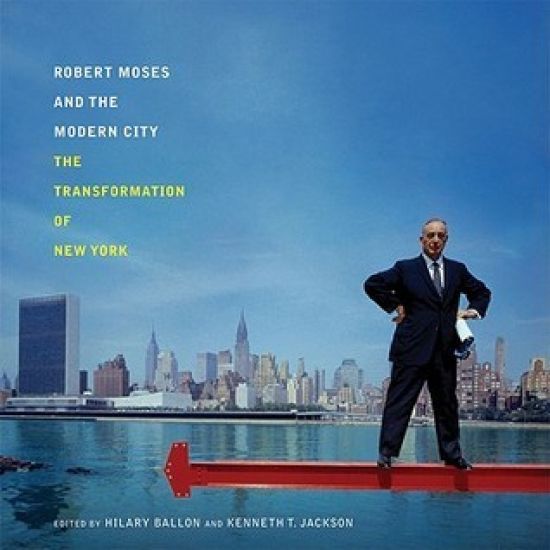
Robert Moses and the Modern City
WW Norton Co
2008
nidottu
“We are rebuilding New York, not dispersing and abandoning it”: Robert Moses saw himself on a rescue mission to save the city from obsolescence, decentralization, and decline. His vast building program aimed to modernize urban infrastructure, expand the public realm with extensive recreational facilities, remove blight, and make the city more livable for the middle class. This book offers a fresh look at the physical transformation of New York during Moses’s nearly forty-year reign over city building from 1934 to 1968.It is hard to imagine that anyone will ever have the same impact on New York as did Robert Moses. In his various roles in city and state government, he reshaped the fabric of the city, and his legacy continues to touch the lives of all New Yorkers. Revered for most of his life, he is now one of the most controversial figures in the city’s history. Robert Moses and the Modern City is the first major publication devoted to him since Robert Caro’s damning 1974 biography, The Power Broker: Robert Moses and the Fall of New York.In these pages eight short essays by leading scholars of urban history provide a revised perspective; stunning new photographs offer the first visual record of Moses’s far-reaching building program as it stands today; and a comprehensive catalog of his works is illustrated with a wealth of archival records: photographs of buildings, neighborhoods, and landscapes, of parks, pools, and playgrounds, of demolished neighborhoods and replacement housing and urban renewal projects, of bridges and highways; renderings of rejected designs and controversial projects that were defeated; and views of spectacular models that have not been seen since Moses made them for promotional purposes.Robert Moses and the Modern City captures research undertaken in the last three decades and will stimulate a new round of debate.
Exalted for centuries as a hero and author of the Bible, Moses is inseparable from biblical tradition itself. Moses is also an inherently ambiguous figure and a perennial focus of controversy, from ancient disputes of priestly rivalry to modern issues of class, gender and race.In Rewriting Moses, Brian Britt analyses elements of polemic and ideology in the Moses of the Bible, of film, novel, visual art and scholarship. He argues that the biblical Moses lives within writing, while the post-biblical Moses lives more often in biography. Yet later rewritings of Moses refract biblical traditions of writing in surprising ways. Rewriting Moses provides an original account of the Freudian insight that traditions preserve what they repress.This is volume 14 in the Gender, Cutlure, Theory series and is volume 402 in the Journal for the Study of the Old Testament Supplements series.