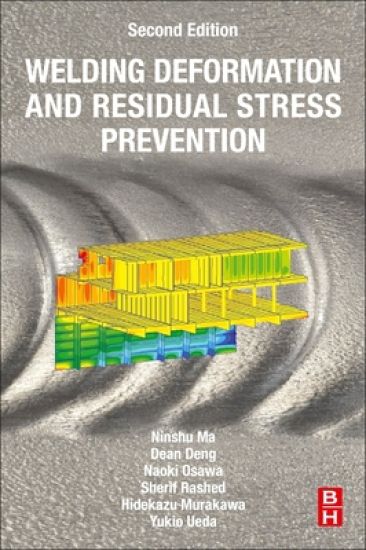
Welding Deformation and Residual Stress Prevention, Second Edition provides readers with both fundamental theoretical knowledge about welding deformation and stress as well as unique computational approaches for predicting and mitigating the effects of deformation and residual stress on materials. This second edition has been updated to include new techniques and applications, outlining advanced finite element methods such as implicit scheme, explicit scheme, and hybrid scheme, and coupling analysis among thermal-metallurgy-mechanics. Non-destructive measurement methods for residual stresses are introduced, such as X-ray diffraction, the indentation technique, the neutron diffraction method, and various synchrotron X-ray diffraction techniques. Destructive measurement techniques are covered as well, such as block cutting for releasing residual stress, blind hole drilling, deep hole drilling, the slit cutting method, sectional contour method, and general inherent strain method. Various industrial applications of the material behavior and computational approaches are featured throughout.
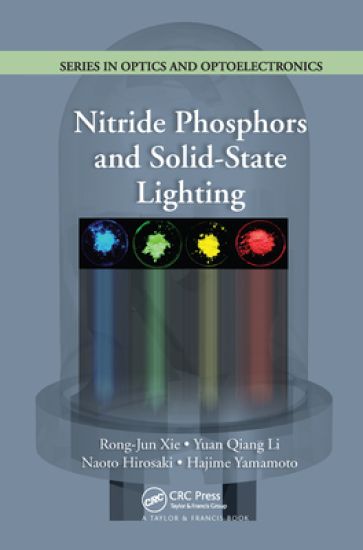
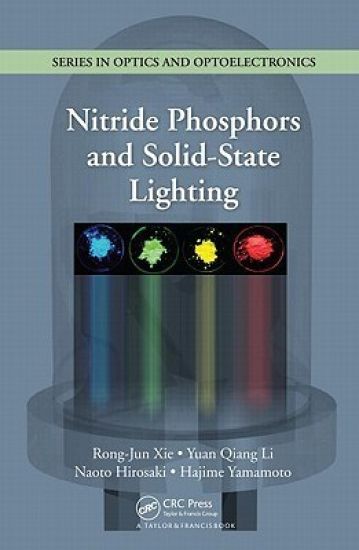
Nitride Phosphors and Solid-State Lighting provides an in-depth introduction to the crystal chemistry, synthesis, luminescence, and applications of phosphor materials for solid-state lighting, mainly focusing on new nitride phosphors. Drawing on their extensive experimental work, the authors offer a multidisciplinary study of phosphor materials that encompasses materials science, inorganic chemistry, solid-state chemistry, solid-state physics, optical spectroscopy, crystal field theory, and computational materials science.The book begins with an introduction to the principles, semiconductor/phosphor materials, and characterizations of solid-state lighting and white light-emitting diodes (LEDs). It then discusses the optical and luminescence processes occurring in optically active centers of solid materials and presents the photoluminescence properties of traditional phosphors for white LEDs, including garnets, aluminates, silicates, sulfides, oxysulfides, phosphates, and scheelites.The remainder of the text focuses on newly developed nitride phosphors. The authors describe the crystal chemistry of general nitride compounds, the crystal structure and photoluminescence properties of new nitride phosphors, and synthetic methods for preparing nitride phosphors. They detail the structural analysis of nitride phosphors and present experimental and computational results of typical nitride phosphors. The authors also examine key issues, such as excitation and emission spectra, thermal quenching, and quantum efficiency. The final chapter explores applications of nitride phosphors in white LEDs for general lighting and LCD backlight purposes.Covering novel luminescent materials, this book brings you up to date on the evolving field of solid-state lighting. It illustrates the fundamentals, synthesis, properties, and applications of the latest nitride phosphor materials.
Approximately four million years of human history has passed. We have been using materials to make a variety of tools. The first materials used were naturally occurring materials such as animal bones, stones, wood etc.; and some of these familiar materials are porous. Porous materials are so familiar that they are sometimes forgotten or ignored. The taste experience of ice cream is created not only by adjusting ingre dients, but also by including air as an ingredient, i.e. pores that give the smooth texture of ice cream. This book is designed to describe and explain about pores, the synthesis of materials with pores (porous materials), and applications of porous materi als. This book is intended for engineers and scientists of different disciplines and specialities, and is expected to be useful in the design and synthesis of porous materials for existing as well as potential new applications. Let us rediscover pores. K. Ishizaki, S. Komameni and M. Nanko January 1998 1 Introduction 1.1 WHAT ARE POROUS MATERIALS? Porous materials are dermed as solids containing pores. Figure 1.1 shows different porous materials. Generally speaking, porous materials have a porosity of 0.2-0.95. The porosity means the fraction of pore volume to the total volume. Porous materials have been used in various applications from daily necessities, such as purifying drinking water by activated carbon or porous ceramics, to uses in modern industries, for example removing dusts from high purity process gases for semiconductor production.
A systematic and comprehensive introduction to electromagnetic transient in cable systems, written by the internationally renowned pioneer in this field Presents a systematic and comprehensive introduction to electromagnetic transient in cable systemsWritten by the internationally renowned pioneer in the fieldThorough coverage of the state of the art on the topic, presented in a well-organized, logical style, from fundamentals and practical applicationsA companion website is available
Helps readers understand the physics behind MOS devices for low-voltage and low-energy applications Based on timely published and unpublished work written by expert authorsDiscusses various promising MOS devices applicable to low-energy environmental and biomedical usesDescribes the physical effects (quantum, tunneling) of MOS devicesDemonstrates the performance of devices, helping readers to choose right devices applicable to an industrial or consumer environmentAddresses some Ge-based devices and other compound-material-based devices for high-frequency applications and future development of high performance devices. "Seemingly innocuous everyday devices such as smartphones, tablets and services such as on-line gaming or internet keyword searches consume vast amounts of energy. Even when in standby mode, all these devices consume energy. The upcoming 'Internet of Things' (IoT) is expected to deploy 60 billion electronic devices spread out in our homes, cars and cities. Britain is already consuming up to 16 per cent of all its power through internet use and this rate is doubling every four years. According to The UK's Daily Mail May (2015), if usage rates continue, all of Britain's power supply could be consumed by internet use in just 20 years. In 2013, U.S. data centers consumed an estimated 91 billion kilowatt-hours of electricity, corresponding to the power generated by seventeen 1000-megawatt nuclear power plants. Data center electricity consumption is projected to increase to roughly 140 billion kilowatt-hours annually by 2020, the equivalent annual output of 50 nuclear power plants."—Natural Resources Defense Council, USA, Feb. 2015 All these examples stress the urgent need for developing electronic devices that consume as little energy as possible. The book “MOS Devices for Low-Voltage and Low-Energy Applications” explores the different transistor options that can be utilized to achieve that goal. It describes in detail the physics and performance of transistors that can be operated at low voltage and consume little power, such as subthreshold operation in bulk transistors, fully depleted SOI devices, tunnel FETs, multigate and gate-all-around MOSFETs. Examples of low-energy circuits making use of these devices are given as well. "The book MOS Devices for Low-Voltage and Low-Energy Applications is a good reference for graduate students, researchers, semiconductor and electrical engineers who will design the electronic systems of tomorrow."—Dr. Jean-Pierre Colinge, Taiwan Semiconductor Manufacturing Company (TSMC) "The authors present a creative way to show how different MOS devices can be used for low-voltage and low-power applications. They start with Bulk MOSFET, following with SOI MOSFET, FinFET, gate-all-around MOSFET, Tunnel-FET and others. It is presented the physics behind the devices, models, simulations, experimental results and applications. This book is interesting for researchers, graduate and undergraduate students. The low-energy field is an important topic for integrated circuits in the future and none can stay out of this."—Prof. Joao A. Martino, University of Sao Paulo, Brazil
Nitride Phosphors and Solid-State Lighting provides an in-depth introduction to the crystal chemistry, synthesis, luminescence, and applications of phosphor materials for solid-state lighting, mainly focusing on new nitride phosphors. Drawing on their extensive experimental work, the authors offer a multidisciplinary study of phosphor materials that encompasses materials science, inorganic chemistry, solid-state chemistry, solid-state physics, optical spectroscopy, crystal field theory, and computational materials science.The book begins with an introduction to the principles, semiconductor/phosphor materials, and characterizations of solid-state lighting and white light-emitting diodes (LEDs). It then discusses the optical and luminescence processes occurring in optically active centers of solid materials and presents the photoluminescence properties of traditional phosphors for white LEDs, including garnets, aluminates, silicates, sulfides, oxysulfides, phosphates, and scheelites.The remainder of the text focuses on newly developed nitride phosphors. The authors describe the crystal chemistry of general nitride compounds, the crystal structure and photoluminescence properties of new nitride phosphors, and synthetic methods for preparing nitride phosphors. They detail the structural analysis of nitride phosphors and present experimental and computational results of typical nitride phosphors. The authors also examine key issues, such as excitation and emission spectra, thermal quenching, and quantum efficiency. The final chapter explores applications of nitride phosphors in white LEDs for general lighting and LCD backlight purposes.Covering novel luminescent materials, this book brings you up to date on the evolving field of solid-state lighting. It illustrates the fundamentals, synthesis, properties, and applications of the latest nitride phosphor materials.
Approximately four million years of human history has passed. We have been using materials to make a variety of tools. The first materials used were naturally occurring materials such as animal bones, stones, wood etc.; and some of these familiar materials are porous. Porous materials are so familiar that they are sometimes forgotten or ignored. The taste experience of ice cream is created not only by adjusting ingre dients, but also by including air as an ingredient, i.e. pores that give the smooth texture of ice cream. This book is designed to describe and explain about pores, the synthesis of materials with pores (porous materials), and applications of porous materi als. This book is intended for engineers and scientists of different disciplines and specialities, and is expected to be useful in the design and synthesis of porous materials for existing as well as potential new applications. Let us rediscover pores. K. Ishizaki, S. Komameni and M. Nanko January 1998 1 Introduction 1.1 WHAT ARE POROUS MATERIALS? Porous materials are dermed as solids containing pores. Figure 1.1 shows different porous materials. Generally speaking, porous materials have a porosity of 0.2-0.95. The porosity means the fraction of pore volume to the total volume. Porous materials have been used in various applications from daily necessities, such as purifying drinking water by activated carbon or porous ceramics, to uses in modern industries, for example removing dusts from high purity process gases for semiconductor production.
Converging technologies promise a new era of delivering education, health, and social services to millions of digitally excluded. Hard hit by the COVID-19 pandemic and beset with low human development outcomes, how can South Asia bring these benefits to vulnerable groups, adapt technologies, and build trust and protection against risks?
Van, a former soldier made slave, toils away endlessly in a salt mine. An expected chance at liberation drops in his lap when a pack of infected dogs pass through, killing everyone but him and a young girl called Yuna. Van hopes to make a peaceful life for himself now that he’s escaped. However, the disease that cleared out the mine is rapidly spreading, placing him and his ward at the center of a conflict greater than any the world has ever seen.
Van’s chase for the kidnapped child Yuna leads him to the chief of the Ahfal Oma, the People of the Fire Horse. The leader is obsessed with reclaiming the land the empire took from his kin, but what does that have to do with Yuna? Meanwhile, Hohsalle continues pursuing the trail left by Van, convinced that finding him is the key to stopping the spread of black wolf fever. Could the disease be connected to the Ahfal Oma chief’s quest for revenge?
Based on the critically claimed novel. High schooler Atsushi Andou has always hidden the fact that he’s gay. But one day, he sees his classmate Sae Miura with a BL book-a small moment with major consequences. Atsushi longs for a “normal” happiness with a loving wife and a biological child, but what can he do when he’s not turned on by women?
"I wonder why people like us are born.” Continuing to keep his sexuality a secret, Jun decides to start dating his classmate Sae. They go on dates, they kiss—but as much as Jun wants to prove he can do more and keep up the ruse, things don’t go as planned. Yet just as he thinks of being honest with Sae, he receives a sudden, devastating message from Mr. Fahrenheit...
After everything that happened, Jun decides to attend the school closing ceremony at Sae’s request—and there, microphone in hand, she reveals her secret. Jun has realized how little he knows about Sae, but there’s quite a lot she wants to tell him, and for that matter, the whole school! In this moving final volume, will Jun come to terms with himself and find the answers he’s been looking for?
This book studies the intersection between cryptography and AI, highlighting the significant cross-impact and potential between the two technologies. The authors first study the individual ecosystems of cryptography and AI to show the omnipresence of each technology in the ecosystem of the other one. Next, they show how these technologies have come together in collaborative or adversarial ways. In the next section, the authors highlight the coevolution being formed between cryptography and AI. Throughout the book, the authors use evidence from state-of-the-art research to look ahead at the future of the crypto-AI dichotomy. The authors explain how they anticipate that quantum computing will join the dichotomy in near future, augmenting it to a trichotomy. They verify this through two case studies highlighting another scenario wherein crypto, AI and quantum converge. The authors study current trends in chaotic image encryption as well as information-theoretic cryptography and show how these trends lean towards quantum-inspired artificial intelligence (QiAI). After concluding the discussions, the authors suggest future research for interested researchers.