

Kirjahaku
Etsi kirjoja tekijän nimen, kirjan nimen tai ISBN:n perusteella.
1000 tulosta hakusanalla Nigel Ellis

THE ITSY-BITSYThe Itsy-Bitsy live beneath a forest filled with wonders, beneath a smelly bog which helps to protect their sacred village, King Wattle and Orchid helping the others take care of all that they have.Amongst the people here resides Bromus, a lonely and very upset Itsy-Bitsy. He is the potion master who tries ever so hard to avoid work by pretending to be hurt, whilst the miners of the tiny community of little people collect magical shale.Nurses and cooks also work hard, but Bromus is quite intent on upsetting all by firstly destroying a beautiful flower, one that the Itsy-Bitsy have come to love so much.From one mistake to another, Bromus doesn't learn by his poor decision-making, as he ventures to the world above and introduces insects to the village down-under, in the hope of destroying the happiness of all, but one day he almost goes too far.Tiny people with big hearts, a beautiful village with some magical qualities, adventures above ground, and great friendships, makes this village a wonder in itself, one that simply has to be visited.What will become of Bromus?
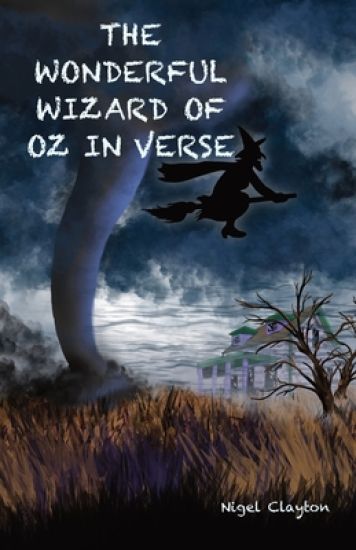
The Wonderful Wizard of Oz in Verse.The Wonderful Wizard of Oz needs no real introduction in itself, for it is a classic, and this version is no different, other than the fact that it is written in verse, as a poem.Dorothy, along with her dog Toto, are sucked into a cyclone, as L.Frank Baum expresses it, and is swept to a strange land called Oz. Here she ventures to find a way home, befriending several, unique friends along the way, including the Scarecrow, The Cowardly Lion, and the Tin Woodman.

BORN A WINNER, LIVE A WINNER, DIE A WINNER. You may be a multi-millionaire, a prison inmate, terminally ill, the creator of a business empire, an orphan, the leader of a nation, an award winning actor, actress or entertainer, the world's most gifted athlete, or just consider yourself to be an ordinary person, but the one thing we all have in common is that we were born a winner, to live a winner and to die a winner. Your distant relatives did not swing from the trees, nor did you originate from a piece of slime that crawled out of the ocean. You were created on purpose, for a purpose and no matter how fantastic or how hopeless your current circumstances are, there is an awesome eternal destiny that awaits you. The truth in this book will amaze, inspire, challenge, motivate and empower you to live the rest of your life full of peace, joy, vision, purpose and destiny as you are introduced to THE KEY TO LIFE. "THE KEY TO LIFE" TOTALLY TRANSFORMED THESE MEN & SET THEM SPIRITUALLY FREE. PLEASE READ THEIR TESTIMONIES. "Nigel's message about "THE KEY TO LIFE" and having a life purpose is imperative. This book explains the truth in great detail to all who question science, history and the Bible itself. Reading this book has definitely blessed me and my prison ministry. Nigel knows what it is to have such keys operating in his own life and this book has left such a stain on me, that it's unquestionable. Anybody that would have questions as to their purpose in this life will get more out of this book than owning and running a Fortune 500 Company". ANDREW CHAN ONE OF THE (BALI 9) DRUG SMUGGLERS. DEATH ROW, KEROBOKAN PRISON. BALI, INDONESIA. "THE KEY TO LIFE is a book that will inspire, challenge and astound you. It will open the mysteries of this life and the life to come by showing you, in a most unique way, that there are 2 BIRTHS BUT 1 AUTHOR. A must read " TIM HALL EVANGELIST & FOUNDING PASTOR "LIFEPOINT CHURCH" ADELAIDE, AUSTRALIA. "This is one of those books where, as you are reading it you say to yourself, 'Oh my goodness, I can think of at least 10 people I know who should read this book. Nigel's research and presentation in this book make it an easy and enjoyable read, but simultaneously, powerfully, impacts your soul." "I phoned Nigel one day after I had given one of his books to a young lady who had attempted suicide three times, and was threatening to try again. Three days after receiving the book she rang me and said "Pastor Jurgen, thank you so much for the book Now I do not want to commit suicide any more because I know that I am not a mistake and that I have value". PASTOR JURGEN MATTHESIUS LEAD PASTOR - C3 CHURCH SAN DIEGO - USA.

In June 1941 the German Wehrmacht launched Operation Barbarossa: the attack on the USSR and the largest land invasion in recorded history. The titanic battles that followed led to the greatest loss of life ever experienced in a military campaign. Since the end of WWII there has been intense discourse about the key operational and strategic decisions made by the German and Soviet high commands on the East-Front, especially during the critical period from July to September 1941.Operation Barbarossa: the Complete Organisational and Statistical Analysis, and Military Simulation focuses on 1941 - when the USSR came closest to defeat. It includes full analyses of the belligerents' armed forces, weapons, equipment, personnel, transport, logistics, war-production, mobilisation and replacements. Uniquely, the work formalises a sophisticated military simulation methodology extending from the tactical to the strategic level, and applies this methodology to each of the belligerents. Volume I, the first of six volumes, is primarily concerned with the structure of this methodology, but uses many of the events and weapons from Operation Barbarossa as illustrative case studies. The complete work represents the most historically accurate, advanced and comprehensive quantitative analysis yet, of the 1941 campaign on the East-Front.Operation Barbarossa: the Complete Organisational and Statistical Analysis, and Military Simulation is the culmination of over ten years of research and collation. It brings together an immense amount of information from many published and unpublished sources, and presents it with contextual history and analyses. The professional researcher or amateur scholar of WWII is provided with a comprehensive data source, containing the details of all the armed forces involved on the East-Front during 1941, as well as the relevant economic and logistical support. Currently no other single work provides a comparable reference of the actual Soviet and Axis land, air and naval forces involved in what was the most decisive and destructive campaign of WWII.

Operation Barbarossa: the Complete Organisational and Statistical Analysis, and Military Simulation includes full analyses of the Axis and Soviet armed-forces organisation, weapons, equipment, personnel, transport, logistics, war-production, mobilisation and replacements during 1941. Uniquely, the work employs a sophisticated military simulation methodology extending from the tactical to the strategic level, and applies this methodology to each of the belligerents. Volume IIA is concerned with the Wehrmacht. All the significant German weapon systems and combat squads used in the campaign are analysed using the quantitative methodology detailed in Volume I, along with the contextual history. An assessment of each weapon system's inherent 'combat power' is provided, as well as attributes such as the relative anti-tank, anti-personnel and anti-aircraft values. Volume IIA then focuses on the detailed Kriegstarkenachweisungen (KStN, or TOE) for German land units (including those in the West), as well as the unit's actual organisation and equipment. All significant units in the German Army, Waffen SS, Luftwaffe and security forces are included; ranging from the largest panzer divisions, down to small anti-aircraft companies, military-police units, Landesschutzen battalions, and rail-road and construction companies. In all cases the data is presented in detailed tables, using the weapon systems and combat squads previously analysed. Operation Barbarossa: the Complete Organisational and Statistical Analysis, and Military Simulation collates an immense amount of information from many sources, and presents it with contextual history and analyses. The professional researcher or amateur scholar is provided with a comprehensive data source, containing the details of all the armed forces involved on the East-Front during 1941, as well as the relevant economic and logistical support. The complete work represents the most accurate, advanced and comprehensive quantitative analysis yet, of the East-Front campaign. Currently no other single work provides a comparable reference on the actual Soviet and Axis land, air and naval forces involved in what was the most decisive campaign of WWII.

Volume IIB is the second volume relating to (and completing) the Wehrmacht, and the German mobilisation and war-economy, from June to December 1941. It includes the most detailed Orders of Battle ever published on the German Heer, Luftwaffe, Waffen SS and Kriegsmarine, in all areas of the Reich, between 22nd June and 4th July 1941. Even small and obscure units are included, such as: flak companies, artillery HQs, observation battalions, bridging columns, Landessch tzen battalions, MP battalions, railroad companies, and Luftwaffe Kurierstaffeln, Verbindungsstaffeln and Sanit tsflugbereitschaften. The Luftwaffe OOBs also include details on aircraft types and strengths in each air unit.Also scrutinised in detail are: the personnel and equipment allocated to combat-units in each army, army-group or reserve-force, in all areas across the Reich during the initial phase of Barbarossa; the ground and air units used as reinforcements as well as those newly mobilised; the total available military personnel and equipment in the Reich from June to December 1941; the Replacement Army; the overall mobilisation process and resources used; the available replacements and those sent east; the logistical supply of the Wehrmacht (i.e. the changing Supply Distribution Efficiency); the Kriegsmarine forces in the East; and the Wehrmacht and Waffen SS casualties from June 1941 to February 1942. The latter includes details on killed, wounded, missing/POW, sick and unfit, and recuperated casualties.Operation Barbarossa: the Complete Organisational and Statistical Analysis collates an immense amount of information from many sources, and presents it with contextual history and analyses. The professional or amateur scholar is provided with comprehensive details of all the armed forces on the East Front during 1941, as well as the relevant economic and logistical support. The complete work represents the most accurate and comprehensive quantitative analysis yet, of the East-Front campaign. Currently no other single work provides a comparable reference on what was the most decisive and destructive campaign of WWII.
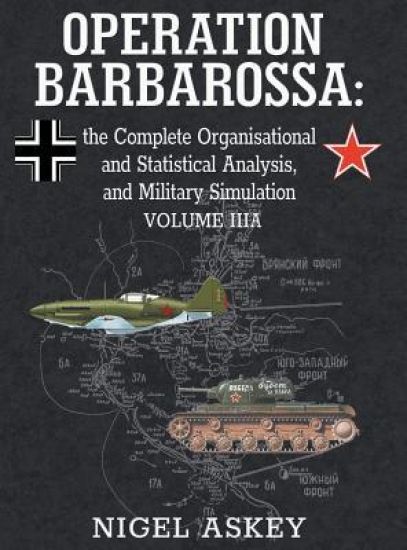
Volume IIIA is the first of two volumes relating to the Soviet armed forces, mobilisation and war-economy from June to December 1941. All the significant Soviet weapon systems and combat squads used in the campaign are analysed using the quantitative methodology detailed in Volume I, along with the contextual history. An assessment of each weapon system's inherent 'combat power' is provided, as well as attributes such as the relative anti-tank, anti-personnel and anti-aircraft values.Volume IIIA then focuses on the detailed Shtaty (TOEs) for all the Soviet land unit types fielded across the USSR during 1941. All significant units in the RKKA (Red Army), VVS, VMF, PVO and NKVD are included; ranging from the largest mechanised corps and tank divisions, down to small mortar battalions, PVO anti-aircraft battalions and NKVD security companies. In all cases the data is presented in detailed tables, using the weapon systems and combat squads previously analysed. Volume IIIA also includes the most detailed Orders of Battle ever published on the Red Army, PVO and NKVD forces on 22nd June 1941. Even small and obscure units are included down to battalion and company level. Lastly, Volume IIIA examines in detail every unit's actual personnel and equipment in each of the USSR's Western Military Districts when the Axis forces invaded.Operation Barbarossa: the Complete Organisational and Statistical Analysis collates an immense amount of information from many sources, and presents it with contextual history and analyses. The professional or amateur scholar is provided with comprehensive details of all the armed forces on the East Front during 1941, as well as the relevant economic and logistical support. The complete work represents the most accurate and comprehensive quantitative analysis yet, of the East-Front campaign. Currently no other single work provides a comparable reference on what was the most decisive and destructive campaign of WWII.
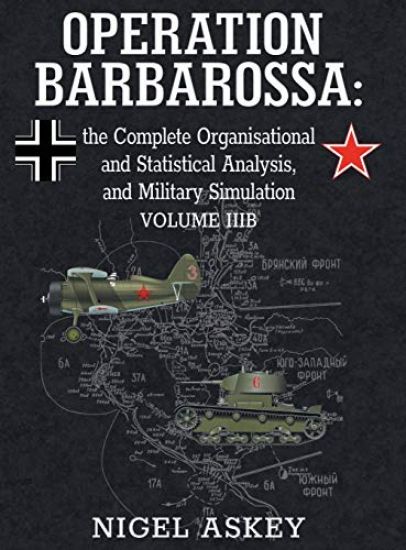
Operation Barbarossa: the Complete Organisational and Statistical Analysis, and Military Simulation, Volume IIIB is the second of two volumes relating to (and completing) the Soviet armed forces, mobilisation and war-economy from June to December 1941. The Soviet mobilisation that followed the start of Operation Barbarossa remains the largest and fastest mobilisation ever carried out in human history; involving some 11,790,000 conscripts and reservists. Volume IIIB represents the first ever complete and comprehensive quantitative analysis of this immense Soviet mobilisation program. Every major Soviet combat unit formed in the Red Army, Air Force, Navy, NKVD and PVO is included, along with minor units down to HQ and battalion level. All the combat units mobilised, along with the resources used, are presented in a precisely documented and structured fashion.Volume IIIB also includes the most detailed study published to date of the Soviet Air Forces (the VVS and PVO) fielded during 1941. It includes: the VVS command and authorised air-unit structures, detailed Orders of Battle (including aircraft types, strengths and readiness) in each VVS command area in June 1941, air-unit reinforcements, and overall aircraft usage, production, replacements and losses during the second half of 1941. The Soviet Navy (the VMF) is similarity treated, with every significant naval vessel accounted for (including those lost and newly commissioned) in each of the USSR's naval command areas during 1941.Also analysed to the same level of detail are: the actual strength and deployment of Soviet forces in the USSR's internal military districts and Stavka Reserves on 22nd June 1941, pre-war stockpiles and war production of all types of weapon systems and transport, the personnel and equipment used in the formation of newly mobilised forces, the personnel and equipment replacements used by existing combat units, logistical supply of the Soviet armed forces during 1941 (i.e. the changing Supply Distribution Efficiency) and a detailed examination of the Soviet military casualties. The latter includes details on killed, wounded, missing, POW and unfit casualties during 1941, and also reviews the losses from 1942 to 1945.Operation Barbarossa: the Complete Organisational and Statistical Analysis collates an immense amount of information from many sources, and presents it with contextual history and analyses. The professional or amateur scholar is provided with comprehensive details of all the armed forces on the East Front during 1941, as well as the relevant economic and logistical support. The complete work represents the most accurate and comprehensive quantitative analysis yet, of the East-Front campaign. Currently no other single work provides a comparable reference on what was the most decisive and destructive campaign of WWII.

This book themes around the important role of teams within an organisation, if you leverage their knowledge, passion and kindle their curiosity for driving improvement and change.
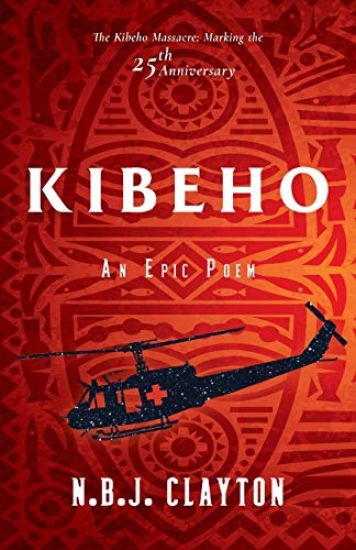

Set in South Australia, 1884; this is an epic poem of three Afghan cameleers as they go about delivering supplies along the Birdsville Track. Follow Nak, Shir and Abdul on an adventure across outback Australia, where their pasts catch up to them in many ways. Individual feelings are tested to the limit, insecurities are measured by fear, and desire is outweighed by need. Angry and forgiving, tired and alive, eager and pessimistic. They fight against the conditions, against the hate, and against their pasts. It is a work of fiction, based on the people of the times, where prejudice is very much alive, many Afghans being treated poorly, not just for the colour of their skin, or their religious belief, but because of the expertise that the Afghan cameleers offer the Australian outback, taking work from many Australians. This poem offers an in-depth look at the life of cameleers and the issues surrounding camel strings, shedding a great amount of light on the subject of camels in the outback, opening the eyes of the reader as to the great work that camel strings performed during this time of expansion. Camels were able to out-work bullock teams and horses due to their abilities to adjust to a harsh land and the cameleers were no exception.
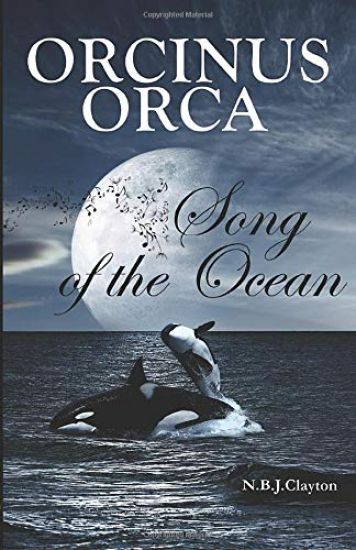
This is an epic poem.The orca: they are black and white dolphins, mammals of the sea, warm-blooded creatureswhich are at the top of the food chain for the territory that they hold within their power, manbeing their only predator.Tom is born in the Pacific Ocean, 1862; he is 2.5 metres long and weighs 200kg; a grandspecimen. George Davidson is born of Eden; May, 1863.This is the story of Tom, Killer whale of Twofold Bay, Eden, friend to George Davidson (baywhaler) and others like him: it is based upon a true story that will live in the memory of thecitizens of Eden for eternity, a museum being built in Tom's honour upon his death.For thousands of years, before man recorded such events, killer whales hunted all manner ofbaleen whale in every ocean on this planet, and only once in all that time has it beenwitnessed, and recorded for the prosperity of understanding and knowledge, that they cooperatedwith humans in their hunt for whales. It all took place on the east coast of Australia, Twofold Bay, Eden. And it is here that an extraordinary story unfolds of an unwrittencontract between man and beast, one of nature's most powerful and intelligent, one that ismisunderstood and labelled unkindly.
Epic Poem - Poetry It was a great monopoly and stretched from Holland to Asia - namely Batavia (Jakarta), where the Dutch United East India Company (VOC) headquarters was established - and surrounding countries; a source of great wealth. Trade between these countries was of strategic importance where trade and wealth was concerned, copper, tin, spices, opium and dyes being some of the basic requisites of commerce. From the Cape of Good Hope to Batavia the ships would travel due west for approximately 1,000 Dutch miles before turning north. It was unfortunate for the time, however, that there was no means by which to accurately determine longitude at sea. Eventually land was encountered and this becomes the accepted method of voyage: to seek the sight of land and then head north towards the coast of Sumatra. For almost a hundred years some were lucky enough to cast their eyes upon the west coast of a great mass of land, thought to have been a part of New Guinea. The Zuytdorp departs the Cape of Good Hope, Table Bay, with the ship Kockenge. She pulls ahead of the Kockenge due to her being a much larger and faster vessel. Due to the departure being in April, opposed to the favourable March, the skipper decides to sail until sighting land before turning north for Batavia, to take full benefit of the winds from the west and the voyage then to the north. But catastrophe is all they meet, no success in voyage to be celebrated. The Zuytdorp is shipwrecked. This is the story of the survivors. There is evidence to show that Aboriginals of the Shark Bay area suffer from Porphyria Variegate, a gene mutation that is traceable to the Dutch. It is uncommon and rare, and there is no reason, other than the coupling of an Aboriginal with a survivor of the Zuytdorp, that currently explains the disease being discovered in Australian Aboriginals of WA. I do not declare this to be fact nor fiction: take it as you will.
This is the story of a man on walkabout, trekking the centre of Australia some 60,000 yearsago. The adventures open the door to myths and legends of Aboriginal society as never readbefore. The myths, legends and wonders of Aboriginal society are many and vast, passed onby word of mouth for tens of thousands of years.If we assume that the 'religion' of these people dates back so far then we have to assume thatcreatures such as the diprotodon, megalania, and thylacoleo, just to name a few, are foreverpresent in their myths and legend. But there are indicators to show that the religion does notdate back so far, or in the least, that religion was an on-going form of practice, for the dingo which only dates back some 5,000 years] seems to be rather active in ritual and commonplace amongst some myths and legends.Whether these stories have changed over the years as word mouth is hard to secure as asource of historical worth] or not, I have taken the liberty, whether justly or otherwise, to putit into story form, so that there appears to be a more rudiment meaning to the entiredevelopment of Aboriginal Dreamtime, which is an eternal way of life and carries with itmany sacred meanings.I can only hope that I have created no ill-will, for my intentions are to provide others with thejoy of understanding in a way which is more effortless then simply passing over one mythafter another in a big thick book.Kulinma Ngulakujaku-kula This book might contain names of people who have since departed this world

Build a website with Django 3 is the fourth edition of my popular Django beginners book, fully updated for Django 3.Not only has the book been updated to cover the latest version of Django, but I've added install instructions for macOS users.Your complete introduction to Django 3Build a website with Django 3 covers all the core concepts of Django to get you up and running fast: Why Django is the premier Python framework for developing web applications The big picture - how Django is structured Django Models Django Views Django Templates The Django admin Generic views Simple forms Complex forms and model forms Managing Users Restricted content File uploads Sending email Deploying a Django application Build a real website This book is not about boring theory. You'll be building a fully functioning website as you learn Django. I even show you how to deploy your website to the Internet for free.



SONGS OF AUSTRALIA - A Poetic Trilogy BOOK ONE Set in South Australia, 1884; this is an epic poem of three Afghan cameleers as they go about delivering supplies along the Birdsville Track. Follow Nak, Shir and Abdul on an adventure across outback Australia, where their pasts catch up to them in many ways. Individual feelings are tested to the limit, insecurities are measured by fear, and desire is outweighed by need. Angry and forgiving, tired and alive, eager and pessimistic. They fight against the conditions, against the hate, and against their pasts. BOOK TWO The orca: they are black and white dolphins, mammals of the sea, warm-blooded creatures that are at the top of the food chain for the territory that they hold within their power, man being their only predator. Tom is born in the Pacific Ocean, 1862; he is 2.5 metres long and weighs 200kg; a grand specimen. George Davidson is born of Eden; May, 1863. This is the story of Tom, Killer whale of Twofold Bay, Eden, friend to George Davidson (bay whaler) and others like him: it is based upon a true story that will live in the memory of the citizens of Eden for eternity, a museum being built in Tom's honour upon his death. BOOK THREE It was a great monopoly and stretched from Holland to Asia - namely Batavia (Jakarta), where the Dutch United East India Company (VOC) headquarters was established - and surrounding countries; a source of great wealth. Trade between these countries was of strategic importance where trade and wealth was concerned, copper, tin, spices, opium and dyes being some of the basic requisites of commerce. From the Cape of Good Hope to Batavia the ships would travel due west for approximately 1,000 Dutch miles before turning north. It was unfortunate for the time, however, that there was no means by which to accurately determine longitude at sea. Eventually land was encountered and this becomes the accepted method of voyage: to seek the sight of land and then head north towards the coast of Sumatra. For almost a hundred years some were lucky enough to cast their eyes upon the west coast of a great mass of land, thought to have been a part of New Guinea. The Zuytdorp departs the Cape of Good Hope, Table Bay, with the ship Kockenge. She pulls ahead of the Kockenge due to her being a much larger and faster vessel. Due to the departure being in April, opposed to the favourable March, the skipper decides to sail until sighting land before turning north for Batavia, to take full benefit of the winds from the west and the voyage then to the north. But catastrophe is all they meet, no success in voyage to be celebrated. The Zuytdorp is shipwrecked. This is the story of the survivors. There is evidence to show that Aboriginals of the Shark Bay area suffer from Porphyria Variegate, a gene mutation that is traceable to the Dutch. It is uncommon and rare, and there is no reason, other than the coupling of an Aboriginal with a survivor of the Zuytdorp, that currently explains the disease being discovered in Australian Aboriginals of WA. I do not declare this to be fact nor fiction: take it as you will.