

Kirjahaku
Etsi kirjoja tekijän nimen, kirjan nimen tai ISBN:n perusteella.
1000 tulosta hakusanalla Olga Primachenko
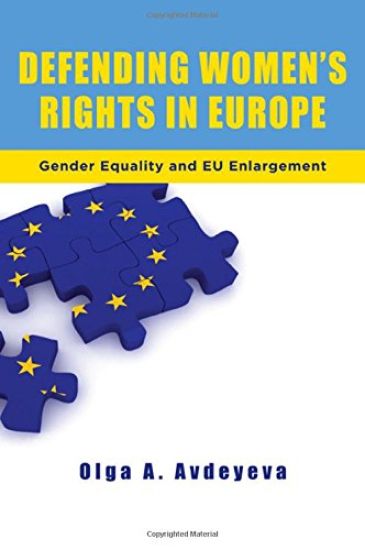
Comparative analysis of gender equality reforms enacted in ten post-communist states who became members of the European Union.Between 2004 and 2007, ten post-communist Eastern European states became members of the European Union (EU). To do so, these nations had to meet certain EU accession requirements, including antidiscrimination reforms. While attaining EU membership was an incredible achievement, many scholars and experts doubted the sustainability of accession-linked reforms. Would these nations comply with EU directives on gender equality? To explore this question, Defending Women's Rights in Europe presents a unique analysis of detailed original comparative data on state compliance with EU gender equality requirements. It features a comprehensive quantitative analysis combined with rigorous insightful case studies of reforms in Poland, the Czech Republic, and Lithuania. Olga A. Avdeyeva reveals that policy and institutional reforms developed furthest in those states where women's advocacy NGOs managed to form coalitions with governing political parties. After becoming members of the EU, the governments did not abolish these policies and institutions despite the costs and lack of popular support. Reputational concerns prevented state elites from policy dismantling, but gender equality policies and institutions became marginalized on the state agenda after accession.This book is freely available in an open access edition thanks to Knowledge Unlatched-an initiative that provides libraries and institutions with a centralized platform to support OA collections and from leading publishing houses and OA initiatives. Learn more at the Knowledge Unlatched website at: https://www.knowledgeunlatched.org/, and access the book online at the SUNY Open Access Repository at https://soar.suny.edu/handle/20.500.12648/1710.

Comparative analysis of gender equality reforms enacted in ten post-communist states who became members of the European Union.Between 2004 and 2007, ten post-communist Eastern European states became members of the European Union (EU). To do so, these nations had to meet certain EU accession requirements, including antidiscrimination reforms. While attaining EU membership was an incredible achievement, many scholars and experts doubted the sustainability of accession-linked reforms. Would these nations comply with EU directives on gender equality? To explore this question, Defending Women's Rights in Europe presents a unique analysis of detailed original comparative data on state compliance with EU gender equality requirements. It features a comprehensive quantitative analysis combined with rigorous insightful case studies of reforms in Poland, the Czech Republic, and Lithuania. Olga A. Avdeyeva reveals that policy and institutional reforms developed furthest in those states where women's advocacy NGOs managed to form coalitions with governing political parties. After becoming members of the EU, the governments did not abolish these policies and institutions despite the costs and lack of popular support. Reputational concerns prevented state elites from policy dismantling, but gender equality policies and institutions became marginalized on the state agenda after accession.This book is freely available in an open access edition thanks to Knowledge Unlatched-an initiative that provides libraries and institutions with a centralized platform to support OA collections and from leading publishing houses and OA initiatives. Learn more at the Knowledge Unlatched website at: https://www.knowledgeunlatched.org/, and access the book online at the SUNY Open Access Repository at https://soar.suny.edu/handle/20.500.12648/1710.
Refugeehood and the Postconflict Subject
Olga Maya Demetriou
State University of New York Press
2018
sidottu
Examines the effects of culturally specific interpretations of refugeehood with an ethnographic focus on CyprusBeing a "refugee" is not simply a matter of law, determination procedures, or the act of flight. It is an ontological condition, structured by the politics of law, affect, and territory. Refugeehood and the Postconflict Subject explores the variable facets of refugeehood, their interconnections, and their intended and unintended consequences. Grounded on more than a decade of research on the island of Cyprus, Olga Maya Demetriou considers how different groups of "refugees" coexist and how this coexistence invites reinterpretations of the law and its politics. The long-standing political conflict in Cyprus produced not only the paradigmatic, formally recognized "refugee" but also other groups of displaced persons not so categorized. By examining the people and circumstances, Demetriou reveals the tensions and contestations within the international refugee regimes and argues that any reinterpretation that accounts for these tensions also needs to recognize that these "minor" losses are not incidental to refugeehood but an intrinsic part of the wider issues.
Refugeehood and the Postconflict Subject
Olga Maya Demetriou
State University of New York Press
2019
pokkari
Examines the effects of culturally specific interpretations of refugeehood with an ethnographic focus on CyprusBeing a "refugee" is not simply a matter of law, determination procedures, or the act of flight. It is an ontological condition, structured by the politics of law, affect, and territory. Refugeehood and the Postconflict Subject explores the variable facets of refugeehood, their interconnections, and their intended and unintended consequences. Grounded on more than a decade of research on the island of Cyprus, Olga Maya Demetriou considers how different groups of "refugees" coexist and how this coexistence invites reinterpretations of the law and its politics. The long-standing political conflict in Cyprus produced not only the paradigmatic, formally recognized "refugee" but also other groups of displaced persons not so categorized. By examining the people and circumstances, Demetriou reveals the tensions and contestations within the international refugee regimes and argues that any reinterpretation that accounts for these tensions also needs to recognize that these "minor" losses are not incidental to refugeehood but an intrinsic part of the wider issues.
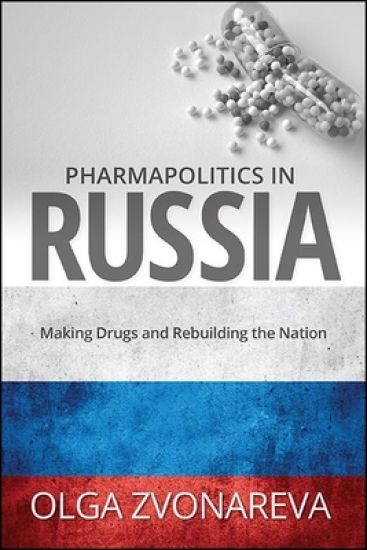
Documents the surprising role pharmaceutical science and technology has played in Russia's search for national identity over a century of political turbulence.Over the last one hundred years, the Russian pharmaceutical industry has undergone multiple dramatic transformations, which have taken place alongside tectonic political shifts in society associated with the rise and fall of the Soviet Union and the emergence of a post-Soviet order. Pharmapolitics in Russia argues that different versions of the Russian pharmaceutical industry took shape in a co-productive process, equally involving political ideologies and agendas, and technoscientific developments and constraints. Drawing on interviews, documents, literature, and media sources, Olga Zvonareva examines critical points in the history of the pharmaceutical industry in Russia. This includes the emergence of Soviet drug research and development, the short-lived neoliberal turn of the 1990s, and the ongoing efforts of the Russian government to boost local pharmaceutical innovation, which in turn produced a now widely shared vision of an independent and self-sufficient nation. The resulting industrial organizations and practices, she argues, came to embed and transmit particular imaginaries of the nation and its future.
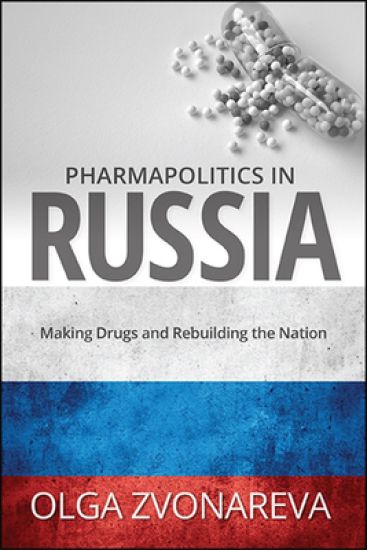
Documents the surprising role pharmaceutical science and technology has played in Russia's search for national identity over a century of political turbulence.Over the last one hundred years, the Russian pharmaceutical industry has undergone multiple dramatic transformations, which have taken place alongside tectonic political shifts in society associated with the rise and fall of the Soviet Union and the emergence of a post-Soviet order. Pharmapolitics in Russia argues that different versions of the Russian pharmaceutical industry took shape in a co-productive process, equally involving political ideologies and agendas, and technoscientific developments and constraints. Drawing on interviews, documents, literature, and media sources, Olga Zvonareva examines critical points in the history of the pharmaceutical industry in Russia. This includes the emergence of Soviet drug research and development, the short-lived neoliberal turn of the 1990s, and the ongoing efforts of the Russian government to boost local pharmaceutical innovation, which in turn produced a now widely shared vision of an independent and self-sufficient nation. The resulting industrial organizations and practices, she argues, came to embed and transmit particular imaginaries of the nation and its future.

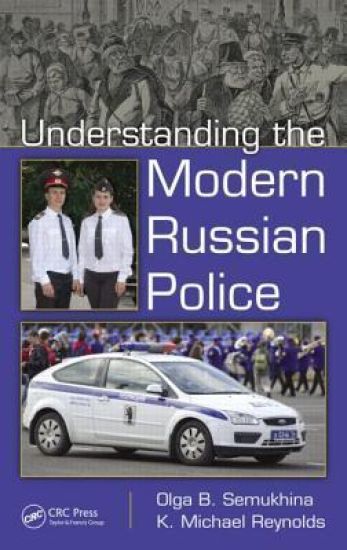
Understanding the Modern Russian Police
Olga B. Semukhina; Kenneth Michael Reynolds
Routledge Member of the Taylor and Francis Group
2013
sidottu
Understanding the Modern Russian Police represents the culmination of ten years of research and an ongoing partnership between the Volgograd Academy of Russian Internal Affairs Ministry (VA MVD) and the Volgograd branch of the Russian Presidential Academy of National Economy and Public Administration (VAPA). The book provides a timely and comprehensive analysis of the historical development, functions, and contemporary challenges faced by the modern Russian police.Spanning more than two centuries of history, the book covers: The tsarist police evolution that witnessed the creation of the Ministry of Internal Affairs of the Russian Federation (MVD) in 1802 and concluding with the 1917 October Revolution The Soviet era from the 1917 October Revolution until Stalin’s death in 1953The Khrushchev and Brezhnev periods, and the Soviet police’s maturation into a professionally educated and well-equipped law enforcement systemThe transformational period of police development beginning with Gorbachev’s perestroika and concluding with the first term of Putin in 2008The structure, authority, and workforce of the modern Russian policePublic-police relationships existing today in RussiaReports by Amnesty International and Human Rights Watch on corruption and abuse of power, along with a legal analysis of practices by the European Court of Human Rights (ECHR)The 2011 Police Reform by MedvedevThe book concludes with some predictions on the future of the Russian police and its potential reforms. Encompassing the efforts of many great researchers from Russia, this exhaustive review of the history of policing in Russia enables readers to comprehend the societal and political forces that have shaped policing in this country.
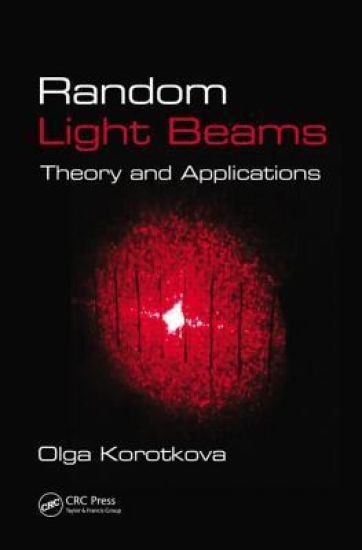
Random Light Beams: Theory and Applications contemplates the potential in harnessing random light. This book discusses light matter interactions, and concentrates on the various phenomena associated with beam-like fields. It explores natural and man-made light fields and gives an overview of recently introduced families of random light beams. It outlines mathematical tools for analysis, suggests schemes for realization, and discusses possible applications. The book introduces the essential concepts needed for a deeper understanding of the subject, discusses various classes of deterministic paraxial beams and examines random scalar beams. It highlights electromagnetic random beams and matters relating to generation, propagation in free space and various media, and discusses transmission through optical systems. It includes applications that benefit from the use of random beams, as well as the interaction of beams with deterministic optical systems.• Includes detailed mathematical description of different model sources and beams• Explores a wide range of man-made and natural media for beam interaction • Contains more than 100 illustrations on beam behavior• Offers information that is based on the scientific results of the last several years • Points to general methods for dealing with random beams, on the basis of which the readers can do independent researchIt gives examples of light propagation through the human eye, laser resonators, and negative phase materials. It discusses in detail propagation of random beams in random media, the scattering of random beams from collections of scatterers and thin random layers as well as the possible uses for these beams in imaging, tomography, and smart illumination.
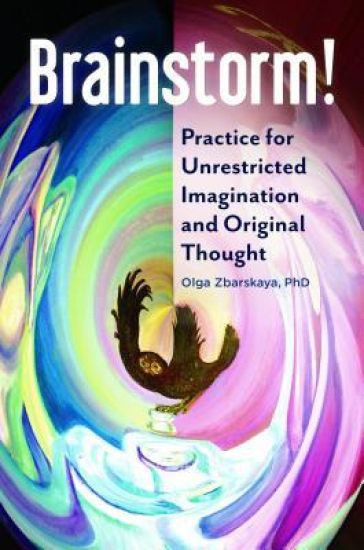
This book explains how to unlock unlimited personal creativity and to create a culture that supports emotional health, inventiveness, and success through a comprehensive examination of creative thinking that integrates theoretical, scientific, psychological, and sociological perspectives.How do we teach innovative thinking and stimulate creativity? Creative thinking is a highly desirable trait in today's world, where creativity lends the mental fitness and flexibility necessary to switch easily between patterns of thinking and contend with the constant changes that result from ongoing technological advancements. Yet research shows that the national level of creativity in both children and adults is declining. This book showcases methods that build "outside of the box" thinking skills that can empower people to succeed not only in school or work but in life in general, resulting in greater self-esteem, reduced stress, increased productivity, improved overall health, and more satisfaction in everyday life. Brainstorm! Practice for Unrestricted Imagination and Original Thought shows, with scientific proof, that the powerful engine of creativity has unlimited fuel and can power every sphere of life, from food preparation to personal relationships and from academia to government administration. It is a manual for leveraging creative thought in order to overcome barriers, solve difficult problems, and streamline and optimize day-to-day living. Educators, institutional leaders, and CEOs will discover how creativity-boosting courses and trainings can promote unprecedented performance and productivity among students and employees. Based on extensive research data and more than 100 interviews with experts worldwide, this accessible and engaging book presents vivid analogies and metaphors; insights from experts in various fields ranging from education to neurology, music, and technology; and fun exercises that make it clear that creativity is indispensable in every realm of life—and that anyone can take simple, effective steps to tap into their own creative potential.
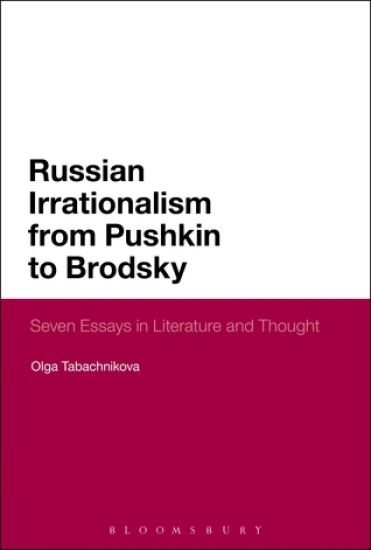
Russian Irrationalism from Pushkin to Brodsky
Olga Tabachnikova
Bloomsbury Academic USA
2015
sidottu
Russia, once compared to a giant sphinx, is often considered in the Anglophone world an alien culture, often threatening and always enigmatic. Although recognizably European, Russian culture also has mystical features, including the idiosyncratic phenomenon of Russian irrationalism. Historically, Russian irrationalism has been viewed with caution in the West, where it is often seen as antagonistic to, and subversive of, the rational foundations of Western speculative philosophy. Some of the remarkable achievements of the Russian irrationalist approach, however, especially in the artistic sphere, have been recognized and even admired, though not sufficiently investigated. Bridging the gap between intellectual cultures, Olga Tabachnikova discusses such fundamental irrationalist themes as language and the linguistic underpinning of culture; the power of illusion in national consciousness; the changing relationship between love and morality; the cultural roots of humour, as well as the relevance of various individual writers and philosophers from Pushkin to Brodsky to the construction of Russian irrationalism.

Software-Implemented Hardware Fault Tolerance
Olga Goloubeva; Maurizio Rebaudengo; Matteo Sonza Reorda; Massimo Violante
Springer-Verlag New York Inc.
2010
nidottu
Software-Implemented Hardware Fault Tolerance addresses the innovative topic of software-implemented hardware fault tolerance (SIHFT), i.e., how to deal with faults affecting the hardware by only (or mainly) acting on the software. The first SIHFT techniques were proposed and adopted several decades ago, but they have been the object of new interest in the past few years, mainly due to the need for developing low-cost safety-critical computer-based applications in fields such as automotive, biomedics, and telecommunications. Therefore, several new approaches to detect, and when possible correct, transient and permanent faults in the hardware have been recently proposed. These approaches are innovative (with respect to those proposed in the past) since they are of higher applicability (often starting from the source-level code of an application) and generality, being capable of coping with many different fault types. The book presents the theory behind software-implemented hardware fault tolerance, as well as the practical aspects related to put it at work on real examples. By evaluating accurately the advantages and disadvantages of the already available approaches, the book provides a guide to developers willing to adopt software-implemented hardware fault tolerance in their applications. Moreover, the book identifies open issues for researchers willing to improve the already available techniques.

Olga Bakich’s biography of Valerii Pereleshin (1913–1992) follows the turbulent life and exquisite poetry of one of the most remarkable Russian émigrés of the twentieth century. Born in Irkutsk, Pereleshin lived for thirty years in China and for almost forty years in Brazil. Multilingual, he wrote poetry in Russian and in Portuguese and translated Chinese and Brazilian poetry into Russian and Russian and Chinese poetry into Portuguese. For many years he struggled to accept and express his own identity as a gay man within a frequently homophobic émigré community. His poems addressed his three homelands, his religious struggles, and his loves. In Valerii Pereleshin: The Life of a Silkworm, Bakich delves deep into Pereleshin’s poems and letters to tell the rich life story of this underappreciated writer.

Moj rodnoj russkij jazyk / My Native Russian Language. Workbook. Year 6. Part 2
Olga Bramley; Elena Orlovich
The London School of Russian Language and Literature
2024
nidottu
Workbook: My Native Russian Language, Year 6, Part 2 - to be used with the relevant Textbook. This Workbook, accompanied by a Textbook, Audio and Teacher's Guide, is designed for pupils aged 12-14 studying Russian as a second native language in the sixth year of a Russian language school abroad. *The Textbook includes interesting and entertaining texts and exercises to stimulate students' learning and creativity, and is supplemented by an online audio aid.*The Workbook contains homework assignments to reinforce the material learned, and to develop students' speech and creative abilities, as well as vocabulary with a translation of key words and expressions into English, French and German, to assist bilingual students.The books (Part 1 plus Part 2) can be used for a full-year school course comprising 28 Reading-Conversational lessons and 29 Grammar lessons, arranged by topics. The lessons develop thought and speech, enrich students' active vocabulary, and raise the general standard of their language skills. (Part 1 includes 10 Topics over 24 lessons.)The materials contain 300 key words, 220 commonly used conversational expressions, 40 proverbs, 14 songs, and recommends a list of about 70 books for home reading - all on the topics studied.By working with these books, pupils are sure to learn a lot of new things, develop good friendships in the classroom, fall in love with the subject, and start speaking Russian fluently and correctly!
My Native Russian Language, Year 6, Part 2
Olga Bramley; Elena Orlovich
The London School of Russian Language and Literature
2024
nidottu
Textbook: My Native Russian Language, Year 6, Part 2 This Textbook, accompanied by a Workbook and Teacher's Guide, is designed for pupils aged 12-14 studying Russian as a second native language in the sixth year of a Russian language school abroad. *The Textbook includes interesting and entertaining texts and exercises to stimulate students' learning and creativity, and is supplemented by an online audio aid.*The Workbook contains homework assignments to reinforce the material learned, and to develop students' speech and creative abilities, as well as vocabulary with a translation of key words and expressions into English, French and German, to assist bilingual students.The books (Part 1 plus Part 2) can be used for a full-year school course comprising 28 Reading-Conversational lessons and 29 Grammar lessons, arranged by topics. The lessons develop thought and speech, enrich students' active vocabulary, and raise the general standard of their language skills. Part 2 includes 10 Topics over 24 lessons.The materials contain 300 key words, 220 commonly used conversational expressions, 40 proverbs, 14 songs, and recommends a list of about 70 books for home reading - all on the topics studied.By working with these books, pupils are sure to learn a lot of new things, develop good friendships in the classroom, fall in love with the subject, and start speaking Russian fluently and correctly!
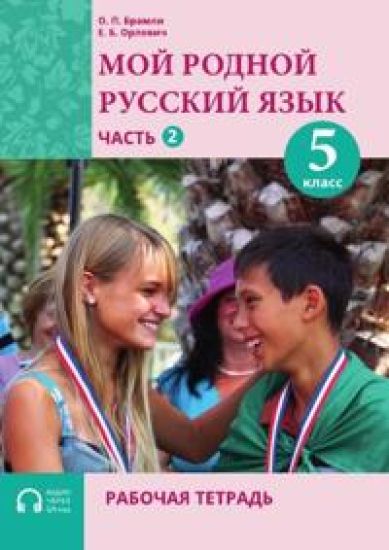
Moj rodnoj russkij jazyk / My Native Russian Language, Workbook. Year 5, Part 2
Olga Bramley; Elena Orlovich
The London School of Russian Language and Literature
2024
nidottu
Workbook: My Native Russian Language, Year 5, Part 2 This Workbook, accompanied by a Textbook, Teacher's Guide, and Audio is designed for pupils aged 11-13 studying Russian as a second native language in the fifth year of a Russian language school abroad. *The Workbook contains homework assignments to reinforce the material learned, and to develop students' speech and creative abilities, as well as vocabulary with a translation of key words and expressions into English, French and German, to assist bilingual students.*The Textbook includes interesting and entertaining texts and exercises to stimulate students' learning and creativity, and is supplemented by an online audio aid.The books (Part 1 plus Part 2) can be used for a full-year school course comprising 32 Reading-Conversational lessons and 32 Grammar lessons, arranged by topics. The lessons develop thought and speech, enrich students' active vocabulary, and raise the general standard of their language skills. Part 2 includes 9 Topics over 30 lessons: 16 Conversation and 14 Grammar Lessons.The materials contain 230 key words, 210 commonly used conversational expressions, 90 proverbs, 14 songs, and recommends a list of over 70 books for home reading - all on the topics studied.By working with these books, pupils are sure to learn a lot of new things, develop good friendships in the classroom, fall in love with the subject, and start speaking Russian fluently and correctly!We wish them every success in their Russian studies!
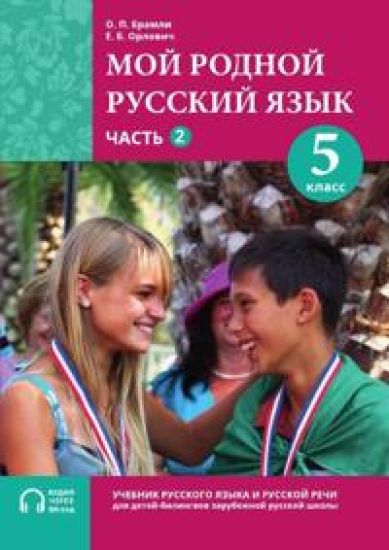
Moj rodnoj russkij jazyk / My Native Russian Language, Year 5, Part 2
Olga Bramley; Elena Orlovich
The London School of Russian Language and Literature
2024
nidottu
This Textbook, accompanied by a Workbook and Teacher's Guide, is designed for pupils aged 11-13 studying Russian as a second native language in the fifth year of a Russian language school abroad. *The Textbook includes interesting and entertaining texts and exercises to stimulate students' learning and creativity, and is supplemented by an online audio aid.*The Workbook contains homework assignments to reinforce the material learned, and to develop students' speech and creative abilities, as well as vocabulary with a translation of key words and expressions into English, French and German, to assist bilingual students.The books (Part 1 plus Part 2) can be used for a full-year school course comprising 32 Reading-Conversational lessons and 32 Grammar lessons, arranged by topics. The lessons develop thought and speech, enrich students' active vocabulary, and raise the general standard of their language skills. Part 2 includes 9 Topics over 30 lessons.The materials contain 230 key words, 210 commonly used conversational expressions, 90 proverbs, 14 songs, and recommends a list of over 70 books for home reading - all on the topics studied.By working with these books, pupils are sure to learn a lot of new things, develop good friendships in the classroom, fall in love with the subject, and start speaking Russian fluently and correctly!We wish them every success in their Russian studies!