

Kirjahaku
Etsi kirjoja tekijän nimen, kirjan nimen tai ISBN:n perusteella.
1000 tulosta hakusanalla P. Sharp

p-adic Numbers, p-adic Analysis, and Zeta-Functions
Neal Koblitz
Springer-Verlag New York Inc.
2012
nidottu
Neal Koblitz was a student of Nicholas M. Katz, under whom he received his Ph.D. in mathematics at Princeton in 1974. He spent the year 1974 -75 and the spring semester 1978 in Moscow, where he did research in p -adic analysis and also translated Yu. I. Manin's "Course in Mathematical Logic" (GTM 53). He taught at Harvard from 1975 to 1979, and since 1979 has been at the University of Washington in Seattle. He has published papers in number theory, algebraic geometry, and p-adic analysis, and he is the author of "p-adic Analysis: A Short Course on Recent Work" (Cambridge University Press and GTM 97: "Introduction to Elliptic Curves and Modular Forms (Springer-Verlag).





P.A.S.T. Parenting As a Single Teenager
Ashley D. Captain; Stephanie M. Captain
AuthorHouse
2011
pokkari


P-450 and Chemical Carcinogenesis
Springer-Verlag New York Inc.
2012
nidottu
This book is one of a GANN Monograph on Cancer Research series and is based on a Japanese Cancer Association-sponsored symposium entitled "Multiplicity of Chemical Carcinogen-Activating Enzymes· with Particular Emphasis on Cytochrome P-450" which was held in Tokyo on November 21, 1983. The principal role of microsomal cytochrome P-450 in the metabolic activation of various chemical carcinogens in animal cells has been well established. The activated chemical carcinogens induce mutations of the cells, which is an essential part of the initiation of chemical carcinogenesis. Since microsomal cytochrome P-450 in various animal tissues includes multiple molecular species with different substrate specificities and different responses to chemical inducers, knowledge of the molecular and catalytic properties and the inducibilities of those cytochrome P-450 forms is surely a most important base from which to elucidate the mechanism of chemical carcinogenesis. The focus of the symposium was this area of molecular diversity and inducibility of microsomal cytochrome P-450 in animal tissues. The mechanism of activation of various types of chemical carcinogens by cytochrome P-450 and related enzymes was another main topic. The editors, who were also the symposium organizers, hope these summaries of current research in this field in Japan will stimulate future development of studies on the mechanism of chemical carcinogenesis.

p-i-l-a-t-e-s Arm and Leg Weights Instructor Manual Levels 1-5
Catherine Wilks
Lulu.com
2012
pokkari
p-i-l-a-t-e-s Arm and Leg Weight Instructor Manual - 21 Exercises over 5 Levels this manual offers a complete guide to performing exercises with Arm Weights in a Pilates Class. This manual offers a step by step guide to progressing clients with this apparatus. It is an excellent resource for Pilates Instructors and Personal Trainers to create variety in their Pilates workouts.

p-i-l-a-t-e-s Magic Circle Instructor Manual - 49 Exercises over 5 Levels this manual offers a complete guide to performing exercises with the Magic Circle. A fantastic versatile piece of equipment necessary for any Pilates Studio or Fitness Professional. This manual offers a step by step guide to progressing clients with this apparatus. It is an excellent resource for Pilates Instructors and Personal Trainers.
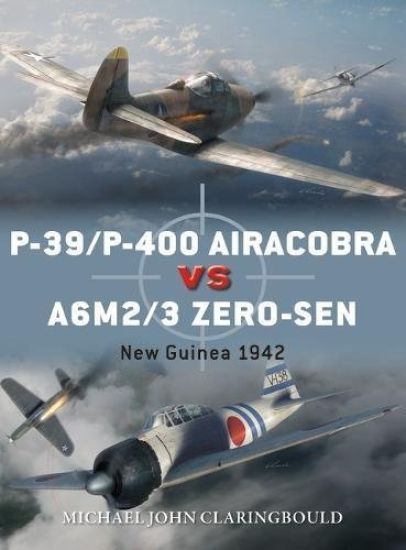
After the huge advances made in the early months of the Pacific war, it was in remote New Guinea where the advance of Imperial Japanese Naval Air Force (IJNAF) A6M Zero-sen fighters was first halted due to a series of offensive and defensive aerial battles ranging from treetop height up to 30,000 ft. Initially, the IJNAF fought Australian Kittyhawks, but by May 1942 they had fought themselves into oblivion, and were relieved by USAAF P-39 and P-400 Airacobras. The battles unfolded over mountainous terrain with treacherous tropical weather. Neither IJNAF or USAAF pilots had been trained for such extreme conditions, incurring many additional losses aside from those that fell in combat. Using specially commissioned artwork and contemporary photographs and testimony, this fascinating study explains how, despite their initial deficit in experience and equipment, the Airacobras managed to square the ledger and defend New Guinea.
P-51B Mustang
James William "Bill" Marshall; Lowell F. Ford; Col (Ret.) Robert W. Gruenhagen
Osprey Publishing
2020
sidottu
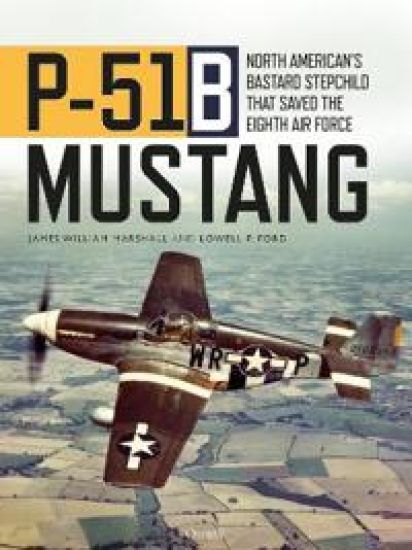
The story of the P-51B Mustang aircraft from its development prior to the American entry into the war through to D-Day in June 1944.During World War II, the United States Army Air Corps was led by a cadre of officers who believed implicitly that military aviation, particularly fast heavy bombers at high altitude, would be able to destroy strategic enemy targets during daylight with minimal losses. However, by 1942 the Flying Fortress was proving vulnerable to Luftwaffe fighters. This title charts the United States Army Air Force's struggle to develop a Long-Range Escort which would enable them to achieve the Combined Bomber Objectives and gain mastery of the skies over the Third Reich. The commitment of the USAAF to the Mediterranean and European theatres saw an increasingly desperate need to find a fighter escort, which reached crisis point in 1943 as losses suffered in the Tidal Wave offensive and Schweinfurt-Regensburg-Munster raids emphasised the mounting strength of the Luftwaffe.The USAAF leaders increasingly accepted the probability of bomber losses, and the deployment of the P-51B Mustang solved the problem of Germany’s layered defence strategy, as Luftwaffe fighters had been avoiding the P-47 Thunderbolt and P-38 Lightening escort fighters by concentrating their attacks beyond the range of the Thunderbolt and Lightning.The P-51B duly emerged as the ‘The Bastard Stepchild’ that the USAAF Material Division did not want, becoming the key Long-Range Escort fighter, alongside the P-38 and P-47, that defeated the Luftwaffe prior to D-Day. As well as the P-51B's history, this title explores the technical improvements made to each of these fighters, as well as the operational leadership and technical development of the Luftwaffe they fought against.
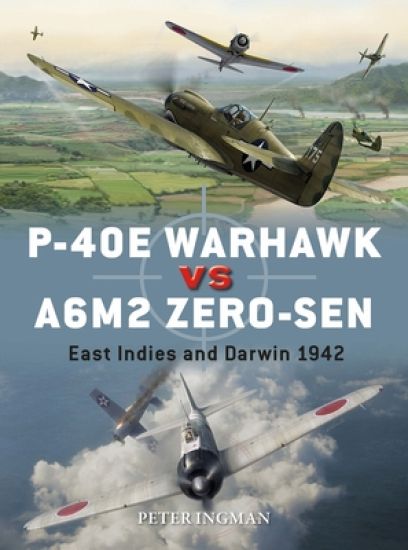
The P-40E Warhawk is often viewed as one of the less successful American fighter designs of World War II, but in 1942 the aircraft was all that was available to the USAAC in-theatre. Units equipped with the aircraft were duly forced into combat against the deadly A6M2 Zero-sen, which had already earned itself a near-mythical reputation following its exploits over China and Pearl Harbor. During an eight-month period in 1942, an extended air campaign was fought out between the two fighters for air superiority over the Javanese and then northern Australian skies. During this time, the P-40Es and the Zero-sens regularly clashed without interference from other fighter types. In respect to losses, the Japanese ‘won’ these engagements, for many more P-40Es were shot down than Zero-sens. However, the American Warhawks provided a potent deterrent that forced the IJNAF to attack from high altitudes, where crews’ bombing efficiency was much poorer.Fully illustrated throughout, and supported by rare and previously unpublished photographs, this book draws on both American and Japanese sources to tell the full story of the clashes between these iconic two fighters in Darwin and the East Indies.
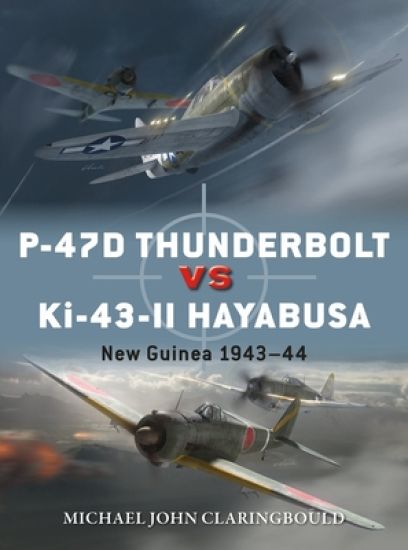
Although New Guinea’s Thunderbolt pilots faced several different types of enemy aircraft in capricious tropical conditions, by far their most common adversary was the Nakajima Ki-43-II Hayabusa, codenamed ‘Oscar’ by the Allies. These two opposing fighters were the products of two radically different design philosophies. The Thunderbolt was heavy, fast and packed a massive punch thanks to its battery of eight 0.50-cal machine guns, while the ‘Oscar’ was the complete opposite in respect to fighter design philosophy – lightweight, nimble, manoeuvrable and lightly armed. It was, nonetheless, deadly in the hands of an experienced pilot. The Thunderbolt commenced operations in New Guinea with a series of bomber escort missions in mid-1943, and its firepower and superior speed soon saw Fifth Air Force fighter command deploying elite groups of P-47s to Wewak, on the northern coast. Flying from there, they would pick off unwary enemy aircraft during dedicated fighter patrols. The Thunderbolt pilots in New Guinea slowly wore down their Japanese counterparts by continual combat and deadly strafing attacks, but nevertheless, the Ki-43-II remained a worthy opponent deterrent up until Hollandia was abandoned by the IJAAF in April 1944.Fully illustrated throughout with artwork and rare photographs, this fascinating book examines these two vastly different fighters in the New Guinea theatre, and assesses the unique geographic conditions that shaped their deployment and effectiveness.
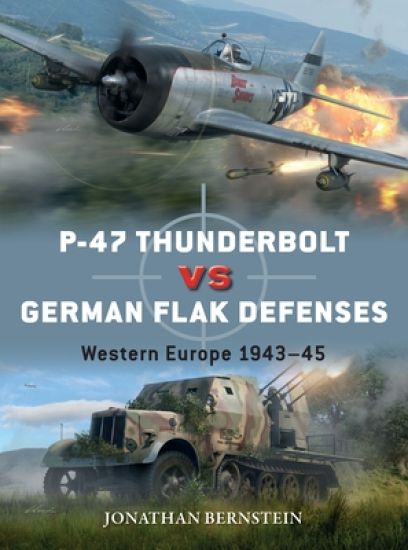
Since the end of World War 2, the tactical air war over Europe has been largely overlooked by historians and authors alike in favour of analysis of the higher profile strategic bombing campaign. Involving just as many aircraft as the daylight heavy bombing campaign, the fighter-bombers (principally of the Ninth Air Force) wreaked considerably more havoc on German ground forces. Indeed, Thunderbolt units undertaking such missions effectively complemented the strategic campaign, ensuring the defeat of Nazi Germany. P-47 pilots paid a high price to achieve this victory, however, as the German flak arm was well equipped (nearly a quarter of all war-related production was devoted to anti-aircraft weaponry) with weapons of various calibres to counter tactical air power’s low to medium altitude threat. The USAAF four numbered air forces that saw action over the European continent suffered significant fighter-bomber losses to flak. The principle fighter-bomber from the summer of 1944 through to VE Day was the P-47D, with both dedicated ground attack units and squadrons that had completed their bomber escort tasking seeking out targets of opportunity across occupied Western Europe. While heavy-calibre anti-aircraft fire was intended to both shoot down enemy aircraft and force bombers to drop their ordnance sooner or from higher altitudes, thus reducing bombing accuracy, low-altitude flak batteries put up a virtual ‘wall of steel’ for enemy fighter-bombers to fly through. Damaging a low-flying fighter-bomber made it easier for other flak gunners to track, engage and destroy it. Innovations like lead-computing gunsights gave gunners a higher probability of intercepting low-altitude fighters. Conversely, the appearance of air-to-ground rockets beneath the wings of P-47s gave pilots better standoff range and a harder-hitting punch when dealing with low and medium altitude flak units.This volume analyses the tactics and techniques used by both P-47 fighter-bomber pilots and German flak gunners, featuring full-colour illustrations to examine the Allied tactical air power in Europe from 1943 and how German defences were overpowered by the air threat.
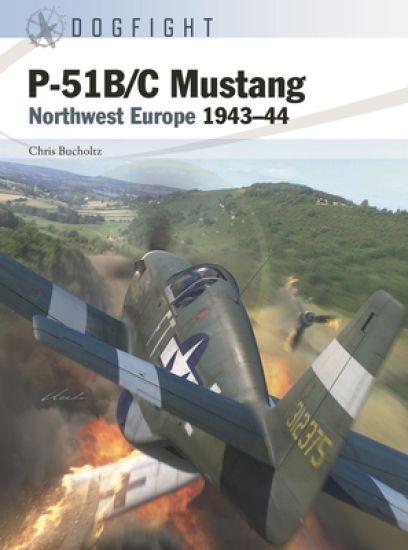
This up-to-date volume straps the reader into the cockpit of the P-51B/C as the Mustang-equipped fighter groups of the ‘Mighty Eighth’ Air Force attempt to defend massed heavy bomber formations from deadly Luftwaffe fighters charged with defending the Third Reich.Luftwaffe Reichsmarschall Hermann Göring admitted that the appearance of long-range Mustangs over Berlin spelled the end of the Jagdwaffe’s ability to defeat American daylight bombing. But the Mustang was far more than an escort – it was a deadly hunter that could out-perform nearly every German fighter when it was introduced into combat. Entering combat in Europe in December 1943, P-51Bs and P-51Cs had advantages over German Bf 109s and Fw 190s in respect to the altitude they could reach, their rate of climb and top speed. Initially tapped for close bomber escort, Mustangs were quickly turned loose to range ahead of the bomber stream in order to challenge German fighters before they could assemble to engage the bombers en masse. Thanks to the Mustang’s superior performance, USAAF pilots effectively blunted the Luftwaffe’s tried and tested tactic for destroying B-17s and B-24s. Boldness and aggression in aerial combat meant that P-51B/C pilots inflicted a rapidly mounting toll on their German counterparts in the West during the early months of 1944, contributing mightily to Allied air superiority over northern France on D-Day. This volume, packed full of first-hand accounts, expertly recreates the combat conditions and flying realities for Mustang pilots (including headline aces such as Don Blakeslee and Don Gentile, as well as lesser known aviators). It is heavily illustrated with photographs, artwork and innovative and colourful 3D ribbon diagrams, which will provide a realistic overview of the most dynamic dogfights in aviation history.

An exciting account of the aerial battles fought by the USAAF's P38 Lightnings and the Jagdflieger's Bf 109Gs for dominance over North Africa and the Mediterranean.USAAF fighter pilots experienced a baptism of fire when flying the technically advanced but fragile P-38 Lightning over North Africa in the wake of 1942's Operation Torch. Their opponents were battle-hardened jagdflieger of the Jadgwaffe, flying the tried and tested Bf 109 in its very lastest Gustav iteration. Responsible primarily for escorting USAAF bombers attacking Afrika Korps installations in Tunisia, the P-38 units in North Africa had to develop effective tactics to defend the bombers against Luftwaffe fighter attacks. For several months the Lightning squadrons had to also cope with shortages of aircraft and spare parts, steady losses and a lack of replacement pilots. To survive, American aviators had to learn quickly. While it is difficult to definitively attribute victories in air combat, in the air battles over Tunisia and later over Sicily and Italy, the claims made by Lightning pilots were comparable to Luftwaffe claims for P-38s destroyed. Edward M. Young turns his attention to the bitterly fought air war in North Africa and the Mediterranean in 1942–43. Using original archival sources, official records and first-hand accounts from both USAAF and Luftwaffe veterans, as well as newly commissioned artwork and 50 carefully selected photographs from official and personal archives, this book sees two of the most iconic piston-engined fighters of their era pitted head-to-head for control of the skies in a key theatre of World War II.