Kirjojen hintavertailu. Mukana 12 016 292 kirjaa ja 12 kauppaa.

Kirjahaku

Etsi kirjoja tekijän nimen, kirjan nimen tai ISBN:n perusteella.

1000 tulosta hakusanalla Pamela Cook

Identifying and Supporting Children with Specific Learning Difficulties
Many children experience difficulties which impact on their learning at home and school. Some children are considered to have a specific learning difficulty such as dyslexia or dyspraxia, but other children display a range of indicators which cross the boundaries of specific named 'conditions'. If teachers are to offer appropriate support, the authors of this highly practical book argue that they must look beyond the label to assess the whole child. This is an informative book which: * encourages teachers to consider children as individuals rather than attempting to match them to existing sets of indicators * pinpoints the overlap of indicators within different specific learning difficulties * considers the process of assessment* explains the implications of the children's difficulties* offers tried-and-tested strategies to promote inclusive learning.Teachers, teaching assistants, Special Educational Needs Co-ordinators and students undertaking teacher education courses will all find this a refreshingly accessible book.
Identifying and Supporting Children with Specific Learning Difficulties
Many children experience difficulties which impact on their learning at home and school. Some children are considered to have a specific learning difficulty such as dyslexia or dyspraxia, but other children display a range of indicators which cross the boundaries of specific named 'conditions'. If teachers are to offer appropriate support, the authors of this highly practical book argue that they must look beyond the label to assess the whole child. This is an informative book which: * encourages teachers to consider children as individuals rather than attempting to match them to existing sets of indicators * pinpoints the overlap of indicators within different specific learning difficulties * considers the process of assessment* explains the implications of the children's difficulties* offers tried-and-tested strategies to promote inclusive learning.Teachers, teaching assistants, Special Educational Needs Co-ordinators and students undertaking teacher education courses will all find this a refreshingly accessible book.
Teaching Mathematics

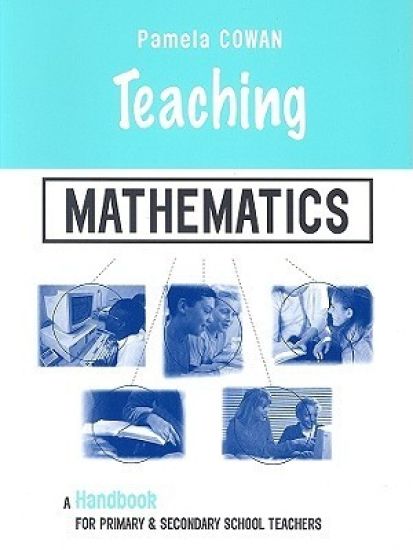
Teaching Mathematics

Pamela Cowan

Routledge
2006
nidottu
A practical introduction to Maths teaching designed specifically for beginning teachers in primary and secondary schools. It brings together the latest DfES and TTA guidelines and requirements with authoritative guidance, ensuring that readers feel confident about how to approach their role as a teacher. This book explores key issues in maths teaching today, including:planning and classroom managementassessment, recording and reporting information and communication technologyinvestigative mathematicsequal opportunities, special needs and differentiationkey skills and alternative mathematics qualificationsbeing an effective maths teacher personal and professional development in the early stages of a teaching career.
Macartney at Kashgar

Macartney at Kashgar

Pamela Nightingale; C.P. Skrine

Routledge
2005
sidottu
First published in 1973. This book describes the career of Sir George Macartney, who spent twenty-eight years at the turn of the nineteenth century as British representative in Sinkiang, China's most westerly province. Macartney was in a unique position to observe political and diplomatic manoeuvres by the key players trying to establish a sphere of influence in China's strategically vital hinterland before and during the Chinese revolution.
The Education of the Poor

The Education of the Poor

Pamela Silver; Harold Silver

Routledge
2007
sidottu
Originally published 1974. Thousands of elementary schools for the children of the poor were founded during the nineteenth century, yet there is scarcely a published history of a single one of them. This volume is precisely such a history and the authors trace its story against the background of local and national change in education and society. On the basis of a unique collection of records the authors have pieced together a picture of the social composition of the school, its curriculum and teaching methods, and its administration and finance. They relate the history of the school to that of London and the church, to that of educational authorities and educational policy.
From Ancient Myth to Modern Healing

From Ancient Myth to Modern Healing

Pamela Donleavy; Ann Shearer

Routledge
2008
sidottu
This book is about the energy personified by the classical Greek goddess Themis, who brought her divine and natural 'right order' to gods and humans, and who still presides over law courts as the figure of Justice. In many Western countries today, the growing dis-ease in minds and bodies of individuals is often echoed in whole communities. Rather than coming together, they seem to split apart in anger and distress. But themis energy is equally powerful, and can work to bring together and to heal. From the battle of the Titans and Olympians to the oracle at Delphi and the banquet of the gods, the stories of the goddess weave through these chapters to illuminate how themis energy is at work today. The authors explore psychological healing in individuals and relate this to new research in neurocardiology on the subtle interactions of body and mind. They show how the international movement for restorative justice is drawing on the same healing tools to benefit victims and offenders alike. And they evoke the extraordinary story of the South African Truth and Reconciliation Commission, which shows the world how themis energy can help transform a ravaged society.This book deepens understanding of the psychological urge towards healing and wholeness which is as much a part of human beings as the urge to destroy. It offers exciting new insights into Jung's unique approach to the relationship between individual and collective psychology. It will appeal to psychologists who work with individuals and groups, to lawyers and others concerned with the failure of current criminal justice systems, and to people involved in religious, political and other groups that seek to build communities which can encompass and even celebrate diversity rather than rejecting it in fear.
From Ancient Myth to Modern Healing

From Ancient Myth to Modern Healing

Pamela Donleavy; Ann Shearer

Routledge
2008
nidottu
This book is about the energy personified by the classical Greek goddess Themis, who brought her divine and natural 'right order' to gods and humans, and who still presides over law courts as the figure of Justice. In many Western countries today, the growing dis-ease in minds and bodies of individuals is often echoed in whole communities. Rather than coming together, they seem to split apart in anger and distress. But themis energy is equally powerful, and can work to bring together and to heal. From the battle of the Titans and Olympians to the oracle at Delphi and the banquet of the gods, the stories of the goddess weave through these chapters to illuminate how themis energy is at work today. The authors explore psychological healing in individuals and relate this to new research in neurocardiology on the subtle interactions of body and mind. They show how the international movement for restorative justice is drawing on the same healing tools to benefit victims and offenders alike. And they evoke the extraordinary story of the South African Truth and Reconciliation Commission, which shows the world how themis energy can help transform a ravaged society.This book deepens understanding of the psychological urge towards healing and wholeness which is as much a part of human beings as the urge to destroy. It offers exciting new insights into Jung's unique approach to the relationship between individual and collective psychology. It will appeal to psychologists who work with individuals and groups, to lawyers and others concerned with the failure of current criminal justice systems, and to people involved in religious, political and other groups that seek to build communities which can encompass and even celebrate diversity rather than rejecting it in fear.
Financial Exclusion and the Poverty Trap

Financial Exclusion and the Poverty Trap

Pamela Lenton; Paul Mosley

Routledge
2011
sidottu
The persistence of poverty hurts us all, and attacking poverty is a major policy objective everywhere. In Britain, the main political parties have an anti-poverty mandate and in particular an agreed commitment to eliminate child poverty by 2020, but there is controversy over how this should be done. This book addresses one of the main causes of poverty, financial exclusion – the inability to access finance from the high-street banks. People on low or irregular incomes typically have to resort to loan sharks, ‘doorstep lenders’ and other informal credit sources, a predicament which makes escape from the poverty trap doubly difficult.Over the last fifteen years, a strategy of breaking down the poverty trap has been implemented, known in the UK as community development financial institutions (CDFIs), typically non-profit lending institutions focussed on the financially excluded, and seeking to learn from the achievements of microfinance around the world. Focussing on the period 2007-09, during which the UK went into a global recession, this book investigates how CDFIs work and how well they have helped low-income people and businesses to weather that recession. Based on a study of eight CDFIs in four UK cities, we ask: what ideas for overcoming financial exclusion have worked well, and which have worked badly? What can we learn from the experience of these CDFIs which can help reduce poverty in this country and globally? We assess the impact of CDFIs using a range of indicators (including income, assets, education, health) and ask what changes in policy by both CDFIs and government agencies (for example, benefits agencies) might be able to increase impact. Some of the key lessons are: CDFIs need to work with appropriate partners to build up savings capacity in their clients; the community environment is vital in determining who escapes from the poverty trap; and CDFIs can never function properly unless they learn how to control their overdue debts.This book will be vital reading for those concerned with social policy, microfinance and anti-poverty policies in industrialised countries and around the world.
Sigmund Freud

Sigmund Freud

Pamela Thurschwell

Routledge
2009
sidottu
The work of Sigmund Freud has penetrated almost every area of literary theory and cultural studies, as well as contemporary culture. Pamela Thurschwell explains and contextualises psychoanalytic theory and its meaning for modern thinking. This updated second edition explores developments and responses to Freud’s work, including: tracing contexts and developments of Freud’s work over the course of his careerexploring paradoxes and contradictions in his writingfocusing on psychoanalysis as an interpretative strategy, paying special attention to its impact on literary and cultural theoryexamining the recent backlash against Freud and arguing for the continued relevance of psychoanalysis.Encouraging and preparing readers to approach Freud’s original texts, this guide ensures that readers of all levels will find Freud accessible, challenging and of continued relevance.
Sigmund Freud

Sigmund Freud

Pamela Thurschwell

Routledge
2009
nidottu
The work of Sigmund Freud has penetrated almost every area of literary theory and cultural studies, as well as contemporary culture. Pamela Thurschwell explains and contextualises psychoanalytic theory and its meaning for modern thinking. This updated second edition explores developments and responses to Freud’s work, including: tracing contexts and developments of Freud’s work over the course of his careerexploring paradoxes and contradictions in his writingfocusing on psychoanalysis as an interpretative strategy, paying special attention to its impact on literary and cultural theoryexamining the recent backlash against Freud and arguing for the continued relevance of psychoanalysis.Encouraging and preparing readers to approach Freud’s original texts, this guide ensures that readers of all levels will find Freud accessible, challenging and of continued relevance.
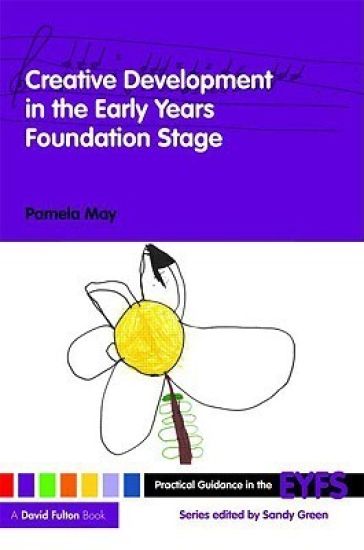
Creative Development in the Early Years Foundation Stage
The Practical Guidance in the Early Years Foundation Stage series will assist practitioners in the smooth and successful implementation of the Early Years Foundation Stage.Each book gives clear and detailed explanations of each aspect of Learning and Development and encourages readers to consider each area within its broadest context to expand and develop their own knowledge and good practice.Practical ideas and activities for all age groups are offered along with a wealth of expertise of how elements from the practice guidance can be implemented within all early years settings. The books include suggestions for the innovative use of everyday ressources, popular books and stories.The clear and practical information in this book will help practitioners in supporting and developing the natural curiosity of children, helping them explore and express their own ideas through a variety of activities including music art and dance. The author explores the balance between the necessary freedoms of choice that creativity requires and the control which thoughtful practitioners must exert and offers ideas for building children's imaginations through play.
Creative Development in the Early Years Foundation Stage
The Practical Guidance in the Early Years Foundation Stage series will assist practitioners in the smooth and successful implementation of the Early Years Foundation Stage.Each book gives clear and detailed explanations of each aspect of Learning and Development and encourages readers to consider each area within its broadest context to expand and develop their own knowledge and good practice.Practical ideas and activities for all age groups are offered along with a wealth of expertise of how elements from the practice guidance can be implemented within all early years settings. The books include suggestions for the innovative use of everyday ressources, popular books and stories.The clear and practical information in this book will help practitioners in supporting and developing the natural curiosity of children, helping them explore and express their own ideas through a variety of activities including music art and dance. The author explores the balance between the necessary freedoms of choice that creativity requires and the control which thoughtful practitioners must exert and offers ideas for building children's imaginations through play.
Child Development in Practice

Child Development in Practice

Pamela May

Routledge
2010
sidottu
How should children feel about themselves and their learning? How do I know what children have learnt and how can I move them on? How can I ensure that resources are available for children to use actively and independently?In today’s busy setting an understanding of child development sometimes gets overlooked, yet it lies at the heart of effective practice. Child Development in Practice provides an approachable, user-friendly base from which to plan ways of working with children that are developmentally appropriate and will enable them to learn enjoyably and effectively. Drawing on recent research, the book thoughtfully discusses sound principles of child development alongside descriptions of every day practice. It then offers practical advice on how to fully utilise the key areas in an early years setting, including the creative area, books and stories and the outside, and shows how to plan and implement integrated topics where teaching is cross-curricular and holistic. Throughout, a series of key questions are presented to encourage practitioners to reflect on why they are teaching in certain ways and increase their understanding of children’s developmental needs.Directly linking theory and practice, this book aims to give students and practitioners the knowledge and confidence they need to help children become active, interactive and independent learners.
Child Development in Practice

Child Development in Practice

Pamela May

Routledge
2010
nidottu
How should children feel about themselves and their learning? How do I know what children have learnt and how can I move them on? How can I ensure that resources are available for children to use actively and independently?In today’s busy setting an understanding of child development sometimes gets overlooked, yet it lies at the heart of effective practice. Child Development in Practice provides an approachable, user-friendly base from which to plan ways of working with children that are developmentally appropriate and will enable them to learn enjoyably and effectively. Drawing on recent research, the book thoughtfully discusses sound principles of child development alongside descriptions of every day practice. It then offers practical advice on how to fully utilise the key areas in an early years setting, including the creative area, books and stories and the outside, and shows how to plan and implement integrated topics where teaching is cross-curricular and holistic. Throughout, a series of key questions are presented to encourage practitioners to reflect on why they are teaching in certain ways and increase their understanding of children’s developmental needs.Directly linking theory and practice, this book aims to give students and practitioners the knowledge and confidence they need to help children become active, interactive and independent learners.
Planning Process Drama

Planning Process Drama

Pamela Bowell; Brian S. Heap

Routledge
2012
sidottu
Process drama is now firmly established, internationally, as a powerful and dynamic pedagogy. This clear and accessible book provides a practical, step-by-step guide to the planning of process drama. Grounded in theory and illustrated in practice, it identifies and explains the principles of planning and shows how they can be applied across age ranges and curricula. Drawing on the authors’ wide-ranging practical experience and research, examples are built up and run throughout the book, at each step showing how and why the teachers’ planning decisions were made. This second edition features: a wider range of examples illustrating the planning principles in practice two completely new chapters: one deals with planning for diverse learner groups and the other moves the reader on from the pre-action planning phase to the ‘planning on your feet’ required as the drama unfolds.incorporated new material to reflect recent understanding of how learning takes placeWritten as a conversation between reader and authors, Planning Process Drama will help practitioners to update and refine their practice and strengthen their understanding, skills and confidence.Planning Process Drama will be an essential guide for students undertaking initial teacher training at primary level, in addition to both Drama and English at secondary level, and a Masters in Drama in Education. It will also prove to be valuable reading for specialist and non-specialist teacher in both the primary and secondary sectors who teach, or wish to teach, process drama.
Planning Process Drama

Planning Process Drama

Pamela Bowell; Brian S. Heap

Routledge
2012
nidottu
Process drama is now firmly established, internationally, as a powerful and dynamic pedagogy. This clear and accessible book provides a practical, step-by-step guide to the planning of process drama. Grounded in theory and illustrated in practice, it identifies and explains the principles of planning and shows how they can be applied across age ranges and curricula. Drawing on the authors’ wide-ranging practical experience and research, examples are built up and run throughout the book, at each step showing how and why the teachers’ planning decisions were made. This second edition features: a wider range of examples illustrating the planning principles in practice two completely new chapters: one deals with planning for diverse learner groups and the other moves the reader on from the pre-action planning phase to the ‘planning on your feet’ required as the drama unfolds.incorporated new material to reflect recent understanding of how learning takes placeWritten as a conversation between reader and authors, Planning Process Drama will help practitioners to update and refine their practice and strengthen their understanding, skills and confidence.Planning Process Drama will be an essential guide for students undertaking initial teacher training at primary level, in addition to both Drama and English at secondary level, and a Masters in Drama in Education. It will also prove to be valuable reading for specialist and non-specialist teacher in both the primary and secondary sectors who teach, or wish to teach, process drama.
Surviving, Existing, or Living

Surviving, Existing, or Living

Pamela R. Fuller

Routledge
2013
sidottu
For professionals working with people who experience severe psychosis, increasing empirical evidence for the benefits of psychotherapy for psychosis has been especially welcome. Given the limitations of medication-only approaches and the need for an expanded perspective, including for those diagnosed with schizophrenia, Surviving, Existing, or Living takes a fresh look at severe psychosis, offering a heuristic model for understanding psychosis along a continuum of severity, from the extreme experience of acutely impairing psychosis to a more enriched life experience.Pamela Fuller emphasizes that facilitating recovery from psychosis requires appropriately and effectively matching the type and timing of interventions to client readiness and capabilities. The need to consider each individual according to which of three primary issues/phases preoccupy the person with psychosis is essential for tailoring treatment. She identifies these phases as:Surviving Phase – preoccupation with survivalExisting Phase – preoccupation with restriction of life experiences in order to copeLiving Phase – preoccupation with quality of life and relationships Surviving, Existing, or Living examines the rationale for these three phases, and provides details of phase-specific treatment interventions as well as a 'how to' guide for facilitating engagement and for determining 'what to do when,' including with those experiencing acute, severe psychosis. Rich clinical case examples are provided to highlight concepts and the types of interventions. Trauma-specific and group interventions for psychosis are also described, as well as ways to foster resilience in the professional who works with individuals with psychosis.Surviving, Existing, or Living offers a detailed guide to help individuals experiencing psychosis move from suffering to recovery, beyond surviving or existing toward more fully living. The book will be essential reading for professionals in the fields of psychology, psychiatry, counseling, medicine, social work, nursing, occupational, recreational, and vocational therapies, experience-based experts, and students.
Surviving, Existing, or Living

Surviving, Existing, or Living

Pamela R. Fuller

Routledge
2013
nidottu
For professionals working with people who experience severe psychosis, increasing empirical evidence for the benefits of psychotherapy for psychosis has been especially welcome. Given the limitations of medication-only approaches and the need for an expanded perspective, including for those diagnosed with schizophrenia, Surviving, Existing, or Living takes a fresh look at severe psychosis, offering a heuristic model for understanding psychosis along a continuum of severity, from the extreme experience of acutely impairing psychosis to a more enriched life experience.Pamela Fuller emphasizes that facilitating recovery from psychosis requires appropriately and effectively matching the type and timing of interventions to client readiness and capabilities. The need to consider each individual according to which of three primary issues/phases preoccupy the person with psychosis is essential for tailoring treatment. She identifies these phases as:Surviving Phase – preoccupation with survivalExisting Phase – preoccupation with restriction of life experiences in order to copeLiving Phase – preoccupation with quality of life and relationships Surviving, Existing, or Living examines the rationale for these three phases, and provides details of phase-specific treatment interventions as well as a 'how to' guide for facilitating engagement and for determining 'what to do when,' including with those experiencing acute, severe psychosis. Rich clinical case examples are provided to highlight concepts and the types of interventions. Trauma-specific and group interventions for psychosis are also described, as well as ways to foster resilience in the professional who works with individuals with psychosis.Surviving, Existing, or Living offers a detailed guide to help individuals experiencing psychosis move from suffering to recovery, beyond surviving or existing toward more fully living. The book will be essential reading for professionals in the fields of psychology, psychiatry, counseling, medicine, social work, nursing, occupational, recreational, and vocational therapies, experience-based experts, and students.
Ethics, Norms and the Narratives of War
This book examines the ethics and values that render a war discourse normative, and features the stories of American soldiers who fought in the Iraq War to show how this narrative can change. The invasion of Iraq, launched in March 2003, was led by the United States under the now discredited claim that Iraq was developing weapons of mass destruction (WMD). However, critical questions concerning what we may be able to learn from this experience remain largely unexplored. The focus of this book, therefore, is on soldiers as systems of war – and the internal battle many of them wage as they live a reality that slowly emerges as inconsistent with familiar beliefs and value commitments. This work offers a reflective study of identity struggle from the perspective of emotional psychology and delves into the ‘narrative field’ of socio-politics. Going beyond the political contestations over the U.S. military intervention in Iraq, the author analyses original research on the evolving beliefs and value-commitments of veterans of the war, exploring their faith in its ‘just cause’ and their personal sense of self and national identity. This book will be of much interest to students of the Iraq War, US foreign policy, military studies, discourse analysis, and IR in general.
The Thinking Child

The Thinking Child

Pamela May

Routledge
2013
sidottu
What characteristics do children need to become motivated to learn? How do children’s experiences and relationships affect their cognitive development? How do you provide learning experiences that meet the developmental needs of every child in your care?The Thinking Child thoughtfully discusses the key principles of children’s cognitive and intellectual development alongside descriptions of everyday practice. It clearly explains the cognitive strategies that children use to learn new knowledge, the development of cognitive milestones such as symbolism, memories and the imagination, metacognition and creativity along with research into how the brain processes information. Throughout the book, the author considers the key characteristics of effective learning and shows how play is one of the primary mechanisms that children use to access new knowledge and to consolidate their emerging ideas and concepts. These characteristics are then applied to integral aspects of early years practice to show how pracitioners can: motivate children to learn new knowledge about themselves and the world around them; help children to develop their own ideas creatively and use this knowledge as a base to learn new things; reflect on their own teaching methods to encourage children’s engagement, motivation and creativity through effective observation and planning; engage with parents and carers to help support children’s learning at home whilst maintaining the values of the family; celebrate the uniqueness of each child and provide learning experiences that are appropriate for individuals with particular learning needs, be they physical, emotional or cognitive to ensure that every child has an equal opportunity to succeed.Emphasising the importance of understanding the theory that underpins children’s cognitive development, this accessible text shows practitioners how they can use this knowledge to provide learning opportunities that nourish children’s thinking and creative skills.