Kirjojen hintavertailu. Mukana 11 244 527 kirjaa ja 12 kauppaa.

Kirjahaku

Etsi kirjoja tekijän nimen, kirjan nimen tai ISBN:n perusteella.

1000 tulosta hakusanalla Perry Crowe

Out in Time

Out in Time

Perry N. Halkitis

Oxford University Press Inc
2019
sidottu
The civil rights of LGBTQ people have slowly yet steadily strengthened since the Stonewall Riots of June, 1969. Despite enormous opposition from some political segments and the catastrophic effects of the AIDS crisis, the last five decades have seen continual improvement in the conditions of the lives of LGBTQ individuals in the United States. As such, the realities and challenges faced by a young gay man coming of age and coming out in the 1960s is, in many profound ways, different from the experiences of a young gay man coming of age and coming out today. Out in Time explores the life experiences of three generations of gay men -- the Stonewall, AIDS, Queer generations -- arguing that while there are generational differences in the lived experiences of young gay men, and each one confronts its own unique historical events, realities, and socio-political conditions, there are consistencies across time that define and unify the identity formation of gay men. Guided by the vast research literature on gay identity formation and coming out, the ideas and themes explored here are seen through the oral histories of a diverse set of fifteen gay men, five from each generation. Out in Time demonstrates how early life challenges define and shape the life courses of gay men, demarcating both the specific time-bound challenges encountered by each generation and the universal challenges encountered by gay men coming of age across all generations and the conditions that define their lives.

Enzymatic Reaction Mechanisms

Enzymatic Reaction Mechanisms

Perry A. Frey; Adrian D. Hegeman

Oxford University Press Inc
2007
sidottu
Books dealing with the mechanisms of enzymatic reactions were written a generation ago. They included volumes entitled Bioorganic Mechanisms, I and II by T.C. Bruice and S.J. Benkovic, published in 1965, the volume entitled Catalysis in Chemistry and Enzymology by W.P. Jencks in 1969, and the volume entitled Enzymatic Reaction Mechanisms by C.T. Walsh in 1979. The Walsh book was based on the course taught by W.P. Jencks and R.H. Abeles at Brandeis University in the 1960's and 1970's. By the late 1970's, much more could be included about the structures of enzymes and the kinetics and mechanisms of enzymatic reactions themselves, and less emphasis was placed on chemical models. Walsh's book was widely used in courses on enzymatic mechanisms for many years. Much has happened in the field of mechanistic enzymology in the past 15 to 20 years. Walsh's book is both out-of-date and out-of-focus in today's world of enzymatic mechanisms. There is no longer a single volume or a small collection of volumes to which students can be directed to obtain a clear understanding of the state of knowledge regarding the chemicals mechanisms by which enzymes catalyze biological reactions. There is no single volume to which medicinal chemists and biotechnologists can refer on the subject of enzymatic mechanisms. Practitioners in the field have recognized a need for a new book on enzymatic mechanisms for more than ten years, and several, including Walsh, have considered undertaking to modernize Walsh's book. However, these good intentions have been abandoned for one reason or another. The great size of the knowledge base in mechanistic enzymology has been a deterrent. It seems too large a subject for a single author, and it is difficult for several authors to coordinate their work to mutual satisfaction. This text by Perry A. Frey and Adrian D. Hegeman accomplishes this feat, producing the long-awaited replacement for Walsh's classic text.
Politics and Society in Great Yarmouth 1660-1722
This is the first intensive study of the political development of a major English town during the late seventeenth and early eighteenth centuries. Perry Gauci examines the activities of the local oligarchy over a period which begins in upheaval, in the aftermath of civil war, and ends in the relative stability of early Georgian England. He brings a fresh perspective to such important episodes as the borough regulation of the 1680s, and the `rage of party' after 1689, by broadening the sphere of `politics' to encompass provincial experiences. He examines the role of the town corporation, a little-studied organ of local government, whose membership reveals much about the relationship between social and political change in this period. Gauci challenges accepted views on these corporations, showing them to be much more dynamic, and less self-interested, than is usually supposed. His analysis of the structures of local politics transcends local history and reveals a great deal about the influence of national authorities over provincial life. It is a significant contribution to the urban history of England.
European and International Media Law

European and International Media Law

Perry Keller

Oxford University Press
2011
sidottu
Over the past half century, western democracies have lead efforts to entrench the economic and political values of liberal democracy into the foundations of European and international public order. As this book details, the relationship between the media and the state has been at the heart of those efforts. In that relationship, often framed in constitutional principles, the liberal democratic state has celebrated the liberty to publish information and entertainment content, while also forcefully setting the limits for harmful or offensive expression. It is thus a relationship rooted in the state's need for security, authority, and legitimacy as much as liberalism's powerful arguments for economic and political freedom. In Europe, this long running endeavour has yielded a market based, liberal democratic regional order that has profound consequences for media law and policy in the member states. This book examines the economic and human rights aspects of European media law, which is not only comparatively coherent but also increasingly restrictive, rejecting alternatives that are well within the traditions of liberalism. Parallel efforts in the international sphere have been markedly less successful. In international media law, the division between trade and human rights remains largely unabridged and, in the latter field, liberal democratic concepts of free speech are influential but rarely decisive. In the international sphere states are moreover quick to assert their rights to autonomy. Nonetheless, the current communications revolution has overturned fundamental assumptions about the media and the state around the world, eroding the boundaries between domestic and foreign media as well as mass and personal communication. European and International Media Law sets legal and policy developments in the context of this fast changing, globalized media and communications sector.
The London Private Banker

The London Private Banker

Perry Gauci

Oxford University Press
2025
sidottu
At the Restoration of 1660, there was no distinctive banking sector, and banking services were provided by a variety of traders, most notably the London goldsmiths. In the later seventeenth century, the first specialists appeared against a background of rapid economic change, and they were often attacked for their greed and self-interest. Historic associations with usury were slow to dissipate, but in the mid-Georgian period a more distinctive cadre of bankers had established itself, thanks to their pivotal role in the service of both landed and commercial elites. These private bankers provided core retail services to thousands of customers, and their premises became well-known sites within the metropolitan landscape. By 1800, the characteristics of the profession were well-developed, to the extent that its members were often seen as establishment figures by both critics and admirers, lauded or vilified in turn for their contribution to national prosperity or instability. The great financial crisis of 1825–6 had a disastrous impact on many private bankers, heralding the rise of the joint-stock bank, but their professional ethos endured as a permanent legacy of their Georgian achievement. The London Private Banker: A Social History, 1660–1825 examines the societal impact of the London private bankers between 1660 and 1825 for the first time. Economic historians have clarified their commercial development, but their distinctive role as retail bankers offers insight into an array of dynamic social forces in eighteenth-century Britian, especially the relationship between the middling and upper orders. Using a sample of some 300 partners, the book examines the development of London private banking from its uncertain late Stuart origins to its established place on the late Georgian high street. Their experiences illuminate the solidity and adaptability of the social order, and their importance is tracked through their commercial services, public lives, and private pleasures. Their advancement renders them a remarkable social phenomenon with a uniquely broad archival record, whose influence ranked alongside the metropolitan merchants and the early industrialists, and whose study has wide-ranging implications for broader understandings of social, cultural, and political life in Georgian England.
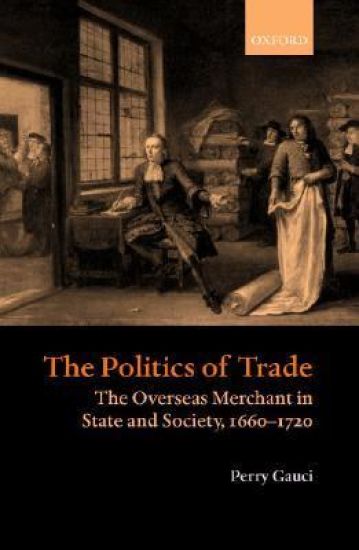
The Politics of Trade

The Politics of Trade

Perry Gauci

Oxford University Press
2001
sidottu
This book examines the political and social impact of the English overseas merchant during this key era of state development. Historians have increasingly recognized the significance of this period as one of commercial and political transition, but relatively little thought has been given to the perspective of the overseas traders, whose activities transended these dynamic arenas. Analsis of the role of merchants in public life highlights their important contribution to England's rise as a commercial power of the first rank, and illuminates the fundamerntal political changes of the time. Case-studies of London, Liverpool, and York reveal the intricate workings of mercantile politics, while studies of the press and Parliament illustrate the increasing prominence of the trader on the national stage. The author's pioneering approach shows how crucial the political accomodation which the merchant class secured with the landed gentry was to the country's success in the eighteenth century.
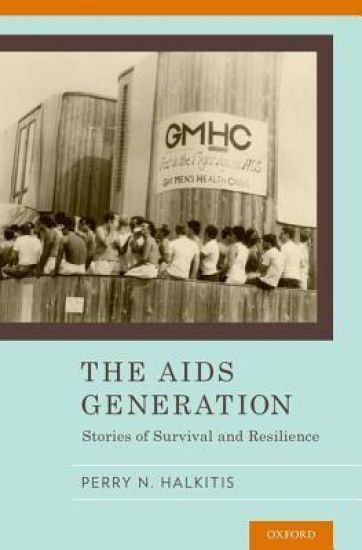
The AIDS Generation

The AIDS Generation

Perry Halkitis

Oxford University Press Inc
2013
sidottu
For young gay men who came of age in the United States in the 1980s, the HIV/AIDS epidemic was a formative experience in fear, hardship, and loss. Those who were diagnosed before 1996 suffered an exceptionally high rate of mortality, and the survivors -- both the infected individuals and those close to them -- today constitute a "bravest generation" in American history. The AIDS Generation: Stories of Survival and Resilience examines the strategies for survival and coping employed by these HIV-positive gay men, who together constitute the first generation of long-term survivors of the disease. Through interviews conducted by the author, it narrates the stories of gay men who have survived since the early days of the epidemic; documents and delineates the strategies and behaviors enacted by men of this generation to survive it; and examines the extent to which these approaches to survival inform and are informed by the broad body of literature on resilience and health. The stories and strategies detailed here, all used to combat the profound physical, emotional, and social challenges faced by those in the crosshairs of the AIDS epidemic, provide a gateway for understanding how individuals cope with chronic and life-threatening diseases. Halkitis takes readers on a journey of first-hand data collection (the interviews themselves), the popular culture representations of these phenomena, and his own experiences as one of the men of the AIDS generation. This riveting account will be of interest to health practitioners and historians throughout the clinical and social sciences -- or to anyone with an interest in this important chapter in social history.
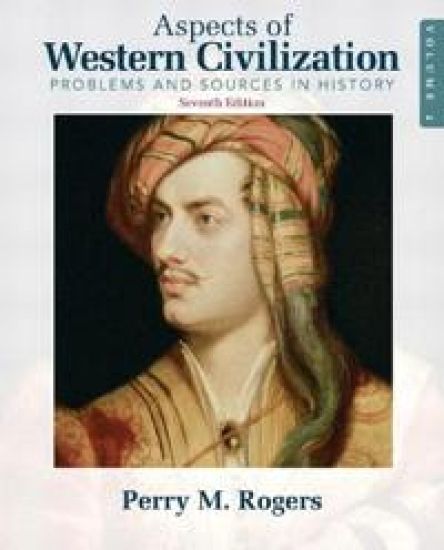
Aspects of Western Civilization
This reader is appropriate as a main text or a supplementary text for introductory-level survey courses in Western Civilization and European History and Civilization. Aspects of Western Civilization : Problems and Sources in History, Volume 2, 7/e, challenges students with basic questions regarding historical development, human nature, moral action, and practical necessity. This collection of diverse primary sources explores a wide variety of issues and is organized around seven major themes: the Power Structure, Social and Spiritual Values, the Institution and the Individual, Imperialism, Revolution and Historical Transition, the Varieties of Truth, and Women in History.
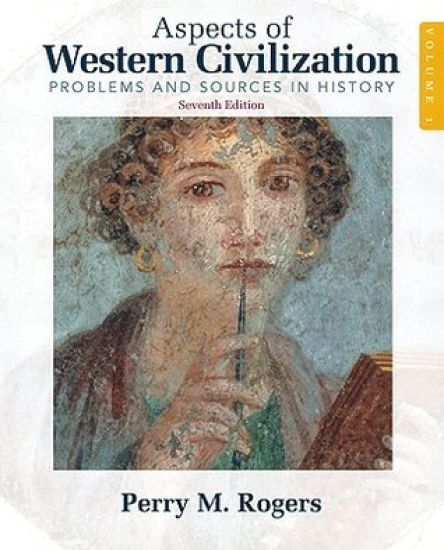
Aspects of Western Civilization
This reader is appropriate as a main text or a supplementary text for introductory-level survey courses in Western Civilization and European History and Civilization. Aspects of Western Civilization : Problems and Sources in History, Volume 1, 7/e, challenges students with basic questions regarding historical development, human nature, moral action, and practical necessity. This collection of diverse primary sources explores a wide variety of issues and is organized around seven major themes: the Power Structure, Social and Spiritual Values, the Institution and the Individual, Imperialism, Revolution and Historical Transition, the Varieties of Truth, and Women in History.
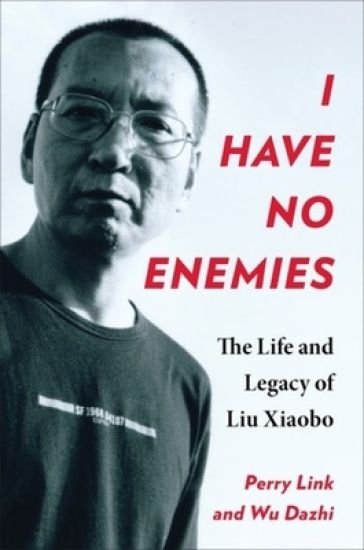
I Have No Enemies

I Have No Enemies

Perry Link; Dazhi Wu

Columbia University Press
2023
sidottu
Late one night in December 2008, police arrived at the home of Liu Xiaobo—China’s leading dissident, a key figure in the prodemocracy manifesto Charter 08—and took him away. When Liu won the 2010 Nobel Peace Prize as a political prisoner, the award was bestowed on an empty chair. Inside China, the regime sought to erase every trace of his existence. Liu died of liver cancer in 2017 without ever having been allowed to return home.I Have No Enemies is the definitive biography of Liu Xiaobo, offering a meticulously researched account of the twists and turns of a remarkable life. Perry Link and Wu Dazhi explore Liu’s upbringing, immersion in classical Chinese poetry and philosophy, bold challenges to literary conformity, and involvement in democratic movements. They trace the lifelong evolution of his thinking and chronicle his persecution, incarceration, and death.I Have No Enemies emphasizes Liu’s principled commitment to dissent and the significance of the example he set in China and around the world. Liu was a farsighted strategist whose ultimate goal was “to change a regime by changing a society.” In Tiananmen Square, he showed others how to face down armed soldiers; in daily life, he looked for ways to build a more democratic culture. A powerful record of Liu’s life and times, this book also tells the story of a generation of Chinese intellectuals who sought a better way forward.
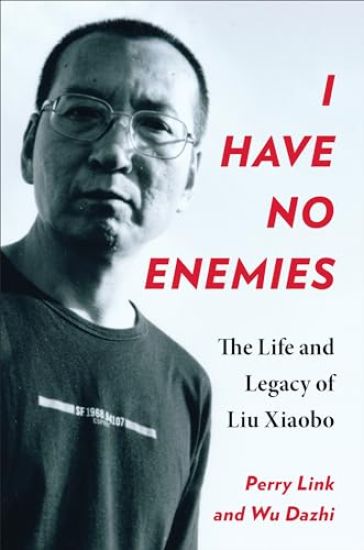
I Have No Enemies

I Have No Enemies

Perry Link; Dazhi Wu

Columbia University Press
2024
pokkari
Late one night in December 2008, police arrived at the home of Liu Xiaobo—China’s leading dissident, a key figure in the prodemocracy manifesto Charter 08—and took him away. When Liu won the 2010 Nobel Peace Prize as a political prisoner, the award was bestowed on an empty chair. Inside China, the regime sought to erase every trace of his existence. Liu died of liver cancer in 2017 without ever having been allowed to return home.I Have No Enemies is the definitive biography of Liu Xiaobo, offering a meticulously researched account of the twists and turns of a remarkable life. Perry Link and Wu Dazhi explore Liu’s upbringing, immersion in classical Chinese poetry and philosophy, bold challenges to literary conformity, and involvement in democratic movements. They trace the lifelong evolution of his thinking and chronicle his persecution, incarceration, and death.I Have No Enemies emphasizes Liu’s principled commitment to dissent and the significance of the example he set in China and around the world. Liu was a farsighted strategist whose ultimate goal was “to change a regime by changing a society.” In Tiananmen Square, he showed others how to face down armed soldiers; in daily life, he looked for ways to build a more democratic culture. A powerful record of Liu’s life and times, this book also tells the story of a generation of Chinese intellectuals who sought a better way forward.
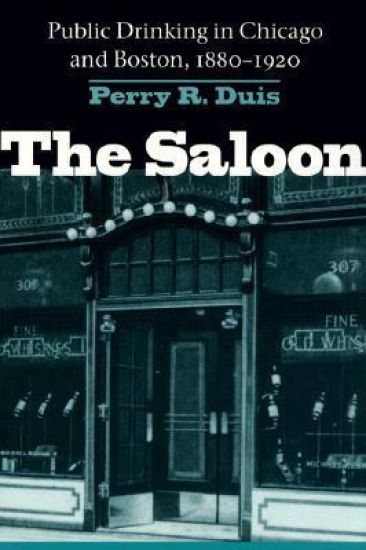
The Saloon

The Saloon

Perry Duis

University of Illinois Press
1998
nidottu
This colorful and perceptive study presents persuasive evidence that the saloon, far from being a magnet for vice and crime, played an important role in working-class community life. Focusing on public drinking in "wide open" Chicago and tightly controlled Boston, Duis offers a provocative discussion of the saloon as a social institution and a locus of the struggle between middle-class notions of privacy and working-class uses of public space.
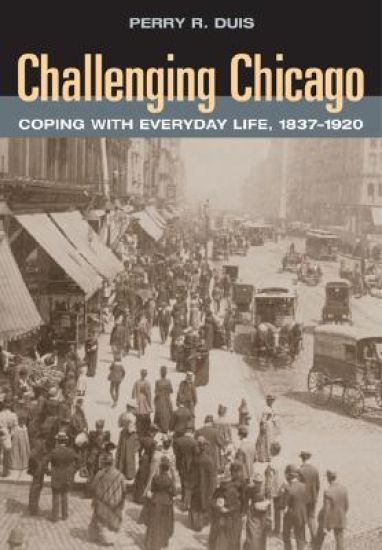
Challenging Chicago

Challenging Chicago

Perry R. Duis

University of Illinois Press
2006
nidottu
During an unprecedented period of rapid growth, the burgeoning metropolis of Chicago quickly became a “concentration of risk”: far more congested, dangerous, unpleasant, immoral, and unhealthy than newcomers had anticipated. Through vignettes and real-life stories, Challenging Chicago reveals lower- and middle-class peoples’ strategies for coping with technology, crowding, anonymity, and other urban ills. Follow along and encounter some of Chicago’s most infamous citizens--the loathed Traction Baron, high-speed “scorchers,” and peddlers of “swill milk.” Learn about the perils of payday, the lunchtime problems of women, the lure of dime museums, and the fatal attraction of Chicago’s “cruelest place.” Against this bleak backdrop emerged the innovators and institutions that made Chicago the vibrant city it is today. The superbly textured narrative is enhanced by eighty-six historic photographs and illustrations.
Barry Gealt, Embracing Nature

Barry Gealt, Embracing Nature

Perry Rachel Berenson

Indiana University Press
2012
sidottu
Barry Gealt's nature paintings, with their thick layers of pigment and saturated colors, evoke the drama of place—purple waves splashing over shell-pink sands, mossy rocks protruding among twisting water surfaces, the windless mists of Indiana mornings, and the hush and rustle of winter woods. This beautiful retrospective catalog presents forty of Gealt's works, mostly large oil-on-panel paintings, from 1985 through 2012. Rachel Berenson Perry traces Gealt's art-making life from his early experiments with figurative painting through the evolution of his abstract, forceful, almost sculptural landscape style. Perry also discusses Gealt's long career as a dedicated teacher and mentor to his many students in the painting program at Indiana University from 1969 until his retirement in 2007.
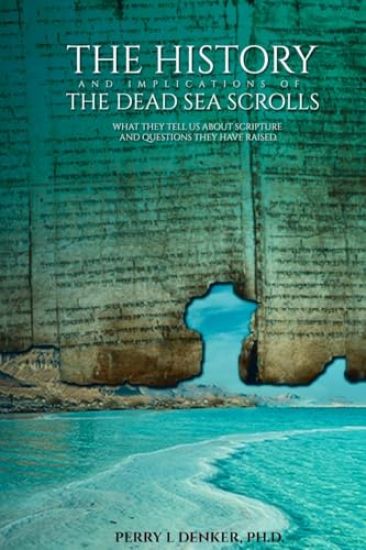
The History and Implications of the Dead Sea Scrolls
Embark on an exhilarating journey through the ancient world with "The History and Implications of the Dead Sea Scrolls." Delve into the fascinating realm of documents written before, during, and after Jesus' time on earth, offering concrete insights into a pivotal era in Judeo-Christian heritage. Unravel the mysteries surrounding their discovery, liberation, and the figures who brought them to light. Discover how the Dead Sea Scrolls have influenced biblical understanding and underscored a precursor to early Christianity. Join as we illuminate the profound impact of one of the greatest archaeological and religious finds of the 20th century. The Dead Sea Scrolls comprise a collection of Jewish documents found between 1947 and 1956 near the Dead Sea in the Judean desert. These texts include fragments from almost every book of the Hebrew Bible (also known as the Old Testament) and other Jewish texts such as hymns, prayers, and philosophical writings. The texts are primarily written in Hebrew, Aramaic, and Greek and provide valuable insights into the beliefs and practices of the Jewish people in the Second Temple period, 516 Before Common Era (BCE) to 70 Common Era (CE). The discovery of the Dead Sea Scrolls has been of great significance to the study of the Bible, particularly the Hebrew Bible. One of the most important aspects of the scrolls is that they provide scholars with access to much older versions of biblical texts than previously available. The scrolls date from 250 BCE to 68 CE. Prior to the unearthing of the Dead Sea Scrolls, the most ancient existing manuscripts of the Hebrew Bible originated in the 9th to 10th century CE.The Dead Sea Scrolls have helped scholars better understand the development and transmission of biblical texts over time. They have also offered significant insights into the beliefs and rituals of the Jewish society responsible for creating and safeguarding these writings.Additionally, the scrolls shed light on the cultural and historical context in which the Hebrew Bible was written and have contributed to the ongoing study of the text and its interpretation.The Scrolls also raise important questions and debates within biblical studies. For example, some scholars have argued that the scrolls provide evidence of alternative Jewish beliefs and practices that were suppressed by the mainstream Jewish community. Others have argued that the scrolls offer proof of a more diverse and complex Judaism than previously thought. Still, others have argued that the scrolls provide evidence of a more fluid and dynamic process of textual transmission than previously believed.The Dead Sea Scrolls are a valuable source of information about the Hebrew Bible and the beliefs and practices of the Jewish people in the Second Temple period. They provide important insights into the history and development of the text of the Hebrew Bible and shed light on the broader cultural and social context in which these texts were produced. At the same time, they raise important questions and debates that continue to be explored by scholars today.
Curious Minds

Curious Minds

Perry Zurn; Dani S. Bassett

MIT PRESS LTD
2023
nidottu
An exhilarating, genre-bending exploration of curiosity’s powerful capacity to connect ideas and people.Curious about something? Google it. Look at it. Ask a question. But is curiosity simply information seeking? According to this exhilarating, genre-bending book, what’s left out of the conventional understanding of curiosity are the wandering tracks, the weaving concepts, the knitting of ideas, and the thatching of knowledge systems—the networks, the relations between ideas and between people. Curiosity, say Perry Zurn and Dani Bassett, is a practice of connection: it connects ideas into networks of knowledge, and it connects knowers themselves, both to the knowledge they seek and to each other. Zurn and Bassett—identical twins who write that their book “represents the thought of one mind and two bodies”—harness their respective expertise in the humanities and the sciences to get irrepressibly curious about curiosity. Traipsing across literatures of antiquity and medieval science, Victorian poetry and nature essays, as well as work by writers from a variety of marginalized communities, they trace a multitudinous curiosity. They identify three styles of curiosity—the busybody, who collects stories, creating loose knowledge networks; the hunter, who hunts down secrets or discoveries, creating tight networks; and the dancer, who takes leaps of creative imagination, creating loopy ones. Investigating what happens in a curious brain, they offer an accessible account of the network neuroscience of curiosity. And they sketch out a new kind of curiosity-centric and inclusive education that embraces everyone’s curiosity. The book performs the very curiosity that it describes, inviting readers to participate—to be curious with the book and not simply about it.
American Places

American Places

Perry M. Chapman

Praeger Publishers Inc
2006
sidottu
For the college campus, place means much more than just geography and physical setting. It is the sum of the experiences, activities, events, and memories that occur within the campus. American institutions of higher education are giving renewed attention to the question of how the quality and character of place can support the endeavors of the institutions. In doing so, campus communities are seeking to reclaim ground that was lost in the decades after World War II, when the traditional virtues of campus coherence, human scale, and place distinction were overtaken by explosive growth in attendance rates and the growing prevalence of automobiles. American Places calls for campuses to be conceived, not only to heighten the quality of the learning experience, but also as working demonstrations of how places everywhere can be transformed into more healthy, humane, civic environments. As campuses and communities are reshaped by societal forces, the campus will endure as a vital civil learning environment well into the 21st century.American Places calls for campuses to be designed, not only to heighten the quality of the learning experience, but also as working demonstrations of ways in which places everywhere can be transformed into more healthy, humane, civic environments. For the college campus, place should mean much more than geography and physical setting. It represents the sum of the experiences, activities, events, and memories that occur within the campus boundaries. Today, American institutions of higher education are devoting renewed attention to the question of how the quality and character of place can support their goals. In doing so, campus communities are seeking to reclaim psychological ground that was lost in the decades after World War II, when the traditional virtues of campus coherence, human scale, and place distinction were overtaken by explosive growth in attendance and the growing prevalence of automobiles. The quest to make better places of college campuses has a critical practical dimension, Chapman maintains: it bolsters student and faculty recruitment, and it improves donor support in an increasingly competitive environment. But behind the pragmatic concerns lies the recognition of place as the all-important bridge between institutional traditions and the societal changes that higher education institutions must address in the new century to maintain their currency as important American places. The campus setting binds the memories of generations, giving it the perceived attribute of timelessness. American Places is a plea: that 21st-century American campuses will collectively adopt an ethic of place supported by principles of sustainability, authenticity, and community.
Siberian Journey

Siberian Journey

Perry McDonough Collins

University of Wisconsin Press
2011
nidottu
Perry McDonough Collins was the first American to journey through Siberia and down the 2,690-mile Amur River to the Pacific Ocean. In 1860 he wrote A Voyage Down the Amoor, an account of his adventures, and his book proved so popular that it was reissued in 1864. Siberian Journey consists of Collins s original text framed by an interpretive introduction and explanatory notes by Charles Vevier, providing an extensive, first-hand account of Russia s land and its people in the mid nineteenth century."